
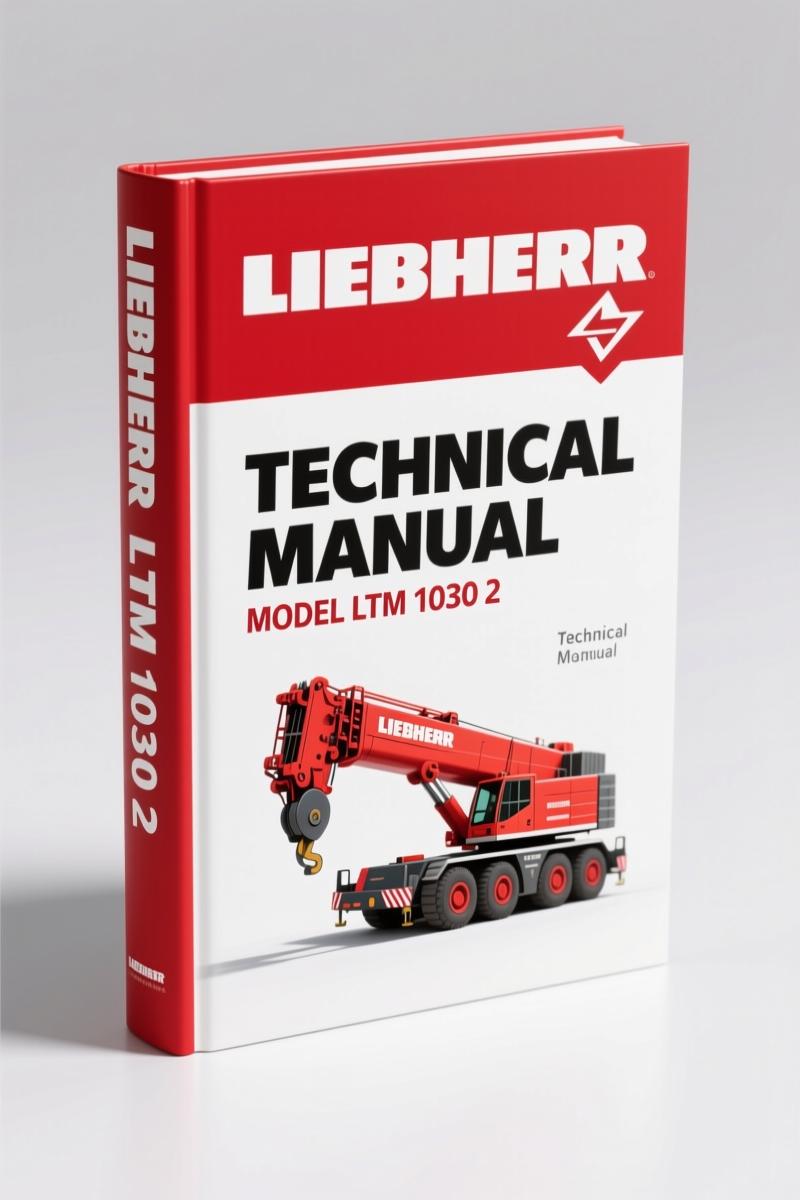
Liebherr LTM 1030/2 Technical Manual – 48 Pages of Factory Hydraulic Data
Original price was: $29.25.$21.99Current price is: $21.99.
Factory Liebherr LTM 1030/2 Technical Manual: 48 pages covering load-sensing hydraulics, pump diagrams, and adjustment protocols for service professionals.
Description
Liebherr LTM 1030/2 Technical Manual – 48 Pages of Factory Hydraulic Specs
If you are working on a Liebherr LTM 1030/2 mobile crane and you don’t have the factory hydraulic schematics, you are wasting time and risking a hydraulic lock. I’ve seen guys skip the load-sensing adjustment sequence and blow a seal on the first lift. This 48-page Technical Manual gives you the exact OEM procedure – not some aftermarket translation that missed a check valve. The LTM 1030/2 is a 30-ton crane with a complex load-sensing hydraulic system. You need the factory diagrams to trace the pressure lines and set the pressure compensators correctly. Page 1 shows the entire system layout: the variable-displacement pump, the Barmag control block, the winch, the telescoping cylinder, and the luffing cylinder. Without that overview, you are guessing which line feeds the swing drive. Aftermarket manuals often leave out the crossover relief settings. This one doesn’t.
Hydraulic Component Overview: Funktionsübersicht
The manual opens with a function overview of all hydraulic components. You get a labeled diagram of the oil supply and pilot pressure system, the hoist winch (Hubwerk 1), the telescoping cylinder circuit, the luffing cylinder circuit, the open-circuit swing drive (Drehwerk), and the ballast system. Every component is drawn with its port designations. The schematic on page 3 (the table of contents) lists each subsystem with its own section. That means you can jump straight to the ballast circuit without flipping through unrelated pages. The LTM 1030/2 uses a Liebherr axial-piston variable-displacement pump (LPV 125) with load-sensing, pressure cutoff, and power regulation. The manual includes a cross-section view and a block diagram of that pump. You’ll also find the ZF 6 WG 210 transmission and the Mercedes-Benz OM 906 LA engine mentioned in the system overview. If you need to understand how the pump interacts with the control block, the block diagram with views from front, right, left, top, bottom, and rear is included. That is the kind of detail you only get from a factory Technical Manual.
Load Sensing Adjustment: The 7-Step Factory Procedure
This is the section that separates the pros from the guys who blow seals. The manual dedicates a full subsection to “Grundeinstellung der hydraulischen Load-Sensing” – the basic adjustment of the hydraulic load-sensing system. It walks you through seven steps: setting the pressure cutoff (DA) on the pump, setting the crane control block relief (V6), adjusting the standby pressure (LS pressure) and pilot pressure, setting the pressure limiters for each movement, setting the pressure limits for the swing drive and ballast, adjusting the winch brake, and then additional settings like the Q-regulator, speed checks, and the pump power regulator (LR). Each step has a target pressure value and a sequence. You do not skip step 2 to get to step 5. The manual includes a test sheet (Prüfblatt – Geschwindigkeiten) for verifying speeds after adjustment. If you have ever tried to tune a load-sensing system without the factory numbers, you know how easy it is to get oscillation or sluggish response. This manual eliminates that guesswork. Page 1 shows the system overview; the adjustment procedure starts after the component overviews. Without this manual, you are flying blind.
Why Use OEM Specs for the LTM 1030/2?
Aftermarket documentation for mobile cranes is a minefield. I have seen “universal” hydraulic schematics that swap the pilot pressure line with the tank return – that will wreck your control block. The Liebherr LTM 1030/2 Technical Manual is an original factory document, printed by Liebherr-Werk Ehingen GmbH. It uses the same part numbers, same pressure values, same valve block configurations that the crane left the factory with. The manual covers the OW-10 superstructure (Oberwagen) with crane hydraulics. If you are working on a different superstructure variant, this manual might not apply. But for the LTM 1030/2 with OW-10, it is the definitive source. For example, the steering block (Steuerblock Barmag) is shown with views from all six sides – front, right, left, top, bottom, rear. Each view labels the ports and the cartridge valves. You can cross-reference the part numbers when ordering replacements. That is the kind of accuracy you can’t get from a third-party reprint. If you need the pneumatic brake system specs for this crane, check out Liebherr LTM 1030/2 Technical Manual – Pneumatic Brake System Specs. For a training manual with factory specs and wiring, see Liebherr LTM 1030/2 1999 Training Manual – Factory Specs & Wiring. And if you work on bigger iron, the Liebherr R 9350 Technical Manual – Specs for Big Iron covers the large excavator hydraulics.
3 Critical Subsystems: Hubwerk, Wippwerk, Drehwerk
The manual breaks down three critical subsystems individually. The hoist winch (Hubwerk 1) section details the hydraulic motor, brake release circuit, and counterbalance valve. The telescoping cylinder (Teleskopierwerk) section shows the synchronizing circuit and the holding valves. The luffing cylinder (Wippwerk) section covers the boom hoist circuit with its own pressure limiter. The swing drive (Drehwerk) is an open-circuit design – the manual provides the schematic for the swing motor and the brake valve. Each subsystem has its own page in the component overview section. You can isolate a problem to one circuit and follow the oil flow from pump to actuator. For instance, if the boom drifts down, you check the luffing cylinder holding valve. The manual tells you which valve is which and where to measure pressure. This is not a generic description; it’s a machine-specific guide. For more on how manual transmissions work in these cranes, refer to Manual Transmission for general principles. The ZF transmission is also covered in the system overview, so understanding the power take-off helps with the hydraulic pump drive. Manual Transmission basics apply to the driveline as well.
Get the Right Adjustment Data for the Ballastierung
The ballast system (Ballastierung) has its own circuit with a separate pressure control. The manual includes a section on the ballast control block (Steuerblock Drehwerk / Ballastierung) with block diagrams and views from front, right, left, back, and bottom. The adjustment of the ballast pressure limits is part of the load-sensing tuning procedure. If you change the ballast weight, you need to reset the pressure relief valve. The manual gives the sequence: set the pressure cutoff on the pump first, then the crane control block relief, then the standby pressure, then the individual movement limits, then the ballast limits. Without this sequence, you risk overloading the ballast cylinder or getting a slow response. The 48-page manual is concise – every page is packed with a schematic or a table. There is no fluff. You get the component overview, the hydraulic schematic for the superstructure, the pump section, the control block sections, and the adjustment procedure. That’s it. If you need to troubleshoot a slow hoist or a stuck swing, this manual will get you the right numbers.
- Does this manual include wiring diagrams?
- No, it covers hydraulic schematics only. The electrical system is not included.
- What models are covered?
- Liebherr LTM 1030/2 with OW-10 superstructure. The manual is specific to this variant. The hydraulic system differs from the LTM 1030/1. While some components are shared, the load-sensing tuning and valve block layout are unique to the /2. Using it on a different model could lead to incorrect pressure settings and component damage. Always verify your machine’s serial number against the manual’s scope. If you have a different variant, order the correct manual to avoid costly mistakes.
- Is the manual in English?
- The manual is trilingual German/English/French. The hydraulic schematics use German labels, but the adjustment procedures include English translations. You’ll need basic German for part names, but the numbers are universal.
- What page has the load sensing adjustment?
- The adjustment sequence starts on page 26 of the PDF.
You need this factory data if you are performing any hydraulic work on an LTM 1030/2. The aftermarket alternative is a gamble I wouldn’t take with a 30-ton crane. Access the Factory Manual now and get the OEM specs for your job.
Additional information
| Brand | Liebherr |
|---|---|
| Language | English |
2 reviews for Liebherr LTM 1030/2 Technical Manual – 48 Pages of Factory Hydraulic Data
You may also like…
-
Sale!
Liebherr LR 636-1275 Service Manual – Factory Specs for Crawler Loader Maintenance
Original price was: $80.60.$65.00Current price is: $65.00. -
Sale!
Liebherr D9306, D9308, D9406, D9408 2002 Service Manual – Factory Specs
Original price was: $83.20.$65.00Current price is: $65.00. -
Sale!

Liebherr PR 712, PR 752 Service Manual – 1426 Pages of Factory Specs
Original price was: $96.85.$65.00Current price is: $65.00. -
Sale!

Liebherr PR 776 Service Manual – Factory Specs for Crawler Dozer
Original price was: $102.05.$65.00Current price is: $65.00.
Related products
-
Sale!

2005 Parts Catalog – International NGD 3.0 L Engine (77 pages)
Original price was: $44.70.$30.00Current price is: $30.00. -
Sale!

1992 Electrical Schematic – OEM Wiring Diagrams for International 1000-3800
Original price was: $24.48.$18.00Current price is: $18.00. -
Sale!
1989 Service Manual – International 1000-4000, 7000, 8000 Instruments
Original price was: $58.80.$40.00Current price is: $40.00. -
Sale!

Technical Manual – International DT 530 & HT 530 (118 Pages)
Original price was: $37.00.$25.00Current price is: $25.00.
Michael T. –
This is exactly what I required. Quick access after checkout. A must-have for any Liebherr LTM mechanic doing maintenance. Worth every penny.
pro_mechanic –
Great buy! It is very easy to read on my laptop without blur. It helped me to rebuild my Liebherr LTM transmission. Saves me hundreds of money.