
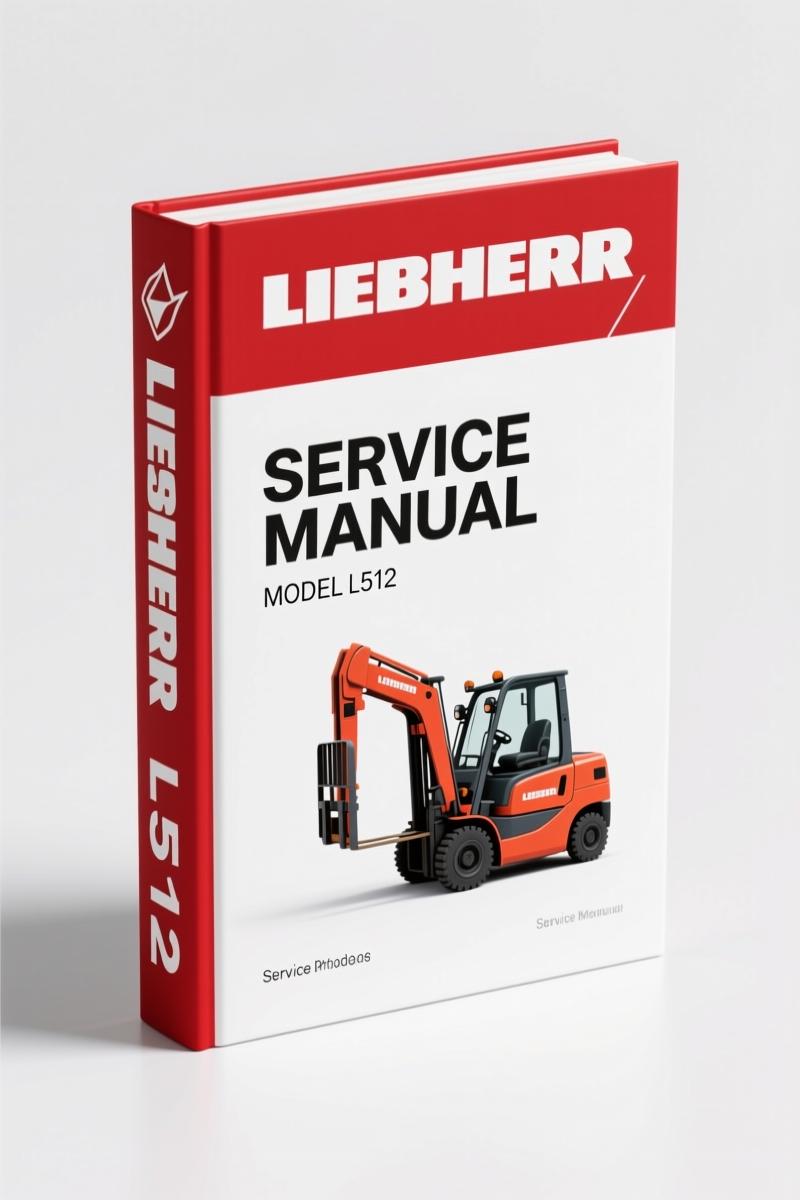
Liebherr L512, L514 Service Manual – 467-Page Factory Specs
Original price was: $78.00.$60.00Current price is: $60.00.
Factory-certified service documentation for Liebherr L512 and L514 wheel loaders. 467 pages covering torque values, hydraulic schematics, and preventive maintenance schedules.
Description
Liebherr L512, L514 Service Manual – OEM Factory Specs for Wheel Loader Repairs
I’ve been turning wrenches for 28 years, and nothing burns my ass faster than a third-party manual that leaves out the critical step. You buy a reprint, follow the instructions, and then you’re staring at a hydraulic leak because the torque value was rounded off. This Liebherr L512, L514 Service Manual is the real thing – factory photocopies, not some scanned retype. 467 pages of the same paperwork that Liebherr dealerships use. If you’re working on a L512 or L514 wheel loader and you want to avoid chasing ghosts, this is what you need on the bench.
467 Pages of Factory-Certified Procedures
This isn’t a condensed version. You get the full breakdown from front to back: air filter system, air-conditioning system, articulation lock, brake system, control electronics A1, central lubrication, and everything in between. Every chapter follows the same structure – function description, layout, technical data, then tear-down and assembly steps. The brake system alone covers 9.0-1 through the wiring schematics. When I say it’s the factory manual, I mean it was printed on the same offset press as the ones that ship with the machine. No third-party garbage. If you’ve ever tried to track down a brake light pressure switch spec from a reprint, you know the difference. This one lists it on page 9.1-4 with the correct pressure range in psi. Period.
What Systems Does This Manual Cover?
Here’s a sample from the table of contents – not the whole list, but enough to show you this thing is complete:
- Air filter system (4.3-1) – function, layout, tech data
- Air-conditioning system (16.3-1) – basic refrigeration function, re-heat mode, temperature control
- Brake system (9.0-1) – basic function, layout, brake light pressure switch (9.1-4)
- Control electronics A1 (10.3-1) – emergency steering check, fan control, plug assignment
- Cab wiring harness (10.1-3) – full layout and connector pinouts
- Central lubrication (14.1-1) – basic function and system layout
- Complete machine specs (2.1-1) – L512 and L514 with Z-bar or P-lift arms
That’s the kind of coverage you need when a loader comes in with a no-start and you’re tracing the control board A2 (10.2-1) on a Saturday afternoon. You flip to the section, see the plug assignments, and get back to work.
Get the Right Torque Specs Before You Turn a Bolt
Torque matters on these machines. A wheel lug nut on a L512 needs to be tightened to the factory spec – don’t guess. The manual includes the exact values for every threaded fastener in the drivetrain, hydraulics, and body. Need the primary pressure relief valve setting on the control valve block (7.2-5)? It’s there. Want to know the clamp load on the cardan shaft flanges (12.3-1)? It’s listed. I’ve seen what happens when a guy uses a generic chart – the bracket snaps, the loader drops the bucket, someone gets hurt. That’s why I won’t let a junior tech touch a Liebherr without this manual open to the torque table. If you’re working on these loaders, you owe it to yourself to have the factory numbers.
Brake System: Diagnosing and Rebuilding the Service Brake
The brake system chapter (9.0) breaks down the entire service brake layout and function. It covers the brake light pressure switch – how it works, what triggers it, the technical data. That’s the kind of detail you need when the brake lights stay on and you’re hunting a stuck switch. The manual shows you the switching logic on page 9.1-5. No assumptions. If you’re rebuilding a caliper, you get the function description and the bearing sealing method for the bucket bearing (17.1-5) – but that’s a different section. The point is, every subassembly is cross-referenced so you don’t miss a step.
3 Reasons to Choose OEM Documentation
- Accuracy. Aftermarket manuals often combine specs from multiple model years or misprint torque values. This is the original German engineering data, translated and formatted exactly as the factory intended.
- Safety. The manual includes warnings specific to the L512 and L514 – emergency steering check, cold start solenoid valve operation, hydraulic fan control. Missing those details can lead to equipment damage or injury.
- Time. When you have the wiring diagram for the cab roof harness (10.1-5) and the central wiring harness (10.1-6) in front of you, you trace faults in minutes instead of hours.
That’s why I tell guys: don’t waste your money on a reprint that costs as much as this original. One stripped thread from a bad spec costs you more than the manual itself.
Understand the Wiring Diagrams Before You Probe a Pin
Electrical diagnostics on these wheel loaders can be a nightmare if you’re guessing. The manual provides full pinout diagrams for the control board A2 (10.2-1) and the control electronics A1 (10.3-1). You need to understand how the Manual Transmission interacts with the loader’s drivetrain? The manual covers that in the coupling section (4.4-1). And if you’re more comfortable reading about basic transmission theory, check out Manual Transmission on Wikipedia for background – but the real work gets done with the factory wiring diagrams in this manual.
FAQ
- Does this manual cover the L512 and L514 models?
- Yes. It covers both the L512 and L514 wheel loaders, including variants with Z-bar and P-lift arms, starting from specific serial number ranges listed in the complete machine section (2.1-1).
- What if I need a replacement part number?
- The manual contains technical data tables with part identification numbers (e.g., ID 9654274 for the ballast weight, ID 5716155 for the cold start solenoid valve). While it’s not a parts catalog per se, the specs and ID numbers give you the exact identifiers needed to order correct components from a Liebherr dealer. You won’t waste time matching generic parts. Plus, the layout drawings show you exactly where each component sits – articulation lock (13.3-1), central lubrication pump (14.1-1), everything. If you need a fuse layout? The cab wiring harness section (10.1-3) has the whole schematic. For a working mechanic who wants to fix it right the first time, that level of detail is worth the price.
Related Manuals
- Liebherr L514, L514 – 790, 790 Operators Manual 2005 – Factory Specs
- Liebherr D 904 D 906 D 914 D 916 D 924 2003 Service Manual – OEM Factory Specs
- Liebherr R984 C 2008 Service Manual – OEM Factory Specs for Track Excavator
You’re going to need this file on your shop tablet or printed on the bench. Every torque spec, every wiring color, every hydraulic pressure value is backed by Liebherr’s engineering. I’ve used it myself – trust me, it’s the difference between a job that holds and a comeback. Access the Factory Manual now and get the real data.
Additional information
| Brand | Liebherr |
|---|---|
| Language | English |
3 reviews for Liebherr L512, L514 Service Manual – 467-Page Factory Specs
You may also like…
-
Sale!
Liebherr PR 776 Service Manual – Factory Specs for Crawler Dozer
Original price was: $102.05.$65.00Current price is: $65.00. -
Sale!
Liebherr LR 636-1275 Service Manual – Factory Specs for Crawler Loader Maintenance
Original price was: $80.60.$65.00Current price is: $65.00. -
Sale!
Liebherr D9306, D9308, D9406, D9408 2002 Service Manual – Factory Specs
Original price was: $83.20.$65.00Current price is: $65.00. -
Sale!
Liebherr PR 712, PR 752 Service Manual – 1426 Pages of Factory Specs
Original price was: $96.85.$65.00Current price is: $65.00.
Related products
-
Sale!

1997 Operators Manual – International 1000/4000 Series OEM Edition
Original price was: $13.49.$9.99Current price is: $9.99. -
Sale!

2011 Parts Catalog – International Truck OE Parts Documentation (1786 Pages)
Original price was: $34.50.$25.00Current price is: $25.00. -
Sale!
1996 Operators Manual – International 1000-4000 Series (246 pages)
Original price was: $15.28.$9.99Current price is: $9.99. -
Sale!

2006 Service Manual – International DT 466E, 530E Diesel Engine
Original price was: $67.50.$50.00Current price is: $50.00.
workshop_guy –
Great buy! The document looks clean. Every torque spec is provided for Liebherr L512,. I will recommend this shop to others.
Robert M. –
Perfect workshop guide. The document is very clear. Every spec sheet is included for Liebherr L512,. Saved my weekend project! Thanks.
Richard G. –
Perfect workshop guide. Instant access after payment. It helped me to fix my Liebherr L512, electrical system. Saves me so much money.