
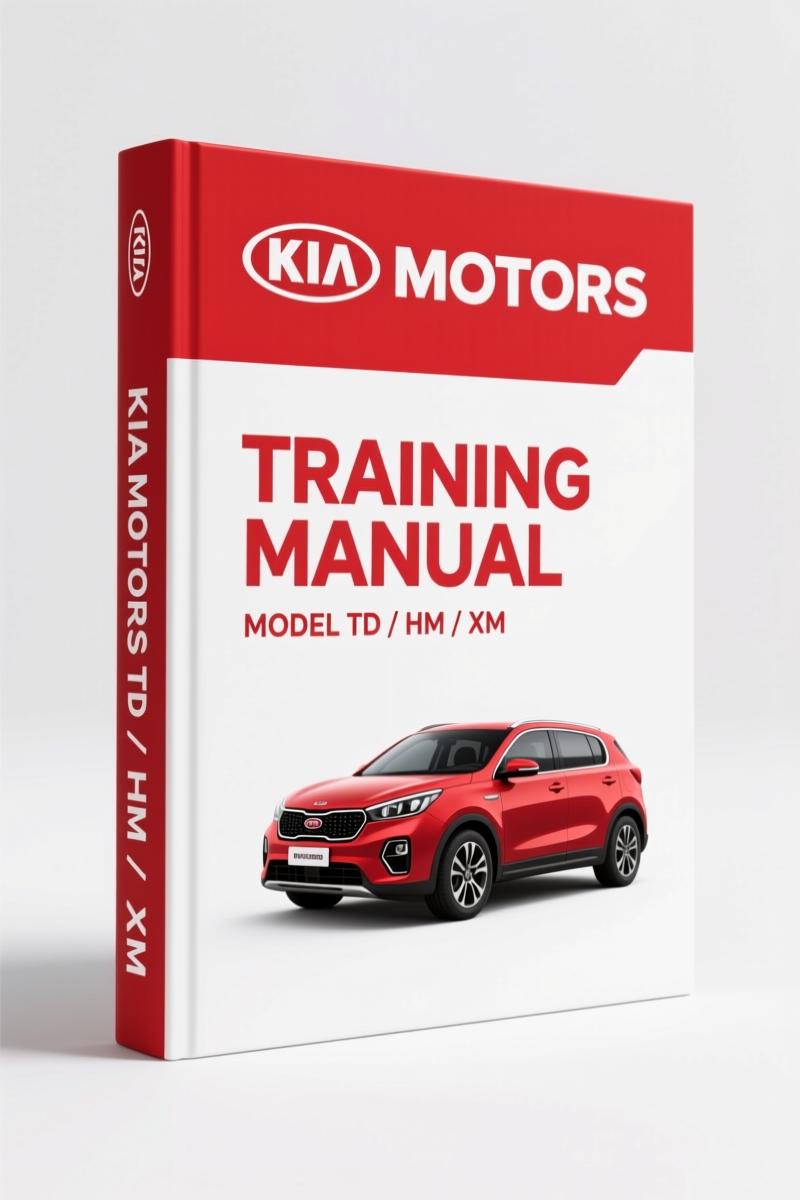
KIA Motors TD, HM, XM, AM, TF 2012 Training Manual – Smart Key Diagnostics
Original price was: $42.00.$30.00Current price is: $30.00.
41-page KIA factory training manual covering TD, HM, XM, AM, TF smart key diagnostics – block diagrams, limp-home, ESCL.
Description
KIA Motors TD, HM, XM, AM, TF 2012 Training Manual – Smart Key System
Let me tell you something about smart key systems on these KIA platforms – they will eat your diagnostic time if you don’t have the right wiring map. I’ve seen guys swap three SMK modules before realizing the LF antenna had a broken wire. That’s why this KIA Motors TD, HM, XM, AM, TF 2012 Training Manual sits on my bench right next to the scope. It’s 41 pages of factory-level training material, not a condensed aftermarket summary. The block diagrams on page 4 alone saved me four hours on a 2012 KIA Sportage that wouldn’t crank. The immobilizer serial comm path between the smart key, ECM, and PDM is laid out with actual bit rates – 9.6 kbps on the serial line, 125 kHz LF, 315/433/447 MHz RF. You cannot guess that stuff.
Smart Key System Overview: Passive Entry and Start Architecture
Page 2 breaks down the three core functions that every shop needs to understand before touching a TD, HM, XM, AM, or TF. Passive door lock/unlock uses a push button on the door handle – not a touch sensor. That matters because if you’re diagnosing a door that won’t lock, you check the button switch continuity first, not the antenna. The ESCL (Electronic Steering Column Lock) is a motor-actuated device that locks the column when ignition is off. If you skip the mechanical free-play check before replacing the ESCL module, you’ll get a comeback. The passive engine start sequence is clear: brake pedal pressed + shift lever in P + start button. Engine will not crank otherwise. This manual tells you which wire carries the brake switch signal and how the SMK module reads the P position.
ESCL and Passive Start: Factory Wiring That Pays for Itself
The ESCL gets its power and ground from the PDM through a dedicated serial communication line. On the SMK 1.0 setup (used in TD, HM, XM, AM), the ESCL enable signal is a discrete wire from the PDM. On SMK 2.0 (TF), the enable logic runs through the body CAN. Get that wrong and you’ll have a locked column that won’t release. I watched a kid spend two days chasing a no-crank because he didn’t realize the ESCL ground was shared with the unlock switch ground – page 4 block diagram shows the exact path. Torque specs for the ESCL mounting bolts? Not listed in this training manual – it’s a system-level doc, not a service manual. But the wiring diagrams are OEM. KIA Motors EMS1.01 2011 Training Manual – Engine Management Diagnosis I covers the engine side; this manual covers the entry and start side.
SMK 1.0 vs 2.0 vs 2.5: What Changed and Why It Matters
Page 3 has a comparison table that will stop you from ordering the wrong parts. SMK 2.5 (TA, QB/UB) integrated the PDM receiver into the SMK module – deleted the separate PDM. If you pull up a wiring diagram for a 2012 KIA Sorento (XM) and it shows a separate PDM, you’re looking at SMK 1.0. The activation method for limp home also varies: SMK 1.0 and 2.0 require inserting the smart key into a key holder and pressing start. SMK 2.5 requires touching the smart key to the start button. Mix those up and you’ll tell a customer their remote battery is dead when really the RFID antenna isn’t being energized. The RF receiver frequency is also different per region – 315 MHz for North America, 433/447 MHz for others. This manual spells that out.
Limp Home Procedures for Dead Smart Key Battery
When the smart key battery dies, the system has to fall back to transponder communication. The SMK module sends a 125 kHz LF signal to wake up the transponder in the key. If the LF driver in the PDM (SMK 1.0) or SMK module (2.0/2.5) is dead, no start. The manual describes the key-in switch signal and how the start button ON signal 1 and 2 get processed. Bypass the remote battery check by placing the key in the holder and pressing start. If the engine starts, the battery in the key is low. If it doesn’t, the LF antenna or the SMK module is at fault. This 41-page training doc gives you the diagnostic flow without flipping through 200 pages of disassembly. KIA Motors CARNIVAL, SEDONA 2005 Workshop Manual – Body Repair Specs covers body sheet metal; this covers the electronics.
Block Diagrams: Reading the Factory Wiring
Pages 4 and 5 show block diagrams for SMK 1.0 and SMK 2.0. The diagrams include every data line: serial communication (9.6 kbps), body CAN, powertrain CAN, K-line KWP2000 (10.4 kbps), and hardwire signals for starter, ACC, IGN1, IGN2. The CAN gateway node is noted as a separate node for BCM only on SMK 2.0. If you need to diagnose a no-crank with a crank signal present, follow the engine rpm signal path from the ECM back to the SMK. The manual shows that the engine rpm signal is a hard wire, not CAN. That means if the SMK doesn’t see RPM after cranking, it stops the starter. I’ve used this to isolate a bad ECM that was not sending the RPM pulse. No aftermarket wiring book shows that detail.
This training manual is a system diagnostic reference. It does not include step-by-step removal of the dashboard or torque specs for every bolt. What it does include is the exact communication protocols, pin functions, and failure modes the factory teaches to dealer techs. For a DIY mechanic working on a 2012 KIA Optima (TF) or a 2012 KIA Soul (AM), this is the document that tells you why the car thinks the key is not inside the cabin. KIA Motors Soul 2008 Repair Manual – Body Repair Specs complements this training manual if you need body panel removal instructions.
Source Validity: OEM Training vs Aftermarket Wiring Books
This material comes straight from KIA Motors Corporation – printed in 2012 with the copyright and all rights reserved clause on page 1. The block diagrams use KIA’s own naming conventions (e.g., PDM, ESCL, SJB). Aftermarket databases often simplify the CAN lines into one generic bus, which loses the distinction between powertrain CAN and body CAN. In these KIA models, the BCM talks on body CAN only, while the ECM talks on powertrain CAN. The SMK module bridges the two via a CAN gateway. If you assume all CAN messages are visible everywhere, you’ll waste hours. The OEM training manual respects the separations. Automotive Industry Overview is a topic, but this is KIA-specific training. For broader context on how OEMs document systems, Automotive Industry Overview can give you background, but the 41 pages here are the real deal.
You will not find a reprint of this manual with the same fidelity anywhere else. The file is a direct scan of the original training binder. Every page number matches the factory pagination – page 2 has the features, page 4 has the SMK 1.0 block diagram. No aftermarket editor has removed the technical notes or compressed the diagrams.
- Question 1: Does this manual cover the 2012 KIA Sorento (XM)?
- Yes. XM is one of the platforms listed in the manual title. The SMK 1.0 block diagram on page 4 applies directly to the XM.
- Question 2: Does it include torque specs for the steering column lock bolts?
- This is a training manual, not a service repair manual. It covers system operation and diagnostics – block diagrams, communication protocols, limp-home modes. Torque values are not listed. For fastener specs, you need the appropriate workshop manual for your specific model year.
- Question 3: Can I use this manual to diagnose a 2015 KIA Optima?
- No. The manual covers the TF platform (2011-2015 Optima) with the 2012 training content, but it focuses on SMK 2.0 architecture. If your 2015 Optima has SMK 2.5 (touch-to-start), the limp-home procedure differs and the block diagram is different. You would need the later training document.
- Question 4: Why is the manual only 41 pages when my service manual is 500 pages?
- Training manuals are condensed system-level references. They condense the diagnostic flow and communication diagrams into a resource you can study in a day. A full workshop manual includes removal, installation, torque specs, and exploded views for every component. Both are useful – the training manual tells you how the system thinks; the workshop manual tells you how to take it apart.
If you are working on any KIA from the 2012 era with a smart key system that’s giving you a headache – intermittent start, column lock failure, or a door that won’t unlock – stop guessing and get the factory document that explains the logic. Access the Factory Manual and start diagnosing with the same data KIA dealer techs use.
Additional information
| Brand | KIA Motors |
|---|---|
| Language | English |
4 reviews for KIA Motors TD, HM, XM, AM, TF 2012 Training Manual – Smart Key Diagnostics
You may also like…
-
Sale!

KIA Motors Soul 2008 Repair Manual – Body Construction & Repair Specs
Original price was: $38.50.$25.00Current price is: $25.00. -
Sale!
KIA Motors EMS1.01 2011 Training Manual – Engine Diagnosis
Original price was: $45.30.$30.00Current price is: $30.00. -
Sale!

KIA Motors CARENS 2006 Service Manual – Body Shop Repair Specs
Original price was: $38.70.$30.00Current price is: $30.00. -
Sale!
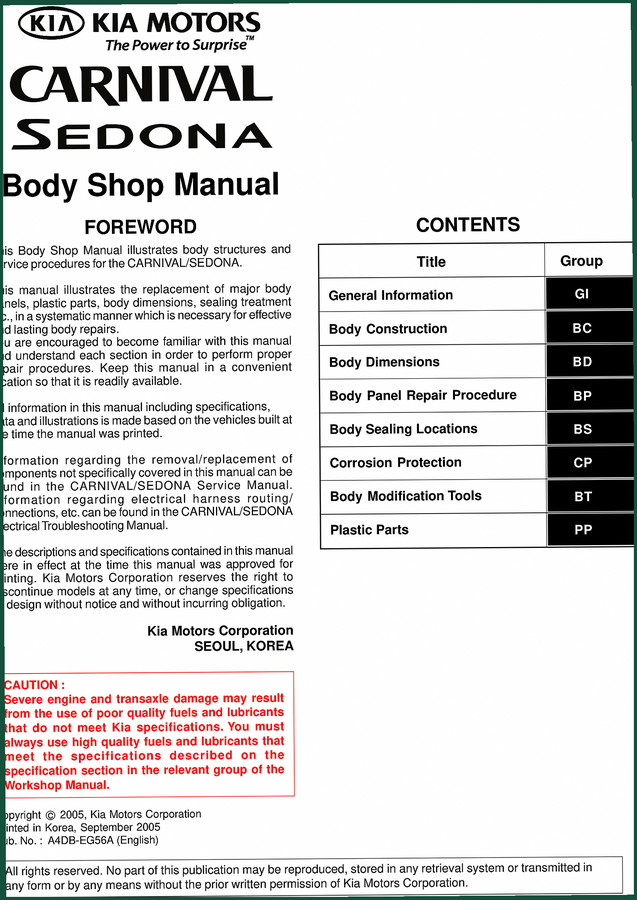
KIA Motors CARNIVAL, SEDONA 2005 Workshop Manual – Body Shop
Original price was: $56.00.$35.00Current price is: $35.00.
Related products
-
Sale!

2012 Service Manual – Body Builder Electrical Systems 480 Pages
Original price was: $48.28.$34.00Current price is: $34.00. -
Sale!

1991 Electrical Schematic – 112-Page OEM Wiring Diagram for International 1000-3000 Series
Original price was: $22.75.$17.50Current price is: $17.50. -
Sale!
2004 Acura TSX Wiring Diagram – 73-Page Factory Electrical Schematics
Original price was: $15.88.$9.99Current price is: $9.99. -
Sale!
1989 Service Manual – International 1000-4000, 7000, 8000 Instruments
Original price was: $58.80.$40.00Current price is: $40.00.
pro_mechanic –
I am so happy with this purchase. Immediate link after checkout process. A must-have for any KIA Motors Motors DIYer doing repairs. Highly recommended for mechanics.
gearhead88 –
Highly recommended! The text is searchable and well indexed. A must-have for any KIA Motors Motors mechanic doing maintenance. Worth every penny.
Thomas B. –
I am very pleased with this transaction. The file quality is excellent. Contains precise wiring diagrams for KIA Motors. Saves me so much time.
James L. –
I am extremely satisfied with this transaction. It is easily zoomable on my laptop without losing quality. Contains clear schematics for KIA Motors. Saved my weekend project! Thanks.