
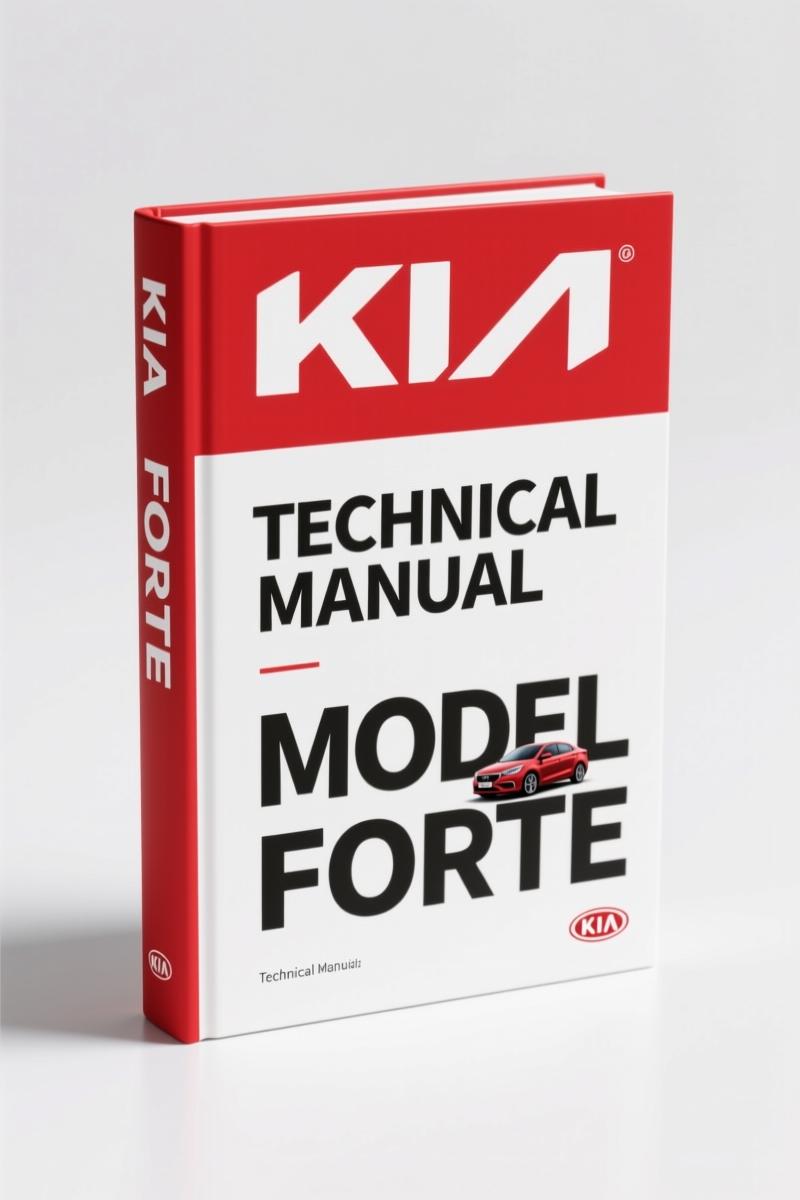
Kia Forte 2014 Technical Manual – OEM Factory Service Specs
Original price was: $22.95.$15.00Current price is: $15.00.
2295-page factory technical manual for Kia Forte 2014 covering engine, electrical, fuel, and emission systems with OEM torque specs.
Description
Kia Forte 2014 Technical Manual – 2295 Pages of Factory Torque Specs and Wiring
Mike Callahan here. I’ve torqued more head bolts than most people have had hot meals, and I’ll tell you flat – guessing on a Kia Forte 2014 will cost you a Saturday and a gasket set. The Kia Forte 2014 Technical Manual is the only thing that keeps a job from turning into a parts cannon. 2295 pages, OEM data, no aftermarket interpretation that skips steps. If you’re chasing a rough idle on a 1.6L or a no-start on the 2.0L, this is where you start – not on a forum.
Engine Mechanical Systems – 1.8L, 2.0L, and 1.6T Coverage
You get three separate engine mechanical sections: 1.8L, 2.0L, and the 1.6T. That’s not a generic “covers all” cheat. Each has its own cylinder head torque sequence, timing marks, and piston ring gaps. The 1.6T section alone runs through the turbocharger oil feed line routing and wastegate adjustment. Factory data tells you the exact orientation of the camshaft position sensor. Miss that by a tooth and you’re pulling the timing cover again.
Any job involving the cooling system? The manual gives you the coolant bleed procedure for each engine variant. The 2.0L has a different bleed port location than the 1.6T. Knowledge like that saves you a phone call to a buddy who’s seen it before.
What Torque Values Are Listed for the 1.6T Cylinder Head?
Factory torque specs for the 1.6T cylinder head bolts are in the Engine Mechanical System 1.6T chapter. The sequence is step‑by‑step with angles. Aftermarket manuals often skip the tightening angle because they copy the base 1.8L data. Not this one. You also get the main bearing cap torque and the connecting rod bolt torque – all with the stretch specifications. Use a torque wrench that reads degrees, not a click‑style for the final pass. Page 1 of the safety section reminds you to set the parking brake and disconnect the cooling fan. That fan can kick on with the ignition off – I’ve seen it.
Get the Right Fuel System Diagnostics – Engine Control Fuel System
The Engine Control – Fuel System section covers the 1.8L and 2.0L naturally aspirated, plus a separate section for the 1.6T. Fuel pressure test port location, injector resistance values, and the fuel pump control module wiring color. If you’re diagnosing a lean code on a 2014 Forte, start with the fuel pressure regulator vacuum line. The manual shows you exactly how to back‑probe the PCM connector without damaging the seal. Use a breakout box if you have one – the manual’s pinout table lists each pin by function and signal type.
That’s the difference between a comeback and a job done right.
Body Electrical System: Factory Wiring Diagrams and Troubleshooting
Body Electrical System is a full chapter covering the smart junction box, BCM, and all exterior lighting circuits. You get connector views and ground locations. Trying to trace a power window failure without the wiring diagram? You’ll waste an hour probing the wrong wire. The manual shows the driver door module pinout and the window motor resistance values. I’ve used that to isolate a broken wire in the door hinge boot faster than a test light will.
7 Systems Covered Beyond the Engine Bay
The table of contents also includes Clutch System, Automatic Transaxle System (three variations – 1.8L, 2.0L, 1.6L), Manual Transaxle System (1.8L‑2.0L and 1.6L separate), Driveshaft and Axle, Suspension System, Steering System, Restraint, Brake System, and Body (Interior and Exterior). That’s 14 chapters of drivetrain and chassis data. The Automatic Transaxle System 2.0L section includes the line pressure test and solenoid resistance specs. No generic fluid‑change instructions – you get the exact fill procedure for the 6‑speed automatic.
For context on why OEM documentation matters, see Automotive Industry Overview. And if you want to compare this manual’s approach to other factory documentation, Automotive Industry Overview gives you perspective on industry standards.
Need the vehicle identification number location? Page 2 has the VIN breakdown and engine number location. That’s the kind of detail that prevents ordering the wrong engine harness.
Source Validity – OEM vs Aftermarket
This is a genuine Kia technical manual, not a third‑party compilation. The page header says “General Information” and the safety notice is the original factory wording with the DANGER, WARNING, CAUTION hierarchy. Aftermarket manuals will sometimes rewrite those warnings to fit their layout – and they lose the nuance. For example, the notice about the cooling fan turning on with the ignition off is often omitted. Here it’s right there in the first pages. I’ve seen a technician lose a finger because he assumed the fan was dead. Don’t trust a photocopy; use the real deal.
Audience Fit – Who Needs This Manual
DIY guys with a 2014 Forte in the driveway who want to replace an alternator or do a timing job – this manual will walk you through the charging system testing and the timing chain alignment. Professionals working flat rate will find the diagnostic trees cut down diagnostic time. Shop owners: having the OEM manual on the shelf means your techs stop asking “what’s the spec on that?” You answer questions before they start.
Frequently Asked Questions
- Does this manual cover the 1.6T engine?
- Yes. Engine Mechanical System 1.6T and Engine Electrical System 1.6T are separate chapters with all torque specs and wiring.
- What safety warnings are included in the manual?
- The manual opens with a multi‑page safety notice that covers eye protection, using safety stands, setting the parking brake, chocking tires, operating the engine only in ventilated areas, keeping clothing away from moving parts, avoiding hot exhaust components, removing jewelry, and the critical warning about the radiator fan turning on with the ignition off. That last one is often omitted in aftermarket reprints, and it’s why I won’t work under the hood without disconnecting the fan motor first. The manual also includes specific cautions for airbag systems and high‑voltage fuel injection components.
If you want to see what the Kia Forte 2010 Service Manual looks like, check Kia Forte 2010 Service Manual. For a later diagnostics edition, there’s Kia Forte 2011 Diagnostics Manual – OEM Factory Specs. And if you work on SUVs, the Kia Sorento Technical Manual – 27-Page Body Dimensions Specs has detailed metal‑to‑metal measurements. Don’t waste time guessing. Access the Factory Manual – it’s the only source you can trust for a job that stays fixed.
Additional information
| Brand | Kia |
|---|---|
| Language | English |
4 reviews for Kia Forte 2014 Technical Manual – OEM Factory Service Specs
You may also like…
-
Sale!
Kia Carnival Workshop Manual (1999-2001) – 1020 Pages of Factory Specs
Original price was: $51.20.$40.00Current price is: $40.00. -
Sale!
Kia Theta, Gamma 2011 Training Manual – Dual CVVT System
Original price was: $43.75.$35.00Current price is: $35.00. -
Sale!
Kia 21218K370041 2009 Training Manual – Suspension & Alignment Specs
Original price was: $46.08.$32.00Current price is: $32.00. -
Sale!
Kia Diesel 1 2007 Training Manual – Factory Diagnostics & Injection Systems
Original price was: $49.46.$31.50Current price is: $31.50.
Related products
-
Sale!

Acura Integra 1998 Service Manual – 1891 Pages Factory OEM Documentation
Original price was: $31.75.$25.00Current price is: $25.00. -
Sale!

1989 Service Manual – International 2000-8000 Electrical Systems
Original price was: $72.00.$50.00Current price is: $50.00. -
Sale!

2005 Parts Catalog – International NGD 3.0 L Engine (77 pages)
Original price was: $44.70.$30.00Current price is: $30.00. -
Sale!

2012 Service Manual – Body Builder Electrical Systems 480 Pages
Original price was: $48.28.$34.00Current price is: $34.00.
James L. –
I am very pleased with this transaction. The file is very clear. A must-have for any Kia Forte owner doing repairs. Saved my weekend project! Thanks.
William H. –
Great OEM spec sheet. It is easily zoomable on my tablet without blur. Every spec sheet is included for Kia Forte. Great value for money.
Charles W. –
Highly recommended! The file is high resolution. It assisted me to troubleshoot my Kia Forte engine. Saved my weekend project! Thanks.
Thomas B. –
Excellent factory service manual. The PDF is very clear. Every wiring layout is provided for Kia Forte. I will definitely buy again.