
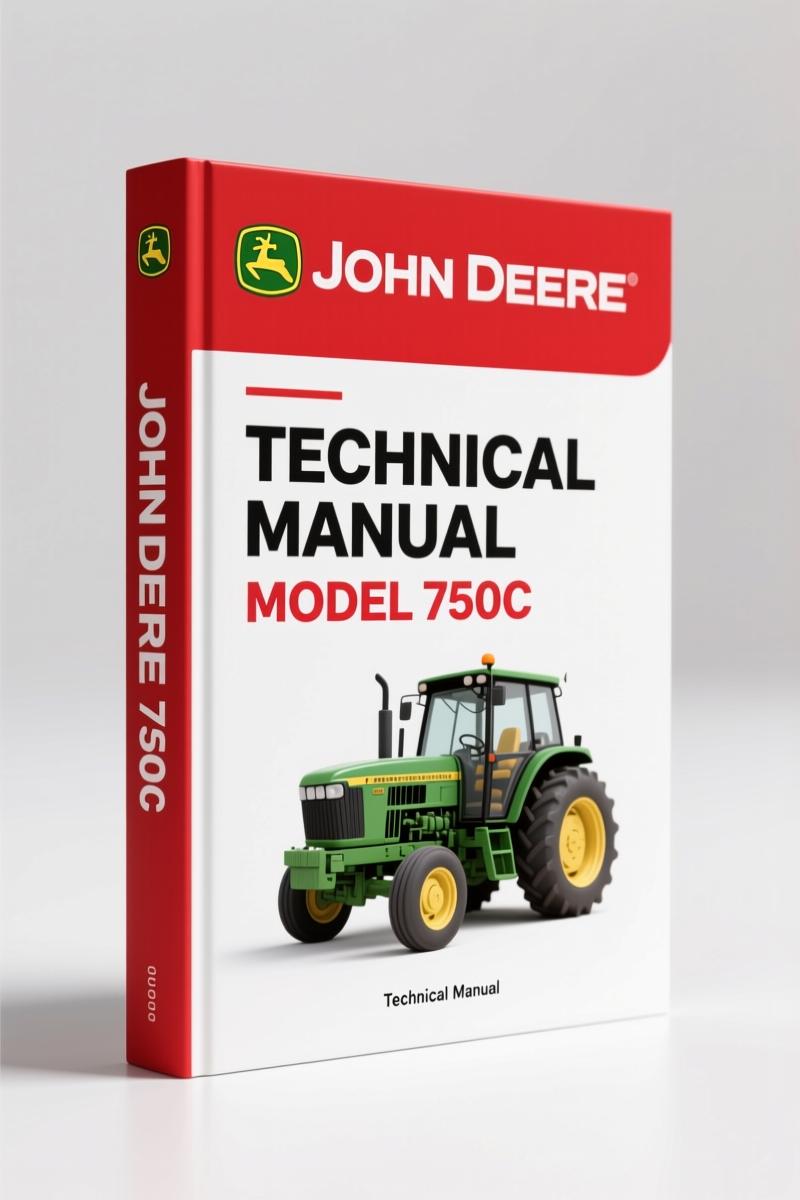
John Deere 750C, 850C 2004 Technical Manual – OEM Factory Specs
Original price was: $95.55.$65.00Current price is: $65.00.
OEM 2004 technical manual for John Deere 750C, 850C dozers: 776 pages of torque values, track service, and fluid specifications.
Description
John Deere 750C, 850C 2004 Technical Manual
I’ve been turning wrenches for 28 years, ASE Master, run a six-bay shop in San Antonio. You bring a John Deere 750C or 850C crawler dozer in with a track sag problem or a blown final drive seal, I don’t reach for a Chilton or some aftermarket PDF that got the torque values from a forum. I reach for the John Deere 750C, 850C 2004 Technical Manual. This is the binder the factory techs used. 776 pages, no guesswork, no missing steps. If you’ve ever had a track shoe come loose because you guessed at the cap screw torque, you know why this matters. The manual spells it out: “Checking Track Shoe Cap Screw Torque—Master Link” is a specific subsection—page references are in the TOC. You don’t hunt.
Let me be direct: this is an OEM publication from 2004. Not a reprint, not a scan of a scan. It covers both Series II and earlier models of the 750C and 850C. The repair section alone breaks down the track system, the undercarriage, the crossbars. You need to remove a carrier roller? The manual lists the essential tools—part numbers given—then walks you through disassembly, assembly, and testing for oil leakage. I’ve used this procedure to rebuild carrier rollers on an 850C that had been sitting in mud for three seasons. It saved me three hours of wasted tear-down because I skipped the metal face seal inspection step in the aftermarket guide. This manual doesn’t let you skip.
Track System Repair – What the Manual Covers
Look at the Table of Contents under “Tracks.” You’ve got sections like “Measure Track Roller Wear,” “Disassemble Track Roller,” “Assemble Track Roller,” “Test Track Roller for Leakage.” That’s not a generic overview—that’s a job sequence. The manual also includes “Exploded View of Front Crossbar and Support—750C” and separate procedures for the 850C with serial number breaks. If your dozer is a 750C with a front crossbar problem, you get the exact removal and installation steps. I’ve seen guys try to use the 850C procedure on a 750C and bend a support plate because the clearances are different. The manual calls out the differences. On page 73 (approximate, I don’t have it in front of me) the “Check and Adjust Front Crossbar-to-Crossbar Support and Main Frame Clearances” procedure is spelled out with wear limits. No guessing.
Torque Specs and Fluid Capacities You Can Trust
The General Information section has a full “Torque Values” subsection with individual entries for hardware torque specifications, metric bolt and cap screw torque values, and service recommendations for O-Ring boss fittings, flat face O-Ring seal fittings, and inch series four bolt flange fittings. I cannot count the number of leaks I’ve fixed that were caused by someone using generic torque values from a memory app. This manual gives the factory spec for the 750C Series II and 850C Series II separately. Need the capacity specs for the 750C LT Series II? It’s in the “General Specifications” chapter right after the safety warnings. The manual lists dimensions for LT, WT, and LGP versions. You don’t have to guess which transmission oil goes in—the “Fuels and Lubricants” chapter tells you the exact diesel engine oil, transmission/hydraulic reservoir oil, and final drive oil specs. It even covers diesel fuel conditioners and storage. That’s the difference between a repair that lasts and a comeback.
Does This Manual Cover the Fuel System?
Yes, but not in deep engine repair—that’s covered in separate engine manuals (like CTM8 for the 6068). This manual focuses on the dozer-specific systems: tracks, crossbars, undercarriage, and the hydraulic and transmission systems as they integrate with the drivetrain. For fuel system component-level repair, you want the engine manual. But for everything related to the crawler itself—track adjuster removal, track sag adjustment, roller replacement—this is the one. The manual even includes a “Track Adjuster Exploded View” so you see exactly how the spring and grease cylinder go together. I’ve used it to rebuild track adjusters on an 850C that was leaking grease past the seal. The procedure calls out the seal part numbers and the assembly torque. You won’t find that in a general service manual.
Audience Fit – Who Needs This Manual
If you own a 750C or 850C crawler dozer and you do even basic maintenance—track tension, roller replacement, final drive work—you need the factory specs. The manual is written for an experienced technician, but if you’re a committed DIYer with mechanical aptitude, you can follow it. The safety section is not skippable: “Avoid High-Pressure Fluids,” “Prevent Battery Explosions,” “Keep ROPS Installed Properly.” I’ve seen a guy get a facial injection from a pinhole leak because he didn’t use a piece of cardboard to check for leaks—the manual warns about that. It also includes proper lifting equipment, support machine properly, and work in a ventilated area. If you’re working in a home garage, read those warnings twice. The manual expects you to have essential tools like a track press, but it lists alternatives where possible.
Source Validity – OEM vs. Aftermarket
I’ve been burned by aftermarket documentation. They mix up torque values between the 750C and the 850C, or they copy a procedure from a different model and don’t update the specs. This manual is original John Deere factory print. The part number TM1589, dated 10AUG04, printed by John Deere Dubuque Works. That’s the same manual the dealer techs use. The specification tables are separated by model and series: “750C Series II Specifications” and “850C Series II Specifications” are distinct tables. The torque section includes “Service Recommendations for Flat Face O-Ring Seal Fittings” that apply specifically to these machines. If you buy a reproduction or a PDF from a third-party site that doesn’t verify the source, you risk using the wrong bolt torque and cracking a casting. I’ve seen it happen. Stick with the factory document.
Related manuals you might need: John Deere 750C 850C Technical Manual, John Deere 750C, 850C Operators Manual – OEM Factory Specs, and John Deere 220 1993 Technical Manual – 718 Pages of Factory Specs. For general transmission theory, check out this Manual Transmission resource. Also, if you need fundamentals on how a Manual Transmission works, that’s useful background.
FAQ
- Does this manual cover the final drive removal?
- Yes. The final drive oil specs are in the Fuels and Lubricants section, and the repair procedures for inner and outer final drives are referenced. However, the manual focuses on the undercarriage and track system; specific final drive overhaul may require the separate Operation and Test manual (TM1588) for complete step-by-step disassembly. The manual does include torque values for the final drive mounting bolts.
- Can I use this manual for the 750C Series I?
- Yes, the manual covers both 750C and 850C including Series II. Series I information is included where applicable. Check the serial number breaks in each procedure—for example, the front crossbar procedure for the 850C is split at S.N. 833332. The general specifications tables list both Series II and earlier versions.
You’ve got a dozer that needs work, and you’re tired of guessing. I’ve been in your position—standing over a track adjuster with a service manual that says “refer to dealer” for the torque spec. This manual doesn’t do that. It gives you the number, the procedure, and the safety warning. Access the Factory Manual and get back to turning wrenches with the right information.
Additional information
| Brand | John Deere |
|---|---|
| Language | English |
4 reviews for John Deere 750C, 850C 2004 Technical Manual – OEM Factory Specs
You may also like…
-
Sale!
John Deere 400 1974 Service Manual – Factory Specs for Technicians
Original price was: $92.30.$65.00Current price is: $65.00. -
Sale!
John Deere 325J 2011 Repair Manual — Factory Specs for Backhoe Loader
Original price was: $109.60.$80.00Current price is: $80.00. -
Sale!
John Deere JD450 1987 Service Manual – OEM Factory Specifications
Original price was: $79.95.$65.00Current price is: $65.00. -
Sale!
John Deere JD450 1987 Service Manual – OEM Factory Specs
Original price was: $97.50.$65.00Current price is: $65.00.
Related products
-
Sale!

1993 Electrical Schematic – International 1000/3000/4000 Bus Chassis OEM Wiring Diagrams
Original price was: $29.26.$22.00Current price is: $22.00. -
Sale!

Acura Integra 1998 Service Manual – 1891 Pages Factory OEM Documentation
Original price was: $31.75.$25.00Current price is: $25.00. -
Sale!
2004 Acura TSX Wiring Diagram – 73-Page Factory Electrical Schematics
Original price was: $15.88.$9.99Current price is: $9.99. -
Sale!

2006 Service Manual – International DT 466E, 530E Diesel Engine
Original price was: $67.50.$50.00Current price is: $50.00.
workshop_guy –
Excellent workshop guide. The scan is high-quality and easy to navigate. It assisted me to troubleshoot my John Deere Deere engine. Saves me a lot of money.
Charles W. –
Great buy! It is very easy to read on my iPad without blur. It helped me to troubleshoot my John Deere Deere transmission. Great value for money.
gearhead88 –
I am very pleased with this purchase. Immediate link after checkout process. Contains precise bolt torque specs for John Deere. I will definitely buy again.
James L. –
Five stars! The scan is high-quality and easy to navigate. It assisted me to rebuild my John Deere Deere engine. Saves me so much dollars.