
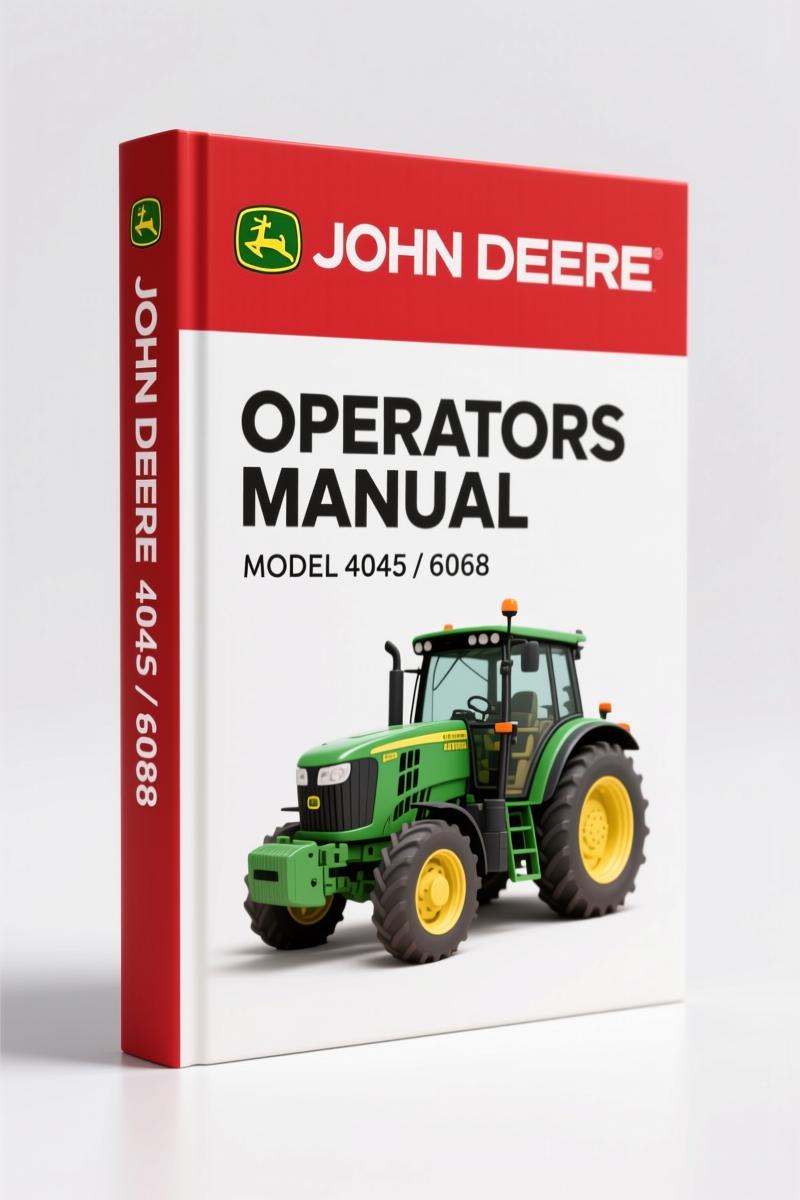
John Deere 4045, 6068 2006 Operators Manual – OEM Specs for Tier 2 Engines
Original price was: $15.98.$9.99Current price is: $9.99.
164-page OEM operator manual for John Deere 4045 and 6068 Tier 2 diesel engines. Covers fuel, lubrication, safety, and service intervals.
Description
John Deere 4045, 6068 2006 Operators Manual
If you’re running a John Deere 4045 or 6068 engine and don’t have this Operators Manual on the workbench, you’re gambling with your equipment and your safety. I’ve seen too many guys guess on fuel filter intervals or ignore the break-in procedure, and then they blame the engine when it pukes. This 2006 factory manual is 164 pages of what John Deere wants you to know before you hit the start switch. It’s not a repair guide — it’s the operating bible for Tier 2 / Stage II PowerTech engines. You get the exact fuel specs, coolant chemistry, and service intervals that keep these diesels alive. No aftermarket guesses.
This manual came from John Deere’s own press. The first thing you’ll notice is the safety section. It runs nearly 20 pages and covers everything from handling fuel safely to battery explosion prevention. That’s not padding — that’s liability protection. For a shop owner, having this on file means when a tech asks “How do I prep for an emergency?” you point to the manual. It’s the same content the dealer uses during new-engine orientation.
Safety: 30 Pages of Real Warnings
The Table of Contents lists 28 safety subsections. I counted them. Things like “Avoid High-Pressure Fluids” and “Install Fan Guards” — not generic bullet points. Each warning ties to a specific risk on these engines. For example, the high-pressure fuel systems on the 4045HF475 (HPCR) can inject fluid through your skin. The manual tells you what to do before you crack a line. That’s real world. If your powered equipment uses a manual transmission, check its own service documentation — the engine manual doesn’t cover driveline safety beyond rotating drivelines. But for the engine itself, this safety section is non-negotiable.
Fuel Specifications and Handling
For the 4045 and 6068, fuel quality is everything. The “Fuels, Lubricants, and Coolant” chapter covers diesel fuel, bio-diesel, and even aviation jet fuels (with warnings). It also details lubricity — something many DIY guys don’t think about. You get the exact test procedures for diesel fuel and instructions for storing fuel to avoid water contamination. There’s a subsection on “Minimizing the Effect of Cold Weather on Diesel Engines” that includes fuel gelling prevention. If you’re in San Antonio like me, you might not need that, but for customers up north, it’s gold. The manual also tells you which supplemental coolant additives (SCAs) to use and how to test coolant concentration. No room for guesswork.
Does the Manual Cover Engine Operation?
Yes, and it’s specific. The “Engine Operating Guidelines” chapter starts with instrument panel descriptions for North American and VDO gauge panels. It then walks through starting the engine, warming it, normal operation, and stopping. There’s a section on “Avoid Excessive Engine Idling” — I see techs let diesels idle for 20 minutes; this manual says it causes cylinder glazing. For generator set standby applications, it gives separate break-in instructions. One paragraph that stands out: “Setting fuel delivery beyond published factory specifications will result in loss of warranty.” That’s written in all caps in the intro. They mean it. If you have a Manual Transmission application that uses this engine, the operation section is the same — but check the transmission’s own manual for clutch engagement points.
Lubrication and Maintenance Intervals
This chapter is the meat of the manual for anyone who plans to keep the engine running past 2000 hours. It includes interval charts for standard industrial and generator standby applications. Daily checks, 250-hour, 500-hour, 2000-hour, and “service as required” tasks. Each task has its own sub-section. For example, the “Changing Engine Oil and Replacing Filter” at 250 hours specifies the correct oil filter part numbers and tells you to use break-in oil for new engines. The “Checking Belt Tensioner Spring Tension” at 500 hours requires a specific belt tension tool — not a flat screwdriver. The manual even covers adjusting valve clearance at 2000 hours, including the exact procedure and the clearance specs. All in imperial units. Every interval is tied to actual hours, not calendar dates, because these engines run variable duty cycles.
Period.
Record Keeping and Serial Number Plates
A short but critical chapter. You get space to record the engine serial number, option codes, and fuel injection pump model number. John Deere puts a PowerTech Medallion and a serial number plate on each engine. The manual tells you where to find them and why you need those numbers when ordering parts. If you blow a fuel pump and can’t read the plate, you’re stuck. This section also explains engine option codes — those alpha-numeric codes that tell you which fuel system (DE10, HPCR, VP44) and valve head configuration you have. Without that, you could order the wrong injectors. I keep this page flagged in every manual I own. If you need a deeper dive into the fuel system or overhaul specs, pair this operators manual with the John Deere 4045 2012 Technical Manual for torque values and disassembly steps. For older Series 300 engines, the John Deere Series 300 OEM Diesel Engines Service Manual covers those. And if you want the same operators info for a different year or variant, check the John Deere 4045 and 6068 Engines Operators Manual collection.
Source Authenticity: Why Factory Matters
This is an OEM document, not a third-party reprint. John Deere Engineering wrote it, John Deere Power Systems printed it. The PDF we sell is scanned from the original factory print, so every warning, every chart, every table is exactly as it left the press. Aftermarket manuals skip details like “Lubricity of Diesel Fuel” or “Avoid Heating Near Pressurized Fluid Lines” because they think it’s fluff. It’s not. It’s the difference between a 10,000-hour engine and a warranty claim. For any engine work, you need the factory book. This one is the operators manual — the starting point. The technical manual is the deep dive, but you can’t skip the operators manual.
Use this book. Keep it clean. If you’re running a John Deere 4045 or 6068, having the right fuel, oil, and coolant specs is the cheapest insurance you’ll ever buy. The manual is 164 pages, spiral-bound in PDF, and every time you open it you’re saving yourself a phone call to the dealer. Stop flying blind. Access the Factory Manual now.
- Can I use this manual for the 6068 model?
- Yes. It covers both 4045 and 6068 PowerTech Tier 2 engines.
- Does this manual include repair procedures like head gasket torque specs?
- This is an operators manual, not a service manual. It covers safe operation, fuel handling, daily/interval maintenance, and coolant testing. For torque specs and engine disassembly, you need the corresponding technical manual (∼ the John Deere 4045 2012 Technical Manual). However, the operators manual does include valve clearance adjustment specs and belt tension values — that’s in the 2000-hour service section. If you need the specific foot-pounds for a connecting rod bolt, this isn’t the book. But for 90% of daily shop questions — fuel filter part numbers, oil viscosity, and cold-start procedures — this is the correct reference.
Related Manuals:
Additional information
| Brand | John Deere |
|---|---|
| Language | English |
2 reviews for John Deere 4045, 6068 2006 Operators Manual – OEM Specs for Tier 2 Engines
You may also like…
-
Sale!
John Deere 400 1974 Service Manual – Factory Specs for Technicians
Original price was: $92.30.$65.00Current price is: $65.00. -
Sale!
John Deere 325J 2011 Repair Manual — Factory Specs for Backhoe Loader
Original price was: $109.60.$80.00Current price is: $80.00. -
Sale!
John Deere JD450 1987 Service Manual – OEM Factory Specs
Original price was: $97.50.$65.00Current price is: $65.00. -
Sale!
John Deere JD450 1987 Service Manual – OEM Factory Specifications
Original price was: $79.95.$65.00Current price is: $65.00.
Related products
-
Sale!

Technical Manual – International 6.0L Power Stroke FICM Diagnostics
Original price was: $29.80.$20.00Current price is: $20.00. -
Sale!

1994 Troubleshooting Manual – International 1000-4000 FBC
Original price was: $60.00.$50.00Current price is: $50.00. -
Sale!

Acura Integra 1998 Service Manual – 1891 Pages Factory OEM Documentation
Original price was: $31.75.$25.00Current price is: $25.00. -
Sale!
1993 Electrical Schematic – International 1000/3000/4000 Bus Chassis OEM Wiring Diagrams
Original price was: $29.26.$22.00Current price is: $22.00.
workshop_guy –
I am very pleased with this transaction. The document looks clean. A must-have for any John Deere Deere DIYer doing maintenance. Worth every penny.
Michael T. –
Highly recommended! The document quality is excellent. A must-have for any John Deere Deere owner doing maintenance. Saved my weekend project! Thanks.