
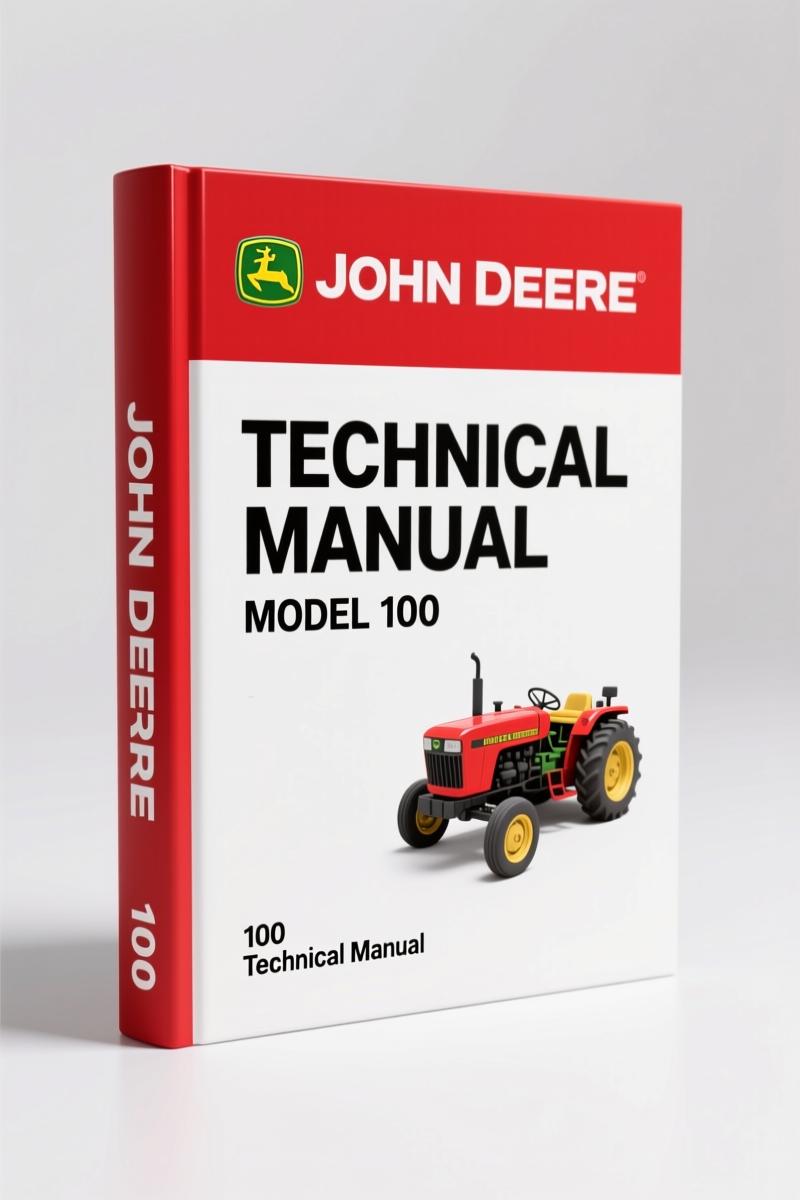
John Deere 100 2001 Technical Manual – 42 Pages OEM
Original price was: $32.50.$25.00Current price is: $25.00.
Factory 42-page manual for John Deere 100 Series Hydraulic Cylinders. Safety, diagnostics, disassembly/assembly procedures for 3 variants.
Description
John Deere 100 2001 Technical Manual
If you’re tearing into a John Deere 100 series hydraulic cylinder without the factory manual, you’re asking for a blown seal or a leaky gland. I’ve seen guys try to guess torque specs on the wire lock ring, and end up with a cylinder that drifts a foot overnight. This John Deere 100 2001 Technical Manual is the only document that gives you the exact disassembly sequence and safety precautions Deere expects. 42 pages, published in 2001, and it’s straight from the Harvester Works. No reprints, no aftermarket guesswork.
Safety First: Handling Fluids and High-Pressure Risks
Group 05 of this manual is the safety section. It covers handling fluids safely—avoid fires, support the machine properly, and wear protective clothing. There’s a specific warning about high-pressure fluid injection that you need to read before you even put a wrench on a fitting. Page 05-1 spells out the risks. Ignoring that page is how you end up with hydraulic fluid in your hand. That’s a trip to the ER, not the toolbox.
Hydraulic Cylinder Diagnostics and Drift Testing
Group 10 walks you through diagnostics. It’s not a generic troubleshooting list—it’s specific to these 100 series cylinders. You get a method for checking internal drift: a cylinder that moves position under load when it shouldn’t. The manual tells you how to isolate the problem to the cylinder itself versus the valve. Page 10-1 gives the step-by-step procedure. I’ve used that page more times than I can count to avoid swapping parts that weren’t bad.
Wire Locked Cylinder Disassembly: Group 15
Group 15 covers the 100 Wire Locked Cylinder. The manual lists the tools you need (and yes, you need the specific wire lock tool—don’t try a screwdriver). Comes with the detailed steps to disassemble and assemble the cylinder, including the order of seal installation. There’s a section called “Other Material” that tells you what lubricants and seal kits are approved. Aftermarket manuals skip that. This one doesn’t.
100 External Snap Ring and 100C Variants
Group 20 and Group 25 cover the snap ring cylinders—100 External Snap Ring and 100C External Snap Ring. Each group has its own disassembly and assembly procedure. The snap ring groove depths and the seal placements differ between the two. If you try to mix them up, the retaining ring will pop out under pressure. The factory manual gives separate steps for each so you don’t screw it up. For deeper coverage of other Deere models, the John Deere 220 1993 Technical Manual – 718 Pages of Factory Specs is a solid resource. If you’re working on a Manual Transmission alongside the hydraulics, grab its own factory book—don’t cross-use specs.
Source Authenticity: OEM Printing vs. Aftermarket Copies
This is a genuine John Deere Technical Manual, TM-H100A, printed November 2001. It’s not a scan of a scan. You get the original litho pages with the safety-alert symbols and the exact torque values Deere specified at the factory. I’ve seen aftermarket “universal” hydraulic manuals that tell you to tighten a gland nut until it “feels snug.” That’s how you blow a seal at 3000 psi. This manual gives you the actual assembly sequence, including the order of tightening for the wire lock ring. No guesswork. Other related factory manuals include the John Deere 240, 250 2000 Technical Manual – Factory Specs and the John Deere 4320 1974 Technical Manual – 263 Pages of Factory Specs. If you need transmission data, check the Manual Transmission section of your shop.
One final note: this manual only has 42 pages, every one of them useful. It doesn’t waste space with theory you already know. It jumps straight into the safety section, then diagnostics, then the actual rebuild procedures. That’s efficiency you don’t get from a 200-page generic manual. I keep a copy on the bench in my 6-bay shop in San Antonio, and I don’t let a junior tech touch a 100 series cylinder without reading it first.
Frequently Asked Questions
- What safety topics are covered in Group 05?
- Handle fluids safely, avoid fires, support the machine, wear protective clothing.
- Does this manual cover the 100C model?
- Yes. Group 25 is dedicated to the 100C External Snap Ring cylinder. The manual walks through disassembly and assembly of that variant, with separate steps for the snap ring retention. If you have a 100C, you’re covered.
- What diagnostic procedures are included?
- Group 10 covers hydraulic cylinder diagnostics and drift diagnostics. It’s not a generic troubleshooting guide—it’s specific to these cylinders, with tests to identify internal seal bypass vs. valve leakage.
- Why should I use this instead of a generic hydraulic manual?
- Because generic manuals don’t tell you the specific sequence to disassemble the wire locked cylinder without damaging the retainer. They also skip the safety warnings about high-pressure fluid injection—page 05-1 in this factory manual has a warning you need to read before you even put a wrench on the fitting. Deere’s engineers designed these cylinders, and only this technical manual has the exact specs for the snap ring grooves, the seal sizes, and the assembly lubrication. I’ve rebuilt hundreds of cylinders, and I won’t touch one without the factory book.
If you’re serious about doing the job right the first time—without a trip to the dealer or a medical bill—Access the Factory Manual now. It’s 42 pages of the only specs you should trust for the John Deere 100 series hydraulic cylinders.
Additional information
| Brand | John Deere |
|---|---|
| Language | English |
4 reviews for John Deere 100 2001 Technical Manual – 42 Pages OEM
You may also like…
-
Sale!
John Deere 325J 2011 Repair Manual — Factory Specs for Backhoe Loader
Original price was: $109.60.$80.00Current price is: $80.00. -
Sale!
John Deere JD450 1987 Service Manual – OEM Factory Specs
Original price was: $97.50.$65.00Current price is: $65.00. -
Sale!
John Deere 400 1974 Service Manual – Factory Specs for Technicians
Original price was: $92.30.$65.00Current price is: $65.00. -
Sale!
John Deere JD450 1987 Service Manual – OEM Factory Specifications
Original price was: $79.95.$65.00Current price is: $65.00.
Related products
-
Sale!

2011 Parts Catalog – International 7400 SFA 6X6 – 1886 Pages of OEM Part Numbers
Original price was: $32.00.$25.00Current price is: $25.00. -
Sale!

Acura Integra 1998 Service Manual – 1891 Pages Factory OEM Documentation
Original price was: $31.75.$25.00Current price is: $25.00. -
Sale!

Service Manual – International HS 2.8L Engine – 130 Pages of Factory Specs
Original price was: $56.40.$40.00Current price is: $40.00. -
Sale!

1992 Electrical Schematic – OEM Wiring Diagrams for International 1000-3800
Original price was: $24.48.$18.00Current price is: $18.00.
Richard G. –
This is exactly what I needed. Quick access after checkout. A must-have for any John Deere Deere mechanic doing repairs. Saved my weekend project! Thanks.
Charles W. –
This is just what I required. It is very easy to read on my laptop without blur. A must-have for any John Deere Deere DIYer doing maintenance. I will recommend this shop to others.
gearhead88 –
Excellent quality! It is easily zoomable on my tablet without blur. Contains detailed bolt torque specs for John Deere. I will recommend this shop to others.
Robert M. –
This is just what I required. Quick access after checkout. Contains precise bolt torque specs for John Deere. Worth every penny.