
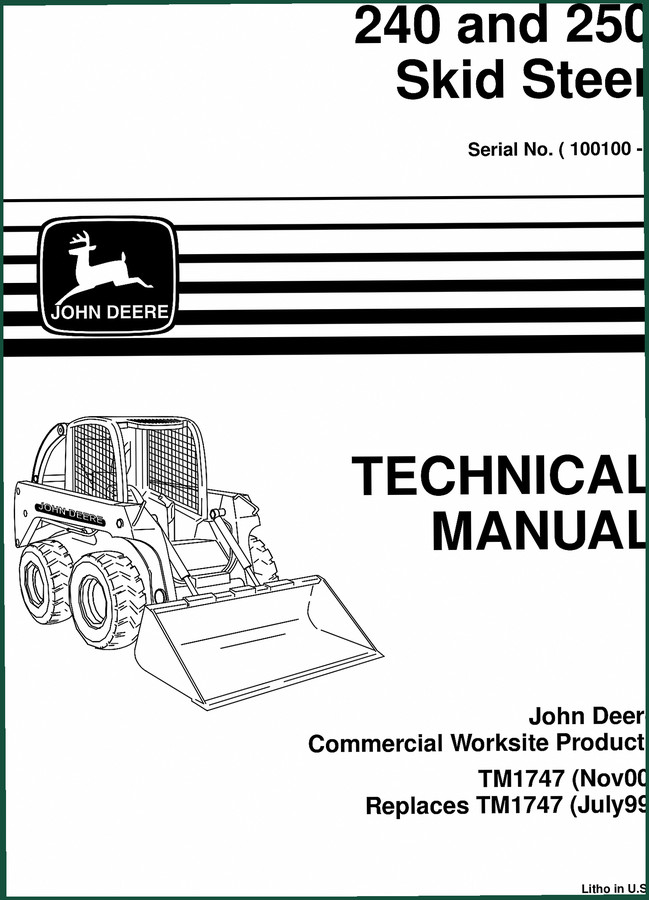
John Deere 240, 250 2000 Technical Manual – 490 Pages OEM Specs
Original price was: $42.70.$35.00Current price is: $35.00.
OEM Technical Manual for John Deere 240 & 250 (2000) – 490 pages of factory torque, fuel, electrical, and engine specs.
Description
John Deere 240, 250 2000 Technical Manual
Listen, I’ve been turning wrenches since before most of you were born. I’ve seen what happens when a guy tries to rebuild a John Deere 240 or 250 skid steer using a third-party manual or a YouTube video. You end up with a head bolt torqued to “feels tight” and a leak that takes a weekend to chase down. That’s why I’m telling you straight: if you’re about to crack open the engine on a John Deere 240, 250 2000 Technical Manual, you need the factory book. Not a reprint. Not a condensed version. The real 490-page OEM document that John Deere issued in November 2000 (TM1747).
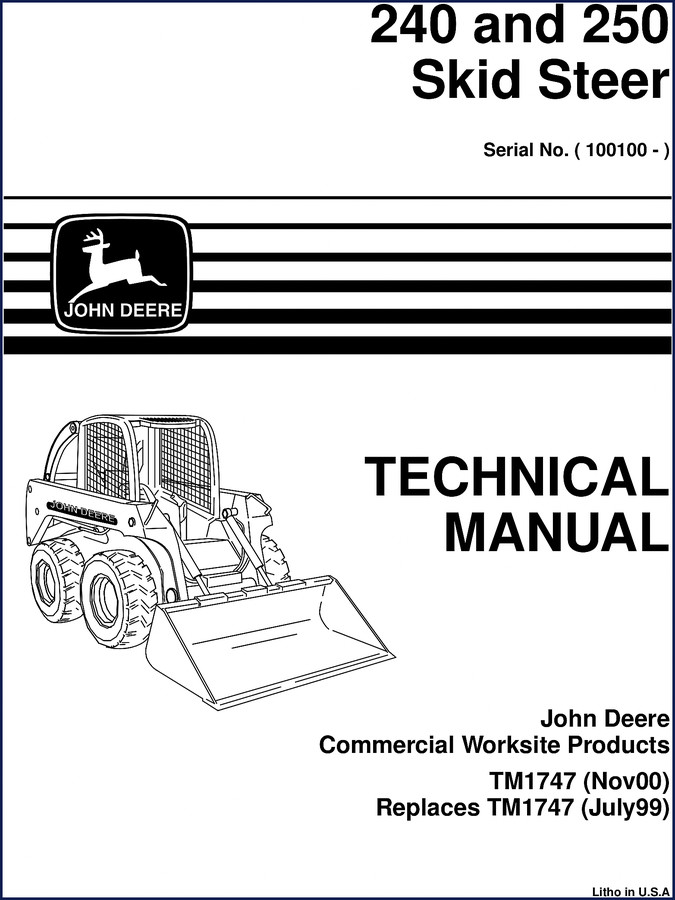
490 Pages of Factory Specs
This manual is 490 pages of the kind of information that keeps you from pulling your hair out. It’s not a generic guide that covers ten different models. It’s written specifically for the 240 and 250 skid steers. That means every torque value, every clearance spec, every wiring diagram is exactly what you need. The table of contents alone lists a dozen sections: Specifications, Engine, Fuel System, Electrical System, Hydraulics, Power Train, Steering, Brakes, Safety, and more. You won’t find a page wasted on a model you don’t own. Page 1 shows the serial number range (100100-) so you know it applies to your machine.
Torque: Why You Trust the Manual Over a Chart
You ever try to guess the torque for an M10 bolt on a John Deere engine block? Don’t. The manual dedicates several pages to Metric Fastener Torque Values, Grade 7, Inch fastener values, O-ring seal recommendations, even face seal fittings. Page 3 introduces the manual’s organization—but the torque specs themselves are in the Specifications section. If you’re doing a cylinder head job, you’ll find the torque-turn tightening method on page after page of the Engine Repair chapter. You’ll also see the exact sequence for tightening head bolts. Skip that step and you’re buying a new gasket. I’ve seen it.
Engine Overhaul: What the Manual Walks You Through
The Engine section is the biggest part of this manual, and it covers everything from troubleshooting to full tear-down and assembly. It starts with Special or Essential Tools, then moves to Sealant Application Guidelines. Then Troubleshooting, Diagnosis, Tests & Adjustments—including cylinder compression pressure test, fuel supply pump pressure, fast and slow idle adjustment, and fuel injection pump timing adjustment. The Repair subsection goes step by step: engine removal, radiator removal, cleaning, disassembly sequence, cylinder head removal, valve seat inspection, piston ring installation, and all the measurements you need—cylinder liner bore, cam follower bore, main bearing clearance. You’ll even find the procedure for measuring cylinder liner protrusion. Every spec is given in inches or ft-lb. No metric guesswork.
Fuel and Electrical Systems: Factory Diagnostics
The Fuel System section includes diesel fuel specifications—lubricity, storage—and the Electrical System section covers the entire wiring and component layout. You’ll get the factory logic for diagnosing a no-start or a charging issue. The manual also shows you where to find the serial number on the engine and the skid steer itself. If you’re swapping an engine or replacing a harness, you’ll want the exact pinouts and wire colors from this book. Aftermarket diagrams often swap colors or omit a ground. This manual doesn’t.
Who Needs This Technical Manual?
If you’re a home garage mechanic who bought a used John Deere 240 or 250 and wants to do your own engine rebuild, this is the only manual you should trust. It’s also for small shop owners who need to hand a tech a reference that won’t steer them wrong. Beginners should not attempt a full engine overhaul without this manual—it’s the safety net. And pros: you know the value of having OEM data when a customer’s machine is down. This manual saves you from calling the dealer for a torque spec. You get it right the first time.
Source Authenticity: OEM vs Aftermarket
This is a genuine John Deere Technical Manual, published November 2000, for the 240 and 250 Skid Steer models. It replaces the previous TM1747 (July99). Every page carries the official John Deere copyright and part number. Aftermarket manuals might say “covers 240, 250” but they skip critical steps like the O-ring boss fitting torque or the specific chain case oil specs. I’ve seen a guy blow a hydrostatic seal using the wrong fluid because his generic manual said “use 10W-30.” The factory manual lists exactly what oil to use in the hydrostatic transmission and hydraulic system for North America. That’s the difference.
Related Manuals
- John Deere 240 250 2005 Technical Manual
- John Deere 220 1993 Technical Manual – 718 Pages of Factory Specs
- John Deere 4320 Tractor Technical Manual TM1029 (1974)
For a broader understanding of how skid steer transmissions work, read about Manual Transmission designs. Also, a Manual Transmission overview can help when diagnosing hydrostatic vs. gear drive issues.
FAQ
- Does this manual cover the 240 and 250 models only?
- Yes. It covers the John Deere 240 and 250 skid steer loaders. It does not cover the 260 or 320 models.
- What if I need the torque spec for the cylinder head bolts on a John Deere 250 engine?
- The manual provides the torque-turn tightening method in the Engine Repair section. You’ll find the exact sequence and final torque value, usually given in ft-lb plus an additional angle turn. The procedure also tells you to clean the threads and apply oil to the bolts before torquing. Do not guess. If your engine has been overheated or you’re installing a new head gasket, follow the manual’s instructions to the letter. It also includes the procedure for checking cylinder head flatness and measuring valve recess. Missing any of those steps means you’ll be doing the job twice. I’ve helped enough guys who thought “close enough” was good enough—it isn’t. The factory manual is your only reliable source for these specs because it comes from the same engineers who designed the engine. Aftermarket books often round down or omit the angle turn portion. That’s why I only trust OEM.
You need the real deal. Not a reprint that skipped pages. Not a scan that looks like it was run over by a skid steer. This is the original John Deere Technical Manual in digital format—490 pages, searchable, printable. Access the Factory Manual now and get back to work with the specs that actually match your machine.
Additional information
| Brand | John Deere |
|---|---|
| Language | English |
2 reviews for John Deere 240, 250 2000 Technical Manual – 490 Pages OEM Specs
You may also like…
-
Sale!
John Deere 400 1974 Service Manual – Factory Specs for Technicians
Original price was: $92.30.$65.00Current price is: $65.00. -
Sale!
John Deere JD450 1987 Service Manual – OEM Factory Specs
Original price was: $97.50.$65.00Current price is: $65.00. -
Sale!
John Deere 325J 2011 Repair Manual — Factory Specs for Backhoe Loader
Original price was: $109.60.$80.00Current price is: $80.00. -
Sale!
John Deere JD450 1987 Service Manual – OEM Factory Specifications
Original price was: $79.95.$65.00Current price is: $65.00.
Related products
-
Sale!

1993 Operators Manual – International Bus 1000-3000 OEM Specs
Original price was: $12.30.$7.99Current price is: $7.99. -
Sale!
1993 Electrical Schematic – International 1000/3000/4000 Bus Chassis OEM Wiring Diagrams
Original price was: $29.26.$22.00Current price is: $22.00. -
Sale!

2006 Service Manual – International DT 466E, 530E Diesel Engine
Original price was: $67.50.$50.00Current price is: $50.00. -
Sale!

Service Manual – International HS 2.8L Engine – 130 Pages of Factory Specs
Original price was: $56.40.$40.00Current price is: $40.00.
Robert M. –
Five stars! The scan is high-quality and well indexed. Contains precise bolt torque specs for John Deere. Saved my repair job! Thanks.
pro_mechanic –
I am so happy with this purchase. The document is high resolution. It helped me to rebuild my John Deere Deere electrical system. Saves me a lot of time.