
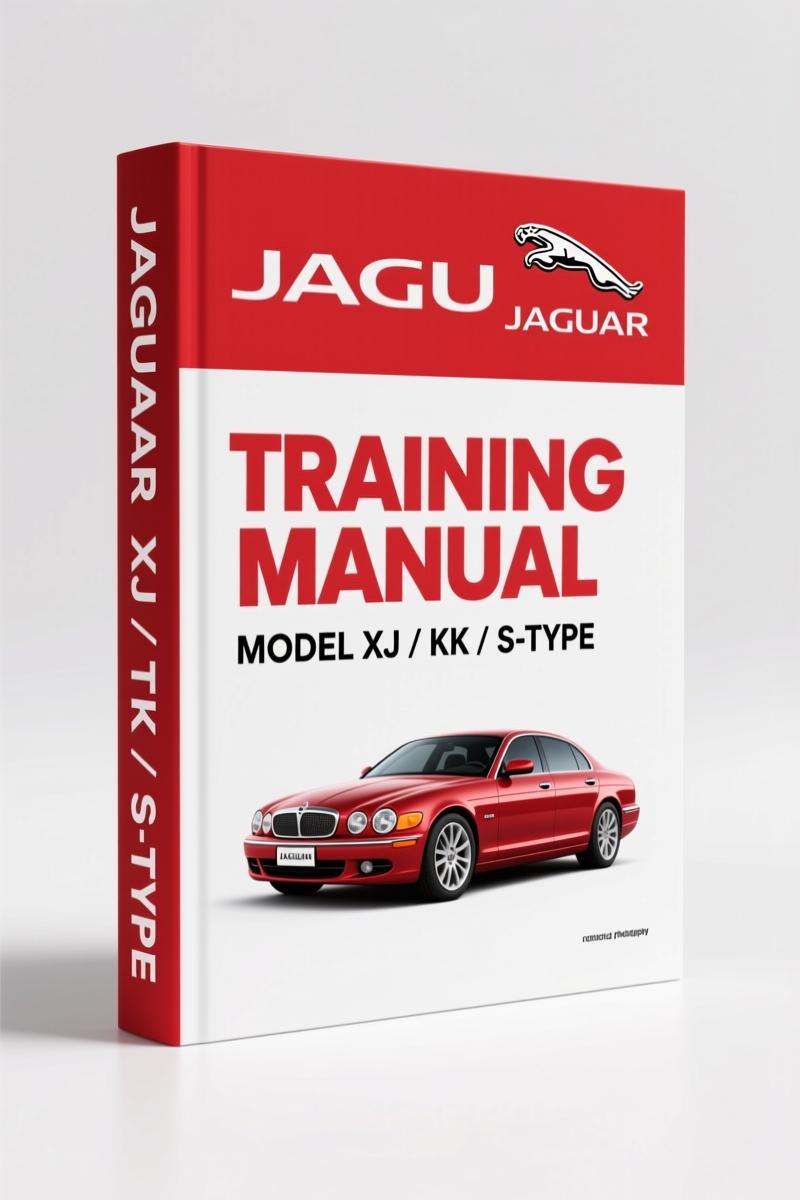
Jaguar XK, XJ, S-Type, X-Type 2002 Training Manual – 246 Pages
Original price was: $158.00.$100.00Current price is: $100.00.
OEM Jaguar electrical training manual covering XK, XJ, S-Type, X-Type 2002 models. 246 pages of factory diagnostic theory and task sheets.
Description
Jaguar XK, XJ, S-Type, X-Type 2002 Training Manual
I’ve been an ASE Master Tech for 28 years, and electrical diagnostics on Jaguars from this era will make you question your career choice. The fiber optic D2B network, CAN bus, and the sheer number of control modules—ABS/TCCM, ADCM, BPM, GECM—will eat your billable hours if you’re working from a generic aftermarket PDF. This is the real deal: Jaguar XK, XJ, S-Type, X-Type 2002 Training Manual, course T682/02, published by Jaguar Cars in February 2002. 246 pages of factory training material that teach you how these systems think, not just what to replace.
What This Training Manual Covers
This isn’t a step-and-repeat repair manual. It’s a training manual—service training course 682—designed to make you understand the electrical architecture. Six sections: General Information (student guide and glossary), Jaguar Electrical Systems, XJ / XK, S-Type, X-Type, and Task Sheets. The glossary on page 4 defines every acronym you’ll encounter: D2B, CAN, DTC, ISO 9141, J-Gate Module, Key Transponder Module. Before you touch a multimeter, you need to know what these modules do and how they talk to each other. The revision summary on page 1 tells you this edition added the Jaguar Electrical Systems section and updated the XJ/XK and S-Type sections—so this is not a stale reprint.
3 Vehicle Generations Under One Cover
One manual covers four model lines: XK, XJ, S-Type, and X-Type. Each has its own control module layout and wiring quirks, but the training material shows you the common electrical architecture. The XJ/XK section (about 60 pages) dives into the CAN network and the Body Processor Module. The S-Type section addresses the fiber optic ring and the Audio Control Protocol. The X-Type section is all new for 2002—you get the specific diagnostic approach for the entry-level sedan that still uses the same CAN backbone. If you work on more than one of these, this single Training Manual saves you from buying four separate books.
Electrical System Deep Dive: XK and XJ
These models share a lot of electrical DNA, but the training manual treats them together because the diagnostic flow is nearly identical. You’ll learn about the D2B fiber optic network that carries audio and telephone data, the Gateway module that translates between CAN and D2B, and the ABS/TCCM that controls braking and traction. The glossary on page 4 defines “Bus” as a simple network where modules are connected in series—critical when you’re chasing a no-communication fault. The manual explains how to use the Data Link Connector (DLC) and ISO 9141 protocol to pull Diagnostic Trouble Codes. It doesn’t spoon-feed you; it expects you to understand the theory before grabbing a scan tool.
Task Sheets: Do the Work, Don’t Just Read
Section 6 contains Task Sheets—real-world exercises. You’re not just reading theory; you’re assigned tasks like “Perform a CAN bus resistance test” or “Diagnose a non-functioning instrument pack.” These are the same tasks used in factory technician training. The manual assumes you have a digital multimeter, a breakout box, and the factory scan tool (or equivalent). It lists required tools in the task sheets. If you skip the task sheet and just read, you’ll miss the practical skill. I’ve seen guys try to shortcut this and end up replacing BPMs that weren’t bad.
Get the Right Diagnostic Flow
This training manual teaches you to approach electrical problems systematically: verify battery voltage, check ground paths, isolate modules, then interpret DTCs. The section on Jaguar Electrical Systems covers the basics of voltage drop testing and signal waveform analysis—things aftermarket manuals gloss over because they don’t want to scare off beginners. But beginners on a Jaguar need this foundation. If you pull a code for “D2B communication fault” and don’t know that the fiber optic cable uses a loop topology, you’ll waste hours. This manual gives you that knowledge. Compare it to Automotive Industry Overview documentation that often omits the diagnostic reasoning. Factory training manuals like this one tell you why, not just what.
Source Validity: Factory Training vs. Aftermarket
This is not a third-party reprint. It’s an original Jaguar Service Training publication (T682/02) printed in the USA by Jaguar Cars in 2002. The content is intended for instructional purposes, but it’s based on the same data used in official service publications. The copyright notice says “All rights reserved” and “based on the latest information available.” Aftermarket manuals often strip out the training context and leave you with a generic procedure that doesn’t account for model-year changes. For instance, the X-Type section was brand new in this edition—aftermarket sources frequently copy older XJ procedures and misapply them. If you want to understand the electrical system on a 2002 Jaguar, get the OEM training manual. Related manuals you may also need: Jaguar XK 2007 Training Manual for later models, Jaguar XJ XK8 AJ27 Engine Management Diagnostics Manual for engine-specific work, and Jaguar S-Type XJ V6 On-Board Diagnostics Manual 2005 for OBD II specifics.
- Does this manual cover the fuel injection or transmission electrical systems?
- Yes, but only as they relate to the overall electrical architecture. The primary focus is on multiplex networks, control modules, and diagnostics. For deep subsystem repairs, pair it with the corresponding factory service manual.
- Can a beginner use this training manual?
- If you know how to use a multimeter and read a wiring diagram, yes. If you don’t, start with a basic electricity course first. This manual assumes you understand voltage, current, and resistance.
- Will this manual help me fix a no-start on a 2002 XJ?
- It will teach you how to diagnose the ECM, fuel pump control module, and immobilizer system (KTM). The task sheets include a no-start scenario. That said, you still need the proper diagnostic tools—don’t expect a quick-fix table.
- Is the electrical information in here still relevant for 2025? It’s over 20 years old.
- For 2002-model Jaguars, absolutely. The CAN and D2B networks haven’t changed on these cars. The diagnostic methodology—systematic voltage drop tests, module isolation, DTC interpretation—is timeless. The glossary terms are still used today. Aftermarket sources often butcher these fundamentals. For comparison, Automotive Industry Overview resources may update connector pinouts, but the system logic remains the same. This manual gives you the factory reasoning that no third-party cheat sheet provides.
If you’re serious about diagnosing these Jaguars without chasing ghosts, access the factory manual from AutoRepairManuals. 246 pages of Jaguar-specific electrical training that will save you from replacing parts that aren’t broken. Access the Factory Manual and get the diagnostic flow that the factory teaches its own technicians.
Additional information
| Brand | Jaguar |
|---|---|
| Language | English |
4 reviews for Jaguar XK, XJ, S-Type, X-Type 2002 Training Manual – 246 Pages
You may also like…
-
Sale!
Jaguar XK, XF, XJ 2012 Diagnostics Manual – Factory OBD
Original price was: $63.60.$40.00Current price is: $40.00. -
Sale!
Jaguar XK, XF, XJ 2010 Diagnostics Manual – Factory OBD System Description
Original price was: $54.00.$40.00Current price is: $40.00. -
Sale!
Jaguar XF 2014 Workshop Manual – OEM Factory Specs for X250 Series
Original price was: $60.30.$45.00Current price is: $45.00. -
Sale!
Jaguar XK, XJ, S-Type, X-Type 2008 Diagnostics Manual – 152 Pages of Factory OBD II Data
Original price was: $62.55.$45.00Current price is: $45.00.
Related products
-
Sale!
Acura NSX 1991 Service Manual – 1420 Pages OEM
Original price was: $102.05.$65.00Current price is: $65.00. -
Sale!

2011 Parts Catalog – International Truck OE Parts Documentation (1786 Pages)
Original price was: $34.50.$25.00Current price is: $25.00. -
Sale!

Service Manual – International HS 2.8L Engine – 130 Pages of Factory Specs
Original price was: $56.40.$40.00Current price is: $40.00. -
Sale!

1996 Operators Manual – International 1000-4000 Series (246 pages)
Original price was: $15.28.$9.99Current price is: $9.99.
Thomas B. –
Excellent factory service manual. The pages are clean and well indexed. A must-have for any Jaguar XK, DIYer doing maintenance. Saves me so much dollars.
Robert M. –
This is just what I was looking for. The pages are clean and easy to navigate. Contains clear wiring diagrams for Jaguar. Saves me so much money.
gearhead88 –
Excellent workshop guide. The document is high resolution. Every spec sheet is included for Jaguar XK,. Worth every penny.
pro_mechanic –
Excellent workshop guide. Instant access after payment. A must-have for any Jaguar XK, mechanic doing repairs. Worth every penny.