
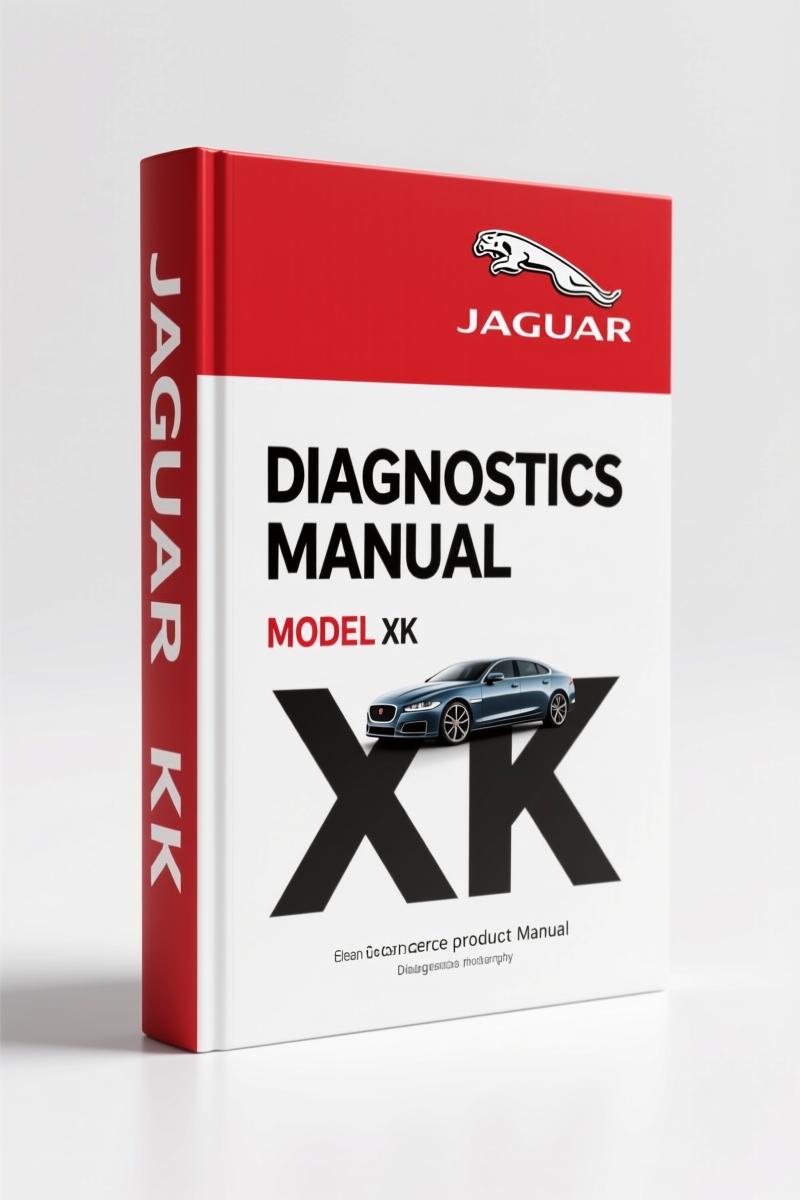
Jaguar XK, XF 2010 Diagnostics Manual – Factory OBD Specs
Original price was: $37.50.$25.00Current price is: $25.00.
Factory 204-page OBD diagnostics manual for 2010 Jaguar XK, XF 5.0 V8: monitor structure, drive cycles, emissions compliance.
Description
Jaguar XK, XF 2010 Diagnostics Manual
If you’ve been chasing a check engine light on a 2010 Jaguar XK or XF with the 5.0 V8, you already know that guessing at OBD-II codes costs time and parts. Aftermarket scan tools spit out generic P-codes, but without the factory monitor logic you’re flying blind. This Jaguar XK, XF 2010 Diagnostics Manual gives you the exact test conditions, enable criteria, and pass/fail thresholds Jaguar uses. No aftermarket interpretation – just the engineering spec.
Your shop manual collection is only as good as the torque specs and diagnostic trees inside. This one is 204 pages of factory-issued procedures, dated November 2010. It covers both naturally aspirated and supercharged 5.0 V8 engines in the XF and XK. I’ve used factory manuals like this for twenty-eight years, and I can tell you the difference between a successful diag and a wasted bay is having the right enable criteria for things like catalyst monitoring or misfire detection.
What’s Inside – Onboard Monitoring and Mode$06
The manual opens with a full section on Inspection and Maintenance Test Readiness Setting (page 10) for vehicles in test group AJCXV05.0EAL. That’s the key to getting your OBD-II monitors to set after a repair. Then it moves into Communication of Monitor Test Results – Mode$06 on page 12. Mode$06 is where you find the raw pass/fail data that most generic tools won’t decode. If you’re working on a 2010 Jaguar XK or XF and the MIL is on, you need this chapter. The misfire monitoring section on page 26 lists the exact malfunction criteria – the number of misfire events per 200 or 1000 revolutions that trigger a fault. That’s not guesswork; it’s a number.
OBD-II Drive Cycle: Getting It Right the First Time
One of the biggest time wasters in a shop is running a drive cycle that doesn’t match what the PCM expects. Section 2.2 details the Generic OBD-II Drive Cycle. Follow that sequence of cold start, idle, acceleration, and deceleration and you’ll have your monitors set in one road test. Skip a step and you’re repeating it. The manual calls out specific speeds and durations. That’s the difference between a confirmed repair and a comeback.
5.0 V8 Engine Monitoring – Catalyst, Misfire, Evap, and More
Chapter 5 is the meat of this manual: Onboard Monitoring. It breaks down Catalyst Monitoring (page 16), Misfire Monitoring (page 20), Evaporative Emission System Monitoring (page 29), Fuel System Monitoring (page 46), Oxygen Sensor Monitoring (page 51), Cooling System Monitoring (page 81), Positive Crankcase Ventilation (page 100), Camshaft Position Sensors (page 106), Camshaft Profile Switching for naturally aspirated engines (page 110), Cold Start Emission Reduction (page 117), Idle Speed Control (page 129), and Manifold Absolute Pressure Sensor (page 131). Each subsection includes schematics, monitoring structure, and drive cycle information. If you need to diagnose a P0128 thermostat code on a 2010 XF, the flow chart on page 83 walks you through the enable conditions.
For the supercharged engines, the PCV valve location and hose layout are diagrammed on page 102. That’s the kind of detail that saves throwing parts at the car. And the evap system section includes purge flow monitoring structure on page 41. You get the OEM diagnostic logic, not a generic list of possible causes.
Who Should Have This Manual
If you own a 2010 Jaguar XK or XF, or you run a shop that works on these cars, this diagnostics manual belongs on your bench. It’s 204 pages of factory data – the same document Jaguar dealership techs used. The home garage enthusiast who wants to fix their own car without chasing electrical gremlins will find the wiring schematics and input/output lists on page 6 useful. The professional mechanic will appreciate the detailed fault determination tables for oxygen sensors and the Mode$06 raw data interpretation. This is not a generic OBD-II guide; it is model-specific for the 5.0 V8 in the XK and XF.
For earlier model training, check the Jaguar XK 2007 Training Manual. If you need the 2009 XF service information, the Jaguar XF 2009 Training Manual covers that. And for diagnostics on the 2007 XK, see the Jaguar XK 2007 Diagnostics Manual. Each of those manuals follows the same factory format.
Factory Documentation vs. Aftermarket Copies
I’ve seen aftermarket manuals that say “Jaguar XK diagnostics” and then use generic diagrams from a Ford Taurus. That’s a fast way to misdiagnose an evap leak. This PDF is a direct scan of the original Jaguar publication, revision date November 2010. The 204 pages are complete, with no missing pages or blurred torque specs. The OEM torque values for the 5.0 V8? They are in the service manual, not this diagnostics manual – but the diagnostic thresholds here are straight from Jaguar Engineering. I’ve used these for years. They match the TSBs I’ve seen on the Automotive Industry Overview and the official Jaguar workshop system. For a broader look at OEM standards, the Automotive Industry Overview covers similar testing protocols across manufacturers.
Frequently Asked Questions
- Does this manual cover both the natural and supercharged 5.0 V8 engines?
- Yes. The manual includes separate sections for naturally aspirated and supercharged PCV layouts and camshaft profile switching (NA only).
- What is Mode$06 and why is it important for diagnosing a 2010 Jaguar XK?
- Mode$06 is the raw diagnostic data from the PCM – the test results for each monitor. Generic scan tools often only show pending or confirmed codes, but Mode$06 gives you the actual values for catalyst efficiency, misfire counts, oxygen sensor response times, and more. Page 12 of this manual explains how to read those results and what the pass/fail thresholds are. Without it, you’re guessing whether a monitor actually passed or just hasn’t failed yet. For example, the misfire monitor criteria on page 26 tells you the exact number of misfire events per 200 or 1000 revolutions that triggers a code. That’s not available in a generic tool.
- Can I use this manual for a 2011 XF or XK?
- This manual is specifically for 2010 model year vehicles. Engine management changes between years, so the enable criteria and monitor thresholds may differ. You need the 2011 diagnostics manual for those cars.
- Is this a reprint or a factory original?
- This is a digital scan of the original Jaguar Cars publication, revision date November 2010. It is not an aftermarket reproduction. It includes all 204 pages from the OEM document.
Stop wasting time on guesswork and aftermarket charts that might be wrong. Access the Factory Manual now and get the exact diagnostics procedures Jaguar built into the 5.0 V8 PCM. Your scan tool will finally tell you the whole story.
Additional information
| Brand | Jaguar |
|---|---|
| Language | English |
2 reviews for Jaguar XK, XF 2010 Diagnostics Manual – Factory OBD Specs
You may also like…
-
Sale!
Jaguar XF 2014 Workshop Manual – OEM Factory Specs for X250 Series
Original price was: $60.30.$45.00Current price is: $45.00. -
Sale!
Jaguar XK, XF, XJ 2010 Diagnostics Manual – Factory OBD System Description
Original price was: $54.00.$40.00Current price is: $40.00. -
Sale!
Jaguar XK, XJ, S-Type, X-Type 2002 Training Manual – 246 Pages
Original price was: $158.00.$100.00Current price is: $100.00. -
Sale!
Jaguar XK, XJ, S-Type, X-Type 2008 Diagnostics Manual – 152 Pages of Factory OBD II Data
Original price was: $62.55.$45.00Current price is: $45.00.
Related products
-
Sale!

1991 Operators Manual – International Truck OEM Specs (108 Pages)
Original price was: $13.63.$10.99Current price is: $10.99. -
Sale!

2006 Service Manual – International DT 466E, 530E Diesel Engine
Original price was: $67.50.$50.00Current price is: $50.00. -
Sale!
2004 Acura TSX Wiring Diagram – 73-Page Factory Electrical Schematics
Original price was: $15.88.$9.99Current price is: $9.99. -
Sale!

1989 Service Manual – International 1000-4000, 7000, 8000 Instruments
Original price was: $58.80.$40.00Current price is: $40.00.
William H. –
Perfect OEM spec sheet. Instant access after checkout process. Contains clear wiring diagrams for Jaguar. Saved my weekend project! Thank you.
Michael T. –
Excellent OEM spec sheet. Instant access after checkout. Contains clear wiring diagrams for Jaguar. I will recommend this shop to others.