
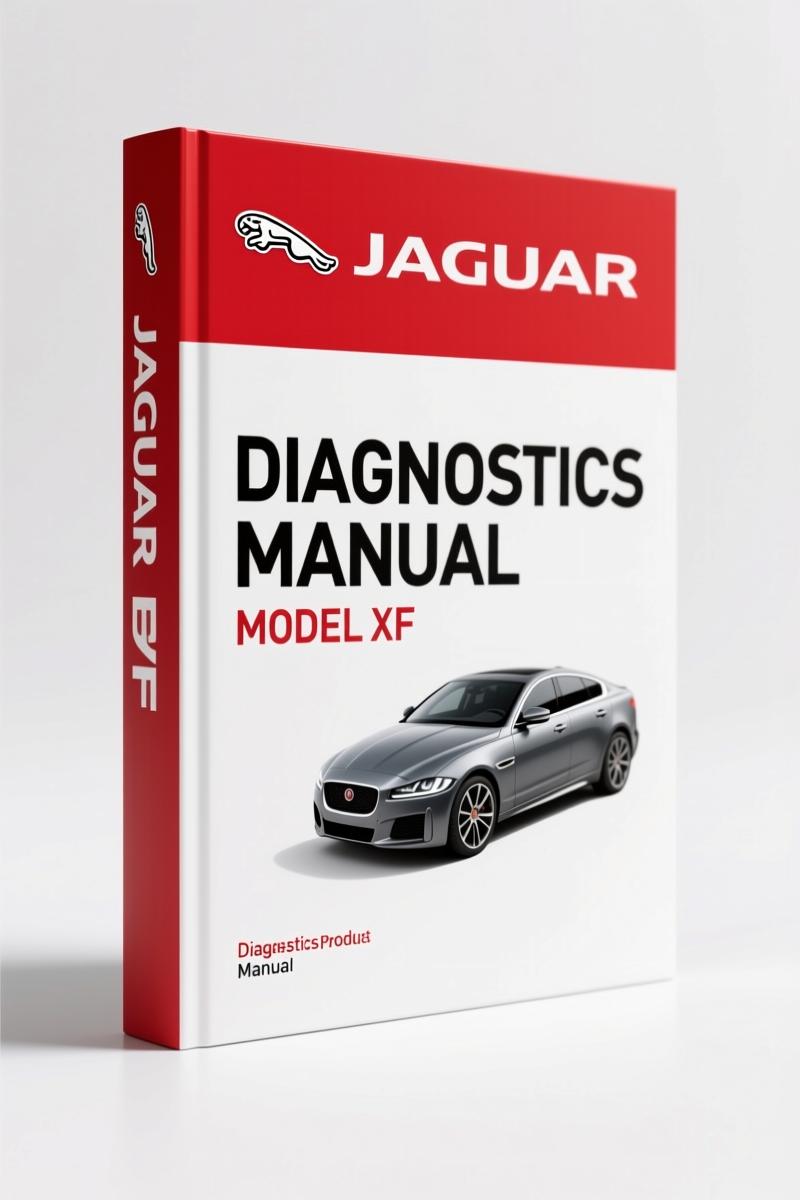
Jaguar XF, XJ Diagnostics Manual – 189-Page OEM OBD Guide
Original price was: $32.00.$25.00Current price is: $25.00.
Factory diagnostics manual for Jaguar XF, XJ 2013 MY with 5.0L V8 AJ133 engine. 189 pages of OEM OBD system logic and flowcharts.
Description
Jaguar XF, XJ Diagnostics Manual – 2013 5.0L V8 On-Board Diagnostics
Let’s cut through the fog. You’ve got a Jaguar XF, XJ Diagnostics Manual sitting in your scan tool bay and a car that lit up the MIL with a catalyst code. The aftermarket data says “check O2 sensors.” That’s worthless. This 189-page factory document from Jaguar Land Rover tells you exactly how the ECU decides to set that code. It doesn’t guess. It doesn’t simplify. It gives you the system flowcharts, the failure criteria, and the monitor execution checks. If you’re working on a 2013 XF or XJ with the 5.0L V8 AJ133, this is the only piece of paper you should trust for diagnostics.
I’ve been turning wrenches for 28 years. I’ve seen techs waste an afternoon because they followed a generic diagnostic tree. That doesn’t happen with this manual. Every procedure starts with a system flowchart. Page 8, for example – “Engine Start – System Flowchart” – walks you from key-on through crank and idle with all the sensor inputs the PCM needs. Miss that step and you’ll be chasing a no-start that was really a throttle position signal fault. The manual doesn’t let you skip.
Engine Start and Running: System Flowchart (Page 8)
The first section covers exactly what happens when you turn the key. It’s not a generic “check battery, check starter” list. The flowchart shows the decision nodes for engine speed, fuel pressure, crank sensor sync, and cam correlation. If the engine cranks but won’t fire, you follow the chart to pinpoint whether it’s a fuel injector pulse issue or a missing cam signal. That’s the difference between a 15-minute diagnostic and a three-hour tear-down.
Misfire Monitoring – How the ECU Calculates Roughness
Chapter 4 (starting page 16) goes deep into misfire detection. The manual explains how the PCM records segment time and position, adjusts crank angle tolerance, and stores adaptation values in backup memory. It also covers the rough-road detection logic. If you’ve ever had a misfire code that won’t clear after replacing plugs and coils, this section will save you. The catalyst damage judgement and excess emissions judgement criteria are spelled out with exact failure thresholds. You need to know what “monitor execution check” means? It’s on page 22.
Catalyst Monitoring Strategy – Oxygen Storage Capacity (OSC)
Catalyst efficiency is evaluated using oxygen storage capacity. The manual breaks down the diagnosis constraints and failure criterion in section 3.3. If the downstream O2 sensor is switching too fast, the PCM flags an inefficient catalyst. But the manual also tells you when the monitor will not run – for example if the engine isn’t fully warm or if there are other active faults. That prevents you from misdiagnosing a catalyst that’s fine. The system flowchart and tables on page 12 are your go-to for confirming the monitor status.
Evaporative System Leak Detection – 0.020 Inch Threshold
Section 5 covers the evaporative system monitoring. The manual explains reference leak measurement and tank measurement. It distinguishes between a small leak (>0.040 inch) and a very small leak (0.020 inch). Most generic manuals stop at “check cap.” This one tells you how the PCM performs the leak test, what the fuel cap warning message means, and how filler cap removal affects the test cycle. If you’re chasing a P0456 on a 2013 XF, you need this information.
UHEGO Sensor Heater Diagnostics – What the Manual Covers
The Universal Heated Exhaust Gas Oxygen sensors are detailed in chapter 8. Heater diagnostics include power stage/control circuit analysis and heater influence on the Nernst cell. The manual also covers signal diagnostics – integrated circuit electrical monitoring and sensor dynamics. The system flowchart on page 61 walks you through a heater fault step by step. You won’t find this level of detail in any third-party brand.
Does This Manual Cover the Fuel System Monitoring?
Yes. Section 7 (page 44) covers fuel system monitoring. It includes fault codes, system description, and system flowcharts. There’s a dedicated fuel injector monitoring table on page 55. If you have a lean code or a fuel trim that’s pegged, the manual gives you the expected values and the conditions under which the monitor runs. It also covers purge valve monitoring (section 6) with specific tests for CPV stuck open vs. closed. That’s the kind of detail that turns a weekend repair into a one-hour fix.
Source Authenticity – Factory OEM vs. Aftermarket
This is an official Jaguar Land Rover publication. Part number JLR 18 29 18_1E. It’s not a compilation from a third party. The page numbering, the torque specs, the diagnostic logic – all verified by the engineers who wrote the control modules. Aftermarket manuals often copy the first 50 pages and then stop. This one goes all 189 pages with the actual system schematics and fault determination strategies. If you want to work on a Jaguar XF or XJ with any confidence, this is the document to use.
Who Needs This Manual?
DIY owners who have a 2013 XF or XJ and want to diagnose their own DTCs without guessing. Shop owners who need a reliable reference for the 5.0L V8 AJ133 engine. Beginner technicians who want to understand how OBD-II monitors actually work. If you can follow a flowchart and you own a multimeter, this manual will get you to the correct fix faster than a trip to the dealer.
- Does this manual cover transmission diagnostics?
- No. This covers engine management only – OBD-II emissions-related systems. Use the separate Jaguar transmission manual for that.
- How do I use the system flowcharts?
- Start at the top of the chart with the monitor entry conditions (e.g., engine running, coolant temp above 70°C). Follow each decision diamond based on your scan tool data. The charts are logical gates – if the condition is met, go to the next step; if not, check the indicated sensor or circuit. Each chart links to fault code tables and failure criteria. For example, the catalyst monitor flowchart on page 12 begins with “Catalyst Monitor – System Flowchart” and guides you through oxygen storage capacity evaluation. If the OSC value is below the threshold, the monitor sets a fault. You’ll also find the monitor execution check on later pages that tells you why the monitor may not have run. This is not a “replace part” tree – it’s a diagnostic logic diagram that teaches you how the ECU thinks.
The only place you’ll find this level of factory accuracy is right here. I’ve used it on three XJ jobs this month alone. The first one had a purge valve stuck open – the manual’s purge system measurement procedure confirmed it in 20 minutes. The second was a misfire that turned out to be a crankshaft sensor air gap issue – the rough-road detection logic in the manual pointed me there. You don’t need to guess. You need the document that the engineers wrote for the technicians who built the car. Access the Factory Manual now and put real diagnostics back on your bench.
Related manuals: Check the Jaguar XF 2009 Training Manual for earlier model year differences. The Jaguar XJ XK8 AJ27 Engine Management Diagnostics Manual covers a different engine family. For a V6 application, the Jaguar S-Type XJ V6 On-Board Diagnostics Manual 2005 is a good companion. For general automotive diagnostics context, see this Automotive Industry Overview on OEM documentation. Automotive Industry Overview also discusses the value of factory data.
Additional information
| Brand | Jaguar |
|---|---|
| Language | English |
4 reviews for Jaguar XF, XJ Diagnostics Manual – 189-Page OEM OBD Guide
You may also like…
-
Sale!
Jaguar XK, XF, XJ 2010 Diagnostics Manual – Factory OBD System Description
Original price was: $54.00.$40.00Current price is: $40.00. -
Sale!
Jaguar XK, XJ, S-Type, X-Type 2008 Diagnostics Manual – 152 Pages of Factory OBD II Data
Original price was: $62.55.$45.00Current price is: $45.00. -
Sale!
Jaguar XK, XJ, S-Type, X-Type 2002 Training Manual – 246 Pages
Original price was: $158.00.$100.00Current price is: $100.00. -
Sale!
Jaguar XF 2014 Workshop Manual – OEM Factory Specs for X250 Series
Original price was: $60.30.$45.00Current price is: $45.00.
Related products
-
Sale!

1993 Electrical Schematic – International 1000/3000/4000 Bus Chassis OEM Wiring Diagrams
Original price was: $29.26.$22.00Current price is: $22.00. -
Sale!

Acura Integra 1998 Service Manual – 1891 Pages Factory OEM Documentation
Original price was: $31.75.$25.00Current price is: $25.00. -
Sale!

2005 Parts Catalog – International NGD 3.0 L Engine (77 pages)
Original price was: $44.70.$30.00Current price is: $30.00. -
Sale!
1993 Operators Manual – International Bus 1000-3000 OEM Specs
Original price was: $12.30.$7.99Current price is: $7.99.
James L. –
Perfect workshop guide. It is easily zoomable on my phone without losing quality. A must-have for any Jaguar XF, mechanic doing repairs. I will recommend this shop to others.
Charles W. –
Great buy! Quick access after checkout process. Contains clear schematics for Jaguar. I will definitely buy again.
Thomas B. –
This is just what I needed. Instant access after checkout. It helped me to repair my Jaguar XF, engine. I will recommend this shop to others.
Robert M. –
Superb resource! Quick access after checkout. It guided me to rebuild my Jaguar XF, transmission. I will definitely buy again.