
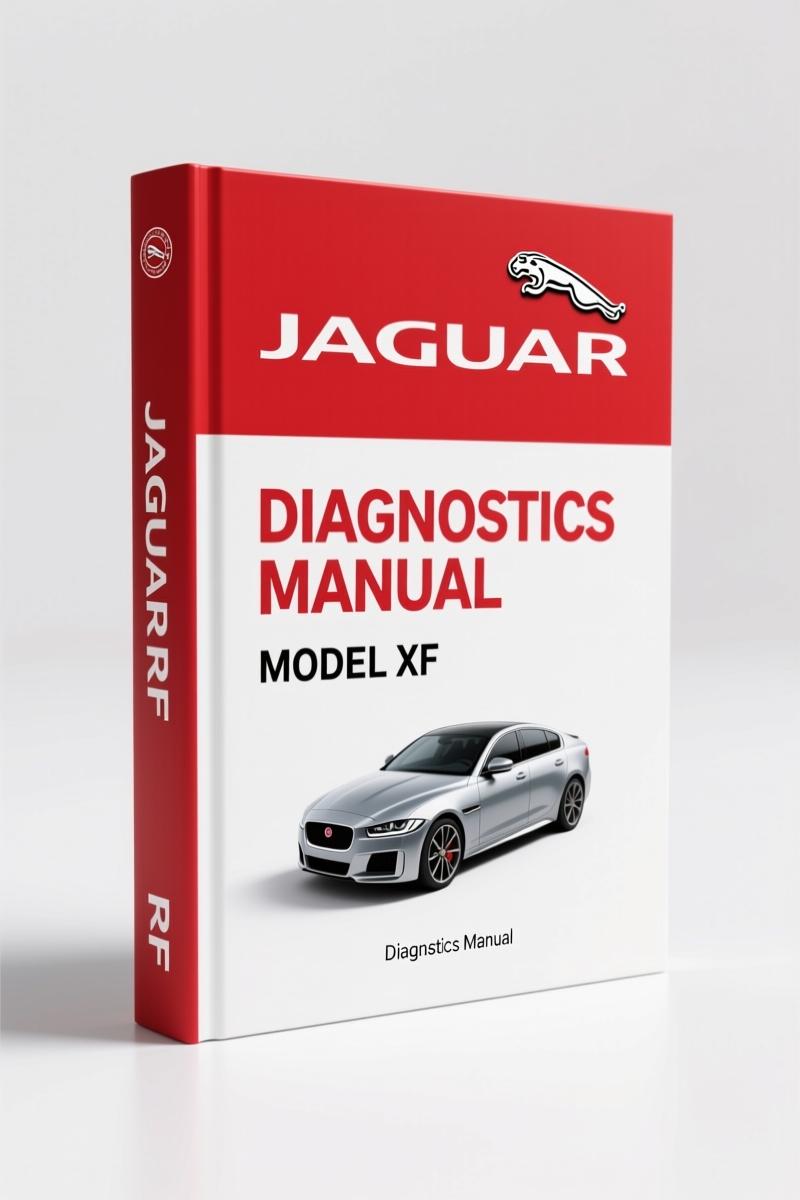
Jaguar XF, XJ 2013 Diagnostics Manual – OEM OBD System Description
Original price was: $50.40.$35.00Current price is: $35.00.
Factory diagnostics manual for Jaguar XF & XJ 2013 MY. 155 pages of OEM OBD system descriptions, flowcharts, and fault codes for the 3.0L V6 AJ126 engine.
Description
Jaguar XF, XJ 2013 Diagnostics Manual
If you’ve ever tried to diagnose a check engine light on a 2013 Jaguar XF or XJ using a generic scan tool and a third-party manual, you know the pain. The aftermarket stuff skips half the logic – it’ll give you a DTC list but no clue how the ECM decides to set it. I’ve pulled my hair out over misdiagnosed catalyst failures because some manual said “replace the O2 sensor” without mentioning the oxygen storage capacity strategy. That’s why I keep a copy of Jaguar XF, XJ 2013 Diagnostics Manual on the bench. It’s the actual JLR document, 155 pages, written for the 3.0L V6 AJ126 engine. No assumptions, no guesswork – just factory test sequences and pass/fail criteria.
This manual comes straight from Jaguar Land Rover. It’s the same binder the dealer techs had when these cars were new. The flowchart on page 7 for “Engine Start – System Flowchart” walks you through every box – crank sensor signal, fuel pressure, immobilizer handshake – in the order the ECM checks them. You don’t have to wonder if the ECU is seeing the cam sensor; the manual tells you what voltage to expect at which pin. That’s the difference between a two-hour diagnosis and a twenty-minute one.
Engine Start and Running – System Flowchart
Section 1 kicks off with the engine start logic. Page 7 shows the full flowchart. If the car cranks but won’t fire, you follow the path: check for fuel pressure, verify CKP sensor signal, then look at the starter interlock. I’ve seen techs replace a fuel pump on an XJ because they assumed it was dead – turned out to be a corroded ground at the ECM. The flowchart would have caught that in ten minutes. Also includes the procedure for clearing flooded start – something the owner’s manual won’t tell you.
Engine Cylinder Numbering and Firing Order – Page 8
Page 8 gives you the cylinder numbering and firing order. On the AJ126 V6, the cylinders are numbered 1-3 on the right bank (passenger side) and 4-6 on the left. Firing order is 1-4-2-5-3-6. If you’re doing a coil-on-plug swap or a compression test, that’s the reference. Don’t assume it’s the same as a Ford Duratec – it’s not. The manual also lists the cylinder identification for the crank sensor pattern. That matters when you’re trying to diagnose a misfire by swapping coils.
Catalyst Monitoring – Oxygen Storage Capacity Strategy
Section 3 is the big one for anyone chasing a P0420 or P0430. The manual breaks down the Oxygen Storage Capacity (OSC) evaluation – how the ECM measures how much oxygen the catalyst can hold, then compares it to a threshold. It lists the exact diagnosis constraints: engine temperature, fuel trim corrections, load conditions. If you’re not in those parameters, the monitor won’t run. The failure criterion is on page 10 – the catalyst efficiency must drop below a specific OSC value before the MIL lights. I’ve seen shops throw converters at an XJ because they didn’t understand the strategy. This manual saves you that $2,000 mistake.
Misfire Monitoring – Rough Road Detection and Adaption Values
Section 4 covers misfire monitoring. The AJ126 uses crank acceleration to detect misfires, but it also has a rough road detection algorithm. If you’re getting false misfire codes on a gravel road, the manual explains how the ECM adjusts the tolerance. It also stores adaption values in back-up memory – the manual shows you how to reset them after a repair. Subsection 4.3.5 walks through the misfire signal calculation. That’s the math the ECM uses to decide if a cylinder actually missed. Critical for diagnosing intermittent misfires that don’t set a hard code.
Evaporative System Monitoring – Leak Detection and Fuel Cap
Section 5 is the EVAP monitor. The manual differentiates between a small leak (0.020 inch), a rough leak (0.040 inch), and a fuel cap warning. The reference leak measurement procedure on page 5.4.1 tells you how to pressurize the system and measure the leak rate with a smoke machine. It also covers the tank measurement sequence. If you’re getting a P0456, you need to know the ECM runs the test only when fuel level is between 15% and 85%. The manual gives you the exact conditions. No more throwing a canister at it and hoping.
UHEGO and HEGO Sensor Diagnostics – Heater and Signal Tests
Sections 8 and 9 cover the oxygen sensors. The UHEGO (wideband) sensors have a heater control circuit that the ECM tests for resistance and dew point. The manual includes the heater power stage monitoring tables. If you’re diagnosing a P0135 or P0131, you follow the flowchart on page 8.6.2. For the HEGO sensors (narrowband), the manual covers delayed response, transient response, and range/signal stuck. Each has its own flowchart. That’s the difference between a correct diagnosis and a parts cannon.
Who Needs This Manual?
This is for the guy who owns a 2013 XF or XJ and wants to fix it himself without paying a dealer $180 an hour. It’s also for the independent shop that sees these cars once a month and needs the factory diagnostics. The manual is written in JLR’s own language – you need to be comfortable with flowcharts and diagnostic tables. If you’re a beginner, you’ll need to learn how to read a system flowchart, but the manual itself is clear. It’s not a repair manual – it’s a diagnostics manual. Use it with a multimeter, a scan tool that can read live data, and a smoke machine for EVAP. You’ll save time and avoid buying parts you don’t need.
Why This Manual Is Better Than Any Aftermarket Copy
I’ve compared this to the AllData and Mitchell versions. They leave out the strategy descriptions. They don’t show the exact failure criteria for the catalyst monitor. They don’t include the rough road detection algorithm. This manual has the original JLR page numbers, the same flowcharts the dealer uses, and the correct torque specs for the engine components (though torque specs are in the service manual, not this one). The diagnostics manual focuses on the logic, not the wrenching. If you need the torque specs for the head bolts, you want the workshop manual, not this one. But for diagnosing a check engine light, this is the only source that matters.
Related manuals you might need: Jaguar XF 2009 Training Manual for early model differences, Jaguar XJ XK8 AJ27 Engine Management Diagnostics Manual for older V8 engines, and Jaguar S-Type XJ V6 On-Board Diagnostics Manual 2005 for pre-2010 models. For a broader perspective on automotive diagnostics, see Automotive Industry Overview and Automotive Industry Overview on the Toyota site (yes, it’s a different brand, but the principles of OBD-II strategy are the same).
- Does this manual include torque specs for the engine?
- No. This is a diagnostics manual, not a service manual. It covers fault codes, system flowcharts, and sensor diagnostics. Torque specs are in the workshop manual.
- Can I use this manual to diagnose a misfire on a 2013 Jaguar XF?
- Yes. Section 4 covers misfire monitoring in detail, including the crank angle tolerance adjustments and rough road detection. The flowcharts on page 15 (section 4.4) walk you through the diagnostic steps.
- What about the fuel system – does it cover high-pressure fuel pump issues?
- Section 7 covers fuel system monitoring, but it focuses on fuel injector monitoring tables and system flowcharts. It does not cover the high-pressure pump mechanical diagnosis. That would be in the engine service manual.
- Is this manual the same as the one the dealer uses?
- Yes. It’s the original JLR document (JLR 18 31 18_1E). The same PDF the dealer techs have. 155 pages, no aftermarket changes.
If you’re tired of chasing ghost codes on your Jaguar, stop guessing. Access the Factory Manual and get the actual diagnostic procedures from the people who built the engine.
Additional information
| Brand | Jaguar |
|---|---|
| Language | English |
2 reviews for Jaguar XF, XJ 2013 Diagnostics Manual – OEM OBD System Description
You may also like…
-
Sale!
Jaguar XK, XJ, S-Type, X-Type 2008 Diagnostics Manual – 152 Pages of Factory OBD II Data
Original price was: $62.55.$45.00Current price is: $45.00. -
Sale!
Jaguar XK, XF, XJ 2010 Diagnostics Manual – Factory OBD System Description
Original price was: $54.00.$40.00Current price is: $40.00. -
Sale!
Jaguar XK, XJ, S-Type, X-Type 2002 Training Manual – 246 Pages
Original price was: $158.00.$100.00Current price is: $100.00. -
Sale!
Jaguar XF 2014 Workshop Manual – OEM Factory Specs for X250 Series
Original price was: $60.30.$45.00Current price is: $45.00.
Related products
-
Sale!

2006 Service Manual – International DT 466E, 530E Diesel Engine
Original price was: $67.50.$50.00Current price is: $50.00. -
Sale!

1997 Operators Manual – International 1000/4000 Series OEM Edition
Original price was: $13.49.$9.99Current price is: $9.99. -
Sale!
1992 Electrical Schematic – OEM Wiring Diagrams for International 1000-3800
Original price was: $24.48.$18.00Current price is: $18.00. -
Sale!
1994 Troubleshooting Manual – International 1000-4000 FBC
Original price was: $60.00.$50.00Current price is: $50.00.
David K. –
I am very pleased with this manual. Immediate link after checkout process. Every torque spec is provided for Jaguar XF,. Worth every penny.
Robert M. –
I am so happy with this manual. The document is high resolution. It assisted me to repair my Jaguar XF, electrical system. I will definitely buy again.