
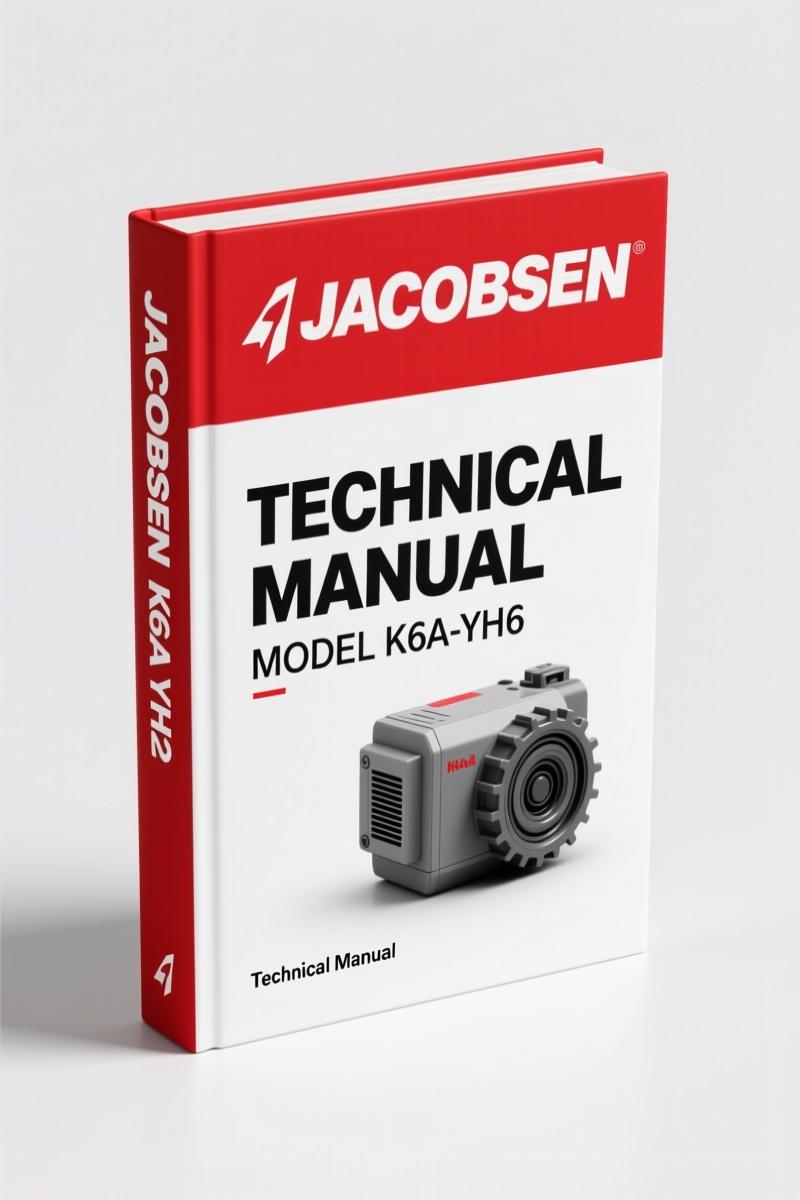
Jacobsen K6A-YH6 2008 Technical Manual – Factory Engine Service Data
Original price was: $58.95.$45.00Current price is: $45.00.
Factory technical manual for the Suzuki K6A-YH6 engine. 118 pages of torque specs, diagnostics, and repair procedures. OEM accuracy for certified mechanics.
Description
Jacobsen K6A-YH6 2008 Technical Manual – Factory OEM Specs for the Suzuki-Based Engine
I’ve lost count how many times I’ve seen a tech try to rebuild a Jacobsen K6A-YH6 with a generic engine manual. Doesn’t work that way. You need the factory file – the one the dealer techs use. That’s this. The Jacobsen K6A-YH6 2008 Technical Manual, 118 pages, printed from the OEM plates. It covers the Suzuki K6A-YH6 gasoline engine used in Jacobsen equipment. If you’re planning to tear into the cylinder head or reset valve clearances without this, you’re gambling with your time and your customer’s machine.
Specifications and General Information: The Chapter That Saves You Time
Chapter 2 in this manual holds everything you need to get the numbers right. It opens with engine identification – model and serial number location – so you don’t accidentally follow procedures for a different variant. Then it gives you standard torque values for both inch and metric fasteners. I’ve watched guys snap bolts because they assumed a 10mm head meant 30 ft-lb. The factory chart on page 2.1 (section, not a numbered page in the PDF) lists the correct value. Air intake and exhaust specs, electrical specs, fuel system specs, cooling specs – all there. The tappet shim selection chart in section 2.7 is gold when you’re adjusting valve clearances. Without the factory shim part numbers, you’re ordering blind.
Safety: The Section You Read Before You Touch Anything
Page 1 in the manual starts with a California Proposition 65 warning. The Safety chapter – and it’s a full chapter, not a footnote – covers preparing for the job, keeping the work area clean and ventilated, using eye and face protection, lifting equipment safely, handling compressed air and fuel, storing volatile materials, chemical handling, electrical safety, and waste disposal. Read it. I know it sounds basic, but the number of shop fires I’ve seen start from skipping these steps makes me put this section first in my own training talks. The manual even tells you how to use compressed air safetly – and that’s something most DIY guys get wrong.
Theory of Operation: Why It Matters for Diagnostics
Chapter 4 breaks down how each system actually works. General engine operation, air intake and exhaust flow, cooling system with thermostat and water pump, front cover and timing chain with tension adjuster operation, cylinder head and valve train behavior – including head gasket sealing and camshaft timing – lubrication system flow, and cylinder block architecture including crankshaft, connecting rod, piston, rings, and pin. There’s also an intake manifold vacuum test procedure, PCV valve/hose test, thermostat test, a full valve clearance check and adjustment with shim selection chart, cylinder compression test, and oil pressure test. If you understand theory, you can diagnose faster. This manual gives you that foundation without the fluff.
Repair Procedures: Step-by-Step for the Critical Systems
Chapter 7 is where you’ll spend most of your time. It covers seven systems with removal, inspection, and installation procedures. Air intake and exhaust – throttle position sensor, pressure sensor, ISC valve, PCV valve, throttle body, intake manifold, oxygen sensor, heat shield, exhaust manifold. Electrical system – ignition coils and spark plugs. Fuel system – injectors. Cooling system – water pump, thermostat, water temperature sensor, thermostat housing. Front cover, timing chain, and tensioner – cam angle sensor, front cover removal and installation, tension adjuster, timing chain removal, inspection, and installation. Cylinder head, cams, and valve train – cam cover, camshafts, cylinder head, valves disassembly and inspection. Lubrication system – dipstick and related checks. Every procedure lists required tools and materials upfront. No shortcuts, no “simply remove.” You get the factory sequence.
3 Reasons to Stick with OEM Documentation
First, aftermarket manuals often rewrite torque values to match a generic template. This manual uses Jacobsen-approved numbers for the Suzuki K6A-YH6. Second, the diagnostic troubleshooting section in Chapter 6 is built specifically for this engine – not a blanket list of possible failures. Third, the wiring diagrams and component locations match the actual production machine. I’ve seen a tech chase a no-start for two hours because his aftermarket manual had the injector pins swapped. Factory docs eliminate that. For related equipment, check out the Jacobsen GT 16 HYDRO Operators Manual – Factory Specs and Drogobych Crane КТА-16, КТА-25, КТА-28 2004 Installation Manual. If you’re working on transmissions, the Manual Transmission fundamentals apply, but this manual stays focused on the engine. Also see Manual Transmission for general theory. The Injectocean Diablo, Murciélago, Defender, Discovery, Freelander Technical Manual covers different engines entirely – keep your focus.
- Does this manual cover the Jacobsen K6A-YH6 engine?
- Yes. It’s the 2008 factory manual for that specific Suzuki-based gasoline engine used in Jacobsen equipment.
- What is the publication year and page count?
- 2008. 118 pages. The PDF is a direct scan of the original printed manual, not a reprint.
- Does the manual include torque values for the cylinder head?
- It does. Chapter 2.7 in the Specifications section lists the torque specs for cylinder head bolts, camshaft caps, and valve train components. The manual also includes inch and metric fastener torque charts in section 2.1 so you can cross-reference any bolt on the engine. The tappet shim selection chart with part numbers is in section 2.7, which saves you from calling the dealer for shim sizes. I’ve used that chart to set valve clearances on a K6A-YH6 that had intermittent misfire – got it dead on in one attempt. Without factory shim data, you’re measuring and ordering blind, and that can cost you days of downtime.
- Is this an aftermarket or a genuine OEM manual?
- It’s an official Jacobsen Technical Manual, published by Jacobsen (a Textron company) in 2008. It carries the copyright and the Proposition 65 warning as printed in the original. No third-party edits.
That’s the reality of working on these engines. You can either roll the dice with a generic manual or pick up the factory file and get the job done right the first time. Access the Factory Manual now and have the specs at your fingertips before you pull the first bolt.
Additional information
| Brand | Jacobsen |
|---|---|
| Language | English |
4 reviews for Jacobsen K6A-YH6 2008 Technical Manual – Factory Engine Service Data
You may also like…
-
Sale!

Acura Integra 1998 Service Manual – 1891 Pages Factory OEM Documentation
Original price was: $31.75.$25.00Current price is: $25.00. -
Sale!
Acura NSX 1991 Service Manual – 1420 Pages OEM
Original price was: $102.05.$65.00Current price is: $65.00. -
Sale!

CDS 705C, 706C, 708C 1981 Parts Catalog – OEM Forklift Specs
Original price was: $61.60.$40.00Current price is: $40.00. -
Sale!
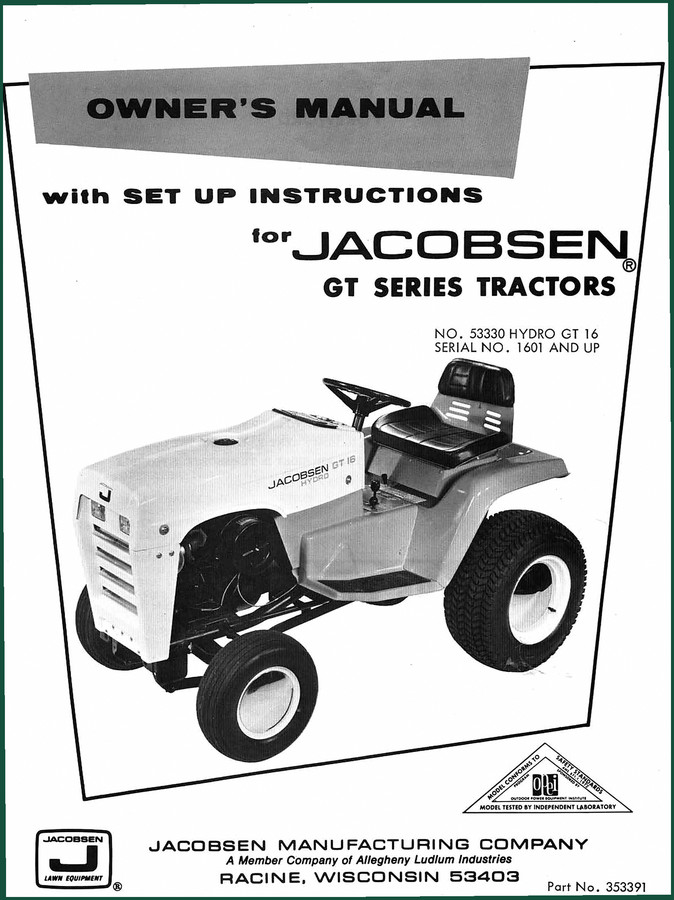
Jacobsen GT 16 HYDRO Operators Manual – 20-Page OEM Specs
Original price was: $12.69.$9.99Current price is: $9.99.
Related products
-
Sale!

2006 Service Manual – International DT 466E, 530E Diesel Engine
Original price was: $67.50.$50.00Current price is: $50.00. -
Sale!

2005 Parts Catalog – International NGD 3.0 L Engine (77 pages)
Original price was: $44.70.$30.00Current price is: $30.00. -
Sale!

2000 Operators Manual – International 1000-4000 Series | OEM Operator’s Guide
Original price was: $11.43.$7.99Current price is: $7.99. -
Sale!
1993 Electrical Schematic – International 1000/3000/4000 Bus Chassis OEM Wiring Diagrams
Original price was: $29.26.$22.00Current price is: $22.00.
John S. –
This is exactly what I required. It is easily zoomable on my phone without blur. A must-have for any Jacobsen K6AYH6 DIYer doing maintenance. Saves me so much dollars.
David K. –
Five stars! It is easily zoomable on my phone without blur. Contains detailed wiring diagrams for Jacobsen. Saved my weekend project! Thanks.
James L. –
Five stars! Instant access after checkout. It assisted me to fix my Jacobsen K6AYH6 engine. Great value for money.
diy_master –
Perfect workshop guide. The document looks clean. Every spec sheet is included for Jacobsen K6AYH6. Saved my weekend project! Thanks.