
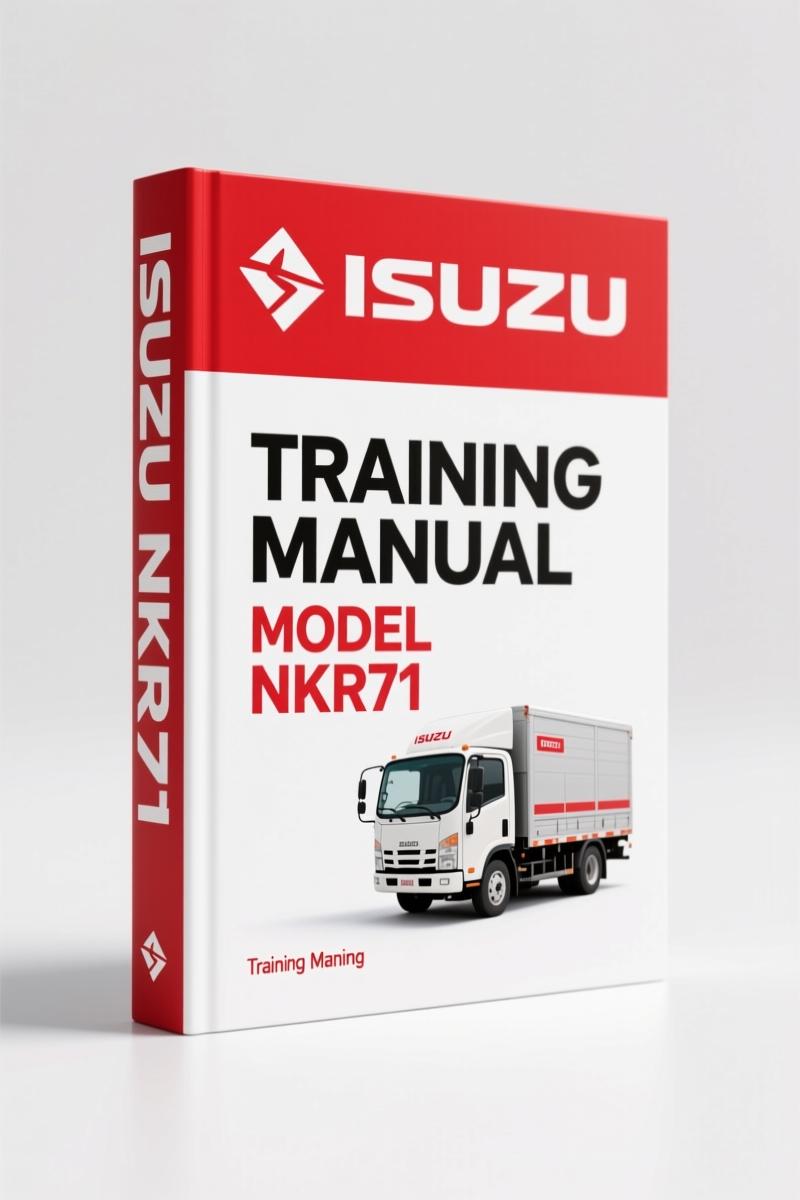
Isuzu TBR54 TFS77 NKR55 NKR71 NHR55 Training Manual 395 Pages
Original price was: $34.25.$25.00Current price is: $25.00.
Isuzu Intermediate 1 training manual for TBR54, TFS77, NKR55, NKR71, NHR55. 395 pages of OEM engine, drivetrain, chassis, electrical content.
Description
Isuzu TBR54, TFS77, NKR55, NKR71, NHR55 Training Manual
You’ve got a truck in the bay that won’t hold idle, the injection pump is acting up, and the aftermarket wiring diagram you printed off the internet has the pinout wrong. That’s when you realize you’re burning billable hours guessing. The Isuzu TBR54, TFS77, NKR55, NKR71, NHR55 Training Manual isn’t a condensed cheat sheet some third-party slapped together. It’s the actual binder ISUZU hands to dealership techs before they touch a T-Series or N-Series. I’ve been wrenching since before OBD-II, and I can tell you the difference between this and a Chilton’s is the difference between a torque wrench and a breaker bar—both turn bolts, but only one gives you the right spec.
This 395-page manual came out of the Isuzu Service Training Center. It’s not a reprint of a reprint. It’s the original training reference used for Intermediate‑1 level technicians. Page 1 lists the four main sections: Engine (diesel and distributor injection pump), Drive Train (clutch, manual trans, prop shaft, differential), Chassis (suspension, FWA, brakes, steering), and Electrical (starter, charging, basic electronics). Every page is packed with construction details and operating principles that a factory tech needs to know to pass the certification. You want to understand why a 4JA1 knocks under load? There’s a chapter in there called “Knocking pada Diesel” and a comparison to gasoline knock that explains the root cause. That’s not something any generic manual covers.
What the Engine Section Actually Covers
The diesel engine portion doesn’t stop at “replace the injector.” It walks you through the combustion cycle, compression temperature, ignition delay, and the exact fuel injection pressure adjustment procedure for two‑stage injection nozzles. The Distributor Type Injection Pump chapter goes into the feed pump, regulating valve, plunger stroke, and the delivery valve with damping valve. You need to set the injection timing? Page 2 of the manual references the cold start device (W‑CSD) and fast idle control device (FICD) – procedures that keep a cold 4JB1‑T from smoking out the shop. If you’ve ever had a customer complain about rough idle after a pump rebuild, this is where you find the governor speed adjustment steps.
Torque Specs and Fluid Capacities – No Guessing
One thing that drives me crazy is a manual that says “tighten securely.” Not here. The Training Manual gives you the plastic region bolt tightening method – called Metoda Pengerasan Baut Plastic Region – for cylinder head and main bearing bolts. That’s the procedure where you angle‑torque past yield to get consistent clamp load. If you don’t have that spec, you’re either snapping bolts or pulling threads. Also included are the overhaul specs for the fan clutch and valve mechanism. I keep a copy of this on my tablet because when a NKR55 comes in with a blown head gasket, I know I’ve got the exact angle‑torque sequence from an Isuzu engineer, not some scanned copy that lost the page numbers.
Who Should Use This Manual (And Who Should Not)
If you’re a home-garage guy rebuilding a TBR54 for a hunting rig, this manual is for you – but only if you already know how to use a dial indicator and a torque wrench. This is training material, not a “how to change your oil” book. It assumes you understand basic engine theory. The audience Isuzu designed this for is a dealership technician with at least a year of experience. That said, if you’re a pro running a six‑bay shop like mine, this is the kind of document you hand to a new hire on day two and say “study this before you touch the diesel injection pump.” The wiring diagrams are OEM‑level, so you can trace the speed sensor circuit on a NHR55 without chasing ghosts. Pair it with the Isuzu NHR55, NHR69, NKR55, NKR66, NKR69 Workshop Manual – Factory Electrical for the full service data.
Source Validity – Why This Beats Aftermarket
Let’s talk about where this data comes from. The page 2 “Kata Pengantar” states the manual was prepared by PT Pantja Motor, Isuzu Training Center. The publication number is ISZ‑TM/INT‑1. That’s an official factory training number. If you compare the governor construction in this to a third‑party manual, you’ll see the factory drawing shows the exact control rack and timer advance mechanism. Aftermarket manuals often redraw those diagrams and lose the dimension callouts. Here you get the unaltered blueprint. That’s why I trust it for every job that involves the Distributor Type Injection Pump on the TFS77 or the inline pump on the 4HF1. The Isuzu TFR/TFS, UCR/UCS Training Manual – 4JJ1-TC Engine covers newer engines, but for these T‑series trucks, this is the one.
7 Key Systems Break Down in the Chassis Electrical Section
The chassis portion addresses suspension alignment (front wheel alignment), brake system, steering, and even the limited slip differential (LSD) option. The electrical section starts from basic electrical theory – because if a tech can’t read a voltage drop, they shouldn’t be touching the starter. It then goes into the starter motor and charging system specifics for the TBR54 and NKR71. For context, the Isuzu 6HK1 4HK1 2008 Training Manual – Diagnostic & Drivability covers later heavy‑duty engines, but this intermediate manual is the prerequisite for understanding the older mechanical injection systems. If you’re working on a fleet of NKR55 delivery trucks, you need this on the shelf.
A quick note on the Automotive Industry Overview standards – factory training manuals like this one set the bar for safe, repeatable repairs. There’s a reason Isuzu invests days of classroom time on this content. When you use a manufacturer‑authored document, you eliminate the risk of using an Aftermarket part number that was transcribed wrong. And if you’re cross‑shopping, consider that Automotive Industry Overview – but nothing replaces the original.
- Does this manual cover the 4JB1‑T engine with turbocharger?
- Yes. The engine section specifically lists the 4JB1‑T and includes turbocharger operation, wastegate control, and emission control systems for N‑Series models. The Emission Control System chapter is part of the engine module.
- Can I use this for a gasoline engine like the 4ZE1?
- No. This training manual is diesel and drivetrain focused. Gasoline is only briefly mentioned in the combustion comparison chapter. For gasoline engines, get the separate Isuzu gasoline service manual.
You’re tired of manuals that skip the plastic region bolt angle or leave out the injection pump timing curves. This 395-page factory training manual gives you exactly what the Isuzu training center intended their techs to know. Don’t waste another Saturday with a generic wire‑diagram. Access the Factory Manual and get the OEM data that lines up with the real truck.
Additional information
| Brand | Isuzu |
|---|---|
| Language | English |
2 reviews for Isuzu TBR54 TFS77 NKR55 NKR71 NHR55 Training Manual 395 Pages
You may also like…
-
Sale!
Isuzu NPR, W3500, NQR, NPR-HD, NRR 2006 Service Manual – 37 Pages
Original price was: $93.00.$60.00Current price is: $60.00. -
Sale!
Isuzu FRR WT5500 2002 Service Manual | Factory Specs
Original price was: $92.40.$60.00Current price is: $60.00. -
Sale!
Isuzu AA-6SD1T Workshop Manual – 243 Pages of OEM Engine Service Data
Original price was: $89.70.$65.00Current price is: $65.00. -
Sale!
Isuzu FRR 1997 Service Manual – 755 Pages of Factory Specs
Original price was: $85.80.$65.00Current price is: $65.00.
Related products
-
Sale!

1995 Operators Manual – International 1000-4000 Series | OEM Documentation
Original price was: $12.49.$9.99Current price is: $9.99. -
Sale!
1996 Operators Manual – International 1000-4000 Series (246 pages)
Original price was: $15.28.$9.99Current price is: $9.99. -
Sale!

Service Manual – International HS 2.8L Engine – 130 Pages of Factory Specs
Original price was: $56.40.$40.00Current price is: $40.00. -
Sale!

2005 Parts Catalog – International NGD 3.0 L Engine (77 pages)
Original price was: $44.70.$30.00Current price is: $30.00.
Robert M. –
I am so happy with this purchase. The file quality is excellent. It assisted me to repair my Isuzu TBR54 transmission. Great value for money.
gearhead88 –
Perfect workshop guide. The file looks clean. A must-have for any Isuzu TBR54 DIYer doing maintenance. Saves me a lot of time.