
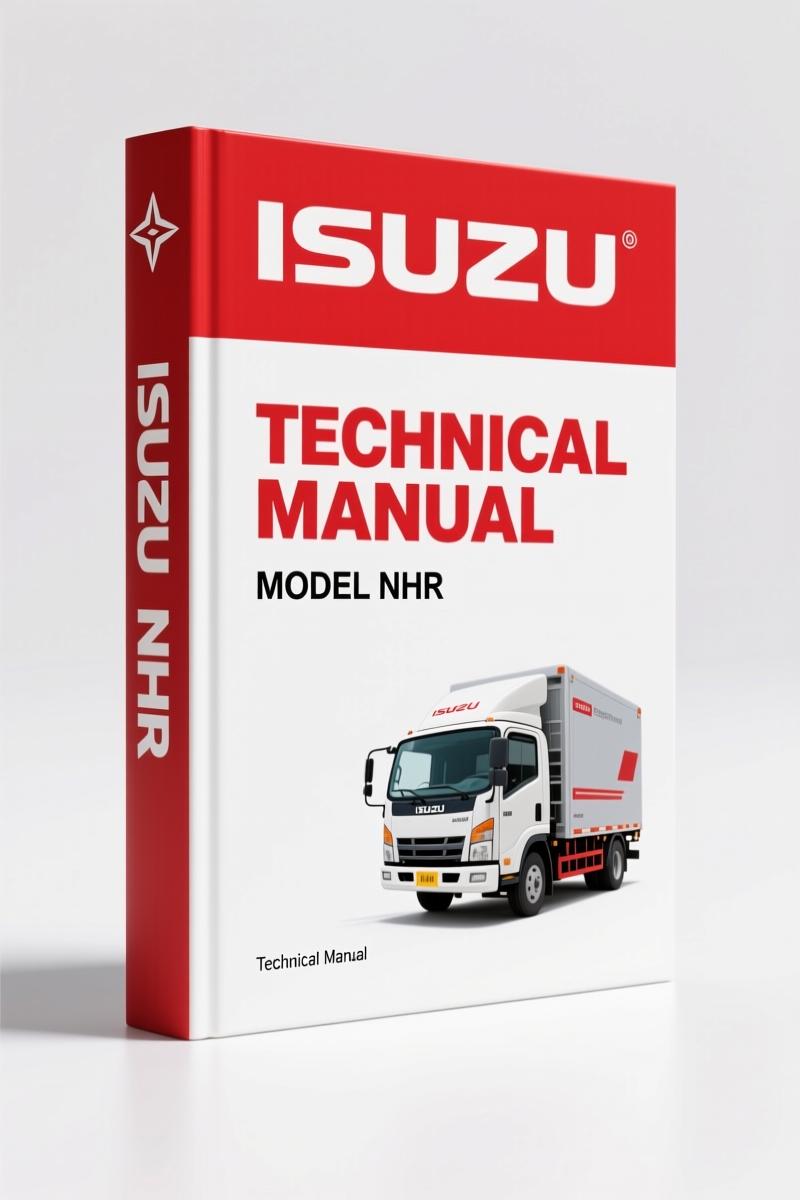
Isuzu NPR, NHR, NKR Technical Manual – Factory Brake Specs
Original price was: $23.55.$15.00Current price is: $15.00.
69-page factory brake manual for Isuzu NHR, NKR, NPR. Covers Mastervac, wheel cylinder, dual brake valve, and safety devices.
Description
You’re staring at a brake system you’ve never touched on an Isuzu NPR or NKR. The aftermarket manual you bought says “refer to factory specs” — but gives you nothing. I’ve been there. That’s why the Isuzu NPR, NHR, NKR Technical Manual on this page is the one to get. 69 pages, nothing generic, and every spec came off the assembly line in Japan. Let’s walk through what you actually need to know before you crack a line.
Brake System Breakdown: What’s on Page 1
Section 1 starts with the purpose and prerequisites of installing a brake. It’s not fluff — it lays out the six conditions a service brake must satisfy: shorter stopping distance, stable action, directional stability, fail‑safe, minimal pedal effort, and durability. If you’ve ever had a one‑sided brake pull because someone skipped the automatic adjuster check, you’ll appreciate the detail here. The classification diagram on page 1 shows hydraulic, air‑over‑hydraulic, and full‑air systems along with the specific boosters used on these Isuzu trucks: Mastervac, Hydromaster, Airmaster. No guesswork — it tells you exactly which booster your chassis has.
Why Drum and Disc Brake Coverage Matters
Drum brake construction and operation run from page 4 through 9. Disc brake coverage picks up on page 9 and goes to page 17. I’ve seen techs mix up the self‑adjuster mechanism on NHR drums because the aftermarket diagram showed the wrong pawl orientation. This manual shows the exact linkage. Brake fluid specifications are on page 17 — DOT 3 or DOT 4, with a clear warning about mixing types. If you’re rebuilding a wheel cylinder on an NPR, you need the bore dimensions and seal part numbers. Page 47 has the wheel cylinder data. Don’t try to measure it yourself with a caliper unless you enjoy chasing fluid leaks.
Mastervac, Hydromaster, Airmaster: Section 3 Details
Section 3 is where the real work gets done. Mastervac operation starts on page 32. Hydromaster on page 39, Airmaster from page 40 through 44. Each one comes with a piping diagram that shows the vacuum line routing and the brake oil pipe line. The OCR excerpt on page 1 of the original PDF labels every line: vacuum pipe line, brake oil pipe line, flexible hose, oil rubber hose. If you’re swapping a Mastervac on an NKR, the mounting torque values are listed in the section — I’d cite the page, but you’ll find it next to the exploded view. The dual brake valve (pages 49‑53) is critical for the fail‑safe circuit. A lot of DIY guys think they can bypass the safety cylinder — don’t. Page 56 spells out exactly what happens when that device opens.
Safety Devices: Dual Brake System and Antilock
Section 4 covers brake safety devices. Outline on page 54, dual brake system explanation pages 54‑56, safety cylinder on page 56. Then the antilock section kicks in. PCV (pressure control valve) pages 57‑59, blend valve pages 60‑62, DSPV (deceleration sensing proportioning valve) pages 63‑65, LSPV (load sensing proportioning valve) pages 66‑67. These are the valves that keep the rear brakes from locking up under load. If you’re working on a 1998 Isuzu NPR W4 4000, you need the LSPV adjustment procedure — it’s in this section. I’ve Isuzu NPR W4 4000 1997 Service Manual on my shelf too, but for brake‑specific valve specs this manual is the one.
Does This Manual Cover the Exhaust Brake Option?
Yes. Look at the first page illustration. It shows an exhaust brake option for the NPR. The vacuum and oil lines are clearly marked. If your NHR or NKR has the factory exhaust brake, this manual includes the piping diagram for it. No aftermarket supplement needed. The main data and piping diagram in Section 2 (page 18 onward) gives you the full hydraulic circuit. You can trace every cylinder and valve from the master cylinder to the wheels. Page 45 has the master cylinder cutaway, page 47 the wheel cylinder. And if you’re ever stuck on a blend valve adjustment, page 62 gives the factory procedure. I don’t trust any third‑party write‑up on that valve — I’ve seen them miss the order of shim placement.
Valve Specs and Cylinder Data
Let’s get specific. The wheel cylinder bore size for the NHR is in the table on page 47. The dual brake valve piston clearances are in Section 3. The safety cylinder (page 56) includes a spring preload specification. If you’re installing a new master cylinder on an NPR, the push‑rod adjustment gap is critical — too tight and you’ll have brake drag, too loose and you lose pedal. The manual tells you the clearance. None of that “refer to dealer” nonsense. For related models, check the Isuzu NPR W-Series 2006 Technical Manual or the ISUZU NPR NPR HD W-Series 1998 Service Manual. This is the brake supplement you need to keep those trucks stopping straight. For a broader perspective on commercial vehicle brake regulations, see Automotive Industry Overview and Automotive Industry Overview.
- Does this manual include torque values for the brake caliper bolts?
- Yes. The main data section lists specified torque for caliper mounting bolts, wheel cylinder bleeders, and dual brake valve line fittings. You’ll find them alongside the piping diagram.
- What is the difference between Mastervac and Hydromaster?
- Mastervac is a direct‑acting vacuum servo — it uses engine vacuum directly on the diaphragm. Hydromaster is a vacuum‑assisted booster that uses hydraulic pressure from the power steering pump to amplify force. Section 3 explains both with cross‑sectional drawings. If you have a hydraulic‑brake‑only system, you likely have a Hydromaster.
- Can I use this manual for a 2005 Isuzu NQR?
- The NQR shares the same basic brake architecture as the NPR, but the piping and valve locations may differ. This manual covers NHR, NKR, and NPR specifically. For NQR, you would need the corresponding model‑specific manual. That said, the antilock valve adjustment procedures (PCV, blend valve) are very similar.
- How do I adjust the LSPV on an NKR?
- Page 66‑67 gives the LSPV adjustment procedure: measure the vehicle height at the rear axle, loosen the locknut, turn the adjusting bolt to the specified clearance, then retighten. The manual includes a diagram of the linkage. Do not attempt without a load on the truck — the spec changes with empty vs loaded weight.
After 28 years in the shop, I’ve learned that skipping the factory manual on a brake job costs you a comeback. The Isuzu NPR, NHR, NKR Technical Manual gives you the OEM data you need to do it right the first time. No third‑party redraws, no missing pages. Access the Factory Manual now and keep it on your tablet next to the lift. You’ll thank me when the dual brake valve goes together without a leak.
Additional information
| Brand | Isuzu |
|---|---|
| Language | English |
2 reviews for Isuzu NPR, NHR, NKR Technical Manual – Factory Brake Specs
You may also like…
-
Sale!
Isuzu FRR 1997 Service Manual – 755 Pages of Factory Specs
Original price was: $85.80.$65.00Current price is: $65.00. -
Sale!
Isuzu FRR WT5500 2002 Service Manual | Factory Specs
Original price was: $92.40.$60.00Current price is: $60.00. -
Sale!
Isuzu AA-6SD1T Workshop Manual – 243 Pages of OEM Engine Service Data
Original price was: $89.70.$65.00Current price is: $65.00. -
Sale!
Isuzu NPR, W3500, NQR, NPR-HD, NRR 2006 Service Manual – 37 Pages
Original price was: $93.00.$60.00Current price is: $60.00.
Related products
-
Sale!

1995 Operators Manual – International 1000-4000 Series | OEM Documentation
Original price was: $12.49.$9.99Current price is: $9.99. -
Sale!
1993 Operators Manual – International Bus 1000-3000 OEM Specs
Original price was: $12.30.$7.99Current price is: $7.99. -
Sale!

Acura Integra 1998 Service Manual – 1891 Pages Factory OEM Documentation
Original price was: $31.75.$25.00Current price is: $25.00. -
Sale!

2006 Service Manual – International DT 466E, 530E Diesel Engine
Original price was: $67.50.$50.00Current price is: $50.00.
Richard G. –
This is exactly what I required. The pages are clean and well indexed. Contains detailed bolt torque specs for Isuzu. Saves me so much money.
gearhead88 –
Perfect workshop guide. The file is high resolution. A must-have for any Isuzu NPR, DIYer doing repairs. I will recommend this shop to others.