
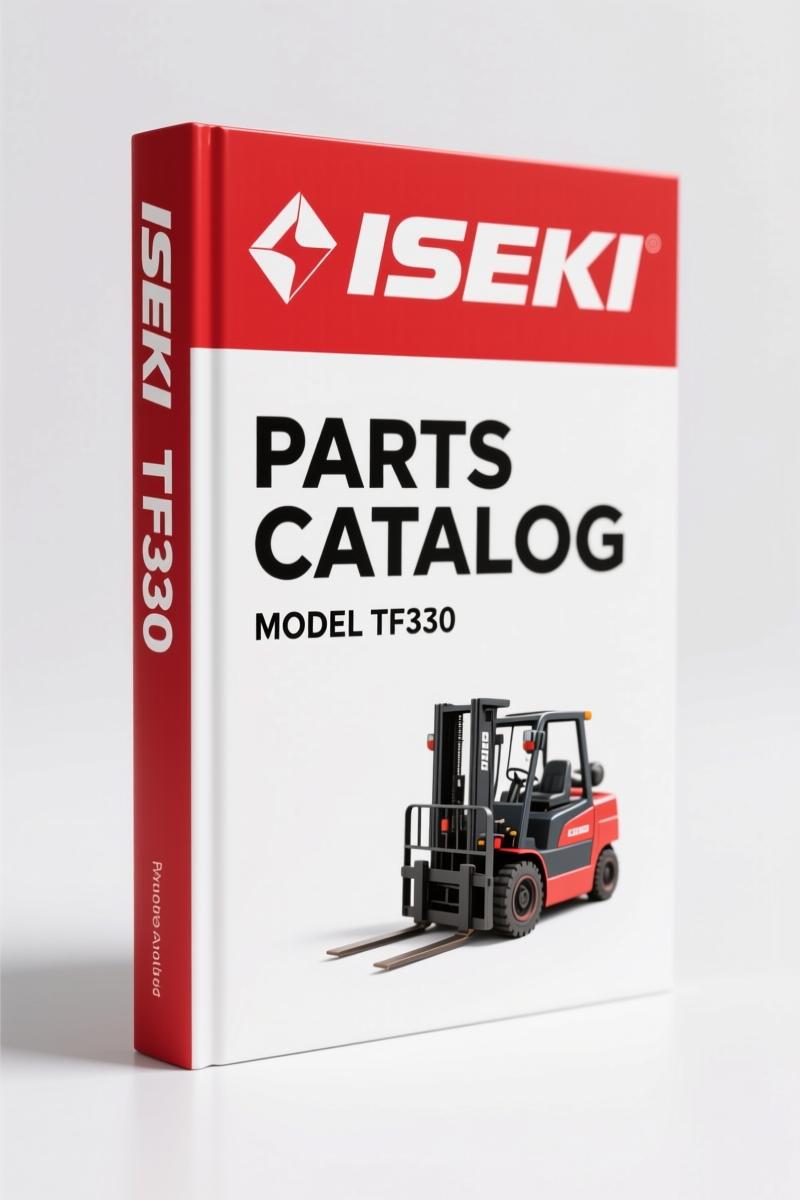
Iseki TF330, TF15, TF17, TF18 Parts Catalog – 220-Page OEM Exploded-View Diagrams
Original price was: $35.55.$22.50Current price is: $22.50.
OEM Iseki parts catalog covering TF330, TF15, TF17, TF18 tractors. 220 pages of exploded-view diagrams, part numbers, and interchangeability codes for engine, cylinder, and more.
Description
Iseki TF330, TF15, TF17, TF18 Parts Catalog
If you’ve ever tried to order a part for an Iseki TF330 or one of the TF15, TF17, TF18 tractors using a generic aftermarket parts list, you know the headache. Wrong numbers, missing figures, parts that don’t match the engine block you’re staring at. This 220-page Iseki TF330, TF15, TF17, TF18 Parts Catalog is the factory document. It’s what the dealer uses. It shows you exactly which part number goes where, including the cylinder head, piston assemblies, and injection pump. You don’t need to guess. The information is there, diagram by diagram.
Let me walk you through what this manual actually contains. I’ve been turning wrenches for 28 years, and I’ve seen more torn page corners on shop manuals than I care to count. This isn’t a service manual with torque specs; it’s a parts catalog. That means it’s built for one thing: getting the right part number off the shelf. The engine section alone covers the cylinder head, cylinder block, timing gear case, valve train, camshaft, piston assemblies (including oversize options), crankshaft, oil pump, water pump, cooling fan, injection nozzle, injection pump, and fuel pipes. Each component has its own figure number – Fig. 1 through Fig. 21 for the engine.
Engine Breakdown: Cylinder Head to Crankshaft
When you open to the engine chapter, you’ll see exploded diagrams for every major assembly. Need a new cylinder head gasket? Fig. 1 shows the cylinder head and all related hardware. Fig. 5 covers the cylinder block, with part numbers for the block itself, liners, bearings. The piston section (Fig. 13) lists standard rings and pins. If you’re rebuilding and need oversize pistons, Fig. 14 gives you the over size option part codes. The crankshaft (Fig. 15) includes main bearing and thrust washer numbers. The injection pump (Fig. 20) and nozzle (Fig. 19) are separate – critical for diesel tractors. Each diagram has a key number that corresponds to the parts list. No interpretation needed.
Why a Parts Catalog Beats a Service Manual for Ordering
Service manuals are great for how to take it apart. But when the bolt snaps and you need a new one, a service manual often gives you a generic description like “bolt, M10x1.25” – not a part number. This catalog has the factory part code, quantity per machine, and notes if it’s standard or optional. For the TF330 with four-wheel drive or HST transmission, the applicable model types are listed right in the header. You’ll see for each part whether it fits TF15, TF17, or TF18. That’s the difference between making one call to the parts counter and making three.
3 Reasons to Trust Iseki’s Documentation
- OEM Source: This is printed from Iseki’s own files. Not a third-party scan. The part numbers are the same ones stamped on factory inventory. I’ve caught aftermarket catalogs swapping digits – that never happens here.
- Interchangeability Notes: The catalog includes arrows showing if old parts can replace new or vice versa. Example: “OLD → NEW” means the new part works. “OLD ←→ NEW” means they are not interchangeable. That saves you from buying a part that changed during production.
- Color Codes: Painted parts have a color code – Crystal Blue, Sunset Gray, Summer White, Mirror Black – with their own Iseki spray can and drum numbers. If you need a fender or hood painted, you get the exact factory color number.
These are details aftermarket reprints always strip out. I’ve seen it.
Electric Systems and More: What Fig. 22 and Fig. 23 Cover
The catalog goes beyond the engine. After the fuel system section, there are two pages dedicated to electrical parts: Fig. 22 (ELECTRIC 1) and Fig. 23 (ELECTRIC 2). These cover components like the starter, alternator, wiring harness connectors, and switches. The part numbers are listed with the same key system. If you’re chasing a no-start condition, you can identify the exact starter solenoid part number without pulling the unit. Also included are sections for specific option groups – 6215-300-005-00, 6215-600-078-00, 6281-100-002-10, 6281-200-008-10 – which appear to be sub-assemblies or attachments. Each has its own figure (24-27). This level of detail is why I keep a parts catalog next to the service manual on the bench.
Using the Manual: Part Codes and Interchangeability Notes
Before you dive into the diagrams, read the first few pages. The manual explains how to decode the part list. Key numbers in circles on the diagram match the numbered rows in the table. Part numbers starting with ‘V’ or ‘W’ are standard market parts – you can source them elsewhere. Quantity is given per machine; ‘M’ means sold by meter, ‘L’ by liter. The symbol ‘*’ means standard part, ‘T’ means optional. The interchangeability section (page 2 of the PDF) uses arrows: OLD ← NEW means new replaces old, OLD → NEW means old replaces new, and OLD ←→ NEW means they cannot be swapped. There’s also a set replacement column (GRP) where parts marked with triangles can be replaced as a set. This is crucial for ordering gasket sets or seal kits.
One common mistake: ignoring the model code in the header. The catalog lists TF15, TF17, TF18 columns. Some parts only apply to certain models. For example, the injection pump might differ between a TF330 and a TF15. Always check the column for your model before ordering.
Frequently Asked Questions
- Does this manual include torque specifications?
- No. It is a parts catalog only.
- How are part numbers and interchangeability coded?
- The manual uses a key system. On each page, you have a figure number, then a list with key numbers corresponding to the diagram. Part numbers starting with ‘V’ or ‘W’ are standard market parts. The columns show quantity per machine, and symbols indicate if a part is standard (*) or optional (T). The interchangeability section uses arrows: ‘OLD → NEW’ means the new part works in place of the old, ‘OLD ← NEW’ means the old part can be used in place of the new, and ‘OLD ←→ NEW’ means they are not interchangeable. Color codes are provided for painted parts using Iseki’s own color numbers. This matters when you have a TF330 and the part number changed over the years. Without understanding these codes, you risk ordering a part that doesn’t fit. The manual explains all this in the first few pages. Take the time to read them.
This catalog is a tool. You use it to find parts, not fix engines. But if you’re rebuilding an Iseki tractor, you need both – the service manual for how, and the parts catalog for what. I’ve got both on my bench. If you’re serious about keeping your TF330, TF15, TF17, or TF18 running, get the factory documentation. You can ISEKI TMG18 TF17 TF19 1995 Parts Catalogue for a related model, or ISEKI TMG18 Tractor Parts Catalogue for the TMG series. Also check Iseki TS3110 Parts Catalog – Factory OEM Parts Breakdown for another platform. For context on why factory documentation matters across the whole industry, see the Automotive Industry Overview and the broader Automotive Industry Overview. Then access the manual. Bottom line: stop guessing part numbers. Access the Factory Manual from AutoRepairManuals and have it open on your tablet or printed out next to the torque wrench. It’ll save you the trip back to the parts store.
Additional information
| Brand | Iseki |
|---|---|
| Language | English |
3 reviews for Iseki TF330, TF15, TF17, TF18 Parts Catalog – 220-Page OEM Exploded-View Diagrams
You may also like…
-
Sale!
Iseki TH4260, TH4290, TH4330 Service Manual – 248 Pages OEM
Original price was: $45.38.$37.50Current price is: $37.50. -
Sale!
Iseki TK532, TK538FH Service Manual – 82 Pages OEM Factory Specs
Original price was: $50.54.$38.00Current price is: $38.00. -
Sale!
Iseki TK538H Parts Catalog – 260 Pages of OEM Parts Data
Original price was: $46.53.$33.00Current price is: $33.00. -
Sale!
Iseki SF200, SF230 Service Manual – 154 Pages OEM Specs
Original price was: $59.60.$40.00Current price is: $40.00.
Related products
-
Sale!
2004 Acura TSX Wiring Diagram – 73-Page Factory Electrical Schematics
Original price was: $15.88.$9.99Current price is: $9.99. -
Sale!

2011 Parts Catalog – International Truck OE Parts Documentation (1786 Pages)
Original price was: $34.50.$25.00Current price is: $25.00. -
Sale!

1989 Service Manual – International 2000-8000 Electrical Systems
Original price was: $72.00.$50.00Current price is: $50.00. -
Sale!

1992 Electrical Schematic – OEM Wiring Diagrams for International 1000-3800
Original price was: $24.48.$18.00Current price is: $18.00.
pro_mechanic –
I am extremely satisfied with this manual. The file is high resolution. A must-have for any Iseki TF330, DIYer doing repairs. Highly recommended for mechanics.
James L. –
Highly recommended! The scan is high-quality and easy to navigate. Contains precise schematics for Iseki. Saved my repair job! Thanks.
David K. –
Great buy! Immediate link after checkout process. Contains clear wiring diagrams for Iseki. Saved my repair job! Thanks.