
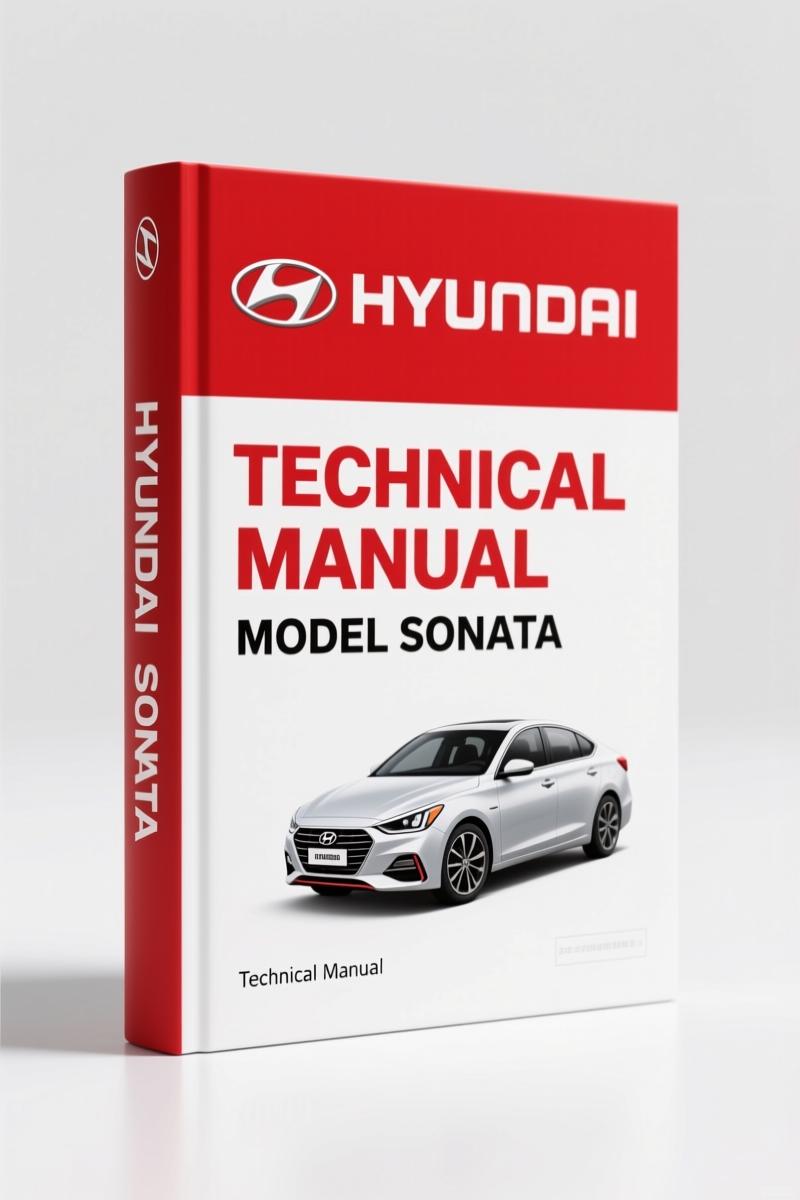
Hyundai Sonata 2010 Technical Manual – TPMS Service Bulletin
Original price was: $18.00.$15.00Current price is: $15.00.
Factory TPMS service bulletin for 2010 Hyundai Sonata: diagnostics, valve stem corrosion, part numbers, and sensor replacement. 25 pages.
Description
Hyundai Sonata 2010 Technical Manual – TPMS Diagnostics and Repair
You’re staring at a TPMS light that won’t go away after a tire rotation. The aftermarket code reader says “low pressure” but all four tires are at 35 psi. Start guessing – replace sensors? Relearn procedure? That’s a $400 mistake waiting to happen. I’ve been there. The Hyundai Sonata 2010 Technical Manual – TSB 10-SS-002 – gives you the factory diagnostic path for TPMS on the NF Sonata and other Hyundai models. 25 pages of direct-from-Hyundai procedures, not a third-party rewrite. This is what I use when a tech comes to me with a TPMS headache.
TPMS Overview: High-Line vs Low-Line Systems
Page 2 of this technical manual lays out the two system types. Hyundai uses three suppliers: TRW, Lear, and Siemens. The 2010 NF Sonata uses a TRW High-Line system – it can tell you which tire is low, not just that one is low. Low-Line systems (like on some older models) just light a warning. That difference matters when you’re trying to diagnose a flickering light. The manual includes a table breaking down every Hyundai model year by supplier and system type. If you’re working on a 2008 Sonata, page 8 shows the part number changes between 08MY and 09MY – don’t order the wrong sensor.
Valve Stem Damage: Page 9 Inspection Points
Corroded valve stems are a common cause of slow leaks and false low-pressure alerts. Page 9 covers damaged stems and page 12 gets into cap corrosion. The manual shows exactly what to look for – rust, cracks, or seized threads – and gives the replacement procedure for both standard and snap-in valves. The Lear Snap-In Valve is covered on page 18. Skip this step and you’ll be chasing a ghost leak for hours. Valve stem torque? The manual doesn’t specify a value, but you should use a beam-style torque wrench to avoid cracking the sensor housing – I’ve seen it happen.
Diagnostic Chart: Page 4 – Don’t Skip It
Every TPMS job should start with the diagnostic chart on page 4. It walks you through: check battery voltage, verify tire pressure with a gauge, then move to GDS tool communication. If the light blinks for 60 seconds then stays on, the manual tells you that’s a system malfunction – not a flat tire. Electro-magnetic interference is covered on page 13 – sometimes aftermarket USB chargers or LED lights cause the trigger. The chart saves you from replacing sensors that aren’t broken. Period.
3 Reasons to Choose OEM Documentation Over Aftermarket
First: part numbers. The manual shows the exact TRW sensor part numbers for 08MY vs 09MY NF Sonata – aftermarkets lump them together and you get the wrong frequency. Second: warranty policy on page 24 – this TSB includes warranty claim instructions, so if you’re a shop, you can get reimbursed for TPMS repairs. Third: GDS tool basics on page 19 – aftermarket manuals skip the relearn procedure that requires a GDS scan tool. Without that, you can’t complete the job. I’ve got a copy of Hyundai ABS/TCS/ESP Training Guide – Section: Bosch 5.3 (With Ebd) on the shelf too – same factory data approach.
Hyundai Sonata 2010 Technical Manual: Who Needs This?
DIY owners who rotate their own tires and want to fix a persistent TPMS light. Shops that train new technicians on system diagnostics. Anyone working on a 2010 Sonata or other Hyundai models listed in the table (Accent, Azera, Elantra, Santa Fe, etc.). The manual is 25 pages – you can read it in 20 minutes and save a weekend of guessing. Pair it with Hyundai Sonata 2013 Workshop Manual for later-year specifics, or Hyundai Sonata 2011-2014 Service Manual for broader coverage. For industry context on TPMS regulations, check the Automotive Industry Overview at Toyota’s owner portal – they follow similar standards.
Frequently Asked Questions
- Does this manual cover all Sonata years?
- No, this TSB is specifically for 2010 and earlier models with the NF chassis.
- What tools do I need to follow the procedures?
- You’ll need a GDS scan tool with TPMS software, a tire pressure gauge, and potentially corrosion cleaner for valve stems. Page 19 covers GDS TPMS Tool Basics.
- Can I use this manual for other Hyundai models?
- Yes – the TSB applies to all Hyundai models equipped with TPMS. It covers systems from TRW, Lear, and Siemens across Accent, Azera, Elantra, Entourage, Genesis, Santa Fe, Sonata, Tiburon, Tucson, and Veracruz. Page 2 has a complete table by model year and system type. If you’re working on a 2009 Santa Fe or a 2010 Tucson, this manual gives you the same diagnostic approach. Just note that sensor part numbers differ, so reference the specific pages for each supplier.
- What if my valve stem is corroded?
- Turn to page 9 – Valve Stem Damage and page 12 – Valve Stem Cap Corrosion for inspection guidelines and replacement steps.
That’s it. Factory data, no fluff. If you want to work TPMS on a 2010 Sonata the way Hyundai intended, access the Factory Manual. Automotive Industry Overview
Additional information
| Brand | Hyundai |
|---|---|
| Language | English |
3 reviews for Hyundai Sonata 2010 Technical Manual – TPMS Service Bulletin
You may also like…
-
Sale!
Hyundai HD65, HD72, County Training Manual – A/C Diagnostics
Original price was: $65.00.$50.00Current price is: $50.00. -
Sale!
Hyundai HDF50III, HDF70III Service Manual – Factory Repair Specs
Original price was: $70.20.$45.00Current price is: $45.00. -
Sale!
Hyundai HDF15-5, HDF18-5 Service Manual – 227 Pages
Original price was: $61.65.$45.00Current price is: $45.00.
Related products
-
Sale!

1996 Operators Manual – International 1000-4000 Series (246 pages)
Original price was: $15.28.$9.99Current price is: $9.99. -
Sale!

Technical Manual – International 6.0L Power Stroke FICM Diagnostics
Original price was: $29.80.$20.00Current price is: $20.00. -
Sale!
1994 Troubleshooting Manual – International 1000-4000 FBC
Original price was: $60.00.$50.00Current price is: $50.00. -
Sale!

2006 Service Manual – International DT 466E, 530E Diesel Engine
Original price was: $67.50.$50.00Current price is: $50.00.
Charles W. –
I am extremely satisfied with this purchase. The pages are clean and well indexed. Every spec sheet is provided for Hyundai Sonata. Great value for money.
pro_mechanic –
I am very pleased with this manual. Quick access after payment. Every wiring layout is provided for Hyundai Sonata. Great value for money.
workshop_guy –
Excellent workshop guide. Immediate link after payment. It guided me to rebuild my Hyundai Sonata transmission. Saves me hundreds of dollars.