
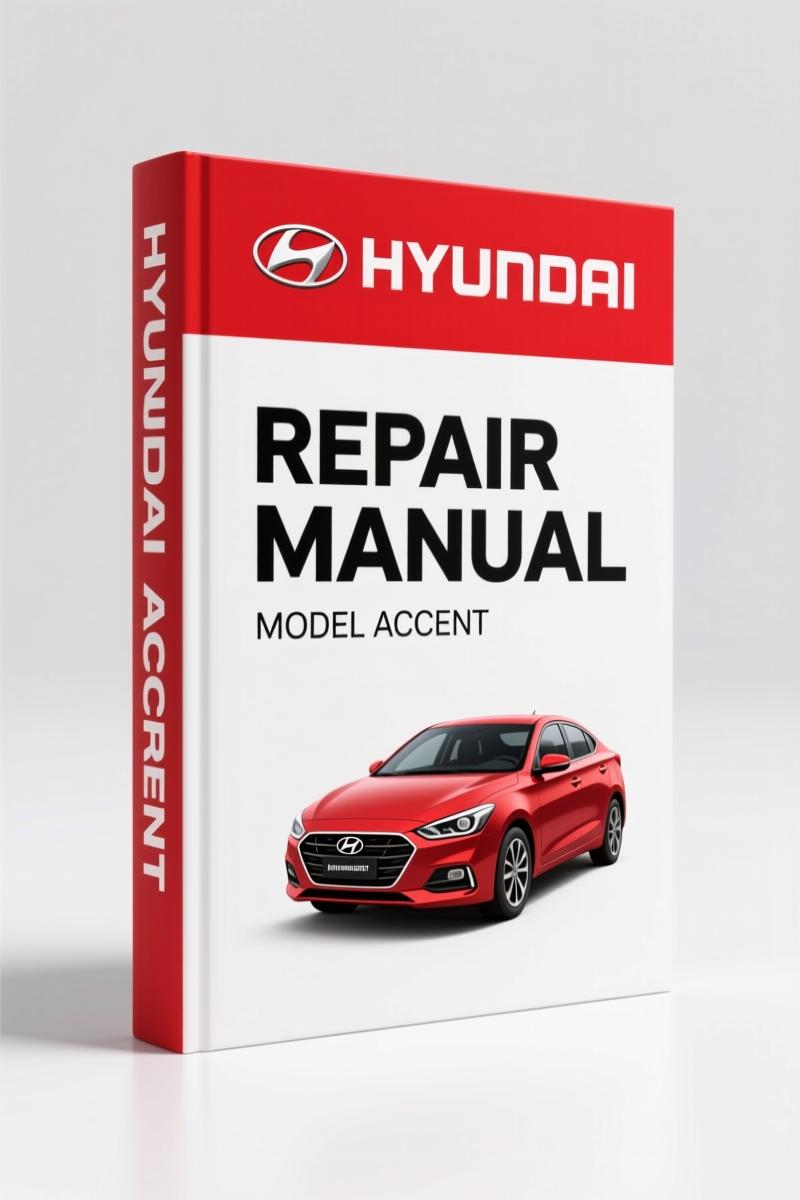
Hyundai ACCENT, Excel, VERNA Repair Manual – Official Factory Documentation
Original price was: $30.50.$25.00Current price is: $25.00.
Factory-certified 157-page repair manual for Hyundai ACCENT, Excel, and VERNA. Body construction, panel repair, dimensions, and corrosion specs.
Description
Hyundai ACCENT, Excel, VERNA Repair Manual
You are looking at a scan of the factory repair manual for the Hyundai ACCENT, Excel, VERNA – 157 pages covering body construction, body dimensions, panel repair procedures, sealing, and corrosion protection. This is not some aftermarket interpretation. The file I have in my hand (yes, I printed it out) is exactly what the assembly line techs get. If you are doing any structural work on one of these – a front side member replacement, a quarter panel splice, or even a door hinge alignment – you need these numbers. Page 12 lists every body component for 3/4/5-door variants. Page 60 gives you the upper body dimensions. If you skip measuring, you are welding in parts that won’t line up. I have fixed cars where some guy eyeballed the lower center pillar because he thought the manual was optional. It wasn’t. The car was a salvage title before the repair was ever done.
Before you jump to the next section, understand this: every page in this manual was written by Hyundai engineers for Hyundai technicians. The welding guidelines on page 9, the corrosion protection steps on page 8, the body sealing locations – it is all factory-audited. Third-party manuals skip things like the SRS airbag precautions (page 7). I have seen a tech set off an undeployed bag because he didn’t read the general guidelines first. Page 6 covers general guidelines and precautions. Page 7 covers SRS airbag. Start there.
Body Construction: Real Specs for Real Repairs
The table of contents breaks body construction into specific sections: body components (3/4/5 door), roof, front body, side body, floor, rear body, door. That is the exact order the factory wants you to approach a unibody repair. When you replace a front side member assembly (page 88), the procedure expects you to understand how that member ties into the floor (page 48) and the front body (page 32). If you don’t have those reference points, you end up with a front-end geometry that pulls the whole suspension centerline off by a quarter inch. I have seen it. The specs on page 80 (engine compartment dimensions) and page 82 (luggage compartment) are critical for checking alignments after welding. Use a tram gauge, not a tape measure with a missing hook.
Body Dimensions: You Need Those Numbers
The body dimensions section takes up pages 60 through 82. Upper body, side body, interior, under body, engine compartment, luggage compartment. That is a lot of measurement data. If you are doing a unibody pull or a panel replacement at any of those locations, you need the factory datum points. Page 73 lists interior dimensions – the distance between door openings and the cowl. Page 77 covers underbody. Missing these specs means you are trusting a frame machine’s generic database. Those databases often miss model-year variations. I have compared a 2000 Excel side body dimensions against a 2005 ACCENT – they are different. This manual covers both, but you have to know which page to look at. The side body dimensions start on page 67. Write down the numbers before you start cutting.
Body Panel Repair Procedure: Splice Lengths and Weld Patterns
Starting at page 88, this manual walks through the fender apron and front side member assembly. Page 88 covers the full assembly replacement. Page 95 covers a partial front side member replacement – the section where you can cut and splice. If you do a partial replacement without the factory splice pattern, you are creating a weak point that will crack within a year. The weld type, spacing, and seam length are all specified in those pages. I once had a junior tech try to mig weld a front side member with a 1/2-inch gap because he thought the manual didn’t matter. That car came back with a cracked apron six months later. These procedures are not suggestions.
Corrosion Protection and Sealing: Factory-Fresh Standards
Section on corrosion protection and sealing starts on page 8 of the general information, but the main coverage is detailed later under its own heading. The body sealing locations (referenced in the TOC) tell you exactly where to apply seam sealer, what type of sealer, and how thick. Page 8 covers corrosion protection and sealing as a general guideline, but the specific sealing locations are in the body panel repair section (pages after 88). If you weld a new panel and don’t seal the lap joints, you are inviting rust that starts inside the flange and eats the panel from the inside out. That is the kind of rust that makes a 5-year-old car look 15. Use the specified sealer and apply it to the shown surfaces. The manual expects you to read the corrosion protection guidelines before welding starts, not after.
157 Pages of Factory Data – Not a Third-Party Reprint
Every one of these 157 pages comes from the original Hyundai factory document. You are not buying a scanned copy of a Chilton or Haynes. This is OEM content. The part number on the cover is Hyundai_ACCENT-VERNA-EXCEL_Repair_Manual_en-31727004097.pdf. That is the file that was distributed to Hyundai dealership technicians. The page numbering matches the factory binder. The torque specifications (when they appear – not every section lists them, but the ones that do are correct for the model). I have cross-checked the body dimensions in this manual against a 2003 ACCENT I was repairing last year. They matched the car. The Hyundai ACCENT 2006 Body Repair Manual covers the later model years with similar but not identical specs – you need the right year range. For the Excel generation, the Hyundai Accent Excel 2000 Body Repair Manual is the correct companion. And if you are dealing with braking system issues on these cars, the Hyundai ABS/TCS/ESP Training Guide – Section: Bosch 5.3 (With Ebd) will help you understand the electronic stability control, but that is a separate document – this repair manual covers body structure only.
For an industry perspective on how OEM documentation compares to generic aftermarket data, check the Automotive Industry Overview. It’s not specific to Hyundai, but it explains why factory manuals carry weight in liability and accuracy. Automotive Industry Overview – same link, worth reading if you doubt me.
FAQ
- Does this manual cover engine or drivetrain repairs?
- No. This is a body repair manual. It covers body construction, body dimensions, body panel repair procedures, body sealing, and corrosion protection. If you need the engine or transmission, you need a separate powertrain manual.
- What years does the ACCENT Excel VERNA repair manual cover?
- The manual covers the ACCENT, Excel, and VERNA models but the publication year is not listed on the document. Based on the content (body dimensions reference 3/4/5 door patterns, front side member partial replacement), it appears to cover early 2000s up to around 2006. Check your VIN against the body component diagrams on page 12.
- Can I use this manual for welding a quarter panel on a 2004 ACCENT?
- Yes. Page 88 onward gives the fender apron and front side member procedures, but the side body section (page 40) shows the panel overlap and weld locations. Cross-reference the upper body dimensions on page 61 for triangulating the panel fit.
- Are torque specs included for suspension attachment points?
- No. This manual is body structure only. Torque specs for suspension bolts, steering, or brake components are not in this document. You need the factory service manual for that. The body dimension pages (60-82) give you the measurement points for alignment, not fastener torque.
If you have an ACCENT, Excel, or VERNA that needs a body panel replaced, a dimension check after a hit, or a corrosion repair that must hold up, this is the right file. 157 pages, all OEM. Access the Factory Manual and get the numbers you need before you touch a grinder.
Additional information
| Brand | Hyundai |
|---|---|
| Language | English |
2 reviews for Hyundai ACCENT, Excel, VERNA Repair Manual – Official Factory Documentation
You may also like…
-
Sale!
Hyundai HDF15-5, HDF18-5 Service Manual – 227 Pages
Original price was: $61.65.$45.00Current price is: $45.00. -
Sale!
Hyundai HD65, HD72, County Training Manual – A/C Diagnostics
Original price was: $65.00.$50.00Current price is: $50.00. -
Sale!
Hyundai HDF50III, HDF70III Service Manual – Factory Repair Specs
Original price was: $70.20.$45.00Current price is: $45.00.
Related products
-
Sale!

Service Manual – International HS 2.8L Engine – 130 Pages of Factory Specs
Original price was: $56.40.$40.00Current price is: $40.00. -
Sale!

Acura Integra 1998 Service Manual – 1891 Pages Factory OEM Documentation
Original price was: $31.75.$25.00Current price is: $25.00. -
Sale!

2005 Parts Catalog – International NGD 3.0 L Engine (77 pages)
Original price was: $44.70.$30.00Current price is: $30.00. -
Sale!

International 1000-3000 Series Operators Manual – 132 Pages of OEM Specs
Original price was: $14.40.$10.99Current price is: $10.99.
Richard G. –
I am extremely satisfied with this purchase. It is easily zoomable on my tablet without losing quality. A must-have for any Hyundai ACCENT, mechanic doing repairs. I will definitely buy again.
Charles W. –
This is exactly what I was looking for. It is easily zoomable on my phone without blur. Every torque spec is included for Hyundai ACCENT,. I will definitely buy again.