
Hyundai 1.5 L, 1.6 L, 1.8 L Technical Manual – Factory Engine Specs
Original price was: $35.55.$22.50Current price is: $22.50.
Factory engine mechanical data for Hyundai 1.5 L, 1.6 L, 1.8 L. 88 pages with torque specs, timing procedures, and fluid capacities.
Description
Hyundai 1.5 L, 1.6 L, 1.8 L Technical Manual – 88 Pages of Factory Engine Specs
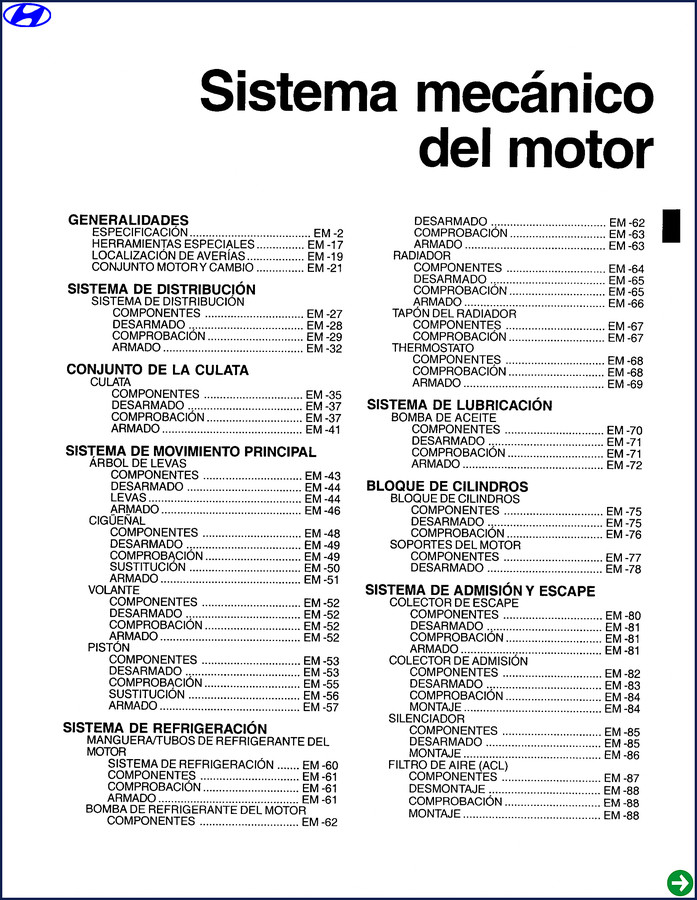
If you are wrenching on a Hyundai 1.5 L, 1.6 L, or 1.8 L engine and don’t have the factory spec sheet in front of you, you are working blind. I have torqued more head bolts than most people have had hot meals, and I can tell you the difference between a job that lasts and a come-back is having the correct clearance, torque, and assembly order. This 88-page Hyundai 1.5 L, 1.6 L, 1.8 L Technical Manual is the real deal – an OEM-level document that lays out the mechanical system from the timing chain to the oil pump. No aftermarket translation, no guesswork.
7 Systems Covered in This Manual
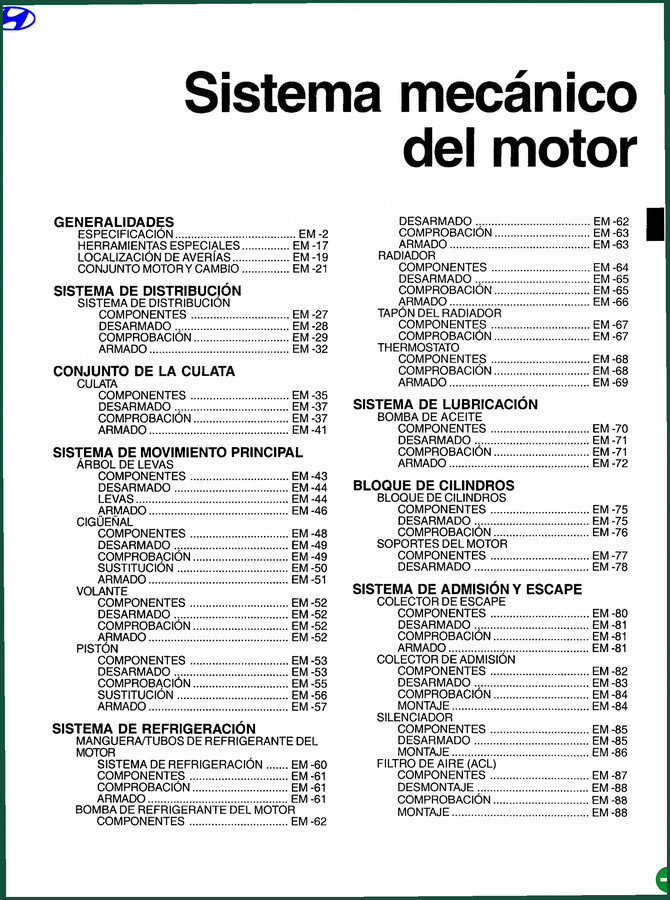
The manual breaks down the engine into seven major systems. Starting with general specifications on page 2, it moves into special tools, fault localization, and engine removal. Then you get into the timing system, cylinder head assembly, main moving parts (camshaft, crankshaft, flywheel, pistons), cooling system, lubrication system, cylinder block, and intake/exhaust. Each section includes a component diagram, disassembly steps, inspection criteria, and reassembly torque values. Page 2 shows the specification table with bore, stroke, and compression ratio for the 1.5 L and 1.6 L variants. The 1.8 L is covered in the same procedures – the differences are noted in the component dimensions.
Does This Manual Include Torque Values for the Cylinder Head?
Yes, the cylinder head section (starting around page 35) includes torque sequences and values. Factory manuals use a specific tightening order and multi-step torque angles. This document gives you both the initial torque and the final angle turn. I have seen DIYers skip the angle step and end up with a blown head gasket. Do not be that guy. The manual also lists the clearance limits for valve seats and guide oversizes – dimensions you will not find in a generic repair book.
Timing System: Factory Disassembly and Reassembly Order
Timing errors cause bent valves and ruined days. The timing system section (starting page 27) walks you through disassembly, inspection, and assembly of the chain or belt drive. It includes the exact alignment marks and tensioner preload. If you are replacing a timing chain on a Hyundai 1.6 L, you need the camshaft holding tool specs – the manual lists the special tools required. Page numbers are given for each step. Follow the order exactly, and you will not be chasing a no-start later.
Torque Specs and Clearance Tables – Why They Matter
Every spec in this manual comes from Hyundai’s engineering department. For example, the cylinder head bolt torque is not a range – it is a precise value with an angle. The crankshaft main bearing clearance is given with a limit. If you are rebuilding a 1.8 L engine, you need the piston ring end gap spec. All of that is in this manual. I have watched guys reuse head bolts because they “felt fine” – that is a leak waiting to happen. Factory specs tell you when to replace. This 88-page document also covers the cooling and lubrication systems with pump clearance checks and thermostat testing.
Get the Right Tool List Before You Start
Special tool section starts on page 17. It lists the pullers, holders, and alignment tools you need. Do not assume you can improvise. The manual calls out specific Hyundai part numbers for each tool. If you are working on a Hyundai 1.5 L in a home garage, you can borrow or buy the correct tools. Using the wrong tool can damage the camshaft journals or the crankshaft seal surface. Page 17 gives you the part numbers, so you can order ahead.
Source Validity: OEM vs Aftermarket Reprints
This is a direct scan of the original Hyundai technical manual. Aftermarket manuals often condense steps or change torque specs to fit multiple models. I have seen aftermarket books list a single torque value for all bolt sizes – that is dangerous. This manual gives you factory-specific data. For background reading on engine theory, the Automotive Industry Overview provides context, but for hands-on work this manual is the tool you need. If you also work on Hyundai commercial engines, check the Hyundai Universe Technical Manual – 16-Page OEM Spec Reference for a broader reference. For later model engines like the Gamma or Theta, the Hyundai Beta, Alpha, Gamma, Theta, Mu 2012 Technical Manual – OEM Specs covers those families. And if you need the complete engine mechanical specs for the Elantra, the Hyundai Elantra Engine Mechanical Specifications has you covered. Transmission work often ties into engine specs; the Manual Transmission section of this manual covers the flywheel and related components.
Who Should Own This 88-Page Technical Manual?
Any DIY mechanic or home garage enthusiast tackling a Hyundai engine rebuild, timing job, or head gasket replacement on a 1.5 L, 1.6 L, or 1.8 L. It is also useful for shop owners who want to give their junior techs a hard copy to follow. The manual is in Spanish, but the numbers, diagrams, and torque specs are universal. If you can read a spec table and follow pictures, you will get the job done correctly.
- Is this manual in English?
- No, it is in Spanish.
- Does it cover the 1.8 L engine?
- Yes, the manual includes specifications and procedures for the 1.5 L, 1.6 L, and 1.8 L variants. The specification table on page 2 lists bore and stroke for 1.5 L and 1.6 L, but the 1.8 L is referenced in the general disassembly sections.
- Can I use this for a 2010 model?
- This manual does not have a publication year, but the content is based on the Hyundai engine family from the late 1990s through early 2000s. If your engine is a 1.5 L, 1.6 L, or 1.8 L with DOHC and similar architecture, the mechanical specifications for cylinder head torque, valve clearance, and timing chain alignment will apply. Always verify with your vehicle’s VIN and engine code. For later models with variable valve timing, you may need supplementing bulletins.
- Are torque values given in lb-ft?
- The manual uses metric (Nm) and imperial (lb-ft) equivalents. Page 2 shows dimensions in inches, and the assembly sections include Nm values.
If you are ready to stop guessing and start working with the original factory data, access the factory manual now. That 88 pages of verified specs will pay for itself the first time you avoid a stripped bolt or a coolant leak.
Additional information
| Brand | Hyundai |
|---|---|
| Language | English |
3 reviews for Hyundai 1.5 L, 1.6 L, 1.8 L Technical Manual – Factory Engine Specs
You may also like…
-
Sale!
Hyundai HDF15-5, HDF18-5 Service Manual – 227 Pages
Original price was: $61.65.$45.00Current price is: $45.00. -
Sale!
Hyundai HDF50III, HDF70III Service Manual – Factory Repair Specs
Original price was: $70.20.$45.00Current price is: $45.00. -
Sale!
Hyundai HD65, HD72, County Training Manual – A/C Diagnostics
Original price was: $65.00.$50.00Current price is: $50.00.
Related products
-
Sale!

International 1000-3000 Series Operators Manual – 132 Pages of OEM Specs
Original price was: $14.40.$10.99Current price is: $10.99. -
Sale!
1995 Operators Manual – International 1000-4000 Series | OEM Documentation
Original price was: $12.49.$9.99Current price is: $9.99. -
Sale!
1993 Electrical Schematic – International 1000/3000/4000 Bus Chassis OEM Wiring Diagrams
Original price was: $29.26.$22.00Current price is: $22.00. -
Sale!
1993 Operators Manual – International Bus 1000-3000 OEM Specs
Original price was: $12.30.$7.99Current price is: $7.99.
pro_mechanic –
Great workshop guide. Instant access after payment. Every wiring layout is included for Hyundai 1.5. Saves me a lot of dollars.
Charles W. –
I am extremely satisfied with this transaction. The scan is high-quality and easy to navigate. It helped me to rebuild my Hyundai 1.5 electrical system. I will recommend this shop to others.
David K. –
I am extremely satisfied with this manual. The document is very clear. It guided me to rebuild my Hyundai 1.5 transmission. I will definitely buy again.