
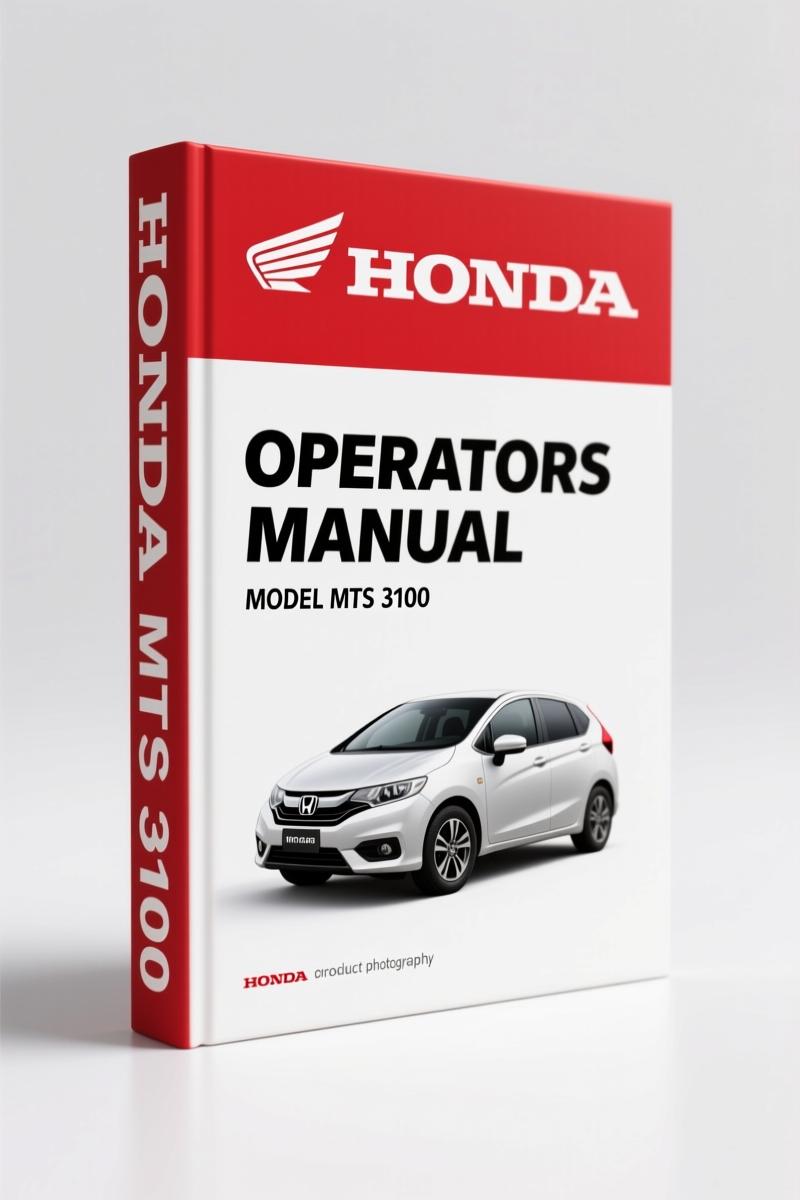
Honda MTS 3100 2003 Technical Manual – OEM Diagnostic Supplement
Original price was: $17.36.$10.99Current price is: $10.99.
OEM diagnostic supplement for Honda MTS 3100 covering ATTS, SRS, ABS/TCS, 4WS, EPS – 136 pages, factory test modes, DTC lists.
Description
Honda MTS 3100 2003 Technical Manual
I’ve seen too many guys waste a Saturday chasing a code with a Chilton’s that says “refer to dealer”. That’s not how you get paid, and it’s not how you fix a car. Honda MTS 3100 systems—ATTS, SRS, ABS/TCS, 4WS, EPS—are all controlled by computers that talk back only when you speak their language. This Technical Manual is the original 2003 Vetronix publication that tells you exactly how to make the MTS 3100 tester talk to those modules. It’s 136 pages of factory procedures, not guesswork.
Active Torque Transfer System (ATTS): Test Mode Navigation
The ATTS section (first chapter) walks you through Preparation for Checking the ATTS—starting with how to operate from the Test Mode Menu. You get the character size selection and the sequence for using the different test modes. Page 3 of the PDF includes the warning about exhaust gas and setting the parking brake. You skip that step and you’re not just wasting time; you’re taking a risk. The manual also shows you how to run the ATTS Test Mode under Misc. Tests, which is where you’ll verify the torque vectoring actuators are responding correctly. If you’ve ever had an ATTS light that wouldn’t clear, the Freeze Data and Snapshot modes are your friends. This chapter covers all of that with the exact button presses the MTS 3100 expects.
Supplemental Restraint System (SRS): Precautions & DTC Clearing
SRS work is not a guessing game. One wrong move and you’re buying an airbag module or worse. This manual starts with the precautions—using Test Harness B, handling the backup power, and the sequence for disabling the system. Then it runs through the History DTC mode and Clear mode. Without the factory step order, you’ll set a code just by looking at it wrong. The DTC List and Descriptions are in section 8, with the exact fault conditions. I’ve used this to clear a stored code on a Prelude that three other techs couldn’t crack, because they didn’t know the character size had to be set to ‘large’ for the display to show the full text. It’s in the manual.
ABS/TCS Diagnostics: Using Function Test Mode
Brake system trouble on a 2003 Honda with ABS-TCS? The manual has a dedicated chapter covering preparation (selecting character size again) and then the DTCs mode, Data List, Snapshot, and Function Test. Function Test is the mode that cycles the solenoids and pumps so you can hear and feel if they’re working. The DTC List section (8-1) gives code-by-code descriptions. If you’re chasing an intermittent ABS light, the Snapshot mode can capture data just before the code sets. That’s real diagnostic power, not a generic “check wheel speed sensor” note. You get the actual factory thresholds.
4 Wheel Steering (4WS): Freeze Data & Snapshot Mode
4WS is one of those systems that makes a car feel planted at speed, but when it fails, the handling gets weird. This manual walks you through the Test Mode Menu for 4WS, then Troubleshoot, Data List, Freeze Data, Snapshot, Clear, and Neutral modes. The Neutral Mode is specific to 4WS—it centers the rear steering rack for alignment. Without this procedure, you can’t zero the steering angle sensor properly. The Freeze Data mode stores the vehicle speed and steering angle at the time of a fault, which saves you from having to replicate the condition. That’s the kind of detail aftermarket docs leave out.
Electric Power Steering (EPS): DTC List and Descriptions
EPS failures often feel like a dead battery until you scan it. The EPS chapter covers the same test mode structure: Troubleshoot, Data List, Freeze Data, Snapshot, Clear, and Misc. Test. But the real value is the DTC List (section 8-1) and DTC Descriptions (8-2). Each code is broken down with the condition that sets it and the circuit involved. I’ve seen a guy replace an entire EPS rack because a generic manual said “possible steering angle sensor fault.” The factory DTC text pointed him to a loose ground at the column. That’s a $3000 difference.
OEM vs Aftermarket: Why This Manual Matters
I’ve got a stack of aftermarket manuals that tell you what to do but never show you the exact button sequence or the factory DTC format. This one is a Vetronix Corporation original—part number 08002640, copyright 2003. It was written for trained service personnel using the MTS 3100 tester. The scan is clean, the bookmarks are intact, and every page matches the printed original. If you’ve used a third-party scan tool manual that says “refer to vehicle service manual,” you know the frustration. This is the vehicle service manual supplement for the diagnostic system itself. You get the glossary and abbreviations too, which are essential when the tester throws a term like “ATTS torque request signal” and you need to know what the PCM is asking for.
Skip the aftermarket copies. They’re not reprints; they’re OCR disasters with missing tables. This file is the real deal.
One more thing: the manual is 136 pages, and it includes warnings on page 3 about carbon monoxide and proper ventilation. I’ve seen guys run a car in a closed bay with the MTS 3100 hooked up and pass out. Don’t be that guy. Read the warnings, set the parking brake, block the wheels, and work safe.
Frequently Asked Questions
- Does this manual cover the 2003 Honda MTS 3100?
- Yes. It is the 2003 Vetronix publication specifically for the MTS 3100 tester applied to 2003 Honda/Acura models. The master table of contents lists ATTS, SRS, ABS/TCS, 4WS, and EPS.
- What torque specifications are included?
- None. This is a diagnostic supplement for the MTS 3100 scan tool. It covers test modes, DTCs, and data lists—not assembly torque values. You get the torque transfer system (ATTS) diagnostics, but no bolt torques.
- Can I use this manual without the MTS 3100 tester?
- Not effectively. The entire manual assumes you have an MTS 3100 with the correct program card. Without it, the test mode steps (snapshot, freeze data, etc.) are useless. You’ll want the Honda/Acura MTS 3100 Operator’s Manual 1992-2003 to understand the tester itself.
- How many pages is the manual?
- 136 pages. It’s a complete scan of the original OEM supplement, including all chapter contents and glossaries.
If you’re diagnosing a 2003 Honda with any of these five systems, this file saves you from flipping through vague aftermarket books. Access the Factory Manual from AutoRepairManuals and get the step‑by‑step procedures that match the factory diagnostic tool.
Additional information
| Brand | Honda |
|---|---|
| Language | English |
4 reviews for Honda MTS 3100 2003 Technical Manual – OEM Diagnostic Supplement
You may also like…
-
Sale!
Honda NSF250R 2012 Parts Catalog – OEM Exploded Views & Part Numbers
Original price was: $55.80.$45.00Current price is: $45.00. -
Sale!
Honda BF75D, BF90D 2011 Service Manual – Factory Shop Manual
Original price was: $89.70.$65.00Current price is: $65.00. -
Sale!
Honda RSX 2005 Service Manual – Factory Specs for Engine, SRS & Emissions
Original price was: $71.10.$45.00Current price is: $45.00. -
Sale!
Honda NSS250, NSS250A, NSS250S, NSS250AS Service Manual – 401 Pages Factory Specs
Original price was: $67.95.$45.00Current price is: $45.00.
Related products
-
Sale!

1989 Service Manual – International 2000-8000 Electrical Systems
Original price was: $72.00.$50.00Current price is: $50.00. -
Sale!

Service Manual – International HS 2.8L Engine – 130 Pages of Factory Specs
Original price was: $56.40.$40.00Current price is: $40.00. -
Sale!

1994 Troubleshooting Manual – International 1000-4000 FBC
Original price was: $60.00.$50.00Current price is: $50.00. -
Sale!
1989 Service Manual – International 1000-4000, 7000, 8000 Instruments
Original price was: $58.80.$40.00Current price is: $40.00.
Thomas B. –
I am extremely satisfied with this purchase. The file quality is excellent. Contains detailed schematics for Honda. I will definitely buy again.
Charles W. –
Perfect factory service manual. The scan is high-quality and easy to navigate. Contains clear bolt torque specs for Honda. Saved my repair job! Thanks.
gearhead88 –
Great OEM spec sheet. Instant access after checkout process. It helped me to troubleshoot my Honda MTS engine. Saves me a lot of dollars.
Michael T. –
Outstanding! The scan is high-quality and well indexed. Every torque spec is included for Honda MTS. I will recommend this shop to others.