
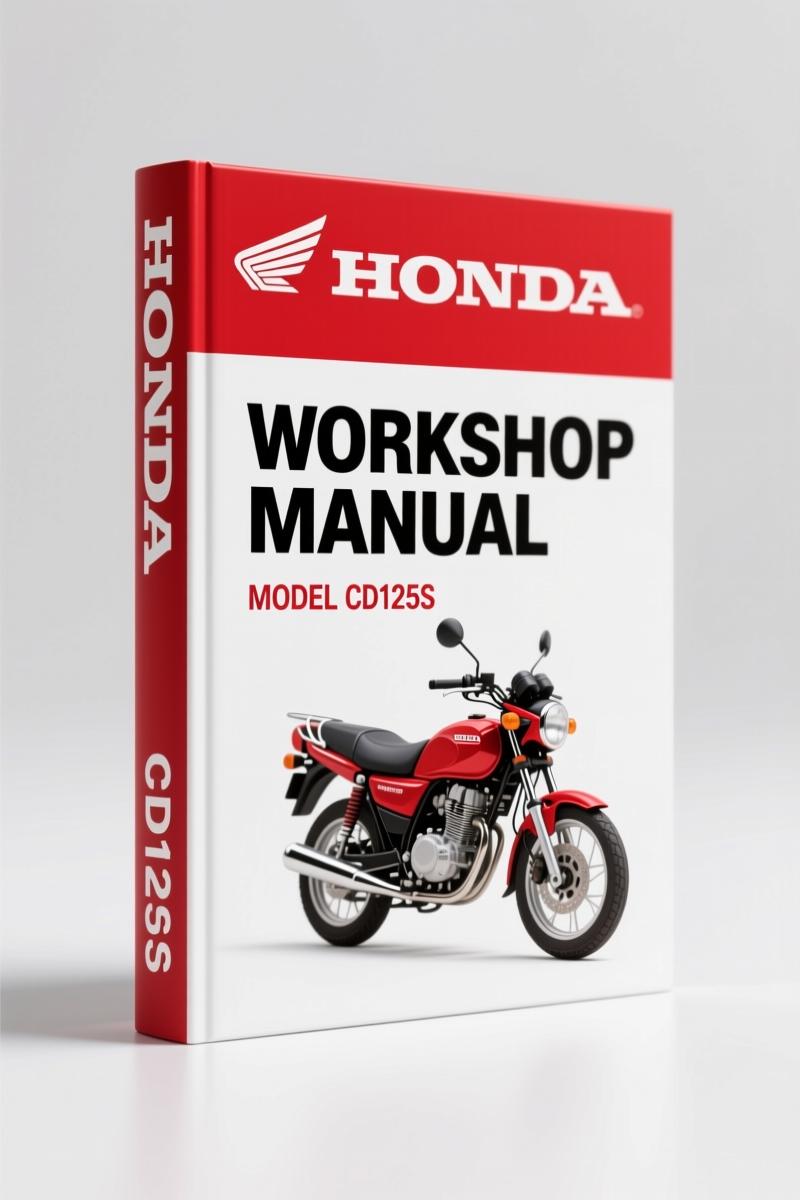
Honda CB100, CL100, SL100, CB125S, CD125S 1971 Workshop Manual
Original price was: $39.50.$25.00Current price is: $25.00.
101-page factory workshop manual for Honda 100-125 single-cylinder models (1971). Covers engine, chassis, electrical, with supplement for TL125.
Description
Honda CB100, CL100, SL100, CB125S, CD125S 1971 Workshop Manual
I’ve been turning wrenches for 28 years, and I’ve seen more aftermarket manuals that are wrong than right. When you’re working on a 1971 Honda CB100 or one of its siblings – the CL100, SL100, CB125S, or CD125S – you need the factory book. Not a reprint from some third-party that guessed the torque values. This Honda CB100, CL100, SL100, CB125S, CD125S 1971 Workshop Manual is the real thing: 101 pages of OEM procedures, straight from Honda Motor Co., Ltd. 1971. If you’re a home mechanic or a pro, this is the only document you should trust for disassembly, adjustment, and repair.
Maintenance Operations: The 15-Step Sequence
This manual kicks off with a complete maintenance rundown – 15 operations that cover tappet adjustment, carburetor tuning, breaker point and ignition timing, clutch adjustment, spark plug inspection, oil change, filter cleaning, cam chain adjustment, fuel system inspection, air cleaner service, brake adjustment, drive chain adjustment, battery electrolyte check, front fork oil replacement, and cylinder compression check. That’s the kind of checklist you need to keep a bike running right. Page 5 starts the section, but you’ll refer back to it every service interval. The supplement also includes tappet clearance and other adjustments for the TL125 models.
The manual also includes a list of special tools (page 2) that Honda recommended for the job. You don’t need all of them, but knowing which ones are required helps you avoid using the wrong puller or compressor.
Engine Section: Cylinder, Head, and Piston Work
When you’re tearing into the engine, the manual lays out exactly what you can do without pulling the engine, and then the full removal and installation procedure. The cylinder, cylinder head, and piston section (page 15) shows you the disassembly steps and the critical torque sequence for the head bolts. Valve removal, oil pump, clutch, gear shift mechanism, cam chain tensioner, AC generator, crankshaft, transmission, primary kick starter, and carburetor – each subsystem gets its own chapter with detailed exploded views and clearance specifications. You won’t find a single generic diagram. These are the factory drawings with Honda part numbers and tolerances. If you’re rebuilding the top end, having the correct valve clearance and piston ring gap is essential. This manual gives you those numbers. The supplement also includes additional notes on clutch and transmission for the TL125. This is the kind of detail that separates a reliable rebuild from a leaky mess.
Brake Adjustment: Front and Rear Procedures
Brakes are not something you guess at. The chassis section covers front brake and front wheel (page 37) and rear brake and rear wheel (page 40). The supplement adds front brake adjustment (page 80) and rear brake adjustment (page 80) plus pedal height adjustment (page 81). Honda gave you the exact procedure for adjusting the brake arm, cables, and the rear brake pedal height. Follow it, and you’ll have consistent stopping power. Skip the guesswork.
Electrical System: Generating and Charging
The electrical section (starting page 53) covers the generating system, charging system, ignition system, battery, and auxiliary electrical equipment. If your bike’s lights are dim or the battery won’t hold a charge, you’ll find the troubleshooting steps and the factory wiring diagram on page 68. The supplement also includes AC generator removal and stator inspection. This is not a generic schematic – it’s the exact wiring for the CB100, CL100, SL100, CB125S, and CD125S models. Check the charging system procedure before you replace any parts.
Technical Data and Wiring Diagram: The Specs You Need
Page 67 is where the technical data lives – compression ratio, spark plug gap, valve clearances, oil capacity, and more. Page 68 has the full wiring diagram. These two pages are worth the price of the manual alone. When you need to verify a spec, you flip to page 67. When you’re tracing a short, you look at page 68. That’s how it works in a real shop. The wiring diagram is color-coded and shows the exact routing for the CB100, CL100, SL100, CB125S, and CD125S. No generic schematic.
Source Authenticity: OEM vs Aftermarket
Aftermarket manuals often aggregate data from multiple sources and introduce errors. This manual is a direct scan of the original Honda publication from 1971. The supplement at the back includes later revisions and TL125-specific information. You get the exact same information that a Honda dealer service technician had in 1971. No third-party interpretations. No redrawn diagrams. If you’re restoring a bike or doing a full rebuild, aftermarket books will waste your time. This one won’t.
- Does this manual cover the TL125 model?
- Yes, a supplement covers the TL125.
- What torque values are listed for the cylinder head?
- The technical data on page 67 lists critical specifications like compression ratio, spark plug gap, and valve clearance. However, specific torque values for the cylinder head are embedded within the engine removal and installation procedures on pages 14-15. You must follow the step-by-step instructions for tightening the head bolts in the correct pattern and to the specified torque, which is not given as a standalone table. The supplement on page 84 also includes installation notes. This is why you need the factory manual – aftermarket books often omit these details or misprint them, leading to stripped threads or blown head gaskets.
If you own other Honda models, these manuals are also factory-sourced: Honda VF700 VF750 VF1100 Workshop Manual 1982-1988 Haynes, Honda Accord Workshop Manual – F22B1 Engine Construction & VTEC, and Honda VT750C C2V 1997 Workshop Manual – Factory Specs & Procedures. For context on the importance of OEM documentation, see Automotive Industry Overview and Automotive Industry Overview.
These 101 pages cover everything from the fuel system to the brake pedal height. If you’re serious about keeping your vintage Honda on the road, you need the real thing. Access the Factory Manual from AutoRepairManuals and put the OEM procedures on your bench.
Additional information
| Brand | Honda |
|---|---|
| Language | English |
2 reviews for Honda CB100, CL100, SL100, CB125S, CD125S 1971 Workshop Manual
You may also like…
-
Sale!
Honda NSS250, NSS250A, NSS250S, NSS250AS Service Manual – 401 Pages Factory Specs
Original price was: $67.95.$45.00Current price is: $45.00. -
Sale!
Honda BF75D, BF90D 2011 Service Manual – Factory Shop Manual
Original price was: $89.70.$65.00Current price is: $65.00. -
Sale!

Honda NSF250R 2012 Parts Catalog – OEM Exploded Views & Part Numbers
Original price was: $55.80.$45.00Current price is: $45.00. -
Sale!
Honda RSX 2005 Service Manual – Factory Specs for Engine, SRS & Emissions
Original price was: $71.10.$45.00Current price is: $45.00.
Related products
-
Sale!

Technical Manual – International 6.0L Power Stroke FICM Diagnostics
Original price was: $29.80.$20.00Current price is: $20.00. -
Sale!

1989 Service Manual – International 1000-4000, 7000, 8000 Instruments
Original price was: $58.80.$40.00Current price is: $40.00. -
Sale!
1992 Electrical Schematic – International 1000/3000/4000/2554 OEM Wiring Diagrams (132 Pages)
Original price was: $26.40.$20.00Current price is: $20.00. -
Sale!
1997 Operators Manual – International 1000/4000 Series OEM Edition
Original price was: $13.49.$9.99Current price is: $9.99.
pro_mechanic –
Outstanding! The document is very clear. Every torque spec is provided for Honda CB100,. Saved my repair job! Thank you.
Thomas B. –
I am so happy with this purchase. The scan is high-quality and well indexed. Contains clear wiring diagrams for Honda. I will definitely buy again.