
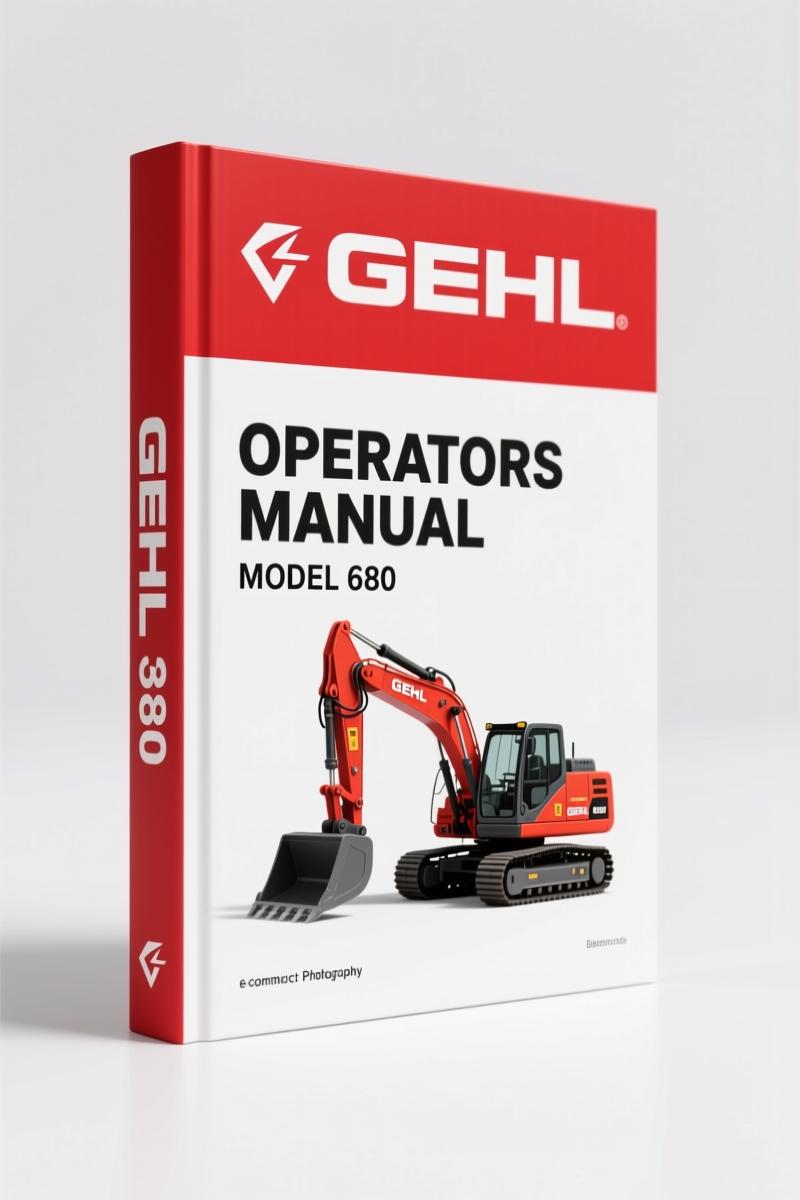
GEHL 680 2005 Service Manual – Factory Specs for 680 Wheel Loader
Original price was: $62.00.$40.00Current price is: $40.00.
Official GEHL 680 2005 Service Manual – 212 pages of factory torque specs, maintenance schedules, and wiring diagrams for the 680 wheel loader.
Description
GEHL 680 2005 Service Manual – Factory Specs for the Wheel Loader
You’ve got a GEHL 680 wheel loader on your bay, serial number starting 343010001, and you’re staring at a pile of aftermarket printouts that don’t match the hardware on the machine. I’ve been there. Torque specs off by 10 ft-lb, filter cross-references that skip, wiring colors that don’t exist. That’s why you need the actual 2005 factory document — the GEHL 680 2005 Service Manual. 212 pages of OEM data that came off the same press the dealer uses. No reprints, no copy-paste jobs from a third party.
This manual covers the machine from the cab layout to the hydraulic pilot control loop. It tells you exactly what oils go in the transmission, what the charge pressure should read, and how to read the serial plates. You want to know the hardware torque for the loader arm pivot? Page 2-10 lists every fastener with the proper value. You want the maintenance schedule? Section 3 breaks it down by hour intervals. I’ve used factory manuals from GEHL on these rigs — they don’t skip steps. That’s why I recommend this one.
Hardware Torques and Fluid Capacities
Page 2-10 in the Service Manual gives you the fastener torque table. Not a generic range — specific values for metric bolts, flange nuts, and hydraulic fittings. The Specifications chapter also covers the engine oil capacity (diesel), the fuel system quantities, and the cooling system requirements. If you’re servicing the axles or the brakes, the specs are right there on page 2-3. This is the stuff you don’t guess on. One wrong torque on a wheel stud and you’re chasing a vibration later.
Maintenance Schedule and Fluids (Section 3)
The maintenance section starts on page 3-1 with fluids and lubricants, then moves to the maintenance decal and the full schedule for the 680 model. It lists every item: fuel system bleeding, engine oil change intervals, coolant replacement, hydraulic filter swaps. The manual tells you the OEM part numbers for filters — not a cross-reference to a generic brand. You’ll find the lubrication points for the loader linkage and the drive line. If you’re doing a 500-hour service, this is your checklist.
Serial Plates and Component Numbers
Beginning serial number 343010001 is the cutoff for this manual. Page 1-2 shows where to find the serial plate on the frame and the component numbers for the engine, transmission, and axles. This is critical when ordering replacement parts. If you’re sourcing a new hydraulic pump or a starter, you need the OEM number off the original component. The manual shows the exact location and format so you don’t order the wrong part. I’ve seen guys order a Bosch pump for a 680 and get the wrong displacement because they didn’t check the plate. This manual prevents that.
Does It Cover the Electrical System and Wiring?
Yes. Section 2 under Electrical system (page 2-5) includes the alternator specs, battery capacity, starter ratings, and the fuse layout. The manual doesn’t include full wiring schematics — that’s typically in the electrical supplement — but it gives you the component specifications and the testing procedures. For a wheel loader, that means you can check the glow plug circuit, the instrument panel, and the safety interlocks. The Operation chapter (page 1-7) even diagrams the multifunctional lever and drive lever so you understand the control logic before you start pulling wires.
Audience Fit: Who Actually Needs This 212-Page Document?
If you own a GEHL 680 and do your own repairs, you need this manual. If you’re a shop that services loader fleets, you need a copy on the shelf. The manual is written for technicians who can read a spec and apply a wrench — it assumes you know how to use a torque wrench and a multimeter. Beginners will find the maintenance schedule useful, but the deeper diagnostics expect some experience. For the pro, the value is in the OEM torque values and the fluid capacities that are verified by the manufacturer. Aftermarket manuals cut corners here. This one doesn’t.
Why Factory OEM Documentation Beats Aftermarket
I’ve been a master technician for 28 years. Aftermarket manuals save money upfront, but they cost you in rework. The OEM manual for the GEHL 680 has the exact bolt tightening sequence for the axle housings, the pilot control pressures, and the high-flow hydraulic option specs (page 2-4). You won’t find that in a generic repair guide. The factory document also includes the vibration and noise level data — not useful for repair, but tells you the engineers measured everything. For the cost of an hour of shop labor, you get the whole book. That’s cheap insurance.
If you’re working on the power train or the engine, you might want the GEHL 680 Parts Catalog for part number lookups. For daily operation, the Gehl 680 All-Wheel Steer Loader Operator’s Manual is a good companion for controls and routine checks. And if you need a newer model reference, check the GEHL Z45 450Z 2012 Service Manual – Factory OEM Specifications for comparable components.
Understanding a loader’s drive system is similar to learning a Manual Transmission — you need the right gear ratios and shift points. The 680 uses a ZF transmission with specific torque converter specs. The manual documents those specs. For a deeper into powertrain fundamentals, a Manual Transmission article from a trusted source can help, but the GEHL manual is your reference for the exact machine.
- Does this manual include step-by-step removal and installation instructions?
- Yes. The maintenance section and several chapters cover disassembly and reassembly for major components like the engine, axles, and hydraulic pump. Procedures include required tool lists and safety warnings.
- What torque values are listed in the hardware table on page 2-10?
- The table specifies torque values in ft-lb for each fastener size — from M6 to M24, including grade ratings. Also included are tightening sequences for wheel nuts and loader pivot bolts. This page alone makes the manual worth owning because a stripped bolt in a hydraulic fitting can cost a whole line replacement. The manual also notes special torque for lock nuts and tension values for hydraulic hose connections. You won’t find this level of detail in a generic handbook.
This is the manual that pays for itself the first time you avoid a parts ordering mistake or a fastener failure. Access the Factory Manual now and put the OEM data on your tablet or print it for the shop binder. Your 680 deserves factory specs.
Additional information
| Brand | GEHL |
|---|---|
| Language | English |
3 reviews for GEHL 680 2005 Service Manual – Factory Specs for 680 Wheel Loader
You may also like…
-
Sale!
GEHL 4640E, 5240E, 2056 2012 Service Manual – 263 Pages | Factory Specs
Original price was: $75.60.$60.00Current price is: $60.00. -
Sale!
GEHL 153, 193, 223 Service Manual – Factory Specs
Original price was: $99.40.$70.00Current price is: $70.00. -
Sale!
GEHL SL4640, SL4840, SL5640, SL6640 Service Manual – 104 Pages
Original price was: $100.75.$65.00Current price is: $65.00. -
Sale!
GEHL 280 Service Manual – Official Factory Specs | AutoFix Global
Original price was: $85.20.$60.00Current price is: $60.00.
Related products
-
Sale!

2011 Parts Catalog – International 7400 SFA 6X6 – 1886 Pages of OEM Part Numbers
Original price was: $32.00.$25.00Current price is: $25.00. -
Sale!

2011 Parts Catalog – International Truck OE Parts Documentation (1786 Pages)
Original price was: $34.50.$25.00Current price is: $25.00. -
Sale!

1989 Service Manual – International 1000-4000, 7000, 8000 Instruments
Original price was: $58.80.$40.00Current price is: $40.00. -
Sale!

2012 Service Manual – Body Builder Electrical Systems 480 Pages
Original price was: $48.28.$34.00Current price is: $34.00.
gearhead88 –
Great workshop guide. Immediate link after checkout process. It guided me to troubleshoot my GEHL 680 transmission. Highly recommended for mechanics.
Richard G. –
This is just what I required. It is easily zoomable on my phone without losing quality. Every spec sheet is included for GEHL 680. Saves me hundreds of time.
Robert M. –
This is exactly what I required. Instant access after checkout process. It guided me to troubleshoot my GEHL 680 electrical system. Worth every penny.