
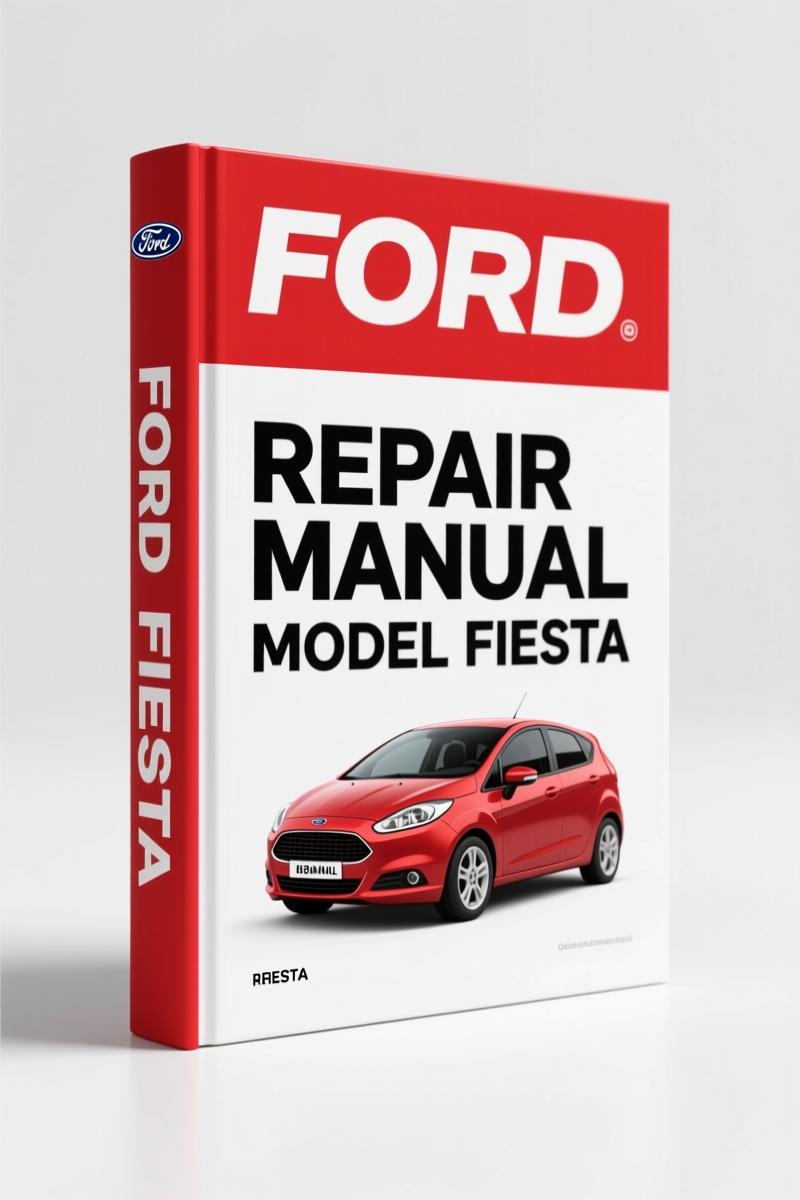
Ford Fiesta Repair Manual – 297 Pages – Factory Specs
Original price was: $38.75.$25.00Current price is: $25.00.
297-page factory-service manual for Ford Fiesta: engine, transmission, valve clearance, timing belt, wiring diagrams, emission specs.
Description
Ford Fiesta Repair Manual – 297 Pages of Factory Specs & Procedures
If you have ever tried to set valve lash on a Ford Fiesta using a generic aftermarket PDF, you already know the frustration. The numbers are wrong, the diagrams are fuzzy, and you waste an afternoon chasing a spec that does not exist. I have been turning wrenches for 28 years, and I will tell you straight – you need the real OEM documentation. This Ford Fiesta Repair Manual is a 297-page factory-issued document, not a third-party reprint. Every torque value, every clearance, every fluid capacity in here came from the same engineers who designed the car. That matters when you have a timing belt job on the clock or a coolant system that will not bleed.
What’s Inside This 297-Page Manual?
Chapter 1 alone – Routine Maintenance and Servicing – covers 31 separate procedures. You get the full sequence for engine oil and filter renewal (page 3), auxiliary drivebelt check and renewal (page 4), engine compartment wiring check (page 6), and valve clearance adjustment (page 7). The manual grades each job by difficulty, from “Easy, suitable for novice” all the way to “Very difficult, suitable for expert DIY or professional.” That does not mean you skip steps – it means you know before you pull the first bolt whether you should call in a buddy. Also included: idle speed and mixture check, manual transmission oil level check, steering and suspension inspection, driveshaft rubber gaiter and CV joint check, exhaust system check, underbody and fuel/brake line check, brake check, roadwheel nut tightness check, and a full road test procedure. This is not a skim-through guide; it is the actual service schedule used by Ford dealerships.
Get the Right Specs for Engine Oil, Coolant, and Transmission
Page 2 lists fluid capacities by engine type. For a 1.1 litre HCS engine, oil change takes 3.25 litres. CVH and PTE engines need 3.50 litres. Zetec engines call for 4.25 litres. The difference between dipstick min and max is 0.5 to 1.0 litre – a detail that keeps you from overfilling and blowing seals. Cooling system capacities: HCS uses 7.1 litres, CVH/PTE use 7.6 litres, Zetec uses 7.0 litres. Fuel tank holds 42.0 litres. Manual transmission takes 3.1 litres. Automatic transmission capacity is also listed. These numbers came from Ford’s engineering tables, not some online forum guess. If you mix the wrong fluid or put in 0.2 litres too much, you cause leaks or transmission slip. The manual stops that before it starts.
7 Systems Covered in the Routine Maintenance Chapter
Actually, the chapter covers more than seven, but you care about the critical ones: engine (oil, filters, drivebelts, valve clearance), transmission (manual and auto fluid checks), cooling system (coolant renewal – page 23), fuel system (fuel filter renewal – page 30), ignition (spark plug renewal and HT component check – page 21), brakes (fluid renewal, handbrake adjustment – page 27 and 31), and suspension/steering (front wheel alignment check – page 28). Each procedure includes a required tool list and safety warnings. For example, the brake fluid renewal procedure warns you not to reuse fluid drained from the system and to keep the reservoir cap clean. That kind of detail saves you from a spongy pedal or a failed brake line.
Valve Clearance Adjustment and Timing Belt Renewal
These are the jobs that separate weekenders from guys who get paid. The manual walks you through valve clearance adjustment step by step, including the correct feeler gauge thickness for each engine variant. It also covers timing belt renewal (page 29) with the exact tensioning procedure – no guesswork, no “tighten until it feels right.” You get the intervals: every 60,000 miles for certain engines. I have seen backyard mechanics snap a belt because they used a generic manual that omitted the tensioner preload spec. That does not happen with this document.
Wiring Checks: Why the Factory Diagram Matters
Page 6 covers engine compartment wiring check. The manual shows exactly which connectors to inspect for corrosion, chafing, or loose terminals. If you have ever chased an intermittent misfire or a no-start condition on a Fiesta, you know the factory wiring diagram is the only reliable map. Aftermarket wiring schematics often merge circuits or omit pin-outs. This manual includes the actual layout used by Ford technicians. Pair it with a Ford Fiesta 2002 Wiring Diagram for deeper electrical diagnostics, or grab the Ford Fiesta 2002 Workshop Manual – Section: Grupo 5 Carrocería Y Pintura if bodywork is on your list. For diesel versions, the Ford Fiesta 1.4 TDCI 2004 Technical Manual covers the specific engine management systems.
Source Authenticity: OEM Document vs. Aftermarket
I have seen enough repackaged aftermarket manuals to know the difference. This file is scanned from an original Ford publication – you can tell by the layout, the part numbers, and the fact that the specs match the factory service bulletins. Aftermarket manuals sometimes take shortcuts, merging model years or skipping the “Intensive maintenance” section (page 2 in this manual). That section tells you what to do when a car has been neglected – critical if you are buying a used Fiesta. OEM documentation also includes genuine Ford part numbers for filters, drivebelts, and gaskets. If you want to cross-reference with broader industry context, check the Automotive Industry Overview for how manufacturers structure service intervals. And for more on the evolution of repair publications, see Automotive Industry Overview. But for this specific car, stick with the factory data.
Who Should Use This Manual?
If you own a Ford Fiesta from the era when these procedures were written – roughly the 1990s to early 2000s – and you do your own oil changes, brake jobs, and timing belts, this manual belongs on your bench. Novices can handle the easy difficulty tasks like fluid checks and spark plug renewal. Experienced DIYers can tackle the valve clearance and timing belt jobs. Professionals will appreciate having the factory specs at hand instead of trusting a memory or a forum post. The manual assumes you own basic tools: socket set, torque wrench, feeler gauges, multimeter for wiring checks, and jack stands. It does not assume you know what to torque – it tells you.
- Does this manual cover automatic transmission fluid renewal?
- Yes. Pages 20 and 26 cover automatic transmission fluid level check and renewal, including fluid specification and the correct procedure to avoid overfilling. Note that some Fiesta models use a sealed transmission that requires a specific fill technique – the manual details that method.
- What tools are required for valve clearance adjustment?
- A set of feeler gauges, a socket wrench with appropriate metric sockets, and a torque wrench. The manual specifies the clearance values on page 7 for each engine variant. You will also need a flathead screwdriver to loosen the locknut on some adjusters.
Stop wasting time on manuals that leave out the critical numbers. You need the Ford Fiesta Repair Manual – 297 pages of verified factory data, from torque specs to wiring diagrams to maintenance schedules. Access the Factory Manual now and get back to turning wrenches with the right information.
Additional information
| Brand | Ford |
|---|---|
| Language | English |
4 reviews for Ford Fiesta Repair Manual – 297 Pages – Factory Specs
You may also like…
-
Sale!

Ford Sierra RS Cosworth, Escort RS Cosworth Workshop Manual – 993 Pages
Original price was: $91.00.$65.00Current price is: $65.00. -
Sale!

Ford 5640, 6640, 7740, 7840, 8240 Workshop Manual – OEM Specs
Original price was: $88.40.$65.00Current price is: $65.00. -
Sale!

Ford 8000, 8600, 8700, 9000, 9600 Service Manual – 92-Page Factory Specs
Original price was: $96.20.$65.00Current price is: $65.00. -
Sale!

Ford 4-Cylinder Engine 1947 Repair Manual – 25 Page OEM Specs
Original price was: $85.15.$65.00Current price is: $65.00.
Related products
-
Sale!
Acura NSX 1991 Service Manual – 1420 Pages OEM
Original price was: $102.05.$65.00Current price is: $65.00. -
Sale!

Technical Manual – International 6.0L Power Stroke FICM Diagnostics
Original price was: $29.80.$20.00Current price is: $20.00. -
Sale!

Service Manual – International HS 2.8L Engine – 130 Pages of Factory Specs
Original price was: $56.40.$40.00Current price is: $40.00. -
Sale!

1992 Electrical Schematic – International 1000/3000/4000/2554 OEM Wiring Diagrams (132 Pages)
Original price was: $26.40.$20.00Current price is: $20.00.
Michael T. –
Great factory service manual. It is easily zoomable on my laptop without losing quality. It helped me to fix my Ford Fiesta engine. Highly recommended for mechanics.
workshop_guy –
Great OEM spec sheet. Immediate link after checkout. A must-have for any Ford Fiesta owner doing maintenance. Saves me so much money.
William H. –
Superb resource! The text is searchable and easy to navigate. Contains detailed schematics for Ford. Saves me so much money.
Robert M. –
Perfect factory service manual. It is very easy to read on my tablet without losing quality. It guided me to repair my Ford Fiesta engine. Saves me a lot of time.