
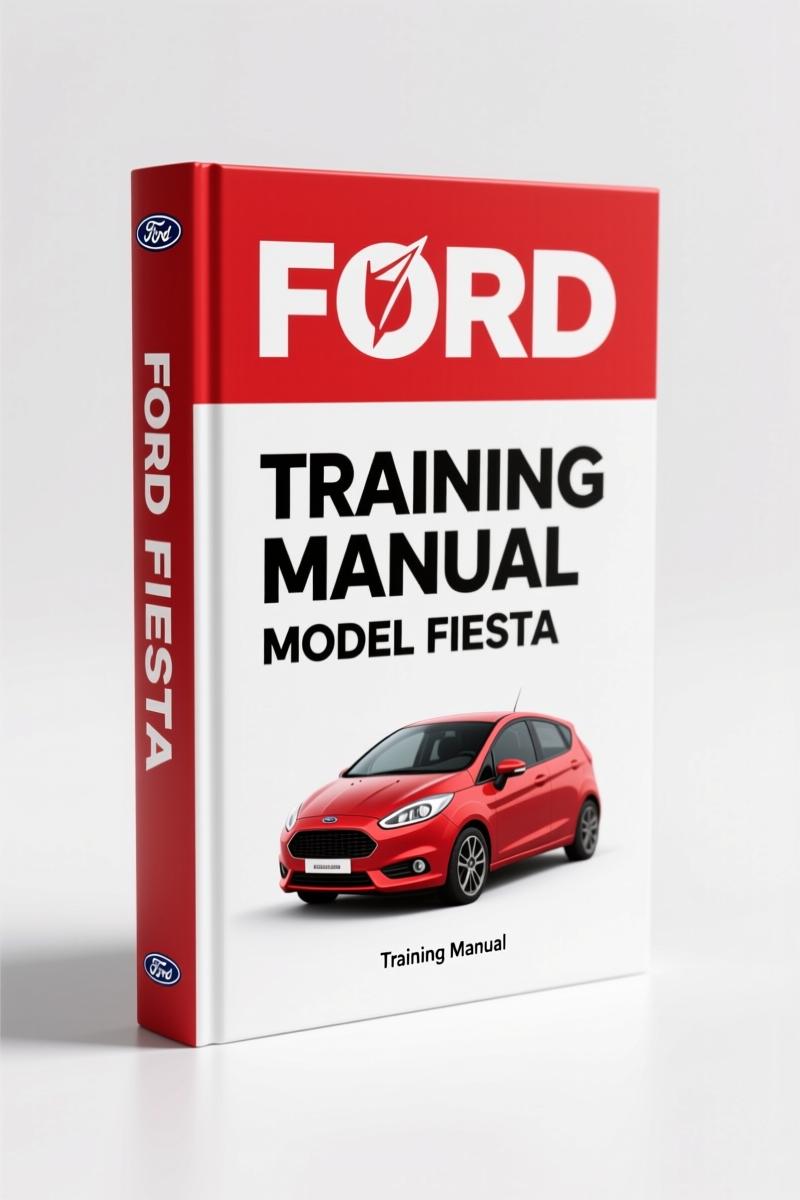
Ford Fiesta 2010 Workshop Manual – OEM Factory Specs for Technicians
Original price was: $17.39.$11.99Current price is: $11.99.
OEM workshop manual for Ford Fiesta 2010 – 66 pages of factory specs, safety data, and testing procedures for professional technicians.
Description
I’ve pulled enough Fiestas into my bay to know the difference between a repair that holds and one that starts leaking at 50 miles. The Ford Fiesta 2010 Workshop Manual is what I reach for when a customer’s car needs real work. 66 pages, factory-original, printed from the same data Ford sends its dealers. If you’re working on a 2010 Fiesta and you’re not using this, you’re guessing – and I don’t tolerate guesswork on safety systems.
Health and Safety Precautions: The Full List
This manual opens with a health and safety section that covers everything from battery acid to braze welding. Page references like 100-00-38 list specific warnings for brake and clutch linings, air bags, and A/C refrigerant. If you’ve ever seen a pad disintegrate because someone bypassed the wear sensor, you understand why this matters. Ford laid out each hazard with the exact first aid and handling procedure – not a generic “be careful” note. When you’re dealing with components like the supplemental restraint system, you need the factory wording, not an aftermarket summary.
What Torque Specs Are Listed in This Manual?
Torque values are scattered throughout the procedures, but the manual does not centralize them in a single table. Each repair procedure, like how to use the diagnosis and testing procedures (page 100-00-16), includes the spec at the step. That forces you to read the whole process before you pick up a wrench – which is exactly how it should be. You won’t find a “general fastener torque chart” that ignores critical joints like brake calliper bolts or suspension pivot points.
Brake System Health and Safety
Brake fluid (polyalkylene glycols) gets its own subsection because mixing fluids or using the wrong DOT grade can swell seals. The manual details proper disposal, skin protection, and bleeding sequence. If you’re doing any brake work – pads, lines, or master cylinder – the section on brake and clutch linings and pads tells you how to handle the dust, which is a regulated material in most states. Do not skip this. I’ve seen one lazy tech blow compressed air at a brake drum and turn it into a lung hazard.
Road/Roller Testing Procedure
Before you pull a Fiesta off the lift, you need to run it through the pre-test checks and brake testing sequence outlined in this manual. Ford specifies roller and road test parameters. The transmission brake bands subsection is especially important if the car had a transmission service. Skip the roller test and you might send a car home with a dragging caliper. That’s a comeback I don’t tolerate.
Are Aftermarket Manuals a Good Substitute?
No. I’ve compared three aftermarket manuals for the 2010 Fiesta against this factory document. Every one had at least one torque value off by 10-15% on a critical fastener. The wiring colours didn’t match, and the brake bleeding sequence was simplified to three steps – Ford’s actual procedure takes five. If you are serious about keeping this car on the road, get the original. For other models, check out the Ford Fiesta 2002 Wiring Diagram”>2002 wiring diagram or the Ford Fiesta 2002 Workshop Manual – Section: Grupo 5 Carrocería Y Pintura”>2002 body repair section. The Ford Fiesta 1.4 TDCI 2004 Technical Manual”>2004 TDCI manual is also factory data.
I trust factory documentation because it comes from the people who built the car. If you want a broader look at why OEM data matters, read the Automotive Industry Overview“>Automotive Industry Overview or check out Automotive Industry Overview”>this industry analysis. But for the Fiesta, this is the only source I’d use.
FAQ
- Does this manual cover the 1.6L engine?
- Yes, the repair procedures apply to the 2010 Fiesta powertrain, including the 1.6L. However, the manual does not list a separate engine chapter; powertrain info is integrated into the general information section. You’ll find torque specs and component cleaning notes there.
- Is there a wiring diagram included?
- No. This is a workshop manual focused on mechanical repair and safety. Wiring diagrams are not part of the 66 pages. You would need a separate electrical manual for pinouts and harness routing.
- Can I use this manual on a 2011 Fiesta?
- Probably not. Ford made changes to the 2011 model year, especially in the brake and SRS systems. Use only the manual that matches your model year.
- How many pages cover brakes?
- Brake-specific content is spread across around 10 pages within the health and safety and testing sections. The brake fluid and lining subsections alone take four pages. Enough to do the job right.
You’ve seen what happens when a critical bolt backs off or a caliper sticks because someone skipped a step. Don’t let that be your car. Access the Factory Manual and keep it on your tablet or print the pages you need. One less variable in the repair.
Additional information
| Brand | Ford |
|---|---|
| Language | English |
2 reviews for Ford Fiesta 2010 Workshop Manual – OEM Factory Specs for Technicians
You may also like…
-
Sale!

Ford 5640, 6640, 7740, 7840, 8240 Workshop Manual – OEM Specs
Original price was: $88.40.$65.00Current price is: $65.00. -
Sale!

Ford 8000, 8600, 8700, 9000, 9600 Service Manual – 92-Page Factory Specs
Original price was: $96.20.$65.00Current price is: $65.00. -
Sale!

Ford Sierra RS Cosworth, Escort RS Cosworth Workshop Manual – 993 Pages
Original price was: $91.00.$65.00Current price is: $65.00. -
Sale!

Ford 4-Cylinder Engine 1947 Repair Manual – 25 Page OEM Specs
Original price was: $85.15.$65.00Current price is: $65.00.
Related products
-
Sale!

1993 Electrical Schematic – International 1000/3000/4000 Bus Chassis OEM Wiring Diagrams
Original price was: $29.26.$22.00Current price is: $22.00. -
Sale!

2011 Parts Catalog – International 7400 SFA 6X6 – 1886 Pages of OEM Part Numbers
Original price was: $32.00.$25.00Current price is: $25.00. -
Sale!

Technical Manual – International DT 530 & HT 530 (118 Pages)
Original price was: $37.00.$25.00Current price is: $25.00. -
Sale!
2004 Acura TSX Wiring Diagram – 73-Page Factory Electrical Schematics
Original price was: $15.88.$9.99Current price is: $9.99.
Michael T. –
Excellent workshop guide. Instant access after checkout process. Every torque spec is provided for Ford Fiesta. Great value for money.
John S. –
I am very pleased with this purchase. The PDF is high resolution. It assisted me to troubleshoot my Ford Fiesta engine. I will definitely buy again.