
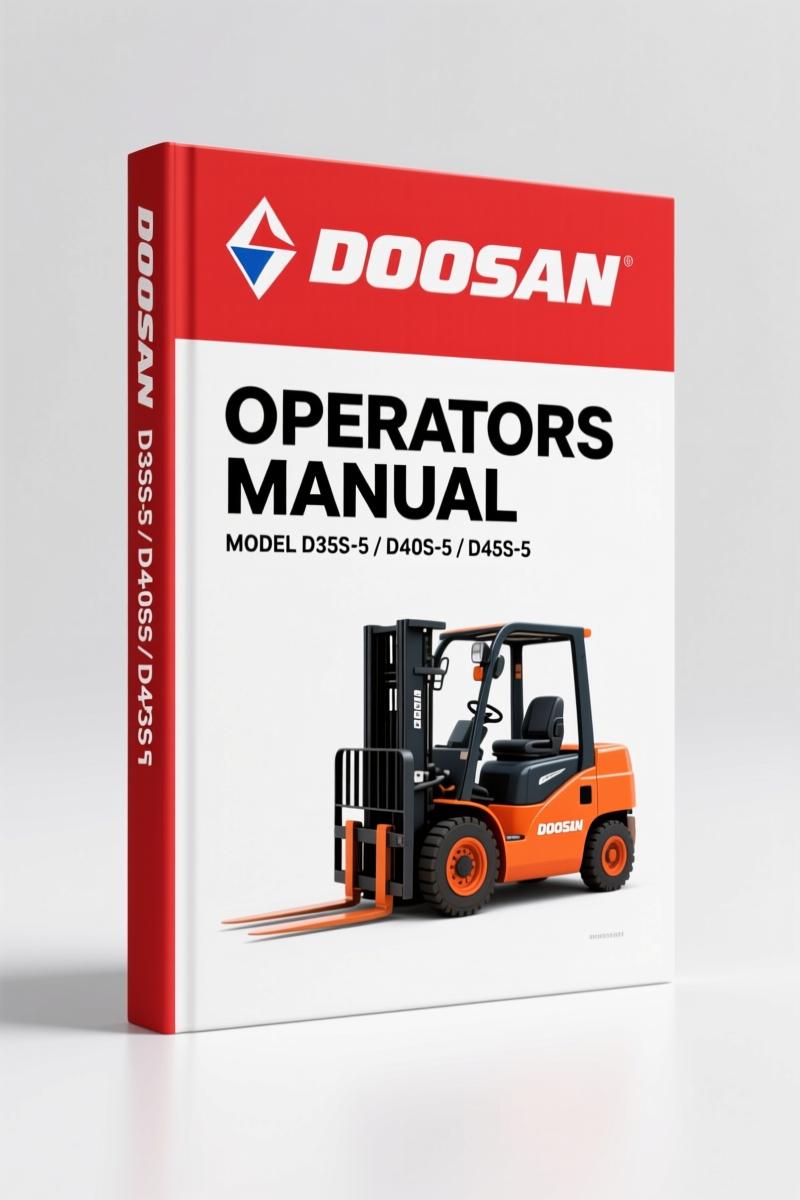
Doosan D35S-5, D40S-5, D45S-5, D50C-5, D55C-5 2007 Manual
Original price was: $36.30.$30.00Current price is: $30.00.
59-page factory Doosan Technical Manual for D35S-5 to D55C-5 models. Torque specs, brake system, drive axle procedures for 2007.
Description
Doosan D35S-5, D40S-5, D45S-5, D50C-5, D55C-5 2007 Technical Manual
If you’re rebuilding the drive axle on a D50C-5 and the torque chart in the aftermarket manual says 250 lb-ft but the factory calls for 275, which one do you trust? The wrong choice costs you a seal failure or worse. This is the Doosan D35S-5, D40S-5, D45S-5, D50C-5, D55C-5 2007 Technical Manual — 59 pages of the exact specifications Doosan put on the line. I’ve torqued more head bolts than most people have had hot meals, and I can tell you: the difference between aftermarket guesswork and factory data is the difference between a job that stays sealed and a come-back.
This manual covers the power train specifically — drive axles and brakes. Two distinct axle types: OCDB (Oil Cooled Disc Brake) and Shoe Brake. Each has its own disassembly, inspection, reassembly, and adjustment procedures. You get the general tightening torque on page 5. Need the torque for mounting the drive axle? Page 10. For the shoe brake drive axle, tightening torque is on page 45. Those are the numbers that matter.
General Tightening Torque – Where the Real Numbers Live
Page 5 lists the general tightening torque for all fasteners on the power train. Not a range — a specific value for each bolt grade and size. This is what you use when the manual doesn’t call out a special torque. Doosan expects you to reference this chart before you put a wrench on anything. For example, flange bolts get one spec, socket head caps get another. Mix them up and you strip threads or lose clamp load.
That’s it. One page, all the torque specs.
Drive Axle OCDB Type: Disassembly and Torque Specs
Starting on page 6, the OCDB type drive axle gets a full walkthrough. General operation, basic specification, and disassembly from the vehicle. The torque for mounting the drive axle is listed on page 10 — not a suggestion. Set that torque or the axle walks on the studs. The manual also covers pinion shaft adjustment, differential assembly, and wheel hub assembly. Every step has a torque or a dimension. For the bigger picture, pair this with the Doosan Lift Trucks Operation & Maintenance Manual.
Brake System: Air Removal and Functional Tests
The brake section starts on page 33. System operation, booster-brake removal and installation, and the critical air removal procedure. If you don’t bleed the brake system correctly, you get a soft pedal on a 10,000 lb forklift. The manual gives the exact sequence — no guesswork. Functional test of the hydraulic applied brake is on page 36. You follow that, you know the brake is working. Don’t skip it. Also included: wheel brake adjustment (page 38) and parking brake adjustment (page 39). If you’re also dealing with the Manual Transmission on these units, you’ll need a separate manual. This one is strictly power train and brake.
Adjusting Gear Set Backlash and Tooth Contact
Pages 28-29 cover the adjustment after assembly. Checking ring gear back face runout, adjusting gear set backlash, and adjusting tooth contact pattern. This is where good mechanics separate from hacks. You don’t just bolt it together and hope. You measure backlash with a dial indicator, then check the contact pattern with marking compound. The manual shows the acceptable pattern and tells you which shim to adjust. Without this, you get gear noise and early failure. The troubleshooting section on page 32 for OCDB type helps diagnose common problems like noise or overheating.
Shoe Brake Type: Tightening Torque and Assembly
On page 42, the shoe brake type drive axle has its own section. Basic specification on page 43, diff carrier assembly on page 44, and tightening torque on page 45 — note that these values differ from the OCDB type. Disassembly covers removal of wheel end, brake, and axle housing. Reassembly includes pinion shaft adjustment, differential assembly, and brake drum diameter spec on page 56. If you’re working on a D35S-5 with shoe brakes, you need these pages. For engine work, pair with Doosan Diesel Engine DB58S 5.8 Liter Service Manual or the Doosan G643E G643 LP Engine Service Manual.
Troubleshooting: Where to Look When Things Go Wrong
Three dedicated troubleshooting sections exist in this manual: page 32 for the OCDB drive axle, page 40 for the brake system, and page 46 for the shoe brake drive axle. Each lists symptoms, possible causes, and corrective actions. Instead of chasing wild guesses, you go straight to the factory checklist. That’s how you fix it the first time.
Source Validity: OEM vs Aftermarket Documentation
Factory documentation is the only source I trust. This is a verified factory manual from 2007. No reprints, no third-party scans. The data comes straight from Doosan’s engineering department. Aftermarket manuals often consolidate multiple models into one generic procedure, and they get torque specs wrong. I’ve seen it. This manual is specific to the D35S-5 through D55C-5 series. The safety warnings on page 3 are straight from the manufacturer. If you want to avoid liability and get the job done right, you use the OEM documentation. Even for related systems like the Manual Transmission, factory data is the only way to guarantee correctness.
Audience Fit: Who Needs This Manual?
Owners of these Doosan models — D35S-5, D40S-5, D45S-5, D50C-5, D55C-5 — doing any power train or brake work need this manual. The 59 pages break down every procedure. Beginners will find the inspection and assembly steps clear, with detailed callouts on bearing preload and gear contact. Veterans will value the exact torque values and adjustment specs. If you’re a fleet manager, having this on the shelf means your techs aren’t guessing. That saves time and parts.
Frequently Asked Questions
- Does this manual cover the engine or electrical systems?
- No. This is a power train and brake technical manual only.
- What is the difference between the OCDB and Shoe Brake drive axle sections?
- The OCDB type (Oil Cooled Disc Brake) is covered on pages 6-32 and includes its own tightening torque chart, assembly procedures for the differential carrier, and a dedicated troubleshooting section. The Shoe Brake type starts on page 42 and has different specification and tightening torque values (page 45). Both sections include disassembly, inspection, reassembly, and adjustment procedures specific to each brake system. The manual assumes you already have the vehicle safely lifted and the axle removed. If you are working on a D35S-5 with shoe brakes, you will use pages 42-59. The OCDB section applies to models with wet disc brakes.
Stop risking your work with guessed numbers. Access the Factory Manual and get the real torque specs for your Doosan D35S-5 or D55C-5. Keep it on the bench, not in a drawer.
Additional information
| Brand | Doosan |
|---|---|
| Language | English |
3 reviews for Doosan D35S-5, D40S-5, D45S-5, D50C-5, D55C-5 2007 Manual
You may also like…
-
Sale!
Doosan DX160LC-3 2014 Service Manual – 891 Pages | AutoFix Global
Original price was: $91.00.$65.00Current price is: $65.00. -
Sale!
Doosan DX420LC 2008 Service Manual – 862 Pages of Factory Specifications for Marine Excavators
Original price was: $85.15.$65.00Current price is: $65.00. -
Sale!
Doosan DA 30-5 Workshop Manual – 788 Pages Factory Specs
Original price was: $94.25.$65.00Current price is: $65.00. -
Sale!
Doosan DL250A 2012 Service Manual – 784 Pages of OEM Shop Data
Original price was: $104.00.$65.00Current price is: $65.00.
Related products
-
Sale!

1992 Electrical Schematic – OEM Wiring Diagrams for International 1000-3800
Original price was: $24.48.$18.00Current price is: $18.00. -
Sale!

Service Manual – International HS 2.8L Engine – 130 Pages of Factory Specs
Original price was: $56.40.$40.00Current price is: $40.00. -
Sale!
1991 Electrical Schematic – 112-Page OEM Wiring Diagram for International 1000-3000 Series
Original price was: $22.75.$17.50Current price is: $17.50. -
Sale!
1993 Electrical Schematic – International 1000/3000/4000 Bus Chassis OEM Wiring Diagrams
Original price was: $29.26.$22.00Current price is: $22.00.
pro_mechanic –
I am very pleased with this transaction. Instant access after checkout process. A must-have for any Doosan D35S5, mechanic doing repairs. Saves me so much dollars.
David K. –
Excellent OEM spec sheet. The text is searchable and easy to navigate. Contains detailed bolt torque specs for Doosan. I will definitely buy again.
Charles W. –
Five stars! It is very easy to read on my tablet without blur. Contains precise bolt torque specs for Doosan. Saves me hundreds of dollars.