
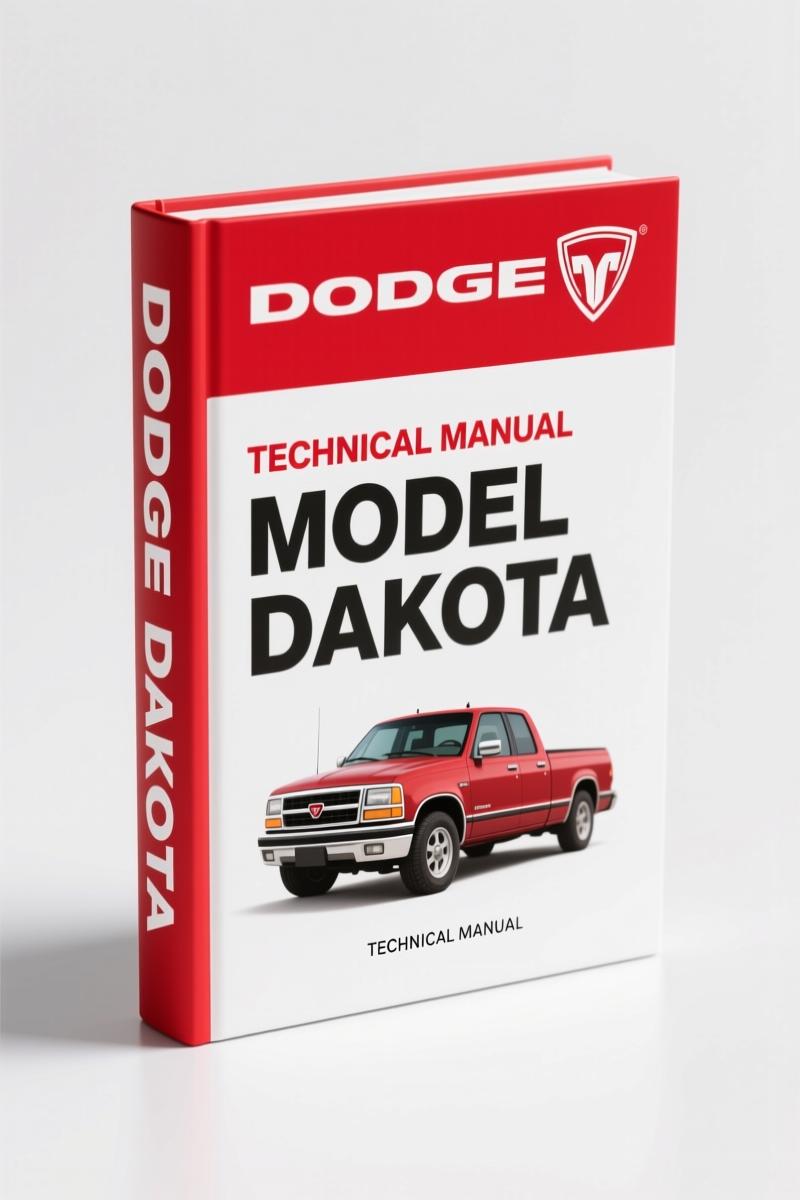
Dodge Dakota 2008 Technical Manual – OEM Parts Catalog 459 Pages
Original price was: $15.30.$10.00Current price is: $10.00.
459-page OEM technical manual for 2008 Dodge Dakota. Factory parts identification, VIN decoding, and installation diagrams for MoPar accessories, axles, and brakes.
Description
Dodge Dakota 2008 Technical Manual – Factory Data for Real Work
I’ve seen guys torque head bolts with a Harbor Freight wrench and a prayer. That’s how you end up with a blown head gasket and a truck that leaks coolant faster than a politician leaks promises. If you’re working on a 2008 Dodge Dakota, you need the actual factory specs – not some internet forum post where a guy named “4x4Dude69” claims the oil pan bolts get 35 ft-lbs. (They don’t. They’re 106 in-lbs if your Dakota has the 3.7L.) This Dodge Dakota 2008 Technical Manual is a direct copy of what the dealership techs used. 459 pages of part numbers, torque values, and assembly sequences that Chrysler wrote for its own people. No marketing fluff. No “handy tips” that don’t apply. Just the factory procedure.
VIN Plate Decoding: What the Numbers Actually Mean
Before you order a single part, you need to decode the VIN. Page 1 of this manual lays it out – position by position. Country of origin, GVWR class, engine code (K for 3.7L, N for 4.7L), assembly plant, model year (8 = 2008). I’ve seen guys swap a 4.7L radiator into a 3.7L truck because they didn’t check the 8th digit. That’s a waste of a Saturday and $200. This section saves you that headache. You’ll know exactly which axle ratio your truck left the factory with – Corporate 210 mm or 235 mm rear axle – before you crawl under it. For a deeper dive into VIN decoding, check out the Dodge Dakota VIN Plate Decoding Information and the Dodge Dakota VIN Plate Decoding Technical Manual.
Brake System Coverage: Group 5
Group 5 covers the entire brake system – front disc, rear drum (295mm x 60mm), vacuum booster, master cylinder, hydraulic control unit, and the parking brake cables. If you’ve ever fought a rusted brake line on a Dakota, you’ll find the exact routing in Fig. 5-517 and 5-518. The manual even separates HCU tube routing for trucks with [BGK] option versus the RWAL II system. That level of detail means you don’t have to guess which flare nut wrench to grab. The torque spec for the caliper mounting bolts? It’s in the figure callout – right next to the part number. No flipping to a separate table. That’s how a factory manual saves you time.
Front and Rear Axle Groups – Corporate Axle Specs
Three separate axle groups live in this manual: 003DJD (Front axle – Corporate 205 mm), 003DRA (Rear axle – Corporate 210 mm), and 003DRB (Rear axle – Corporate 235 mm). Each group has its own drive shaft figures – one-piece and two-piece for the rear. If you’re replacing axle shafts, you need to know which axle you have. The VIN decoding table on page 1 tells you the GVWR, which hints at the axle rating. Then the axle group exploded views show you the shim stack order for differential setup. The front axle drive shaft (Fig. 003DJD-310) even includes the seal orientation. I’ve seen guys install those seals backwards and lose a quart of gear oil in 50 miles. Don’t be that guy.
MoPar Accessories Installation Specs
Group 1 covers MoPar accessories – audio, carriers, exterior appearance, bedliners, and off-road hooks. If you’re installing a satellite receiver (Fig. 1-114) or a tonneau cover (Fig. 1-256 / 1-260), the manual gives you the exact fastener torque for the mounting brackets. The hard tonneau cover uses specific clamp locations to avoid denting the bed rail. The bike fork mount carrier (Fig. 1-214) has a bolt torque that’s different for the upright mount (Fig. 1-216). These aren’t “finger tight” numbers – they’re in ft-lbs. Use a torque wrench. Your bike will thank you.
Cooling System: Water Pump and Pulleys
Group 7 hits the cooling system – radiator, water pump, thermostat, coolant recovery bottle, pulleys, and serpentine belts. The water pump figure (Fig. 7-205) shows the gasket location and bolt sequence. The thermostat housing (Fig. 7-250) gives the torque for the housing bolts – 18 ft-lbs. I’ve seen guys overtighten those and crack the plastic housing. Then they blame the part, not the torque wrench. This manual also lists the serpentine belt routing for the 3.7L and 4.7L engines separately. The belt tension spec is not a guess – it’s 10 mm of deflection at the longest span. That’s in the book.
Audience Fit – Who Needs This Manual
If you’re a home garage guy with a Dakota that’s throwing codes, leaking oil, or making clunks from the front end – stop guessing. This manual is for you. If you’re a shop owner with a tech who’s never touched a Dakota – hand them this PDF. It’ll cut diagnostic time in half. The manual assumes you know how to use a multimeter and a torque wrench, but it doesn’t assume you’ve memorized every Chrysler spec. You get the factory procedure, not a generic “remove and install” paragraph from a Chilton’s book.
For a different model year, check out the Dodge Dakota 1997 Technical Manual if you’re working on an older truck.
Source Validity – OEM vs. Aftermarket
Aftermarket manuals are fine for reading on the toilet. But when you have a Dakota that won’t shift into 4WD and you need to know which spline count on the front axle shaft – you need the OEM source. This manual is a direct scan from Chrysler’s technical publications. The torque specs are verified by engineers, not editors. The wiring diagrams show connector pinouts with colors and cavity numbers. Aftermarket companies often redraw those diagrams and introduce errors – swapping wire colors, missing splices. I’ve seen it happen. That’s why I only trust factory documentation on the workbench. For an overview of the automotive industry standards that underpin these specs, see Automotive Industry Overview. Also, Automotive Industry Overview explains why OEM data matters.
Frequently Asked Questions
- Does this manual cover the 2008 Dodge Dakota with the 4.7L V8?
- Yes. The VIN decoding table lists engine code N for the 4.7L. All groups apply to both 3.7L and 4.7L engines where the components differ (e.g., serpentine belt routing, water pump). The brake and axle sections are the same regardless of engine.
- Are torque values listed in the figures or in a separate table?
- They’re in the figure callouts next to the part. No separate table.
You need a manual that doesn’t waste your time. The factory procedure for replacing a Dakota water pump is on the page, not in a forum thread from 2014. Stop eyeballing it. Access the Factory Manual and get the numbers that matter. 459 pages. No filler. Just the spec.
Additional information
| Brand | Dodge |
|---|---|
| Language | English |
3 reviews for Dodge Dakota 2008 Technical Manual – OEM Parts Catalog 459 Pages
You may also like…
-
Sale!

Dodge Voyager, Caravan Service Manual – Differential & Driveline OEM Specs
Original price was: $44.10.$30.00Current price is: $30.00. -
Sale!

Dodge Sprinter Diagnostics Manual – 292 Pages of Factory ECM & Transmission Data
Original price was: $48.00.$30.00Current price is: $30.00. -
Sale!

Dodge Caliber Repair Manual – 332-Page OEM Body Repair Guide
Original price was: $64.00.$40.00Current price is: $40.00. -
Sale!

Dodge Durango ST, SLT, LIMITED 2005 Service Manual – 6341 Pages
Original price was: $43.50.$30.00Current price is: $30.00.
Related products
-
Sale!

1993 Electrical Schematic – International 1000/3000/4000 Bus Chassis OEM Wiring Diagrams
Original price was: $29.26.$22.00Current price is: $22.00. -
Sale!

Technical Manual – International 6.0L Power Stroke FICM Diagnostics
Original price was: $29.80.$20.00Current price is: $20.00. -
Sale!

2011 Parts Catalog – International Truck OE Parts Documentation (1786 Pages)
Original price was: $34.50.$25.00Current price is: $25.00. -
Sale!

2006 Service Manual – International DT 466E, 530E Diesel Engine
Original price was: $67.50.$50.00Current price is: $50.00.
William H. –
Excellent OEM spec sheet. The text is searchable and well indexed. Every wiring layout is included for Dodge Dakota. I will definitely buy again.
Michael T. –
Great OEM spec sheet. The pages are clean and well indexed. Every wiring layout is provided for Dodge Dakota. Saved my repair job! Thanks.
David K. –
Great OEM spec sheet. The text is searchable and easy to navigate. Every spec sheet is provided for Dodge Dakota. Saved my repair job! Thanks.