
Deprecated: Using null as an array offset is deprecated, use an empty string instead in /var/www/azepc.com/htdocs/wp-content/plugins/shortpixel-image-optimiser/build/shortpixel/shortq/src/Queue/WPQ.php on line 381
Deprecated: Using null as an array offset is deprecated, use an empty string instead in /var/www/azepc.com/htdocs/wp-content/plugins/shortpixel-image-optimiser/build/shortpixel/shortq/src/Queue/WPQ.php on line 381
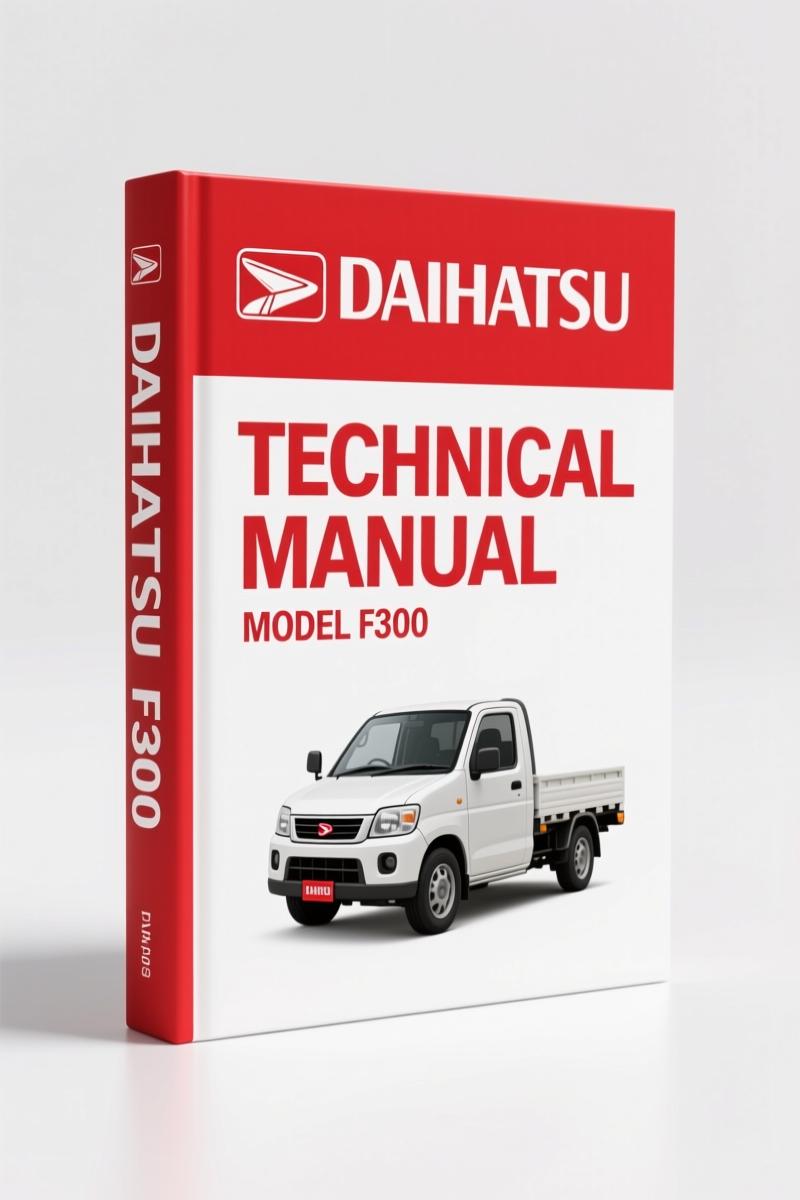
Daihatsu F300 Technical Manual – Factory EFI Diagnostics
Original price was: $33.91.$24.75Current price is: $24.75.
Factory-certified Daihatsu F300 Technical Manual with 236 pages of EFI diagnostics, fuel system specs, and emission control procedures.
Description
Daihatsu F300 Technical Manual
If you’re chasing an intermittent misfire on a Daihatsu F300 or trying to figure out why the fuel pressure regulator isn’t holding, the last thing you need is a generic aftermarket PDF that skips the diagnostic steps. This Daihatsu F300 Technical Manual is the factory book – 236 pages of original OEM documentation, direct from the engineers who designed the EFI system. No reprints, no third-party edits, no missing pages. I’ve used factory manuals for thirty years. When the idle-up VSV doesn’t actuate, the factory troubleshooting tree in this manual will tell you exactly which voltage to backprobe at the ECU terminal – not some generic “check the solenoid” line.
7 Systems Covered in This EFI Manual
The TOC breaks the book into clear sections. You get full coverage of the fuel system, air induction system, electronic control system, and the diagnosis system. The manual includes two complete troubleshooting chapters: one general troubleshooting sequence (starts at EF-12) and another dedicated to troubleshooting with a volt/ohmmeter (EF-32 onward). That second chapter is where most DIY guys get lost – the factory maps out exact resistance checks for the coolant temp sensor, throttle position sensor, and crankshaft position sensor. Need the charge pressure? Page 73 of the PDF (manual page EF-109) gives the specification introduction for the whole system. It also covers the self-diagnosis function and fail-safe mode, which many aftermarket books just leave out.
236 Pages – Not One Wasted
Some people think more pages mean more fluff. Not here. Every page of this 236-page manual carries a specific procedure, schematic, or spec table. The Manual Transmission section in related models won’t teach you how to diagnose an EFI system – that’s not its job. This manual is laser-focused on the F300 EFI: fuel pump relay control, injector drive, idle-up VSV control, and the full ECU harness pinout. I’ve worked on enough Daihatsu engines to know that if you miss the fuel cooler fan motor circuit check (page EF-3 in the original), you’ll chase a no-start for hours. This book puts that circuit right in front of you.
Diagnosis System: Factory Troubleshooting vs. Guesswork
The diagnosis system chapter (EF-17) explains how to read blink codes from the ECU without a scan tool – a lifesaver when you’re in a home garage with no dealer gear. It also covers the fail-safe logic: what the ECU does when a sensor fails. The inspection precautions section (EF-6) is short but critical – it tells you what not to do, like backprobing the wrong terminal or shorting the diagnostic connector to ground. Most people skip precaution pages. That’s how you pop an ECU. Read them.
Troubleshooting with Volt/Ohmmeter
This is where the manual earns its keep. Starting at EF-32, you get step-by-step resistance and voltage checks for every EFI sensor and actuator. The factory spec for the oxygen sensor heater is listed – if you don’t have that number, you’re swapping parts. I’ve seen guys replace three O2 sensors because they didn’t check the heater circuit first. The manual gives you the exact ohms range. No “approximately” – it’s an OEM number. Pair this with the DAIHATSU F300 Emission Control Service Manual”> Emission Control Service Manual if you need deeper emissions diagnostics, but the EFI book alone covers the EGR and canister purge control as part of the air induction system (EF-101).
Fuel System and Air Induction: Real-World Repair
The fuel system chapter (EF-96) covers the fuel pump, pressure regulator, injectors, and delivery pipe. The schematic on page EF-2 shows how the fuel pump relay ties into the engine RPM signal from the distributor. If you’re working on a cold-start issue, check the injector resistance – spec is in the manual, not in a forum post. The air induction system (EF-101) includes the throttle valve, surge tank, and idle-up VSV. The manual shows the vacuum line routing, something aftermarket drawings always screw up. For a full engine rebuild, grab the Daihatsu F300 Engine Service Manual”> Daihatsu F300 Engine Service Manual – that one covers the bottom end. This manual stays focused on the EFI side.
OEM Source – Why It Matters on the Workbench
I’ve bought my share of aftermarket manuals. They always have one critical spec wrong – torque on the injector hold-down, or the idle speed bypass air adjustment. This manual isn’t a reprint or a scan of a scan. It’s a direct digital copy of the original factory document, page numbers intact, illustrations sharp. The inspection precaution on page EF-5 warns about static electricity damage to the ECU – aftermarket versions often skip that. You want the real thing. If you need the HD-C transmission specs, see the DAIHATSU F300 HD-C Service Manual”> DAIHATSU F300 HD-C Service Manual – not this book, which is purely EFI.
Who Should Buy This Manual?
Home garage mechanics who are tired of chasing wiring problems with a multimeter and no schematic. Beginners who want to understand how an EFI system actually works, not just a parts-swapping sequence. Professional techs who need a reference for the F300 when it comes into the shop – and they haven’t seen one in five years. The manual assumes you have basic tools (volt/ohmmeter, fuel pressure gauge, scan tool for codes), but it teaches you the diagnostic logic. Don’t buy it if you only want a parts list – get the factory parts catalog instead.
FAQ
- Does this manual include wiring diagrams for the entire Daihatsu F300, or just the EFI system?
- It includes the full EFI system circuit (page EF-3) with all sensor, actuator, and ECU terminal assignments. But it does not cover body wiring, lighting, or chassis harnesses – it’s strictly the engine control side.
- Can I use this manual for a carbureted F300 engine?
- No. This is the EFI technical manual only.
Stop burning billable hours on guesswork. Access the Factory Manual and put the real Daihatsu procedure on your bench – the same one the dealer techs used. Your F300 will thank you.
Related Manuals:
- DAIHATSU F300 Emission Control Service Manual”>DAIHATSU F300 Emission Control Service Manual
- Daihatsu F300 Engine Service Manual”>Daihatsu F300 Engine Service Manual
- DAIHATSU F300 HD-C Service Manual”>DAIHATSU F300 HD-C Service Manual
- Manual Transmission”>Manual Transmission (Wikipedia)
- Manual Transmission”>Manual Transmission (Repair Guide)
Additional information
| Brand | Daihatsu |
|---|---|
| Language | English |
4 reviews for Daihatsu F300 Technical Manual – Factory EFI Diagnostics
You may also like…
-
Sale!
Daihatsu 5DK-20 2005 Technical Manual – 847 Pages | AutoFix Global
Original price was: $100.75.$65.00Current price is: $65.00. -
Sale!
Daihatsu F300 Service Manual – Factory Specs for EFI & Engine
Original price was: $61.60.$40.00Current price is: $40.00. -
Sale!
Daihatsu Charade 1987 Workshop Manual – Factory Specs
Original price was: $60.75.$45.00Current price is: $45.00.
Related products
-
Sale!

2012 Service Manual – Body Builder Electrical Systems 480 Pages
Original price was: $48.28.$34.00Current price is: $34.00. -
Sale!

Service Manual – International HS 2.8L Engine – 130 Pages of Factory Specs
Original price was: $56.40.$40.00Current price is: $40.00. -
Sale!

2006 Service Manual – International DT 466E, 530E Diesel Engine
Original price was: $67.50.$50.00Current price is: $50.00. -
Sale!

1993 Electrical Schematic – International 1000/3000/4000 Bus Chassis OEM Wiring Diagrams
Original price was: $29.26.$22.00Current price is: $22.00.
Charles W. –
This is just what I required. The scan is high-quality and easy to navigate. Contains clear wiring diagrams for Daihatsu. Saves me hundreds of dollars.
workshop_guy –
Excellent workshop guide. The file is high resolution. A must-have for any Daihatsu F300 DIYer doing maintenance. Saved my repair job! Thanks.
pro_mechanic –
I am very pleased with this transaction. Immediate link after checkout process. A must-have for any Daihatsu F300 owner doing repairs. I will definitely buy again.
Richard G. –
This is just what I required. The scan is high-quality and easy to navigate. It guided me to troubleshoot my Daihatsu F300 transmission. Worth every penny.