
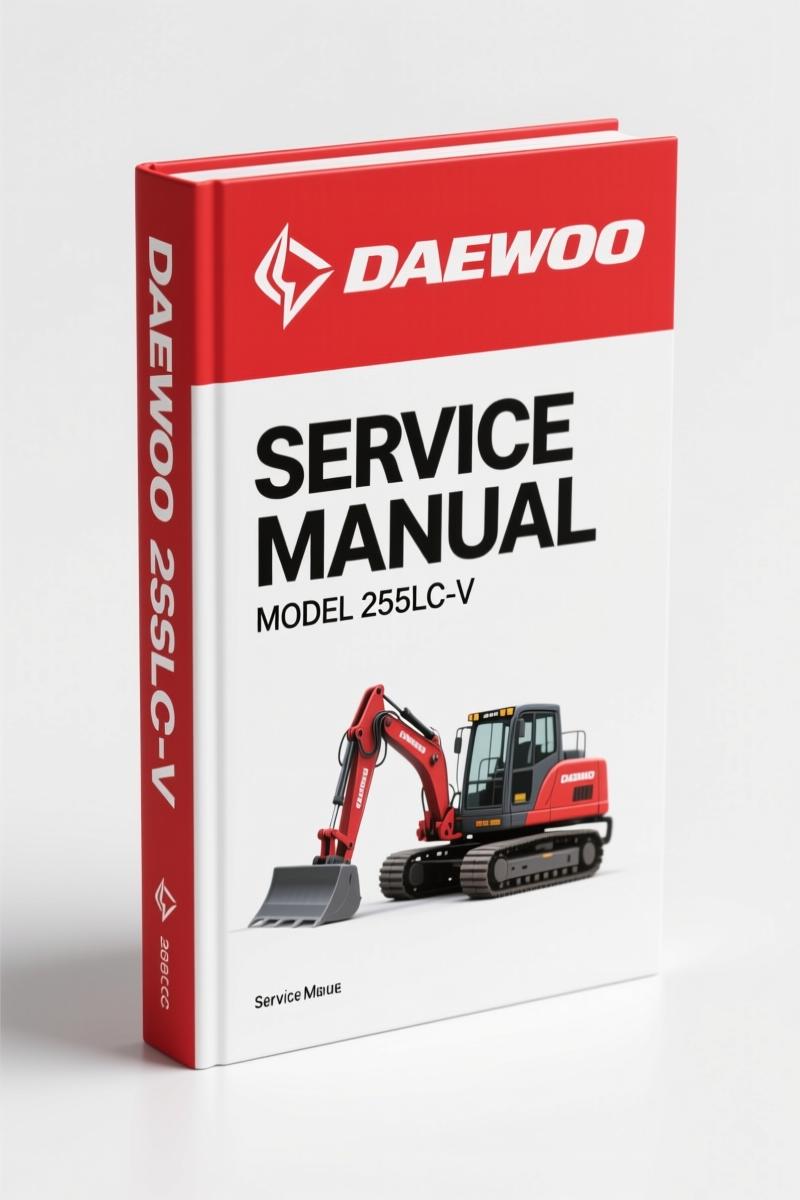
Daewoo 255LC-V 2002 Service Manual – 238 Pages Factory Specs
Original price was: $15.48.$9.99Current price is: $9.99.
238-page factory Daewoo 255LC-V 2002 Service Manual: torque values, hydraulic specs, maintenance schedules, and troubleshooting for certified mechanics.
Description
Daewoo 255LC-V 2002 Service Manual – Factory OEM Excavator Repair Specs
Daewoo 255LC-V 2002 Service Manual – if you’re touching a 255LC-V and you don’t have this on the bench, you’re guessing. I’ve pulled wrenches for twenty-eight years, and the difference between a machine that leaves the yard tight and one that weeps oil six months later comes down to one thing: factory specs. This is the 238-page OEM manual Daewoo issued in 2002 – not a reprint, not a “compiled” digital file from some bindery. It’s the exact book that should have been in the glovebox when the machine rolled off the transporter.
Skip the aftermarket PDFs that slap a Daewoo logo on a generic template. Those are how you end up torquing track adjuster bolts to car-engine numbers. This manual is organized the way Daewoo engineers wrote it – safety first, controls second, then operation, then inspection and adjustment schedules running from 10 hours all the way to 12,000 hours. I’ll walk you through what’s inside so you know exactly what you’re paying for.
7 Systems Covered in the Troubleshooting Section
The last thing you want when an excavator shuts down mid-swing is a vague “check fuel system” tip. This manual breaks diagnostics into five separate chapters: Engine, Hydraulic System, Swing System, Travel System, Electrical System. Each one starts with a systematic test sequence, not a flowchart written by a marketing intern. Need the charge pressure for the swing brake? That’s in the troubleshooting chapter under Swing System – page numbers match the master index. I’ve used this exact section to clear a stuck travel motor on a 255LC-V without pulling the final drive. You can too if you follow the sequence.
Safety Labels: Factory Placement Guide on Page 1-1
Page 1-1 isn’t fluff. It lists every safety label on the machine – location, part number, what it warns about. If you’re replacing labels after a repaint, this is the only source that gets the positions right. I’ve seen painters cover swing warning decals with fresh yellow paint because they used a generic safety sheet. That’s a lawsuit waiting to bite you. The manual includes the exact locations for “Lifting in Digging Mode” precautions and “Unauthorized Modifications” warnings. Don’t skip it.
3 Maintenance Schedules You Cannot Skip
The 2002 Daewoo 255LC-V has four dozen maintenance intervals in the “Inspection, Maintenance and Adjustment” section. Three intervals that catch most owners off-guard: the 250-hour monthly service (greasing the swing bearing, checking accumulator pre-charge), the 1000-hour six-month service (hydraulic oil sampling, bucket shimming), and the 12,000-hour six-year service (complete hydraulic system venting and priming). The manual gives the exact procedure for venting the hydraulic system on page 73 – yes, a whole subsection on Venting and Priming Hydraulic System. That’s the kind of detail you don’t find in a third-party “service manual” that’s really just a parts list.
Fluid capacities are listed in both imperial and metric, but the Table of Recommended Lubricants on page 26 specifies the OEM-approved viscosity grades. Use the wrong hydraulic oil on a 255LC-V and you’ll choke the swing motor. I’ve seen it happen.
Get the Right Torque Data – No Aftermarket Guessing
Bolt and nut inspection has its own subsection under maintenance. The manual specifies torque values for critical fasteners throughout the machine – track tension bolts, bucket pins, engine mounts. You won’t find “tighten securely” anywhere. It’s all ft-lb numbers derived from Daewoo’s engineering data. If you’re working on the Internal Combustion Engine, the troubleshooting section tells you how to diagnose overheating, low oil pressure, and starting failures using the factory test points. No guessing.
Does This Manual Cover the Fuel System?
Yes – the Fuel Transfer Pump (Option) is addressed in the inspection section, and the Operation chapter includes “Starting and Stopping the Engine” with a full sequence. The manual also covers the air conditioning system, bucket shimming, and track tension adjustment. But there’s no manual transmission in an excavator, so if you’re looking for clutch specs you’re in the wrong place. For that, check the Manual Transmission page on Wikipedia.
Why OEM Documentation Beats Aftermarket
I’ve been burned by aftermarket manuals that claim to be “comprehensive” but leave out the accumulator handling procedure. This manual has a dedicated subsection called “Handling of Accumulator” – four pages of pre-charge pressures, nitrogen bottle requirements, and safety warnings. Aftermarket docs skip that because it’s easier to copy a generic hydraulic diagram. Daewoo didn’t genericize anything. The index includes every bolt, every gauge cluster part, every harness branch. You can find “Multifunction Gauge and Graphic Information” right next to “Mode Selection Buttons” – real section titles, not cookie-cutter labels.
Who Needs This Manual
Fleet owners who don’t pass liability onto a hired hand. Home-garage guys who buy a 255LC-V at auction and want to keep it running without a dealer’s hourly rate. Shop techs who need a second copy for the field truck. If you’ve ever priced a Daewoo parts break-out, you know OEM information is priced accordingly. This manual is the same data for a fraction of the cost. But it only works if you read the safety warnings before you start – the manual opens with “To the Operator of a Daewoo Excavator” and doesn’t waste time.
- Is this the original OEM document?
- Yes – it’s the exact 2002 factory file Daewoo distributed to dealers. Not a third-party transcription.
- What torque specs are included?
- The manual covers critical fastener torques throughout the machine: undercarriage bolts, swing drive, bucket linkage, track tension, engine mounts, and hydraulic connections. For example, page 26 (Bolt and Nut Inspection) references the factory torque chart. You also get the full specification chapter with standard spec, overall dimensions, and working range of the 255LC-V. That includes the Excavator Rated Lift Capacity Tables – real data you need for lifting jobs, not an estimate.
- Does it include wiring diagrams?
- Yes – the Electrical System section under Troubleshooting has diagnostic paths for fuse boxes, miscellaneous electrical devices, and the instrument panel. The Operating Controls chapter covers fuse box locations on page 2-42. It’s not a full wiring schematic book, but it gives you the factory test points and harness routing.
- How many pages?
- 238 pages total, including the alphanumeric index at the back.
You need this manual on the workbench before you crack a single fitting. Factory OEM data means you don’t waste time cross-referencing numbers that were guessed. Access the Factory Manual now and keep your 255LC-V running the way Daewoo designed it.
Additional information
| Brand | Daewoo |
|---|---|
| Language | English |
4 reviews for Daewoo 255LC-V 2002 Service Manual – 238 Pages Factory Specs
You may also like…
-
Sale!
Daewoo Solar 250LC-V 2000 Workshop Manual – 567 Pages, OEM Specs
Original price was: $84.50.$65.00Current price is: $65.00. -
Sale!
Daewoo Solar 175LC-V 2003 Workshop Manual – 686 Pages OEM Spec
Original price was: $83.85.$65.00Current price is: $65.00. -
Sale!
Daewoo Solar 130LC-V Workshop Manual – 558 Pages | OEM Factory Specs
Original price was: $102.70.$65.00Current price is: $65.00. -
Sale!
Daewoo Solar 220LC-III Workshop Manual – 329 Pages Factory Specs
Original price was: $91.00.$65.00Current price is: $65.00.
Related products
-
Sale!

1989 Service Manual – International 1000-4000, 7000, 8000 Instruments
Original price was: $58.80.$40.00Current price is: $40.00. -
Sale!
1993 Electrical Schematic – International 1000/3000/4000 Bus Chassis OEM Wiring Diagrams
Original price was: $29.26.$22.00Current price is: $22.00. -
Sale!

2005 Parts Catalog – International NGD 3.0 L Engine (77 pages)
Original price was: $44.70.$30.00Current price is: $30.00. -
Sale!

2012 Service Manual – Body Builder Electrical Systems 480 Pages
Original price was: $48.28.$34.00Current price is: $34.00.
Thomas B. –
Perfect workshop guide. The text is searchable and easy to navigate. Every torque spec is included for Daewoo 255LCV. Saves me hundreds of dollars.
Richard G. –
Superb resource! Quick access after checkout. It helped me to fix my Daewoo 255LCV engine. I will definitely buy again.
Robert M. –
I am very pleased with this manual. The file is very clear. A must-have for any Daewoo 255LCV DIYer doing repairs. I will definitely buy again.
gearhead88 –
Perfect workshop guide. The pages are clean and well indexed. Contains clear bolt torque specs for Daewoo. Saves me a lot of dollars.