
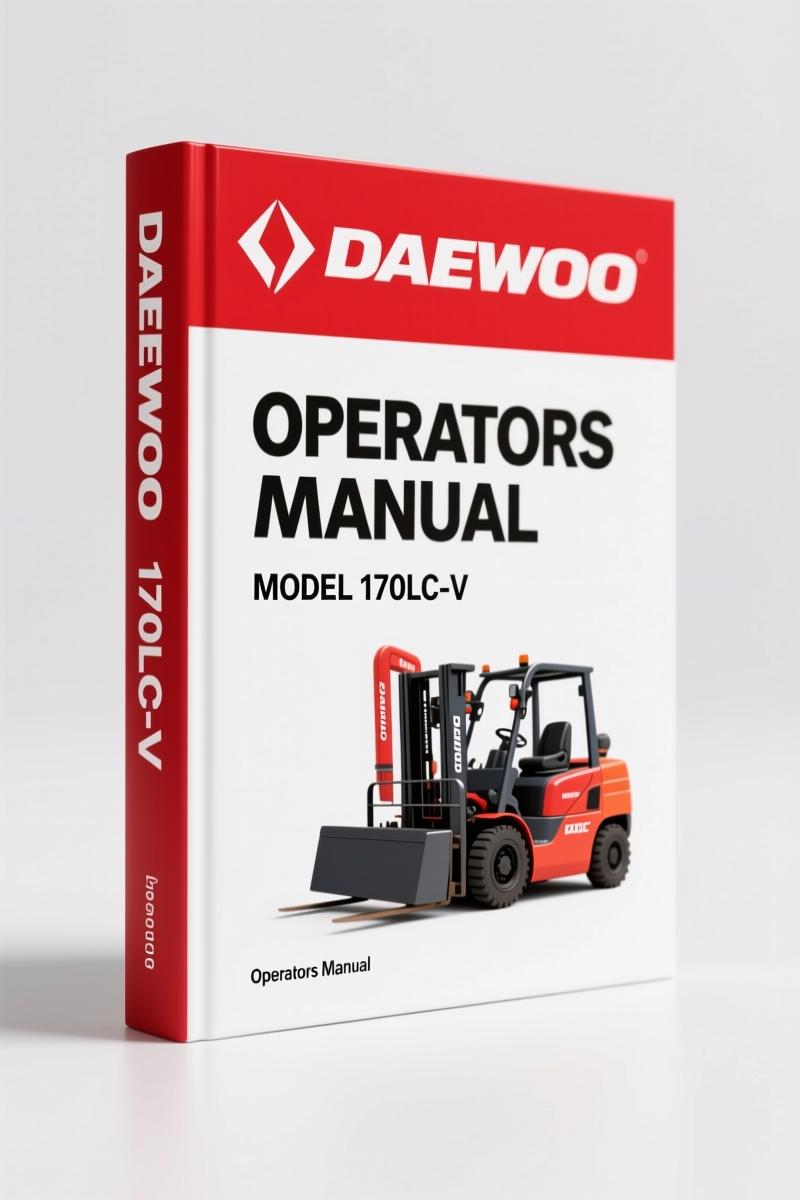
Daewoo 170LC-V 2000 Operators Manual – Factory OEM Doc
Original price was: $12.79.$9.99Current price is: $9.99.
OEM 188-page operator manual for Daewoo 170LC-V excavator. Includes daily service, safety labels, lubricant specs, and maintenance intervals.
Description
Daewoo 170LC-V 2000 Operators Manual
You have a Daewoo 170LC-V sitting in your yard or on a jobsite. The book that came with it is either missing, coffee-stained, or gone. And now you are trying to figure out the right hydraulic breaker settings or the correct way to lift in digging mode without flipping the machine. That is where aftermarket PDFs fall apart – they skip the safety tables, guess at the torque values, and treat the accumulator like it is a tire valve. I have seen guys blow seals because they used a generic manual for track tension. Don’t be that guy.
This is the original 2000 Daewoo 170LC-V Operators Manual, factory-printed and scanned at 188 pages. Every page matches what Daewoo shipped with the machine. No reprints, no third-party rewrites. If you want to know the exact OEM procedure for venting the hydraulic system or the bolt torque on the bucket shims, this is where you find it. I have been turning wrenches 28 years – trust me, the difference between a factory manual and some online copy is the difference between a straight hole and a helicoil.
Safety: Not a Suggestion – Factory Procedures
The first chapter in this manual is not about where the fuel cap is. It is about keeping you alive. Daewoo dedicated 27 pages to safety – starting with the “To the Operator of a Daewoo Excavator” section on page 1-1 and running through the rated lift capacity tables on page 1-27. If you are lifting in digging mode, you need those tables. They list the load limits per configuration, not guesses. The manual also covers work-site precautions, equipment checks, and shipping and transportation safety. Someone at Daewoo spent time writing that so you do not roll an excavator off a trailer. Use it.
Operating Controls: What Every Button Does
Page 2-1 starts the Operating Controls chapter. This is not a generic layout diagram. It shows component locations, the instrument panel, mode selection switches, and even the heater and AC control panel. There is a section on the emergency glass breaking tool – something most operators never look at until they need it. If you have a stereo or miscellaneous electrical devices, the wiring is right there. Want to know the seat belt part number? It is in the Seat Belt subsection. You can stop guessing which switch does what and just read the factory documentation.
Operation: Starting, Stopping, and Not Breaking Things
The Operation chapter covers starting and stopping the engine, using the safety lever, travel procedures, and hydraulic breaker operation. The manual tells you the right way to handle a new excavator before you even turn the key. There is a section on towing procedure that includes warnings you will not find anywhere else. I once saw a guy tow an excavator by the bucket – this manual would have stopped him cold. If you are running a Internal Combustion Engine, the start-up and shutdown steps are specific to this machine. Do not skip the 5-minute warm-up cycle they list.
Inspection, Maintenance, and Adjustment: Interval Tables That Matter
This is the chapter that pays. The manual gives you maintenance intervals from 10-hour daily service all the way to 4000-hour biennial service. You get a table of recommended lubricants, bucket shimming procedures, track tension adjustments, and bolt and nut inspection guidelines. There is a dedicated procedure for venting and priming the hydraulic system after service. If you have ever had a hydraulic pump cavitate because you forgot to prime it, you know why this page is worth the price of the manual. The accumulator handling section tells you exactly how to discharge and recharge it – again, from the factory, not from a forum post.
Troubleshooting: Engine, Hydraulic, Swing, Electrical, Travel
Five separate troubleshooting sections cover the engine, hydraulic system, swing system, electrical system, and travel system. If your 170LC-V won’t swing left or the travel motor is acting up, you go here first. The manual gives you symptoms, probable causes, and corrective actions. No diagrams that look like a kindergarten drew them – these are factory schematics. Pair this with a Manual Transmission knowledge base? Not relevant here, but the electrical troubleshooting chapter will save you hours chasing shorts. The swing system section alone is worth looking at before you pull the swing motor.
Specifications: Dimensions, Working Range, and Weight Data
The Specification chapter has the standard specs, general dimensions, and working range for the 170LC-V. Need the overall length or tail swing radius? It is in there. If you are loading the machine onto a trailer, the shipping and transportation section earlier tells you the tie-down points. The manual also includes rated lift capacity tables in the Safety chapter – you need those numbers for any pick-and-place operation. All figures are in imperial units as published by Daewoo for the North American market.
Why This Manual Beats Aftermarket Copies
I have used aftermarket manuals that claimed to cover the Daewoo 170LC-V but swapped a solar model dimension or left out the Safety chapter entirely. This one is an original OEM scan of the 2000 Operators Manual. The page count is 188 pages – not a 50-page summary someone typed up in Word. You get the full table of contents, every warning label location, and the index. If you need related documentation for other Daewoo models, check out the Daewoo Solar 400LC-V 1998 Operators Manual – Factory Specs & Safety or the Daewoo Solar S220LC-V 1998 Operators Manual – Factory Specs & Safety. For a larger machine, the Daewoo Solar 420LC-V 2001 Operators Manual – 238 Pages might be what you need.
- Does this manual cover the hydraulic breaker attachment?
- Yes. The Operation chapter includes a dedicated “Hydraulic Breaker” subsection with operating instructions and setup precautions. It tells you how to adjust the flow and pressure from the factory specs.
- Can I use this manual for a Daewoo 220LC-V?
- No. The 170LC-V has different dimensions, lift capacities, and control layouts. Do not guess. Get the correct manual for your model – using the wrong one can cause safety issues and mechanical damage. Look for a separate manual for the 220-series.
If you are serious about keeping your Daewoo 170LC-V running right, you need the official data. This 188-page Operators Manual gives you the same information the dealer techs use. Stop relying on photocopies and ripped PDFs. Access the Factory Manual and put it on your tablet or print it out – the safety labels section alone will pay for itself the first time you avoid a pinch-point injury.
Additional information
| Brand | Daewoo |
|---|---|
| Language | English |
4 reviews for Daewoo 170LC-V 2000 Operators Manual – Factory OEM Doc
You may also like…
-
Sale!
Daewoo Solar 175LC-V 2003 Workshop Manual – 686 Pages OEM Spec
Original price was: $83.85.$65.00Current price is: $65.00. -
Sale!
Daewoo Solar 220LC-III Workshop Manual – 329 Pages Factory Specs
Original price was: $91.00.$65.00Current price is: $65.00. -
Sale!
Daewoo Solar 130LC-V Workshop Manual – 558 Pages | OEM Factory Specs
Original price was: $102.70.$65.00Current price is: $65.00. -
Sale!
Daewoo Solar 250LC-V 2000 Workshop Manual – 567 Pages, OEM Specs
Original price was: $84.50.$65.00Current price is: $65.00.
Related products
-
Sale!

1993 Electrical Schematic – International 1000/3000/4000 Bus Chassis OEM Wiring Diagrams
Original price was: $29.26.$22.00Current price is: $22.00. -
Sale!
1989 Service Manual – International 1000-4000, 7000, 8000 Instruments
Original price was: $58.80.$40.00Current price is: $40.00. -
Sale!
1992 Electrical Schematic – OEM Wiring Diagrams for International 1000-3800
Original price was: $24.48.$18.00Current price is: $18.00. -
Sale!
2004 Acura TSX Wiring Diagram – 73-Page Factory Electrical Schematics
Original price was: $15.88.$9.99Current price is: $9.99.
James L. –
I am extremely satisfied with this manual. It is easily zoomable on my iPad without blur. It guided me to troubleshoot my Daewoo 170LCV transmission. Saved my repair job! Thanks.
Richard G. –
This is exactly what I was looking for. Quick access after checkout. It helped me to troubleshoot my Daewoo 170LCV engine. Saves me so much time.
gearhead88 –
Excellent quality! The file is very clear. Contains detailed wiring diagrams for Daewoo. I will definitely buy again.
pro_mechanic –
This is exactly what I needed. It is easily zoomable on my iPad without losing quality. A must-have for any Daewoo 170LCV DIYer doing repairs. Saved my repair job! Thanks.