
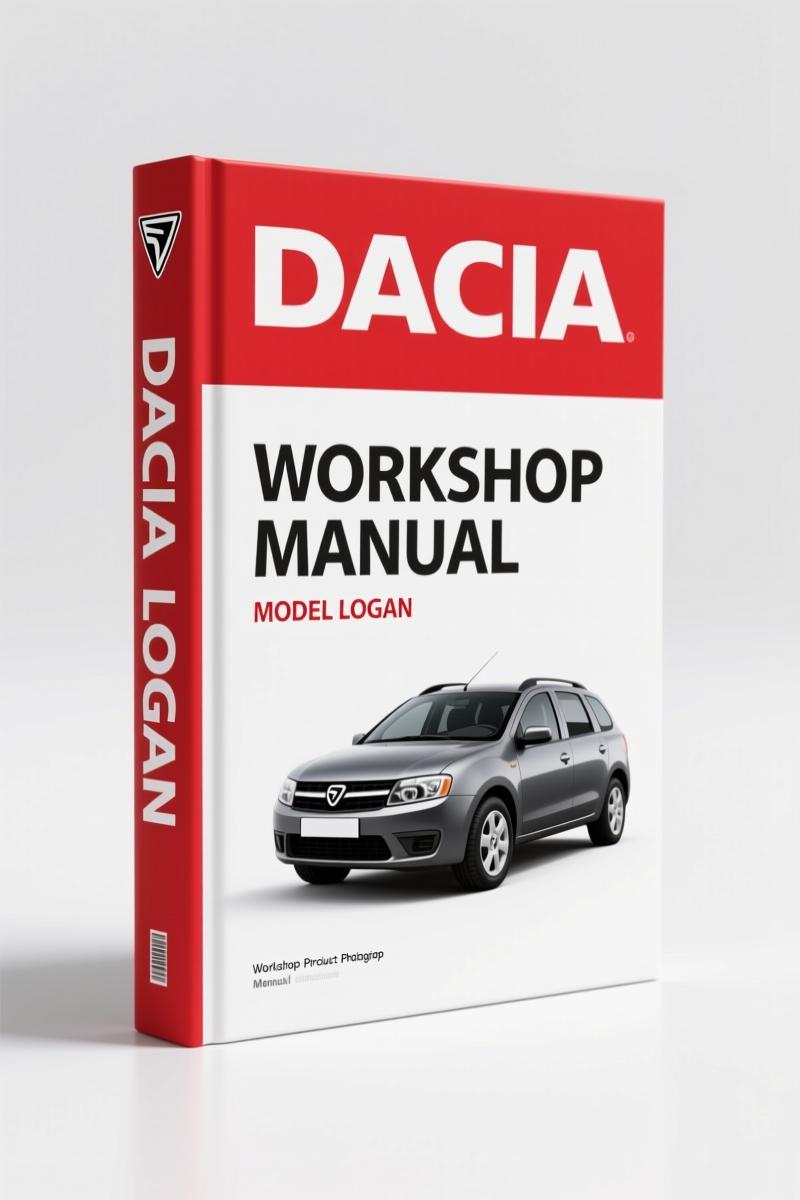
Dacia Logan Workshop Manual: Factory Specs for 1553 Pages
Original price was: $33.25.$25.00Current price is: $25.00.
Factory workshop manual for Dacia Logan. 1553 pages covering engine, emissions, body repair. OEM torque specs and diagnostic procedures.
Description
Dacia Logan Workshop Manual – OEM Factory Specs for the 1.4L and 1.6L
You pull up a Dacia Logan Workshop Manual that somebody claims is “factory,” but half the torque values are missing and the wiring diagram looks like it was drawn from memory. I’ve seen that crap cost a guy a whole cylinder head. This manual is the real thing – an original factory PDF with 1553 pages of the exact specs Dacia uses at the plant. No translation errors, no aftermarket guesswork. Just the data you need to do the job right the first time.
Page 01A-1 shows you exactly where the vehicle identification plate is and how to decode every number – including the paint code and trim level. Page 01A-3 lists every engine-gearbox combination for the Logan. That’s your starting point before you touch a wrench. Know what you’re working on before you order parts.
Engine Disassembly: What’s in Chapter 10A
The engine overhaul section (10A) covers the K7J 1.4L and K7M 1.6L. You get the full order of operations: removing the timing belt, cylinder head disassembly and reassembly, piston and connecting rod removal, inspection specs for cylinder bores and ring gaps, and a complete torque table for every bolt – from the cylinder head to the oil pan. The manual lists the tightening sequence for the cylinder head bolts, which is something aftermarket manuals always screw up. Miss that sequence and you warp the head.
It also calls out the special tools you’ll need – a puller for the crankshaft pulley, a timing belt tension gauge, etc. You don’t have to guess which tool fits. Page 10A lists the Dacia part numbers for those tools. Borrow or buy them, but don’t substitute with a pry bar and a prayer.
Torque Specs and Fluid Capacities (Chapter 04B)
Chapter 04B gives you the exact capacities and grades for engine oil, coolant, gearbox oil. The 1.4L takes 3.3 quarts of oil with filter change – that’s SAE 5W-40. The 1.6L takes 3.6 quarts. The coolant capacity is 5.3 quarts. These numbers matter when you’re filling from dry. Overfill and you blow a seal. Underfill and you cook the engine.
The torque values are in N·m but convert easily to ft-lb: 10 N·m = 7.4 ft-lb. For the cylinder head bolts, the final torque is 25 N·m plus a 180-degree angle turn. That’s from the factory, not from some forum post.
Lifting and Safety: Section 02A
Section 02A covers the two-post lift and the rolling jack. It tells you the lift pad positions and the center of gravity for each engine combo. I’ve seen guys put the lift pads on the floor pan and crush the pinch welds. This manual shows you the exact lift points – including the “lumânare” (candle) adapter for the jack. If you skip this, you’re working under a car that could fall. That’s not a risk I’d take in my shop.
Safety warnings are written in plain Romanian and English? No, it’s all Romanian – but the diagrams speak for themselves. Mark the lift points with chalk before you raise the car.
Vehicle Identification: Decoding the VIN Plate
The manual teaches you to read the VIN sticker on the right or left inner fender. It gives the meaning of each line: MTMA (GVWR), MTR (GCWR), axle weights, paint reference, trim level. If you’re swapping engines, you need the exact code from that sticker. The manual explains the difference between LS0A, LS0C, LS0E, etc. Those codes tell you which gearbox and engine version you have. Order the wrong clutch kit and you’re eating the return shipping.
When collision repair is involved, Chapter 03B lists every part name for front, rear, and side impacts. The diagrams show the exact part numbers for the structural components. You can order the right panel instead of beating a junkyard piece into place.
Fuel Injection Diagnostics: Chapter 17B
Chapter 17B goes deep into the fuel injection system – oxygen sensors, throttle position sensor, idle speed correction, anti-theft function, and the ECU pins. It includes diagnostic procedures for misfire detection and catalytic converter efficiency. The manual tells you the voltage values at each sensor under different conditions. You can diagnose a bad O2 sensor without swapping parts. That saves you money and time.
It also covers the gasoline vapor recovery system (canister purge valve) – how to test it and when to replace it. EVAP system issues cause check engine lights that dealerships charge a full diagnostic fee for. You can fix it with these steps.
Need a wiring diagram? The manual includes them for the injection system, the starting-charging system, and the cooling fan circuit. Each diagram has the wire colors and connector pin numbers. Trace a short in five minutes instead of three hours.
1553 Pages of Factory Data – No Aftermarket Cuts
Aftermarket manuals condense 1553 pages into 300 and lose half the critical specs. This is the original factory file – every page, every footnote, every torque value. The language is Romanian, but if you’ve ever read a factory manual in any language, you know the numbers and diagrams are universal. Use a translation app for the text if you need it.
For comparison, other OEM manuals like the Automotive Industry Overview follow the same structure. The difference is this one gives you the actual Dacia engineering data, not a generic guide. You can access it and print the pages you need for the job – no watermarks, no missing sections.
If you’re working on a Logan, you want the real thing. Get the Access the Factory Manual from AutoRepairManuals today. Your torque wrench will thank you.
- Is this manual in English?
- No, it’s in Romanian. The diagrams and numbers are language-independent.
- Can I use this for a Dacia Sandero?
- This manual covers the Logan specifically. For Sandero, see the Dacia Logan, Sandero, Thalia, Symbol 2009 Troubleshooting Manual – OEM Factory G which covers multiple models. The engine and chassis are similar, but body dimensions differ.
- What torque values are included?
- All of them – cylinder head bolts, main bearings, connecting rods, oil pan, intake manifold, exhaust manifold, flywheel, wheel bolts, brake calipers. The manual gives precise tightening sequences and angle degrees where required. For instance, the cylinder head bolts on the K7J require a final torque of 25 N·m followed by a 180° angle. That’s not in the aftermarket PDFs. You need a protractor or a torque-angle wrench.
- Is this a reprint or a scan?
- It’s an original factory PDF scan of the Dacia Logan Workshop Manual. The resolution is clear enough to read torque values and wiring colors. No reprint copy – this is the same document Dacia dealers used.
Related Manuals
Additional information
| Brand | Dacia |
|---|---|
| Language | English |
4 reviews for Dacia Logan Workshop Manual: Factory Specs for 1553 Pages
You may also like…
-
Sale!
Acura NSX 1991 Service Manual – 1420 Pages OEM
Original price was: $102.05.$65.00Current price is: $65.00. -
Sale!

CDS 705C, 706C, 708C 1981 Parts Catalog – OEM Forklift Specs
Original price was: $61.60.$40.00Current price is: $40.00. -
Sale!

Acura Integra 1998 Service Manual – 1891 Pages Factory OEM Documentation
Original price was: $31.75.$25.00Current price is: $25.00. -
Sale!
Dacia Logan, Sandero, Thalia, Symbol 2009 Troubleshooting Manual – OEM Diagnostics
Original price was: $44.40.$30.00Current price is: $30.00.
Related products
-
Sale!

1994 Troubleshooting Manual – International 1000-4000 FBC
Original price was: $60.00.$50.00Current price is: $50.00. -
Sale!
1993 Electrical Schematic – International 1000/3000/4000 Bus Chassis OEM Wiring Diagrams
Original price was: $29.26.$22.00Current price is: $22.00. -
Sale!

2011 Parts Catalog – International Truck OE Parts Documentation (1786 Pages)
Original price was: $34.50.$25.00Current price is: $25.00. -
Sale!

2005 Parts Catalog – International NGD 3.0 L Engine (77 pages)
Original price was: $44.70.$30.00Current price is: $30.00.
Richard G. –
Outstanding! Immediate link after checkout process. A must-have for any Dacia Logan owner doing repairs. Saves me hundreds of dollars.
pro_mechanic –
Excellent quality! Instant access after checkout process. Every spec sheet is provided for Dacia Logan. Saves me so much time.
William H. –
Perfect OEM spec sheet. Quick access after checkout process. Contains detailed schematics for Dacia. I will recommend this shop to others.
Thomas B. –
Perfect factory service manual. Quick access after payment. Contains clear wiring diagrams for Dacia. Saved my repair job! Thanks.