
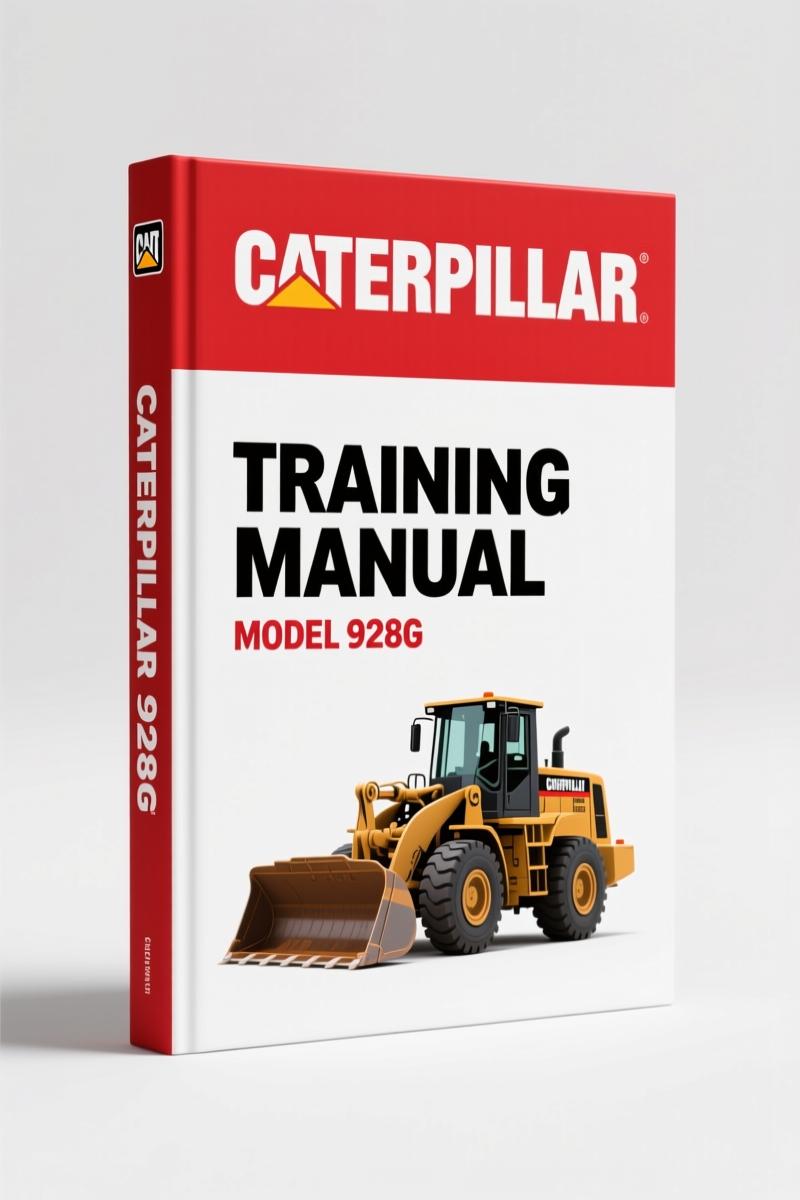
Caterpillar 928G Training Manual – Official OEM Hydraulic System Guide
Original price was: $33.75.$25.00Current price is: $25.00.
Factory-certified 36-page training manual covering pilot operated hydraulics and LSPC steering on the 928G wheel loader.
Description
Caterpillar 928G Training Manual – 36-Page OEM Hydraulics and Steering Guide
You own or work on a 928G wheel loader, and the hydraulics act up. Implement response feels lazy. Steering loses assist at low idle. You pull the service manual, but it’s 2,000 pages and you need the system fundamentals, not a teardown procedure. That’s why the Caterpillar 928G Training Manual exists. This 36-page booklet gives you the hydraulic architecture and the logic behind the pilot-operated implement system and the load-sensing pressure-compensated (LSPC) steering. It won’t hand you torque specs – those are in the service manual – but it will teach you what each component does and how the oil flows. Without that, you’re guessing. And guessing on a wheel loader hydraulic system gets expensive fast.
Hydraulic System Breakdown: Pilot Operated vs Manual
The first lesson in the training manual draws a hard line between manual-operated and pilot-operated systems. On old iron, the operator’s lever directly yanks the spool through linkage. You feel every grain of dirt in the joint. On the 928G, a pilot control valve sends pilot oil to shift the implement control spool. The operator does the thinking; the pilot oil does the heavy lifting. This manual spends the bulk of its 36 pages walking you through the implement hydraulic system schematic in every position: hold, tilt back, lower, dump. If you don’t understand how the pilot circuit reduces operator fatigue and increases safety, you’ll misdiagnose a bad pilot valve as a main pump failure. Read the manual first, then test.
LSPC Steering: How It Differs from Fixed Displacement
The steering system on the 928G uses a variable displacement LSPC pump that shares oil with the implement pilot system. The OCR excerpt from page 2 nails it: “The LSPC system differs from the fixed displacement pump system in that the pump output is controlled primarily by the demand of the system and not by the speed of the engine.” That means at idle, the pump adjusts flow to match steering demand – no wasted power, no overheating. This manual teaches you to test and adjust the LSPC steering using procedures from the Service Manual. If you crack a line and expect a fixed-displacement flow curve, you’ll get a surprise. The training manual prevents that surprise.
4 Learning Objectives for the 928G Hydraulic System
Unit 1 spells out four concrete objectives. By the end, you must be able to:
1. Identify components in the pilot-operated implement hydraulic system and the LSPC steering system.
2. State the function of each component.
3. Trace the oil flow through both systems in all positions.
4. Using the procedures in the Service Manual, test and adjust both systems.
That’s it. No fluff. The manual assumes you already own the caterpillar service manual for specs. This training manual is the prerequisite study guide. If you can’t trace oil flow, you can’t diagnose a sticking valve. Page 2 of the manual shows the pilot system introduction – read it, then go bench-test your knowledge.
Is This Manual for DIY Owners or Professional Techs?
Both. If you are a farm owner who maintains your own 928G loader, you need this manual because you don’t have a hydraulic bench at home. The training manual gives you the mental model to interpret pressure gauge readings and oil contamination symptoms. For a shop tech, this manual saves billable hours. Instead of flipping through a massive technical manual to find the steering system theory, you get it in 36 focused pages. After you grasp the LSPC concept, you can apply it to other Caterpillar wheel loaders. The manual says “many of the concepts used in the LSPC steering system may be transferred to any LSPC system.” That’s real value. Pair it with the Caterpillar 928G IT28G 2002 Parts Catalog for part numbers, or the Caterpillar 928G, IT28G, 924G, 924Gz, 928GZ 2012 Technical Manual for actual torque specs and repair steps.
OEM Authenticity: Why Aftermarket Reprints Fail
This is a genuine Caterpillar training manual, not a scanned copy from a third-party website. Page 1 carries the official Unit 1 header with “928G Wheel Loader” and the lesson structures. Aftermarket reprints often omit pages, blur schematics, or mislabel components. I have seen aftermarket “manuals” that call a pilot relief valve a main relief. That kind of error gets you a ruined pump. The original 36-page layout is precise: objectives, component identification, oil flow tracing, and testing references. No guesswork. If you need a reference on older transmission theory, the Manual Transmission article at Wikipedia can help with the basics, but for 928G hydraulics, stick with the factory document. Another external resource on Manual Transmission won’t help you here, but this training manual will.
928G Training Manual vs Full Service Manual: What’s Missing?
This training manual does not include torque values, fluid capacities, or disassembly procedures. It’s a systems-learning tool. However, it references the Service Manual for testing and adjustment steps. If you need the complete repair data, get the Caterpillar 994F, 994D, 992G 2005 Training Manual Review for comparison, but those are larger models. For the 928G, the training manual is the foundation. You will still need the full technical manual for bolt torques and clearances. But without this training manual, you might skip the fundamental understanding that prevents a misdiagnosis.
- Does this manual include torque specifications?
- No. It teaches system operation; torque specs are in the service manual.
- Can I rebuild the implement hydraulic pump using only this manual?
- No this manual is a training guide for understanding pilot-operated hydraulics and LSPC steering. It walks you through component identification, oil flow tracing, and testing procedures that reference the Service Manual for actual disassembly and adjustment specs. Rebuilding a pump requires the service manual’s clearance tables, seal part numbers, and torque values. Without the service manual you will have the theory but not the numbers. That said, if you haven’t studied this training manual first, you won’t know why the pump fails or how to test it before pulling it apart. Start here then get the service manual.
The 36 pages in this Caterpillar 928G Training Manual will save you from chasing ghosts in the hydraulic system. Whether you are a one-man operation or a dealer tech, know the system before you turn a wrench. Access the Factory Manual and start tracing oil flow tonight.
Additional information
| Brand | Caterpillar |
|---|---|
| Language | English |
3 reviews for Caterpillar 928G Training Manual – Official OEM Hydraulic System Guide
You may also like…
-
Sale!

Caterpillar CP-563E CS-563E CS-573E CS-583E 2002 Service Manual
Original price was: $102.70.$65.00Current price is: $65.00. -
Sale!

Caterpillar 14M, 16M 2007 Training Manual – OEM Service Training Guide
Original price was: $108.50.$70.00Current price is: $70.00. -
Sale!

Caterpillar 3116, 3126, 3114 2010 Troubleshooting Manual – 89 Pages
Original price was: $107.10.$70.00Current price is: $70.00. -
Sale!

Caterpillar 3500B 2000 Service Manual – MEUI Fuel System
Original price was: $93.00.$75.00Current price is: $75.00.
Related products
-
Sale!

2011 Parts Catalog – International 7400 SFA 6X6 – 1886 Pages of OEM Part Numbers
Original price was: $32.00.$25.00Current price is: $25.00. -
Sale!
Acura NSX 1991 Service Manual – 1420 Pages OEM
Original price was: $102.05.$65.00Current price is: $65.00. -
Sale!

2005 Parts Catalog – International NGD 3.0 L Engine (77 pages)
Original price was: $44.70.$30.00Current price is: $30.00. -
Sale!

1994 Troubleshooting Manual – International 1000-4000 FBC
Original price was: $60.00.$50.00Current price is: $50.00.
pro_mechanic –
This is exactly what I required. The PDF quality is excellent. Contains detailed bolt torque specs for Caterpillar. Highly recommended for mechanics.
Robert M. –
This is exactly what I required. The pages are clean and easy to navigate. It helped me to repair my Caterpillar 928G engine. Saved my weekend project! Thank you.
David K. –
Perfect OEM spec sheet. The PDF is very clear. Contains detailed schematics for Caterpillar. Saved my repair job! Thanks.