
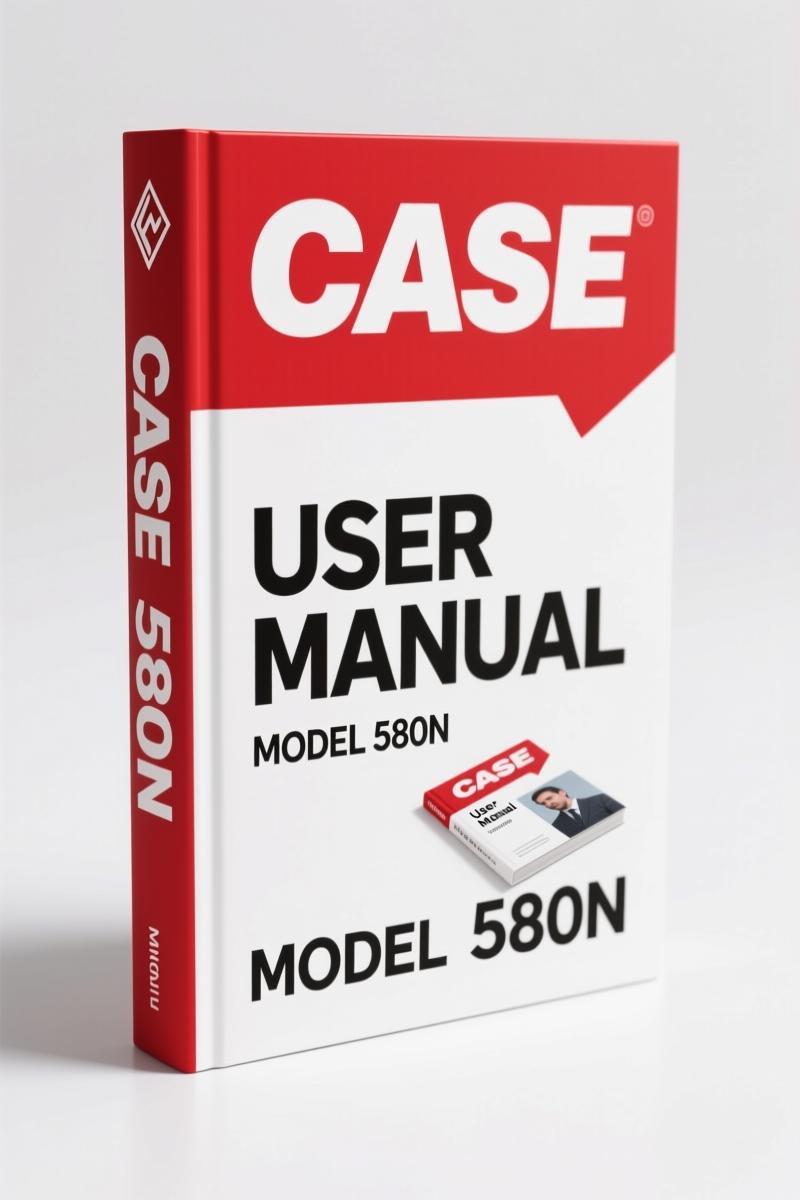
Case 580N, 580SN, 580SN WT, 590SN 2015 Operators Manual – Factory Specs
Original price was: $15.28.$10.99Current price is: $10.99.
OEM operator manual for Case 580N/580SN/590SN (2015). 380 pages: controls, maintenance, specifications, safety. Factory-certified data.
Description
Case 580N, 580SN, 580SN WT, 590SN 2015 Operators Manual
If you’re running a Case 580N, 580SN, 580SN WT, or 590SN Tier 3 backhoe, you need the factory operator’s manual on hand. Not a reprint. Not a third-party summary. The actual 2015 edition from Case Construction. 380 pages of what the factory expects you to know before you start the engine. This manual covers everything from machine orientation to troubleshooting. I’ve seen too many guys rely on memory and end up with a bent loader arm or a hydraulic line blown because they forgot the proper sequence. That’s why this book exists.
Inside, you’ll find 10 chapters starting with general information that explains the Product Identification Number (PIN) and where to find it on the machine, plus the Electro-Magnetic Compatibility (EMC) requirements that matter if you’re adding aftermarket electronics. Chapter 2 lays out safety rules in a way that makes you think twice about shortcuts—specific precautions for ductile iron components, fuel handling, and the support strut for the loader lift arm. I’ve seen that strut save a technician’s hand when a hose blew. Page 2-14 shows exactly where it mounts and how to engage it. Chapter 3 covers the operator’s platform, seat, and all controls—left-hand switch panel, right-hand switch panel, steering column, gear selector, pedal controls. If you’re new to a Case backhoe, this chapter gets you comfortable before you move a lever. Chapter 4 is operating instructions for starting, stopping, and using the loader and backhoe. Chapter 5 handles transport operations—towing, trailering, and roading the machine safely. Chapter 6 dives into working operations, including proper digging techniques and loader cycle. Chapter 7 is maintenance with schedules and procedures for fluids, filters, and greasing. Chapter 8 troubleshoots common problems like engine cranks but won’t start, hydraulics weak, or electrical gremlins. Chapter 9 lists specifications: dimensions, weights, fluid capacities, tire pressures. Chapter 10 covers accessories like auxiliary hydraulics and quick couplers. That’s the full scope, 380 pages bound as a factory PDF.
Controls and Instruments: Why Layout Matters
This chapter (3) is where most operators should start. The front console left-hand switch panel and right-hand switch panel are clearly diagrammed. The gear selector section describes the power shuttle transmission, which is a type of Manual Transmission operation. You’ll also find the heating and ventilation controls. Page 3-7 shows the exact switch assignments—no guesswork. If you’re hopping into a unfamiliar machine, spend ten minutes here before turning the key.
Does This Manual Cover Maintenance Intervals?
Chapter 7 is titled “Maintenance” and it does include service schedules for fluids, filters, and lubrication points. For example, it tells you how often to grease the loader pivot pins and check the transmission fluid. What it won’t give you is internal engine overhaul specs or hydraulic pump rebuild procedures—that’s service manual territory. But for daily and weekly checks, this operator’s manual has what you need to keep the machine running without unscheduled downtime. Operators who skip these intervals end up replacing pumps and cylinders early.
Safety Information: Non-Negotiable
Chapter 2 is 22 pages long for a reason. It covers utility precautions (dig-safe), fuel handling precautions, ductile iron component warnings, and the support strut for the loader lift arm. Hand signals for crane operations are included. Page 2-14 details the support strut engagement—a step I’ve seen neglected on jobsites. Also there’s a section on safety signs and their locations on the machine. If you’re training a new operator, start here. The ER doesn’t give a second chance.
7 Systems Covered in the Troubleshooting Chapter
Chapter 8 gives a systematic approach to common issues: engine cranks but doesn’t start, hydraulic system weak or slow, transmission engagement problems, electrical system faults, and more. It’s not a diagnostic tree with every sensor pinout, but it helps a competent operator narrow down the cause before calling a mechanic. For wiring diagrams and component-level testing, you’ll want the CASE 580N 2014 Parts Catalog and the service manual. This manual gets you 80% of the way there.
Get the Right Spec Data from Chapter 9
Specifications chapter includes machine dimensions, operating weights, fluid capacities (engine oil, hydraulic oil, transmission, coolant, fuel tank), and tire pressures. If you’re loading the machine on a trailer or ordering replacement tires, these numbers matter. No more guessing how many gallons of hydraulic oil to buy. Also includes sound level data and EMC compliance info. For parts breakdowns, cross-reference with the CASE 580N 580SN 590SN 2012 Parts Catalog.
Case 580N, 580SN, 580SN WT, 590SN 2015 Operators Manual: What You Get
This is an OEM factory manual from April 2015, 2nd edition, part number 47869586, superseding 47782453. 380 pages. Covers Tier 3 models only. Includes a full index at the back. The PDF bookmark structure mirrors the printed TOC—you can jump directly to any chapter. No reprints, no photocopies. This is the same document Case operators receive with a new machine. For other models, check the Case SL1-b, SL2 1995 Operators Manual – Factory Specs if you’re working on older units. And for more on transmission theory, see Manual Transmission on Wikipedia.
- Is this manual for Tier 3 models only?
- Yes. The manual is specifically for Tier 3 engines.
- Does it include wiring diagrams or service procedures?
- No. This is an operator’s manual, not a service repair manual. It covers daily operation, controls, safety, and basic maintenance like fluid checks and filter changes. For wiring diagrams or engine overhaul specs, you need the service repair manual. However, the troubleshooting section (Chapter 8) helps diagnose common issues such as engine starting problems or hydraulic performance without tearing into the machine. Operators who understand their machine’s normal behavior can use this manual to spot problems early.
Stick to the book. Access the Factory Manual and keep it on your phone or tablet in the cab. You’ll thank yourself when something unexpected happens on site.
Additional information
| Brand | Case |
|---|---|
| Language | English |
3 reviews for Case 580N, 580SN, 580SN WT, 590SN 2015 Operators Manual – Factory Specs
You may also like…
-
Sale!
Case 26, 26B, 26S 1975 Parts Catalog – Factory Exploded-View Parts Identification
Original price was: $114.00.$75.00Current price is: $75.00. -
Sale!
Case 34, 680 CK 1967 Parts Catalog – OEM Factory Parts
Original price was: $107.25.$75.00Current price is: $75.00. -
Sale!
Case 50 Crawler Series D Service Manual – Factory Specs & Electrical
Original price was: $98.00.$70.00Current price is: $70.00. -
Sale!
Case 2500 Service Manual – OEM Factory Specs for Cruz-Crane
Original price was: $97.30.$70.00Current price is: $70.00.
Related products
-
Sale!

1993 Operators Manual – International Bus 1000-3000 OEM Specs
Original price was: $12.30.$7.99Current price is: $7.99. -
Sale!

1989 Service Manual – International 2000-8000 Electrical Systems
Original price was: $72.00.$50.00Current price is: $50.00. -
Sale!
1992 Electrical Schematic – OEM Wiring Diagrams for International 1000-3800
Original price was: $24.48.$18.00Current price is: $18.00. -
Sale!

2005 Parts Catalog – International NGD 3.0 L Engine (77 pages)
Original price was: $44.70.$30.00Current price is: $30.00.
gearhead88 –
Outstanding! The scan is high-quality and easy to navigate. A must-have for any Case 580N, owner doing repairs. Saved my weekend project! Thanks.
Robert M. –
Great OEM spec sheet. The scan is high-quality and easy to navigate. Contains detailed schematics for Case. Saved my weekend project! Thank you.
Richard G. –
Five stars! It is very easy to read on my iPad without blur. It guided me to fix my Case 580N, electrical system. I will recommend this shop to others.