
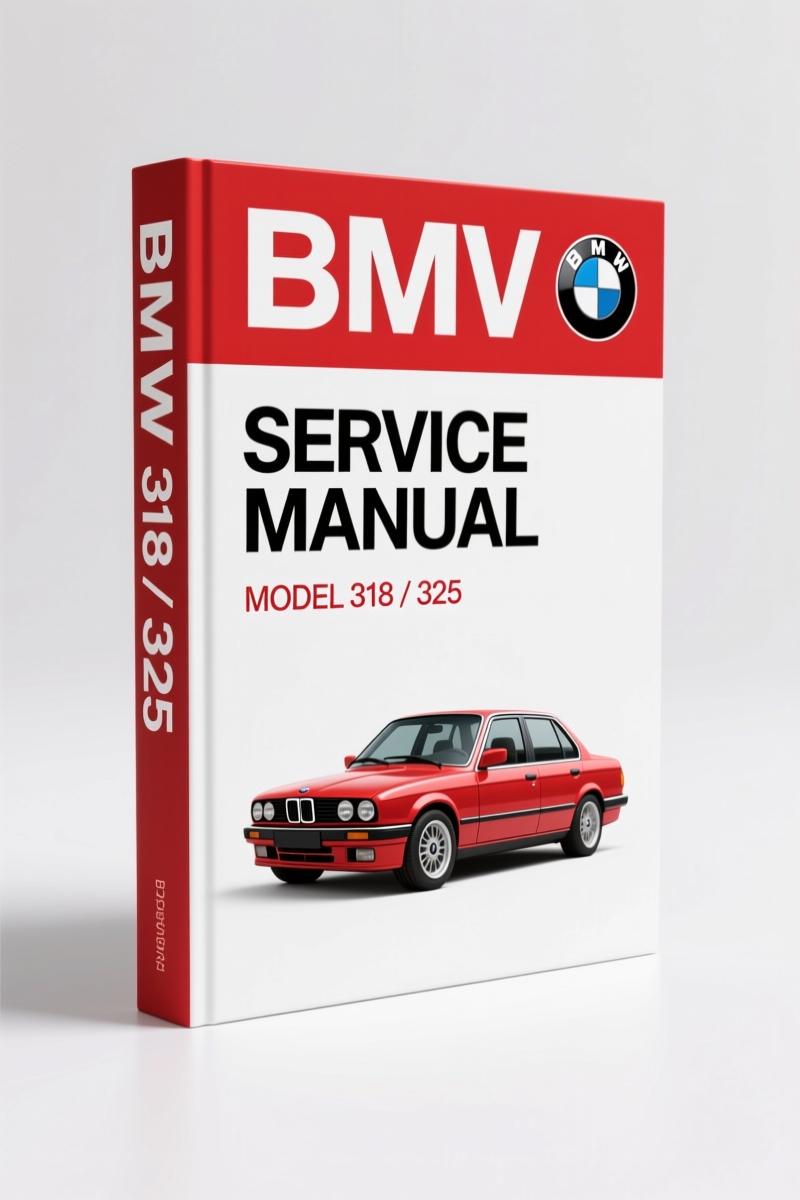
BMW 318, 325 Service Manual – Factory Torque Specs & Transmission Data
Original price was: $40.20.$30.00Current price is: $30.00.
Factory-coded service manual covering transmission, clutch, and shift mechanism for BMW 318/325. 164 pages of torque specs and inspection limits.
Description
If you’re tearing into a BMW 318, 325 Service Manual job and you don’t have the factory book within arm’s reach, you’re asking for trouble. I’ve watched guys ruin a synchro because they pulled a torque number off a forum. That mistake costs you a transmission. This manual is 164 pages of printed-on-paper, OEM-approved procedure. No aftermarket shortcuts, no generic diagrams that leave you guessing which bolt goes where.
Over the years I’ve torqued more head bolts than most people have had hot meals, and I can tell you the difference between a manual that came from the factory and one that some publisher scanned and OCR’d badly is night and day. This one is the real thing. It covers the Getrag and ZF transmissions found in the E30 and early E36 chassis – the 318i, 318is, 325e, 325i, and 325is.
Transmission Service: Page 21 and Up
Chapter 7 is where you’ll live if you’re pulling the gear train. Page 21 starts the transmission service section. Section 7.1 covers removing and installing the gear train. Section 7.2 walks you through disassembling and assembling it. You get oil seal replacement on page 37 and a full inspection checklist starting on page 39 – gears, synchronizer rings, shift forks, shafts, case bushings and bearings. Each step has the exact clearances and wear limits. No guessing whether your synchro is too worn – the manual gives you the numbers.
If you need to pull the whole transmission, chapter 6 has the removal and installation procedure. It’s straightforward, but you still need the factory sequence. Skip a step and you’ll fight the bellhousing for an hour.
Does This Manual Cover the Clutch Hydraulics?
Yes, and it does it right. Chapter 5 is all clutch. Page 13 shows you how to bleed the hydraulic system – a job that trips up plenty of DIY guys because they don’t bench-bleed the master first. The manual includes slave cylinder specifications (check pushrod travel) and master/slave cylinder removal and installation. Page 18 gives you clutch specifications – flywheel runout, disc thickness, pressure plate diaphragm height. And if you need to swap the clutch itself, page 17 walks you through removing and installing it.
3 Reasons to Stick with Factory Specs
One: Tightening torques. Page 41 has the complete tightening torque table for transmission, clutch, and bellhousing bolts. BMW uses aluminum cases and steel bolts – torque them wrong and you strip the threads or crack the case. Two: Transmission tolerances. Page 42 lists wear limits for gears, shafts, and bearings. If your input shaft bearing has more than 0.002 inch of radial play, it’s junk. Three: Gear ratios. The manual includes the gear ratio table for five-speed transmissions on page 42. You need that to identify which trans you have or to order replacement parts.
Aftermarket manuals often copy these tables from earlier editions and miss updates. This one is the factory document – no interpretation.
Inspect Transmission Components Like a Pro
Section 7.4 is a masterclass in inspection. It breaks down what to look at on gears and synchronizer rings (page 39), shift forks and shift rods (page 40), transmission shafts (page 40), and case bushings and bearings (page 40). Each subsection includes the measurement procedure and the acceptable range. For example, the shift fork clearance to the synchro sleeve – if it exceeds a certain spec, you get baulky shifts. The manual tells you exactly how to measure it with feeler gauges.
This is the kind of detail that saves you from having to pull the transmission a second time because you missed a worn hub.
Technical Data: Torques and Tolerances on Page 41
The back of the manual (chapter 8) is pure data. Tightening torques for every fastener in the drivetrain – bellhousing bolts, clutch pressure plate bolts, flywheel bolts, transmission mount nuts. Then transmission tolerances and wear limits, clutch tolerances, and the gear ratio table. If you’re swapping a five-speed into a car that came with a four-speed, you need that gear ratio table to match final drives.
For the clutch hydraulic system, the manual includes slave cylinder pushrod travel specs on page 13 and pedal adjustment specifications on page 15. Don’t eyeball the clutch pedal free play – the factory spec is a few millimeters, but if it’s off you’ll either slip the clutch or wear out the throwout bearing.
Related Manuals for Electrical Diagnostics
If you’re chasing electrical gremlins alongside the drivetrain work, consider the BMW 3 Series 1998 Electrical Troubleshooting Manual and the BMW E36 1999 Electrical Troubleshooting Manual. For earlier E36 models, the BMW 3 Series E36 1996 Electrical Troubleshooting Manual covers the same era as this service manual.
For industry background on why OEM documentation matters, check Automotive Industry Overview and Automotive Industry Overview.
Frequently Asked Questions
- Does this manual cover the clutch bleeding procedure?
- Yes, page 13 covers bleeding the clutch hydraulic system step by step. It includes the sequence for the master and slave cylinders, and the pushrod travel check.
- What models does the transmission chapter apply to?
- Chapter 7 covers the manual transmissions used in the 318 and 325 models from the mid-80s to early 90s, including the Getrag 240 and Getrag 260.
- How many pages is this manual?
- 164 pages.
- Can I find the gear ratios for a five-speed transmission?
- Yes. Page 42 lists the gear ratios for all five-speed transmissions covered in the manual. You’ll find the ratios for first through fifth gear, plus the final drive. Use the transmission identification codes on page 5 to match your unit to the table.
If you want to get the job done right the first time and not have to redo work because of a wrong spec, this is the manual you need. Access the Factory Manual and keep it on your tablet or print it out. Either way, you’ll have the exact same information that BMW dealers used when these cars were new. No aftermarket copy, no missing pages, no interpretation – just the factory procedure.
Additional information
| Brand | BMW |
|---|---|
| Language | English |
2 reviews for BMW 318, 325 Service Manual – Factory Torque Specs & Transmission Data
You may also like…
-
Sale!

BMW 525i, 530i, 535i, 540i Service Manual – 459 Pages Factory Specs
Original price was: $73.20.$60.00Current price is: $60.00. -
Sale!

BMW 735i, 735iL, 740i, 740iL, 750iL Service Manual – 987 Pages
Original price was: $102.05.$65.00Current price is: $65.00. -
Sale!

BMW 525i, 530i, 535i, 540i Service Manual 1989-1995 Factory Specs
Original price was: $96.00.$60.00Current price is: $60.00. -
Sale!

BMW M3, 323i, 325i, 325xi, 328i Service Manual – 1258 Pages
Original price was: $93.00.$60.00Current price is: $60.00.
Related products
-
Sale!

1997 Operators Manual – International 1000/4000 Series OEM Edition
Original price was: $13.49.$9.99Current price is: $9.99. -
Sale!

2011 Parts Catalog – International Truck OE Parts Documentation (1786 Pages)
Original price was: $34.50.$25.00Current price is: $25.00. -
Sale!

1991 Operators Manual – International Truck OEM Specs (108 Pages)
Original price was: $13.63.$10.99Current price is: $10.99. -
Sale!
1995 Operators Manual – International 1000-4000 Series | OEM Documentation
Original price was: $12.49.$9.99Current price is: $9.99.
James L. –
Great OEM spec sheet. It is very easy to read on my iPad without blur. It helped me to troubleshoot my BMW 318, transmission. Highly recommended for mechanics.
David K. –
Great workshop guide. The text is searchable and easy to navigate. Every wiring layout is provided for BMW 318,. Saved my repair job! Thank you.