
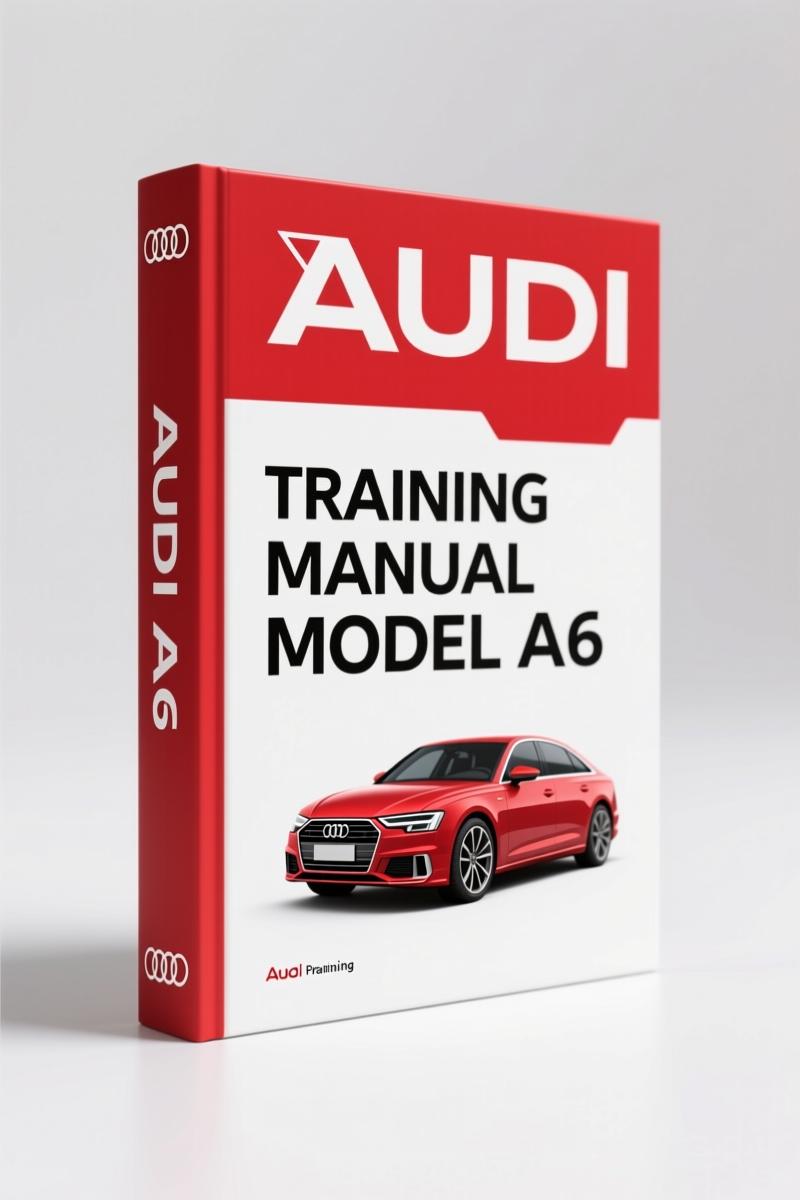
Audi A6 Technical Manual – 4-Level Air Suspension (44 Pages)
Original price was: $35.55.$22.50Current price is: $22.50.
Factory 44-page technical manual for Audi A6 4-level air suspension. System description, component locations, control strategies, and service procedures.
Description
Audi A6 Technical Manual – Air Suspension for the allroad Quattro
Most guys rolling an Audi A6 allroad into my bay are chasing gremlins in that 4-level air suspension. They’ve swapped parts, read generic forums, and still got a warning lamp staring at them. I tell them the same thing: if you don’t understand how the system is supposed to work, you’re just firing parts at a problem. That’s why this Audi A6 Technical Manual matters. It’s not a workshop manual—it’s a self-study programme (SSP 243) that walks you through the design, function, and control logic of the pneumatic suspension. Forty-four pages of factory insight that Audi engineers wrote for their own techs.
What This 44-Page Technical Manual Actually Covers
You get the full system description starting on page 4, then straight into operation and display details (pages 7-8). The control strategies for control units 4Z7 907 553A and 553B live on pages 10-13, including the ESP safety switching logic. System components are broken down: air springs (page 14), air suspension layout (page 17), a diagram of the pneumatic system (page 20), solenoid valves (page 21), temperature sensor G290 (page 22), pressure sensor G291 (page 22), level senders G76/G77/G78/G289 (page 23), warning lamp K134 (page 27), and operating unit E281 (page 28). It also maps out the CAN information exchange (page 29), additional interfaces (page 30), and a function diagram (page 32). The self-levelling suspension control unit J197 and its modes are covered on pages 34-35. Then the service section—special tools (page 38), basic system settings (page 39), self-diagnosis (page 40), and a general overview (page 41). That’s the spine of the material.
Control Strategies – Why You Need to Grasp the Logic
Under the hood of the allroad’s air suspension is a control unit that decides ride height based on vehicle speed and driver input. The manual dedicates pages 10-13 to explaining the strategies for both ECUs. If you’ve ever had a car that refuses to lower on the highway or drops overnight, you need to know which control module handles which mode. The ESP safety switching on page 13 can lock you out if you don’t follow the reset procedure. Without this manual, you’re guessing at what the ECU wants. With it, you can trace the signal path from level senders to the warning lamp and diagnose exactly where the loop breaks.
System Components – Air Springs, Sensors, and Valves
Every component has a specific function and a specific failure mode. The air springs on page 14 aren’t just rubber bags—they’re part of a closed-loop system with the pressure sensor G291 and temperature sensor G290. The solenoid valves on page 21 control airflow to each corner. Level senders (page 23) report ride height. The manual doesn’t give you torque specs for the air spring retaining bolts (that’s in the workshop manual), but it does tell you what each sensor expects to see voltage-wise. That’s critical when you’re reading a wiring diagram or a snapshot from a scan tool.
If you need wiring diagrams for earlier models to cross-reference, check the Audi A6 1998 Wiring Diagram or the Audi A6 2000 Wiring Diagram. The Audi A6 2001 System Wiring Diagram may also help, but stick with the factory self-study programme first to understand the philosophy behind the wiring.
Service Tools and Settings – Not a Workshop Manual, but Still Useful
The service section (pages 38-41) lists special tools required for basic system settings and self-diagnosis. It won’t tell you how to rebuild a strut, but it will tell you the correct procedure for recalibrating ride height after a component change. That’s a step most DIY guys skip, and then they wonder why the car sits crooked. Page 39 covers basic system settings; page 40 covers self-diagnosis including how to read warning lamp blink codes. If you’re a professional, this is the document you hand to a junior tech before they touch the car. For background theory on vehicle systems, the Automotive Industry Overview and Manual Transmission offer general knowledge, but they won’t help you with an A6 that won’t raise.
Why Factory Documentation Beats Aftermarket Copies
Aftermarket manuals love to summarize. They’ll tell you “air suspension uses different ride heights” and stop there. This 44-page technical manual gives you the exact diagram of the pneumatic system on page 20, the sensor pinouts, the CAN message IDs. I’ve seen reprinted copies that omit the control strategies section entirely. The copy on this site is a direct scan of the original Audi self-study programme. The fonts are crisp, the wiring schematics are legible, and there’s no guesswork about which connector is which. If you’re serious about the A6’s air suspension, you need the factory source.
Who Needs This Manual?
Home garage enthusiasts who aren’t afraid to dive into the theory. Shop owners who want their guys to stop replacing level sensors that aren’t broken. DIYers who have a 2000-2005 A6 allroad and want to understand why the car kneels down when parked overnight. This manual won’t hold your hand through a job, but it will give you the foundation to diagnose faster and replace fewer parts. It’s 44 pages of concentrated knowledge.
- Does this manual include torque specs for suspension bolts?
- No. This is a design and function self-study programme (SSP 243). It does not contain step-by-step repair instructions or torque values. You’ll need the official Audi workshop manual for those. However, it does outline the special tools required and basic system settings on page 38-40, which are essential for proper diagnosis and recalibration after a repair. If you need torque values for air spring retaining bolts or control arm fasteners, look for the separate repair manual.
- Can I use this to troubleshoot a fault code on my A6?
- Yes. The self-diagnosis section on page 40 explains the diagnostic protocol and warning lamp behavior.
If you’re working on an A6 allroad quattro with air suspension issues, stop second-guessing and get the factory data. Access the Factory Manual now from AutoRepairManuals.
Additional information
| Brand | Audi |
|---|---|
| Language | English |
3 reviews for Audi A6 Technical Manual – 4-Level Air Suspension (44 Pages)
You may also like…
-
Sale!
Audi A3 2003 Repair Manual – Fuel System Service Documentation
Original price was: $63.45.$45.00Current price is: $45.00. -
Sale!
Audi 100, 200 1989 Workshop Manual – Factory Service for 5-Cylinder Engine
Original price was: $63.45.$45.00Current price is: $45.00. -
Sale!
Audi A8, Q7 Training Manual – Ceramic Brake Systems
Original price was: $54.00.$45.00Current price is: $45.00. -
Sale!
Audi 5000 S 1985 Wiring Diagram – OEM Cooling Fan Circuit Data
Original price was: $86.90.$55.00Current price is: $55.00.
Related products
-
Sale!

1993 Operators Manual – International Bus 1000-3000 OEM Specs
Original price was: $12.30.$7.99Current price is: $7.99. -
Sale!

2005 Parts Catalog – International NGD 3.0 L Engine (77 pages)
Original price was: $44.70.$30.00Current price is: $30.00. -
Sale!
1994 Troubleshooting Manual – International 1000-4000 FBC
Original price was: $60.00.$50.00Current price is: $50.00. -
Sale!
2004 Acura TSX Wiring Diagram – 73-Page Factory Electrical Schematics
Original price was: $15.88.$9.99Current price is: $9.99.
Robert M. –
Perfect factory service manual. It is easily zoomable on my laptop without losing quality. It helped me to repair my Audi A6 transmission. I will recommend this shop to others.
workshop_guy –
Five stars! Immediate link after checkout process. A must-have for any Audi A6 mechanic doing maintenance. I will definitely buy again.
John S. –
Highly recommended! The text is searchable and easy to navigate. A must-have for any Audi A6 owner doing maintenance. Worth every penny.