
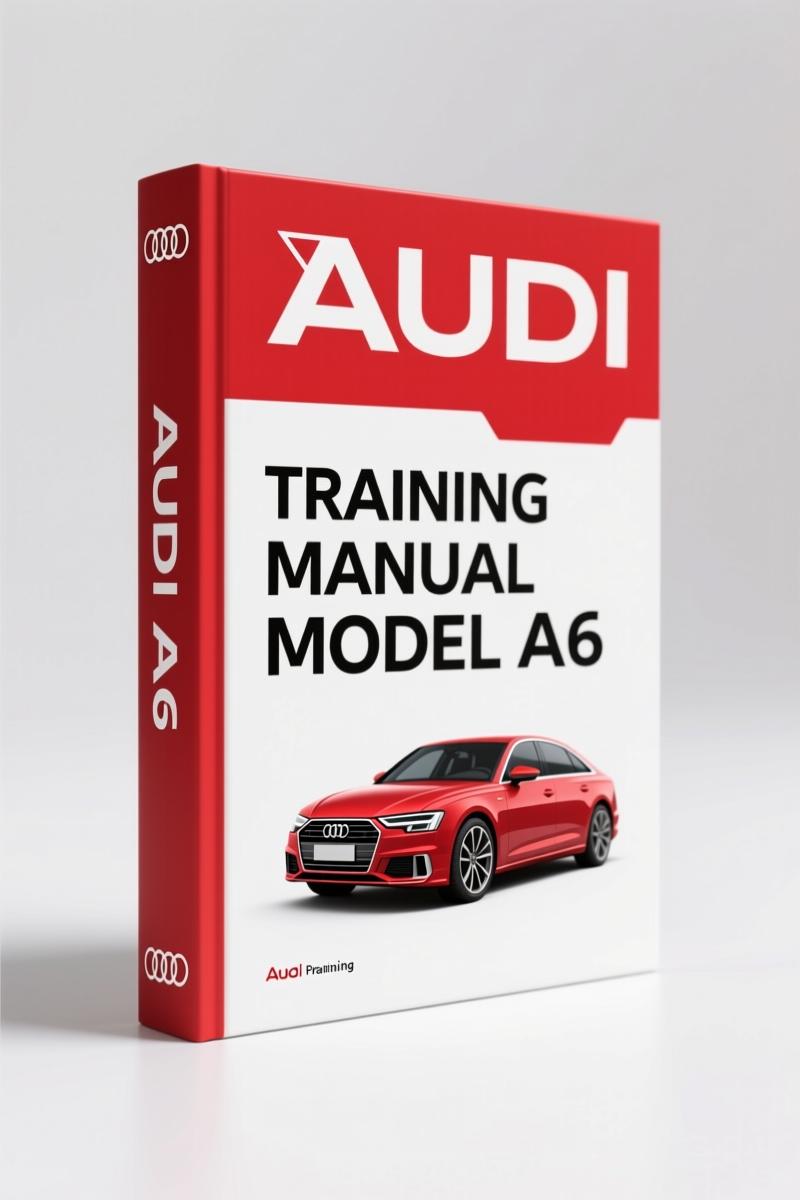
Audi A6 2001 Training Manual – Emission Control & Standards
Original price was: $41.70.$30.00Current price is: $30.00.
Official Audi Academy 40-page training manual on exhaust emissions, OBD, and certification for 2001 A6 models. Factory documentation.
Description
Audi A6 2001 Training Manual
Let me tell you straight: if you are working on a 2001 Audi A6 and you don’t understand how the emissions system works, you are guessing. And guessing on a German car with a complex fuel management system gets expensive fast. I’ve seen techs throw parts at a P0420 code because they didn’t know the difference between a lean misfire and a bad catalyst. This Training Manual is the exact document Audi used to teach their own technicians. It is not a generic repair manual. It is a factory training module, course number 943003, printed by Audi of America, Inc. in March 2001. If you want to understand what’s actually happening in the exhaust stream, this is where you start.
Exhaust Gas Components and Operating Conditions
That sounds like textbook stuff. It is. But I guarantee you will learn something you didn’t know. The manual breaks down what each exhaust gas component is—CO, HC, NOx, O2, CO2—and how they relate to air-fuel ratio and ignition timing. Then it hits you with the real meat: how operating conditions like load, speed, engine temperature, and barometric pressure change the composition. Page 7 covers the effect of those conditions. If you have ever chased a driveability complaint that only happens at part-throttle on a warm day, this section will save your Saturday. It also explains why the O2 sensor signal looks different under deceleration fuel cut-off. That is the kind of knowledge you apply on the scan tool.
Methods of Reducing Emissions: Fuel and Exhaust Treatment
Three big topics here: reduction of fuel consumption, management of fuel vapor losses, and treatment of exhaust gases. The manual goes into evaporative emission control (EVAP) system strategy—purge valve operation, canister loading, and the diagnostics that set a DTC for a gross leak. For exhaust treatment, it covers the three-way catalytic converter, how it stores oxygen, and why it needs a specific air-fuel ratio window. This is not theory you find on a forum. This is the OEM training that tells you why the post-cat O2 sensor flips slow when the catalyst is degrading. I have used this information to correctly diagnose a bad oxygen sensor that everyone else called a bad catalyst. Page 11 starts the methods section; page 15 goes into fuel vapor management. No fluff.
On-Board Diagnostics and Certification Testing
Performance monitoring, or OBD II, is covered on page 17. The manual explains the monitoring cycles—catalyst efficiency, misfire detection, oxygen sensor response, EVAP system, and secondary air injection. It lists the enabling conditions and the thresholds that trigger a fault. Then the certification and testing section (page 18) breaks down Federal emissions certification versus California standards. If you are in a CARB state, you need to know the difference. The manual includes the specific test procedures and pass/fail criteria. It also covers regional differences on page 23. This is the same information that Audi service bulletins reference. Owning this manual means you stop second-guessing whether a code is a real failure or a calibration issue.
Why OEM Training Beats Aftermarket Content
This is a factory document produced by the Audi Academy. It is 40 pages of concentrated knowledge. Aftermarket emissions books generalize everything; they tell you “carbon monoxide is high when rich” and stop there. This manual tells you the exact ppm range for each component at idle vs. cruise, and what normal operation looks like on a gas analyzer. The course goals on page ii are clear: recognize the need for emissions controls, review exhaust gas composition, identify system components. No filler. That is what you get when the manufacturer writes the training. Compare that to a third-party “emissions guide” that copies EPA public data and slaps a price on it. You want the source that Audi technicians used. Automotive Industry Overview
Audience Fit: DIYers and Pros Alike
If you are a DIYer who has struggled to pass a state inspection or a professional who wants to understand the 2001 A6 emissions architecture before you touch the wiring, this manual is for you. It assumes you have some basic knowledge of engine operation, but it does not assume you are a master tech. The language is direct, the diagrams are clear, and the teletest at the end (page 27) lets you check your understanding. You do not need a scan tool to use this manual, but you will understand what your scan tool is telling you a lot better after reading it. For wiring-level diagnostics, pair this with a Audi A6 1998 Wiring Diagram or Audi A6 2000 Wiring Diagram if you are working on earlier models. The Audi A6 2001 System Wiring Diagram is the companion you need for pin-level testing.
- Does this manual include torque specs or repair procedures?
- No. This is a training manual, not a service manual. It covers emissions theory, OBD logic, and certification standards. You will not find valve clearance numbers or belt tension values. What you will find is the why behind the system—and that is what most professionals miss.
- What specific certification standards does it cover?
- The manual explains Federal Emissions Certification (Tier 1 and LEV requirements), California standards (including the Low Emission Vehicle program and the transition to SULEV), and the differences between regions. It includes the actual test cycles (FTP-75, US06, SC03) and how they relate to on-road driving. If you are in a state that does OBD-based inspections, you need to understand what the ECU is checking and why. Page 18 through 23 break it all down with real numbers and pass/fail logic. That is the difference between a manual that says “check for codes” and one that teaches you what the codes mean in context of emissions compliance.
Look, I have been turning wrenches since before OBD II was mandatory. I have seen too many good techs get burned by bad information. If you work on German cars, you need the factory training. This manual is from the Audi Academy. It is 40 pages—memorize it. You will diagnose emissions faults faster and stop throwing parts at symptoms. Manual Transmission (no, that link is not related, but while you are here, check out our other OEM content).
Access the Factory Manual now and put real knowledge on your workbench.
Additional information
| Brand | Audi |
|---|---|
| Language | English |
2 reviews for Audi A6 2001 Training Manual – Emission Control & Standards
You may also like…
-
Sale!
Audi A8, Q7 Training Manual – Ceramic Brake Systems
Original price was: $54.00.$45.00Current price is: $45.00. -
Sale!
Audi 100, 200 1989 Workshop Manual – Factory Service for 5-Cylinder Engine
Original price was: $63.45.$45.00Current price is: $45.00. -
Sale!
Audi 5000 S 1985 Wiring Diagram – OEM Cooling Fan Circuit Data
Original price was: $86.90.$55.00Current price is: $55.00. -
Sale!
Audi A3 2003 Repair Manual – Fuel System Service Documentation
Original price was: $63.45.$45.00Current price is: $45.00.
Related products
-
Sale!

1996 Operators Manual – International 1000-4000 Series (246 pages)
Original price was: $15.28.$9.99Current price is: $9.99. -
Sale!

2011 Parts Catalog – International Truck OE Parts Documentation (1786 Pages)
Original price was: $34.50.$25.00Current price is: $25.00. -
Sale!
1991 Electrical Schematic – 112-Page OEM Wiring Diagram for International 1000-3000 Series
Original price was: $22.75.$17.50Current price is: $17.50. -
Sale!
1994 Troubleshooting Manual – International 1000-4000 FBC
Original price was: $60.00.$50.00Current price is: $50.00.
Robert M. –
I am extremely satisfied with this purchase. Instant access after checkout. It assisted me to rebuild my Audi A6 electrical system. Saved my weekend project! Thank you.
John S. –
This is just what I required. Instant access after checkout. Contains detailed schematics for Audi. Highly recommended for mechanics.