
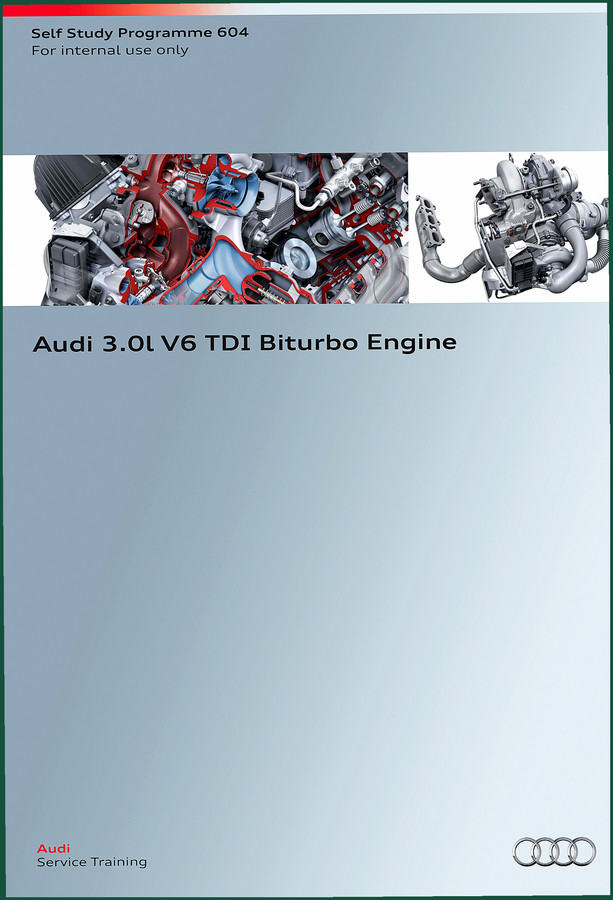
Audi 3.0L V6 TDI Technical Manual – Factory Specs for Biturbo Engine
Original price was: $26.45.$17.99Current price is: $17.99.
OEM Audi 3.0L V6 TDI Technical Manual – 24 pages on biturbo engine mechanicals, charging, fuel system, and exhaust. For professional diagnosis.
Description
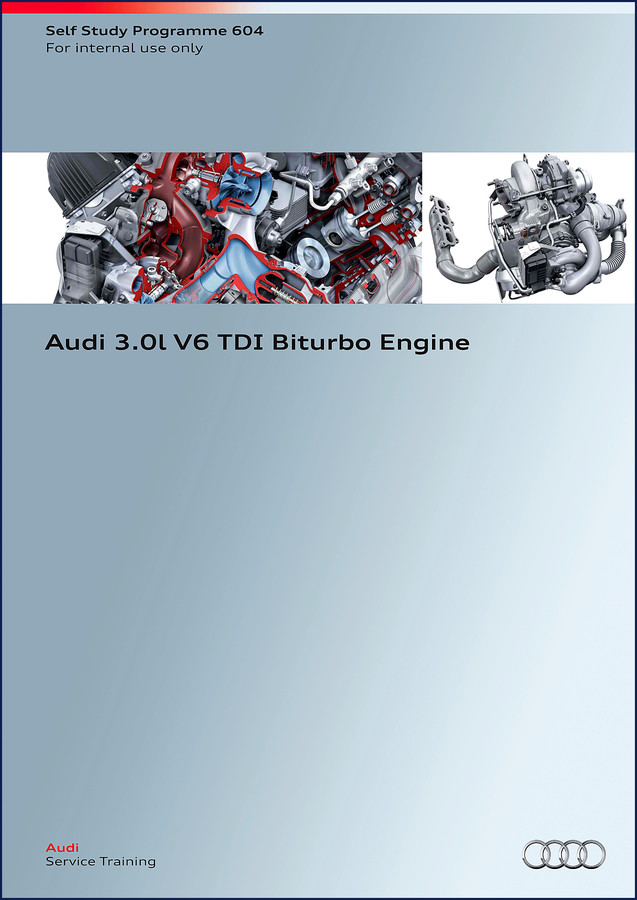
You have an Audi 3.0L V6 TDI with the biturbo setup in your bay. The owner’s complaining about low power, a boost leak, or maybe a coolant weep. Aftermarket manuals give you vague diagrams and torque values that don’t match the hardware. That’s when you reach for something written by the people who designed the engine. This is that document: the Audi 3.0L V6 TDI Biturbo Engine Self-Study Programme, 24 pages of factory-level explanation on how this thing breathes, cools, and fires. It’s not a repair manual – the first page says that in bold. But if you need to understand why the high-pressure turbo sits where it does, or how the variable turbine geometry (VTG) actuator is controlled, this is your roadmap.
Audi 3.0L V6 TDI Technical Manual – The Source
This Technical Manual comes straight from Audi’s Service Training. It’s marked “For internal use only” on page 1. That means you’re getting the same diagrams and descriptions Audi techs study before they touch a 3.0L V6 TDI biturbo engine. The core of the unit is the compact two-stage charging system tucked into the inner V of the engine, over the gearbox bell housing. Page 12 covers the biturbo charging architecture: a high-pressure turbo with electric VTG actuator and a low-pressure turbo with wastegate regulation. If you’ve ever chased a boost control fault on one of these, you know exactly why you need that detail.
Biturbo Charging: System Design and Map Function
The manual dedicates pages 12 through 17 to the charging system – system design, function in map, and the interaction between both turbochargers. The high-pressure unit uses an electrical positioner for the VTG ring; the low-pressure unit uses a wastegate valve tuned for high airflow. That split lets the engine deliver heavy torque at low rpm while still pulling hard at the top end. Understanding that map is how you tell a stuck actuator from a bad sensor. Don’t guess – read page 17’s function-in-map section before you replace parts.
Cooling Circuit and Cylinder Head Configuration
Coolant routing in a V6 TDI biturbo is not like a normal V6. The cylinder head has specific coolant flow paths shown on pages 9 and 10. The oil vacuum pump and coolant pump are covered on page 8. If you’re doing head gasket work, you need the flow diagram from page 10 to know which passages feed the turbos. Mess that up and you’ll overheat the rear bank on the first test drive. Specs on page 6 list capacities – but conversion to imperial is on you.
Does This Replace a Repair Manual?
No. It says so in the document: “The Self Study Programme teaches a basic knowledge of the design and functions… It is not a Repair Manual!”. You still need the factory repair information for torque sequences, fastener grades, and diagnostic trouble codes. What this gives you is the engineering logic behind the repair. For a biturbo engine with two different turbocharger control strategies, that logic keeps you from making expensive mistakes. Pair it with Audi 3.0L V6 TDI Engine (Second Generation) SSP 479 for the earlier design differences, or Audi TT Technical Manual – 82-Page Factory-Direct Diagnostics if you’re working on a shared platform.
Engine Mechanicals: Cylinder Block, Crank Drive, and Cylinder Head
Page 7 covers the cylinder block and crank drive changes from the 2nd Gen engine. The cylinder head page (page 9) explains the four-valve layout and the integrated cooling jacket. If you’re rebuilding one of these, the cylinder head bolt torque and angle specs are not in this book – you need the repair manual for that. But the section tells you which components changed vs. the single-turbo version, so you know what to expect when ordering parts. The exhaust system overview on page 22 includes the sound actuator and active sound exhaust – useful if a customer complains about drone and you suspect the actuator.
One thing that jumps out: the oil vacuum pump and coolant pump layout on page 8. That pump drives auxiliary functions. If you see a vacuum leak on a 3.0L V6 TDI that doesn’t affect brakes, check the vacuum pump mounting. The manual shows you where it bolts to the block.
Common Rail Injection and Engine Management
The fuel system section (page 18) explains the common rail injection system pressures and injector sequencing. Engine management overview on page 20 lists all sensors and actuators. That’s the map for electrical diagnostics. When you have a no-start with rail pressure codes, page 18 tells you the high-pressure pump design and rail pressure sensor location. Don’t swap injectors without understanding the control logic – the manual separates the high-pressure and low-pressure sides.
- Is this manual in metric or imperial?
- All figures are metric. You’ll need a conversion chart for ft-lb torque values. Page 6 shows specifications in metric units.
- Can I use this to rebuild the engine?
- It gives you the design understanding but lacks the step-by-step torque sequences and clearances. Use it alongside the official Audi repair manual. The cylinder head coolant flow on page 10 is critical for head gasket work and is often missing from aftermarket guides.
- Does it cover the biturbo wastegate actuator adjustment?
- Yes, pages 16-17 describe the function-in-map regulation. The low-pressure turbo wastegate valve is controlled by a diaphragm unit; the high-pressure VTG uses an electric motor. The manual explains the control strategy, not the mechanical adjustment procedure.
- What years and models does this apply to?
- The manual references the 2nd Gen 3.0L V6 TDI biturbo used in Audi models from around 2012 onward – including A6, A7, A8, Q7, and others with the biturbo option. Check your engine code against the description. For an overview of diesel engine families, see Automotive Industry Overview.
If you’ve ever fought a biturbo diesel without factory literature, you know the feeling: replacing parts, still no boost, waste of hours. This 24-page Technical Manual doesn’t teach you how to turn a wrench – it teaches you how the engine works so you turn the right wrench. That’s why you need it on your bench next to the diagnostic scan tool. Manual Transmission may be your passion, but a modern V6 TDI biturbo demands this level of detail. Access the Factory Manual now and start your repair with the full picture.
Additional information
| Brand | Audi |
|---|---|
| Language | English |
2 reviews for Audi 3.0L V6 TDI Technical Manual – Factory Specs for Biturbo Engine
You may also like…
-
Sale!

Audi 100, 200 1989 Workshop Manual – Factory Service for 5-Cylinder Engine
Original price was: $63.45.$45.00Current price is: $45.00. -
Sale!
Audi 5000 S 1985 Wiring Diagram – OEM Cooling Fan Circuit Data
Original price was: $86.90.$55.00Current price is: $55.00. -
Sale!
Audi A3 2003 Repair Manual – Fuel System Service Documentation
Original price was: $63.45.$45.00Current price is: $45.00. -
Sale!

Audi A8, Q7 Training Manual – Ceramic Brake Systems
Original price was: $54.00.$45.00Current price is: $45.00.
Related products
-
Sale!

1994 Troubleshooting Manual – International 1000-4000 FBC
Original price was: $60.00.$50.00Current price is: $50.00. -
Sale!

2011 Parts Catalog – International Truck OE Parts Documentation (1786 Pages)
Original price was: $34.50.$25.00Current price is: $25.00. -
Sale!
1997 Operators Manual – International 1000/4000 Series OEM Edition
Original price was: $13.49.$9.99Current price is: $9.99. -
Sale!

1989 Service Manual – International 2000-8000 Electrical Systems
Original price was: $72.00.$50.00Current price is: $50.00.
Robert M. –
I am extremely satisfied with this manual. Instant access after checkout process. A must-have for any Audi 3.0L mechanic doing maintenance. Saved my weekend project! Thank you.
Thomas B. –
Superb resource! Immediate link after checkout process. Every torque spec is provided for Audi 3.0L. Saved my repair job! Thanks.