
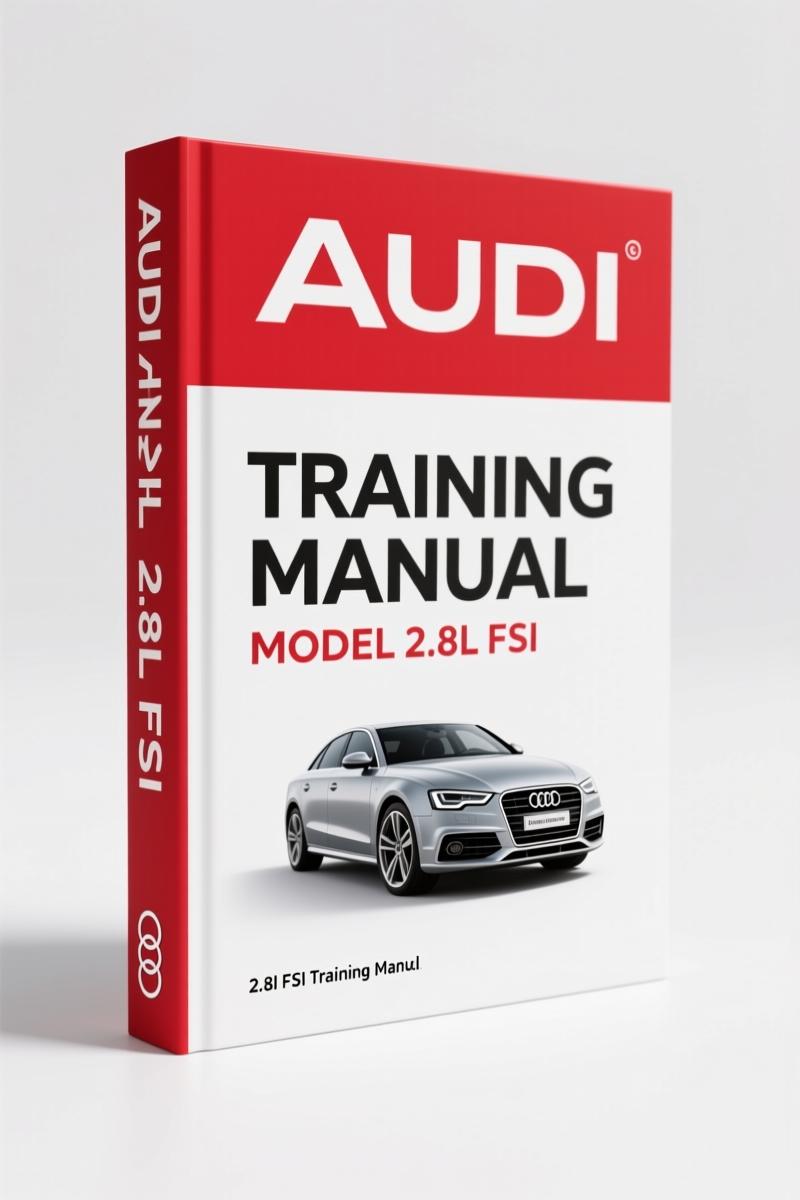
Audi 2.8l FSI, 3.2l FSI, 2.4l MPI Training Manual – Factory Specs
Original price was: $29.60.$20.00Current price is: $20.00.
OEM Audi training manual for 2.8l FSI, 3.2l FSI, 2.4l MPI engines. 64 pages covering engine mechanicals, chain drive, valvelift, and oil systems.
Description
Audi 2.8l FSI, 3.2l FSI, 2.4l MPI Training Manual
You have a customer’s 2008 A6 with a 3.2l FSI that’s puking oil and the aftermarket book says “tighten to spec” but gives you a generic range. That’s not a spec, that’s a guess. The Audi 2.8l FSI, 3.2l FSI, 2.4l MPI Training Manual from AutoRepairManuals is the factory self-study programme – SSP 411 – that Audi issued to its own technicians. 64 pages of mechanical, oil, cooling, air, exhaust, fuel, and engine management systems, all with original engineering drawings and torque values you can trust.
Engine Mechanicals: What the 64 Pages Cover
Every section in this Training Manual targets a specific subsystem. The engine block, crank mechanism, cylinder head, and chain drive are all broken out. Crankcase ventilation and air intake systems get their own pages, not a footnote. Audi valvelift system runs from page 14 onward – that’s the variable lift hardware that can save you hours of diag when the intake cams stop switching. The chain drive section (page 23) shows the trioval sprocket design and how to check tension without pulling the cover. If you are a DIY mechanic doing a timing chain job on a 3.2l FSI, you want those diagrams, not a Chilton sketch.
Audi Valvelift System: Factory Procedure vs Aftermarket Shortcuts
That aftermarket DVD you bought last year showed a solenoid test that works on half the VAG engines. This manual shows the actual Audi valvelift system layout – the switchover tappets, the control solenoid, and the mechanical stop. Page 14 includes a cross-section drawing with callouts for every part. Page 23 covers the chain drive that drives the valvelift camshaft. Without this, you will misdiagnose a valvelift fault as a cam actuator failure nine times out of ten. I have seen it. Don’t be that guy.
Oil Circulation and Cooling Systems – Factory Modifications
A flow-regulated oil pump with dual-stage pressure control is a big deal on these engines. The manual covers it on page 28 under “Lubrication system”. It also explains the downsized oil pump and the thermostat temperature increase – two changes that reduce friction and improve fuel economy. The cooling system section (page 40) gives you the flow path and the bypass valve operation. If you are swapping the water pump on a 2.8l FSI, the coolant pump downsizing means you need the factory part number, not a generic pump that fits but flows wrong. That data is in the oil pressure regulation description.
Does This Manual Cover the 2.4l MPI Engine?
Yes, though it is the older MPI version. The 2.4l MPI is mentioned as the predecessor that the 2.8l FSI replaces. The manual explains that the 2.4l MPI will be produced until mid‑2008 and shares common architecture with the FSI engines. However, most of the training content focuses on the 2.8l and 3.2l FSI engines. If you need specific MPI fuel system data, you’ll find the low/high pressure system section on page 53 covers the FSI fuel rail, not the MPI. For a full MPI repair guide, check the Audi multitronic 01J Training Manual – CVT Design & Function (100 Pages) and Audi 09L, 0AT, 0B6, 0BQ, 09E 2006 Training Manual – Factory Specs – those cover drivetrain but not the MPI engine itself. The Audi Q7 Training Manual – 76-Page Factory Self-Study Programme 361 may have overlapping engine info for the 3.2l FSI used in the Q7. Stick with this SSP 411 for the engine core.
Specifications and Special Tools – Page 6 and Page 62
Page 6 holds the specifications – bore, stroke, compression ratio, firing order, and torque values. Page 62 lists the special tools you need for engine repairs: the chain tensioner tool, the camshaft locking kit, and the valve spring compressor. If you buy this Training Manual, print those two pages double‑sided and tape them to your toolbox. They will save you a return trip to the parts store every single time. For a broader understanding of why factory specs matter, see Automotive Industry Overview and also Automotive Industry Overview for background on OEM documentation standards.
Why This Training Manual Blows Away Aftermarket Service Info
Aftermarket manuals are written by editors who never turned a wrench. This one was written by Audi’s own training department. The drawings are from the engineering CAD files, not a photocopy of a photocopy. The step‑by‑step repair procedures are built around the factory tool list – every fastener has a torque angle sequence. If you are a professional mechanic billing by the hour, using this manual cuts your diagnostic time and eliminates comebacks. Beginners: you can follow the air circulation system overview (page 45) and understand how the variable intake manifold works without guessing. That is the difference between a successful repair and a parts‑shotgun approach.
- Q: Does this manual cover the 2.4l MPI engine in full detail?
- The 2.4l MPI is mentioned as a predecessor and shares some block architecture, but the training manual is focused on the 2.8l and 3.2l FSI engines with valve lift. For MPI fuel system specifics, you will need a separate MPI service manual.
- Q: Is this the same as a service / repair manual?
- No. This is a self‑study programme – it explains how the systems work, not step‑by‑step bolt removal for every job. It includes torque specs and special tool numbers, which are vital for repairs. Pair it with a factory repair manual for full procedure coverage.
- Q: What special tools are required for the valvelift system?
- Page 62 lists a camshaft locking tool (T10014) and a valve spring compressor. The chain drive section also calls for a tensioner wedge. Without these, you risk chain jump or valve damage.
- Q: How does the dual‑stage oil pump regulation work on the 2.8l FSI?
- The flow‑regulated oil pump switches between low and high pressure based on engine load. The manual explains the control solenoid and the pressure relief valve. This system reduces parasitic drag by lowering oil pressure at idle – a common failure point when the control solenoid clogs. The lubrication section (page 28) gives the oil circuit diagram.
That aftermarket book with the bent corners? Toss it. The genuine Audi training documentation is what you need on the bench. Access the Factory Manual now and get the real diagrams, real torque specs, and real valve lift operation that make these engines tick. Your career – and your customer’s engine – depends on using the right data.
Additional information
| Brand | Audi |
|---|---|
| Language | English |
2 reviews for Audi 2.8l FSI, 3.2l FSI, 2.4l MPI Training Manual – Factory Specs
You may also like…
-
Sale!
Audi 5000 S 1985 Wiring Diagram – OEM Cooling Fan Circuit Data
Original price was: $86.90.$55.00Current price is: $55.00. -
Sale!
Audi A8, Q7 Training Manual – Ceramic Brake Systems
Original price was: $54.00.$45.00Current price is: $45.00. -
Sale!
Audi 100, 200 1989 Workshop Manual – Factory Service for 5-Cylinder Engine
Original price was: $63.45.$45.00Current price is: $45.00. -
Sale!
Audi A3 2003 Repair Manual – Fuel System Service Documentation
Original price was: $63.45.$45.00Current price is: $45.00.
Related products
-
Sale!

1991 Operators Manual – International Truck OEM Specs (108 Pages)
Original price was: $13.63.$10.99Current price is: $10.99. -
Sale!

1993 Electrical Schematic – International 1000/3000/4000 Bus Chassis OEM Wiring Diagrams
Original price was: $29.26.$22.00Current price is: $22.00. -
Sale!

Service Manual – International HS 2.8L Engine – 130 Pages of Factory Specs
Original price was: $56.40.$40.00Current price is: $40.00. -
Sale!
1994 Troubleshooting Manual – International 1000-4000 FBC
Original price was: $60.00.$50.00Current price is: $50.00.
Michael T. –
I am very pleased with this manual. The PDF looks clean. A must-have for any Audi 2.8l DIYer doing maintenance. Worth every penny.
Thomas B. –
Excellent OEM spec sheet. The file quality is excellent. A must-have for any Audi 2.8l owner doing repairs. Highly recommended for mechanics.