
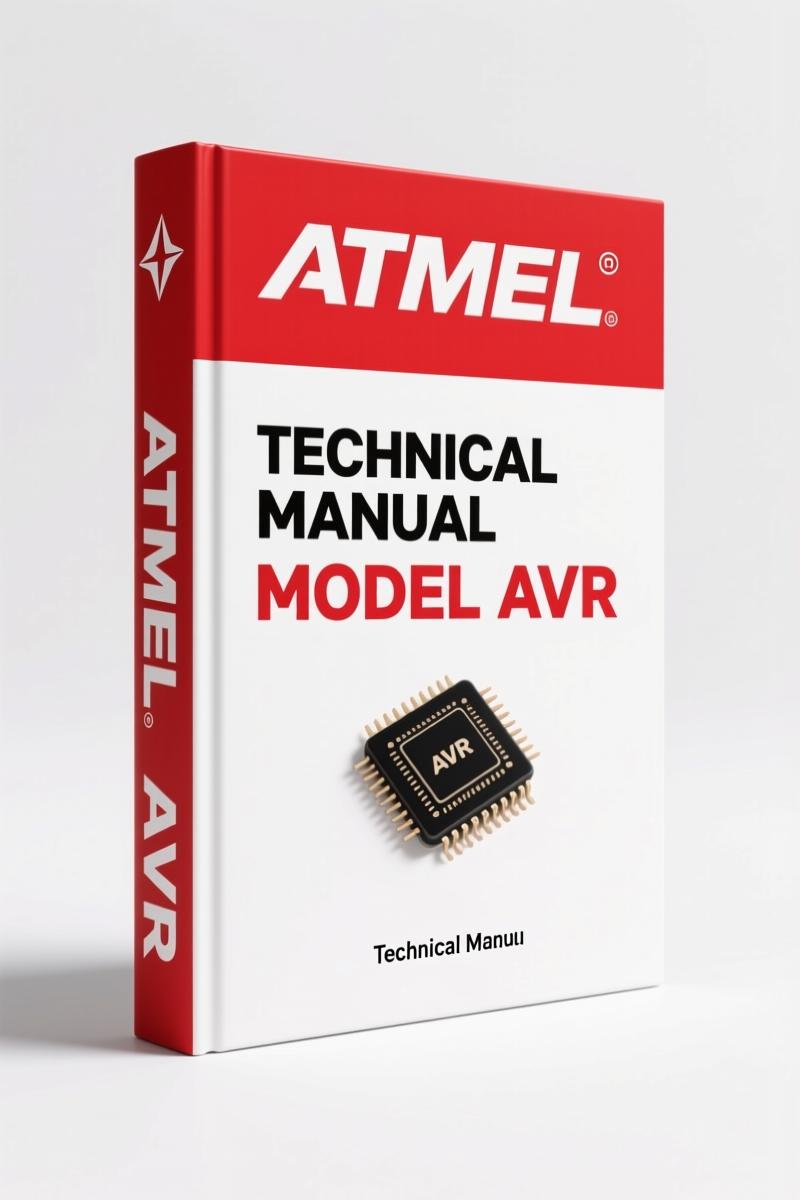
Atmel AVR 2011 Technical Manual – Assembler Programming for ECU Diagnostics
Original price was: $16.16.$10.99Current price is: $10.99.
81-page technical manual on AVR assembler programming. Covers hardware, registers, SRAM, and calculations. For technicians working with embedded systems.
Description
Atmel AVR 2011 Technical Manual – Understand the Brains of Modern Vehicle Electronics
You’ve got a car that’s throwing codes you’ve never seen. You’ve swapped parts and the problem didn’t budge. Before you start chasing ghosts, ask yourself: do you actually understand the microcontroller that’s running the thing? I’ve seen techs flash an ECU without knowing what a register does, then wonder why the engine won’t idle. That’s the fast track to a comeback job. The Atmel AVR 2011 Technical Manual is the factory document that tells you exactly how the processor inside those modules thinks. 81 pages, straight from Atmel. No aftermarket guesswork.
Why Learning Assembler? – Control Over the Hardware
Chapter 1 of this manual doesn’t waste time. “Why learning Assembler?” It gets straight to the point: high-level languages hide what the silicon is doing. If you’re debugging a fuel pump driver that’s cutting out at 3,000 RPM, you need to know how the CPU handles instructions, interrupts, and timing. This chapter lays out the concept behind assembler for micro-controllers, including how the CPU works (section 2.2) and the difference between assembler and high-level languages (2.4). You’ll see that assembler isn’t machine language – it’s one step closer, and that step matters when every clock cycle counts. Section 2.8 asks “What is really easier in assembler?” and the answer includes bit manipulations and direct port access – exactly what you need to control actuators without delays.
Hardware for AVR-Assembler-Programming – ISP, Programmers, and Boards
Section 3 covers the ISP interface of the AVR processor family (3.1) and the programmer for the PC-Parallel-Port (3.2). If you’re building or repairing a bench setup to flash ECUs, you need to know the pinouts and voltage levels. The manual includes experimental board schematics for ATtiny13 (3.3.1) and AT90S2313/ATmega2313 (3.3.2). Plus it details ready-to-use commercial boards like the STK200, STK500, and the AVR Dragon (3.4). You can cross-reference these with your own tools to make sure you’re not dropping a byte on the ISP lines. That’s the kind of detail that saves a Saturday afternoon.
Ports and Registers – Essential for Actuator Control
Chapter 5 dives into registers: different types, pointer-registers (5.2), and accessing memory locations with pointers (5.2.1). Chapter 6 covers ports – write access (6.2), read access (6.3), and the dangerous read-modify-write access (6.4). If you’ve ever had an output pin glitch because you didn’t mask properly, you’ll appreciate the section on memory mapped port access (6.5). The status register (6.7) is called “the most used port” – and it is. This is where you learn to read flags without causing side effects. No aftermarket manual explains this with Atmel’s own clarity.
Calculations and Number Systems – Sensor Data Conversion
Chapter 9 is a beast. It covers number systems in assembler (9.1): positive whole numbers, signed integers, BCD, packed BCD, and ASCII-format numbers. Then bit manipulations (9.2), shifts and rotates (9.3), and 16-bit addition/subtraction (9.4.1). If you’re working with an ADC reading from a temperature sensor, examples in section 9.10 show fixed decimal output for 8-bit and 10-bit converters. The hardware multiplication sections (9.7) walk through 8-by-8, 16-by-8, 16-by-16, and 16-by-24-bit multiplications. Need to convert a binary sensor value to BCD for a dash display? Page 73 covers exactly that. This manual hands you the assembly code, not some abstract algorithm.
SRAM and Stack Operation – Avoid Common Bugs
Chapter 7 explains SRAM: direct addressing (7.3.1), pointer addressing (7.3.2), and pointer with offset (7.3.3). Then it shows you how to use SRAM as a stack (7.4). Section 7.4.3 lists “Common bugs with the stack operation” – I’ve seen technicians brick an ECU by overflowing the stack. This chapter shows you how to define the stack area (7.4.1) and use it correctly (7.4.2). You’ll also learn about jumping, branching, and interrupts in Chapter 8, including subroutines (8.5) and interrupt-driven programming (8.6) – critical for real-time fuel and timing control.
Source Validity – OEM Atmel Document, Not a Reprint
This is the original Atmel PDF from 2011, scanned from the factory document. The file name alone (ATMEL_AVR_2011_Technical_Manual_en-67813013415.pdf) confirms it’s a first-generation OEM file. No aftermarket compiler added their own interpretations. I’ve seen techs rely on third-party “summaries” that skip the ISP timing diagrams – and then wonder why their programmer doesn’t sync. This manual gives you the spec, period. For related OEM documentation, check out the Atmel 80C51 Technical Manual – ECU Repair Specs & Data if you’re working with older control modules, or the Drogobych Crane КТА-16, КТА-25, КТА-28 2004 Installation Manual for heavy equipment. For automotive engine control, the Injectocean Diablo, Murciélago, Defender, Discovery, Freelander Technical Manual covers a different processor family but the same diagnostic mindset.
Who Needs This Manual?
DIY mechanics who want to understand the code behind their car’s ECU. If you’re tuning or repairing engine management systems, you’ll need to know how the AVR handles interrupts, port reads, and the stack. This manual doesn’t assume you have a computer science degree – it starts from “Why learning Assembler?” and builds up. Beginners in automotive electronics will find the experimental board schematics helpful for building a test rig. Professionals working with modules that use AVR microcontrollers (plenty of 2010s ECUs) can use this to debug J2534 passthrough logs or write custom flash routines. For external resources on how a manual transmission interacts with the ECU, see Manual Transmission fundamentals on Wikipedia. The same source has a deep dive on Manual Transmission synchromesh systems.
- Does this manual cover the ATtiny13 and ATmega2313 specifically?
- Yes. Section 3.3.1 and 3.3.2 have experimental board designs for both. The register and port chapters apply to the whole AVR family, with specific notes for different parts.
- How many pages is the Atmel AVR 2011 Technical Manual?
- 81 pages.
- Is this a reprint or a copy of an aftermarket book?
- It’s the original OEM Atmel PDF from 2011. No third-party edits, no missing sections. The file name and metadata confirm it’s a factory document.
- Will this help me reprogram my car’s ECU directly?
- It gives you the assembly language foundation needed to understand what the code is doing, but you’ll need additional hardware-specific documentation for your exact ECU model. This manual teaches you how the AVR processor works – the “brain” behind many ECUs. Without that knowledge, you’re guessing. With it, you can interpret factory routines and timing.
Look, I’ve been wrenching for 28 years and I’ve seen more ECUs bricked by skipped steps than by worn parts. If you’re serious about understanding the microcontroller that runs your vehicle’s critical systems, stop relying on forum rumors. The factory spec is right here. Access the Factory Manual and start working with the same data the engineers used.
Additional information
| Brand | Atmel |
|---|---|
| Language | English |
3 reviews for Atmel AVR 2011 Technical Manual – Assembler Programming for ECU Diagnostics
You may also like…
-
Sale!

CDS 705C, 706C, 708C 1981 Parts Catalog – OEM Forklift Specs
Original price was: $61.60.$40.00Current price is: $40.00. -
Sale!

Acura Integra 1998 Service Manual – 1891 Pages Factory OEM Documentation
Original price was: $31.75.$25.00Current price is: $25.00. -
Sale!
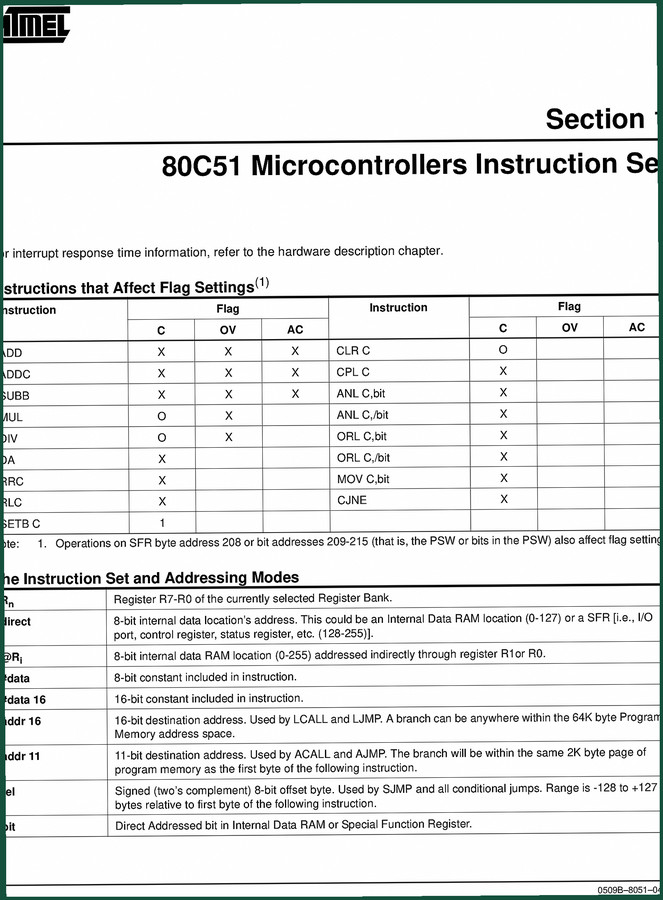
Atmel 80C51 Technical Manual – Instruction Set for ECU Diagnostics
Original price was: $34.43.$22.50Current price is: $22.50. -
Sale!
Acura NSX 1991 Service Manual – 1420 Pages OEM
Original price was: $102.05.$65.00Current price is: $65.00.
Related products
-
Sale!

1992 Electrical Schematic – International 1000/3000/4000/2554 OEM Wiring Diagrams (132 Pages)
Original price was: $26.40.$20.00Current price is: $20.00. -
Sale!
1993 Operators Manual – International Bus 1000-3000 OEM Specs
Original price was: $12.30.$7.99Current price is: $7.99. -
Sale!
2004 Acura TSX Wiring Diagram – 73-Page Factory Electrical Schematics
Original price was: $15.88.$9.99Current price is: $9.99. -
Sale!
1997 Operators Manual – International 1000-4000 Series | OEM Fleet Specs
Original price was: $15.61.$10.99Current price is: $10.99.
Richard G. –
This is just what I required. The scan is high-quality and easy to navigate. Every torque spec is provided for Atmel AVR. I will recommend this shop to others.
diy_master –
Excellent workshop guide. It is very easy to read on my laptop without losing quality. Every torque spec is provided for Atmel AVR. I will recommend this shop to others.
Michael T. –
Outstanding! Instant access after checkout process. Every wiring layout is included for Atmel AVR. Saves me hundreds of dollars.