
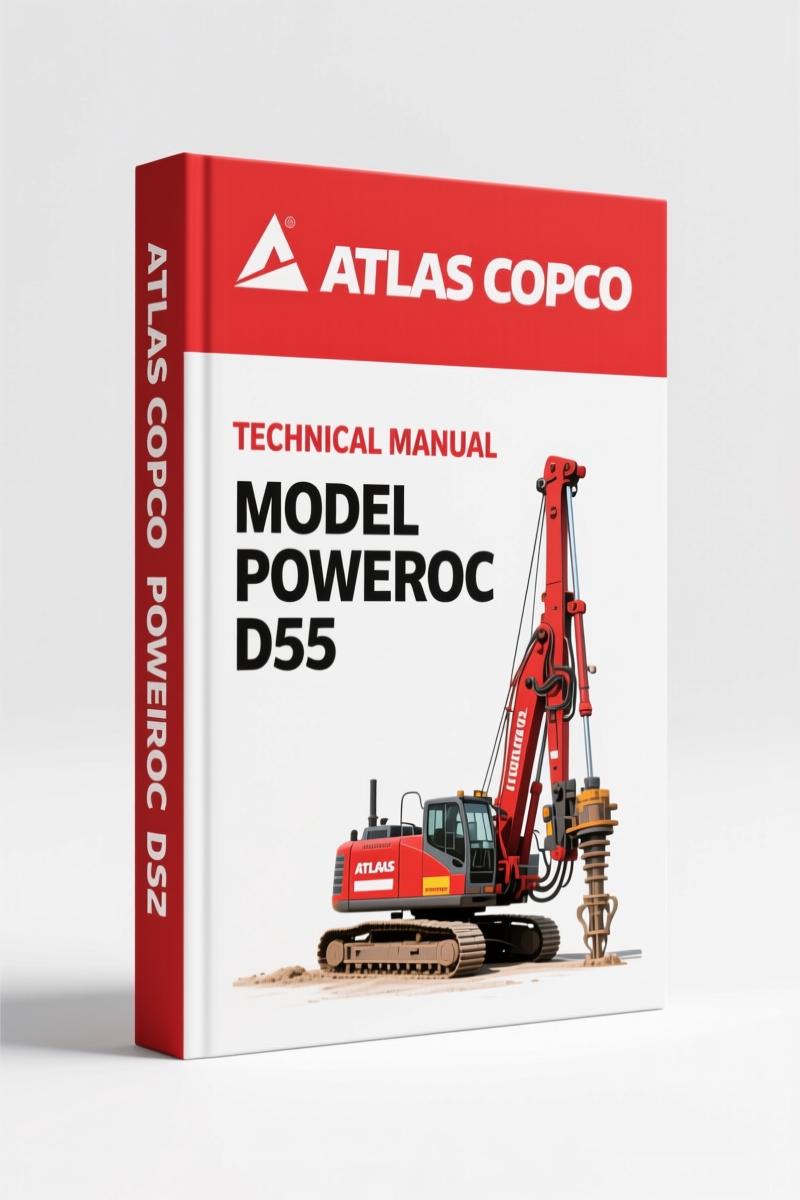
Atlas Copco PowerROC D55 2011 Technical Manual – OEM Specs
Original price was: $53.60.$40.00Current price is: $40.00.
Factory-certified 42-page technical manual for Atlas Copco PowerROC D55 (2011). Hydraulic systems, ECM, pilot pressure, electrical schematics. No generic content.
Description
Atlas Copco PowerROC D55 2011 Technical Manual
I’ve been wrenching on heavy equipment for nearly three decades, and I’ll tell you straight: if you’re working on a 2011 Atlas Copco PowerROC D55 without the factory technical manual, you’re wasting time and risking a hydraulic line to the face. The Atlas Copco PowerROC D55 2011 Technical Manual from AutoRepairManuals gives you the exact system descriptions and specs Atlas Copco put out—not some aftermarket rewrite that fudges the pilot pressure numbers. This is the same book used in the factory service bays, and it’s 42 pages of dense, no-nonsense information. Every pump setting, every electrical pinout, every ECM signal—it’s in here.
Hydraulic Pumps and Pilot Pressure: Factory Settings
Look at page 13 of the manual. That’s where you’ll find Pump 1 and Pump 2 pressure settings—exact numbers, not guesses. Pilot pressure gets its own section starting on page 4, with the return oil and oil cooler on page 5. If you’ve ever had a drill rig that drifts or a pump that won’t build pressure, the answer is in those pages. The manual calls out two separate pump circuits (Pumps 4 and 5 are on page 16) and gives you the press specs in bar. Convert to PSI yourself if you need—the manual stays metric, but I’ve got a conversion chart taped to my toolbox. Knowing the exact setting saves you from replacing a perfectly good pump because you guessed the wrong relief pressure.
Electrical System General: Battery Charging, Main Fuse, Seat Switch
Page 6 covers the entire electrical system layout—battery charging circuit, main fuse location, and the seat switch interlock that kills the engine if you stand up. The PCB (printed circuit board) described there is the brains behind the control panel. If you’ve got a no-crank condition, start with the main fuse check on that page. The manual also diagrams the electrical supply from the battery switch, through the ECM (Caterpillar ECM on page 8), and out to the control panel. Don’t trust aftermarket wiring diagrams; they’ll have you chasing ghosts. This is the OEM layout—wire colors, connector pin numbers, the works.
Diesel Engine ECM and Control: What the Manual Reveals
Starting on page 9, the manual walks through the Caterpillar diesel engine controls. Battery switch ON position, ignition position, start position—each step is listed with the corresponding ECM interaction. The ECM overview on page 10 tells you how the engine speed is controlled and how the control instrumentation feeds back. Switches and sensors that automatically stop the diesel engine are separated from those that only indicate a fault (page 11). That distinction matters when you’re diagnosing a shutdown that shouldn’t have happened. You’ll waste half a day replacing a sensor that’s just a warning, not a kill signal. The manual keeps you on the right path.
3 Systems Covered in This 42-Page Manual
The manual splits into three main sections: General/PowerROC D55 overview (page 3), Hydraulic pumps and pilot pressure (pages 4-5), and Electrical system general (pages 6-8) plus the Diesel engine chapter (pages 9-11). That’s fifteen pages of dense system description before you even get to the pump adjustment procedures. The remaining pages cover the pumps and pilot pressure details (pages 13-16), return oil system, and supplementary diagrams. For a 42-page document, it packs a surprising amount of usable data. You want to know pump 3 pressure settings? Page 14. Need the pilot pressure relief valve spec? It’s back on page 4.
Does This Manual Include Wiring Diagrams and Torque Specs?
This is a system description manual, not a full service manual. You get hydraulic schematics, electrical diagrams, and pressure settings—but not step-by-step disassembly instructions. Torque values for cylinder head bolts? No. Pump mounting bolt torque? Not listed. What it does give you: exact pilot pressure values, pump displacement settings, and ECM control logic. The wiring diagrams show the seat switch, main fuse, PCB, and ECM interconnections. For torque specs on mechanical fasteners, you’ll need the separate Atlas Copco service manual. Use this technical manual in combination with the service book for a complete picture. Check out the Atlas Copco ROC F9 2023 Technical Manual – Factory Maintenance Schedules if you need a newer model’s maintenance intervals, or the Atlas Copco Boomer 282 Strapping and Lifting Technical Manual for underground drill rig lifting procedures. If you’re working on a different Atlas Copco compressor, the Atlas Copco XRY5 557 Cd, XRXS 567 Cd, XRXS 607 Cd 2010 User Manual covers those units.
- Does this manual cover the PowerROC D55 from 2011 only?
- Yes.
- Can I use this manual for troubleshooting hydraulic pump pressure issues?
- Absolutely. Page 13 gives you Pump 1 and Pump 2 pressure settings. The pilot pressure section on page 4 explains how the pilot circuit interacts with the pumps. If you’re seeing low pressure on the drifter or feed, start by checking those numbers against your actual readings. The manual also covers pump 3, 4, and 5 settings on pages 14 and 16. Combine this with a pressure gauge on the test port and you’ll isolate the problem fast. Just remember to use factory-rated hoses and never exceed the max pressure listed—blowing a line at 300 bar will take your arm off. This manual tells you the safe limits, but you still have to respect them.
Source Authenticity: Why OEM Beats Aftermarket
This manual is a direct from Atlas Copco PDF—no photocopies, no third-party rewrites. The copyright on page 1 says Atlas Copco Rock Drills AB, Sweden, 2011. The table of contents matches the factory print exactly. Aftermarket books often merge data from different years or omit the pilot pressure circuit because they assume it’s standard. It’s not. The PowerROC D55 uses a unique pilot system that controls the hydraulic pumps based on engine load. If you get that wrong, you’ll burn up the pumps. I’ve seen it happen. That’s why I only trust OEM documentation for anything with a Caterpillar engine and a hydraulic system this complex. AutoRepairManuals stocks the original file—no cropping, no watermarks. If you’re serious about keeping your rig running, you need this on your tablet or printed out and in a binder. The Manual Transmission gearbox on the feed system might be covered in a separate drivetrain manual, but the hydraulic controls are all here. For the Manual Transmission clutch adjustments, that’s a different document—this one stays focused on the power systems.
If you need to get the PowerROC D55 back to drilling rock, stop guessing. Access the Factory Manual and keep a real copy on your workbench.
- Atlas Copco ROC F9 2023 Technical Manual – Factory Maintenance Schedules [LINK_ID_REL_0]
- Atlas Copco Boomer 282 Strapping and Lifting Technical Manual [LINK_ID_REL_1]
- Atlas Copco XRY5 557 Cd, XRXS 567 Cd, XRXS 607 Cd 2010 User Manual [LINK_ID_REL_2]
Additional information
| Brand | Atlas Copco |
|---|---|
| Language | English |
3 reviews for Atlas Copco PowerROC D55 2011 Technical Manual – OEM Specs
You may also like…
-
Sale!

Atlas Copco Boomer S1D Wiring Diagram – Factory Electrical Schematics
Original price was: $57.20.$40.00Current price is: $40.00. -
Sale!
Atlas Copco 190W-270MH 2011 Workshop Manual – 576 Pages
Original price was: $85.20.$60.00Current price is: $60.00. -
Sale!
Atlas Copco Rocket Boomer S1D 2007 Parts Catalog – OEM Parts Data
Original price was: $75.50.$50.00Current price is: $50.00. -
Sale!
Atlas Copco ST1030 2007 Service Manual – Factory Specs & Procedures
Original price was: $58.05.$45.00Current price is: $45.00.
Related products
-
Sale!

1994 Troubleshooting Manual – International 1000-4000 FBC
Original price was: $60.00.$50.00Current price is: $50.00. -
Sale!
2004 Acura TSX Wiring Diagram – 73-Page Factory Electrical Schematics
Original price was: $15.88.$9.99Current price is: $9.99. -
Sale!
International 1000-3000 Series Operators Manual – 132 Pages of OEM Specs
Original price was: $14.40.$10.99Current price is: $10.99. -
Sale!

2012 Service Manual – Body Builder Electrical Systems 480 Pages
Original price was: $48.28.$34.00Current price is: $34.00.
Richard G. –
Highly recommended! The scan is high-quality and well indexed. Contains detailed wiring diagrams for Atlas Copco. Great value for money.
Michael T. –
Outstanding! It is very easy to read on my laptop without blur. Every torque spec is included for Atlas Copco Copco. Saves me a lot of money.
William H. –
Excellent OEM spec sheet. The pages are clean and easy to navigate. Contains detailed bolt torque specs for Atlas Copco. I will definitely buy again.