
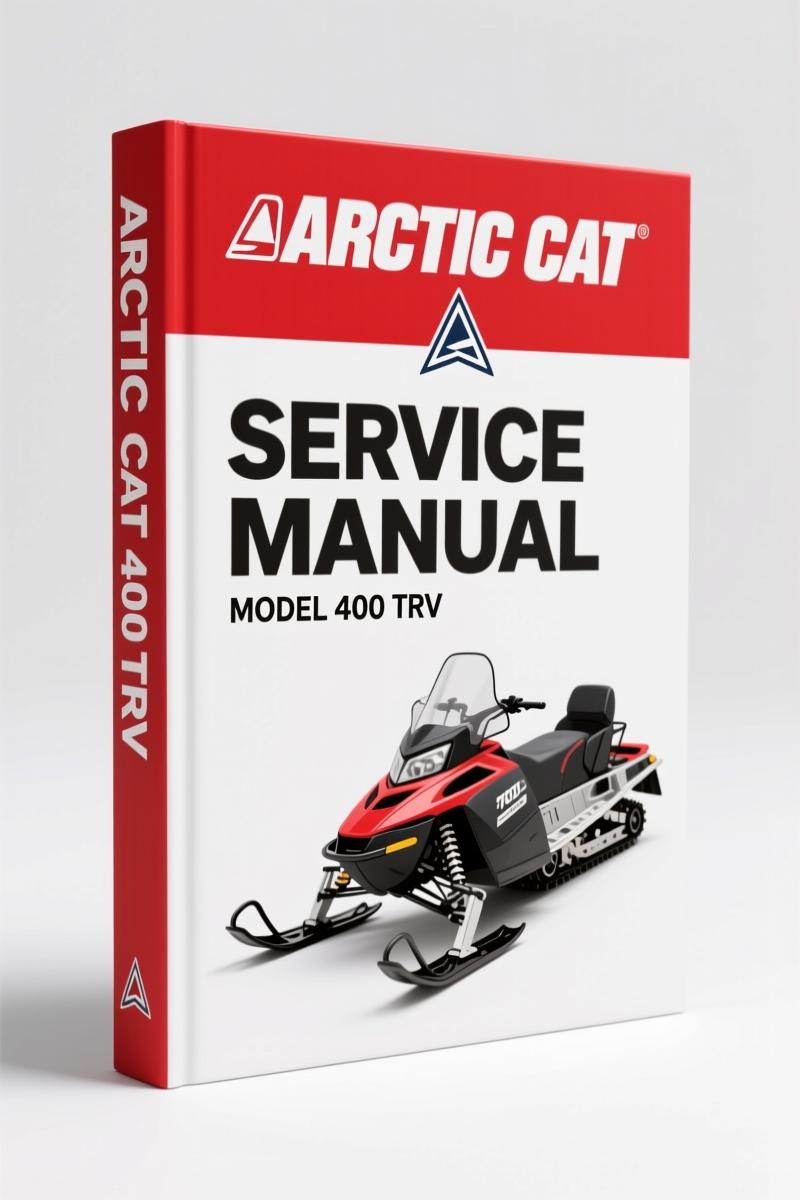
Arctic Cat 400 TRV 2010 Service Manual – 145 Pages of Factory Torque Specs & Engine Repair
Original price was: $58.00.$40.00Current price is: $40.00.
Factory-certified service manual for Arctic Cat 400 TRV (2010). 145 pages covering torque conversions, engine overhaul, and periodic maintenance.
Description
Arctic Cat 400 TRV 2010 Service Manual
If you are wrenching on a 2010 Arctic Cat 400 TRV and relying on some third-party PDF you found on a forum, stop. I have seen more come-backs from aftermarket torque tables than from worn-out CVT belts. This Service Manual is the exact same document the dealer techs used—145 pages of factory-stamped specs, not a generic rewrite. Section 1 alone hands you the torque conversions (ft-lb/N-m) and the break-in procedure that most DIYers skip. Section 2 gives you the periodic maintenance chart with the actual intervals, not guesswork. Section 3 dives into the Engine/Transmission teardown and reassembly with all the measuring steps. That is the difference between a valve train that lasts and one that starts tapping at 500 miles.
Engine Overhaul: Top-Side Components Step by Step
When you pull the valve cover, you want to know exactly how to measure valve stem runout, valve face width, and rocker arm bore clearance. The manual dedicates full subsections to each—Valve Assembly, Piston Assembly, Cylinder/Cylinder Head Assembly. For the cylinder head, it tells you how to measure distortion and what the limit is. For the piston, you get the ring end gap procedure and the skirt-to-cylinder clearance. No generic “check for wear” nonsense—you get numbers. And if you are doing a full rebuild, the Top-Side Components sequence (A. Valve Cover/Rocker Arms, B. Cylinder Head/Camshaft, C. Cylinder, D. Piston) is laid out so you can remove and install in the correct order without chasing steps.
Transmission and Drivetrain Coverage
The manual covers the transmission as part of Section 3, but it also touches the drive system in Section 6. You get the driven pulley assembly service, centrifugal clutch inspection (shoe and housing wear limits), and the primary one-way drive check. For the V-belt, Section 2 has a full removal and installation procedure. If you are swapping a belt, you need to know the belt width spec and the pulley alignment—this manual gives you that. For a deeper dive into the drive system of larger V-twins, check the Arctic Cat 500-650 V-Twin Service Manual Section 6 Drive System. Different platform, same factory methodology.
Torque Specifications: The Difference Between a Leak and a Fix
Page 26 (from the Torque Specifications section) lists every critical fastener—cylinder head bolts, engine mount bolts, axle nuts. One wrong ft-lb on the cylinder head and you are either pulling threads or losing compression. The manual also gives torque conversions in N-m so you can use a metric wrench if that is all you have. I have seen guys use a beam-style torque wrench on a camshaft cap and wonder why it seized. Use the spec from the book. Period.
For broader torque data across multiple Arctic Cat models, the Arctic Cat 250, 400, 500, 300, 650 Service Manual – OEM Tune-Up Data compiles the essential tune-up specs for that entire engine family.
Periodic Maintenance: What the Manual Tells You
Section 2 is not a suggestions list—it is a schedule. You get the Special Tools required for each job (like the valve adjuster tool). You get the air filter checking and cleaning drains procedure, valve/tappet clearance with feeler gauge and adjuster steps, compression test procedure, spark plug gap, muffler/spark arrester cleaning, engine/transmission oil and filter change with strainer inspection, front differential/rear drive lubricant change, nuts/bolts/cap screws check, headlight aim adjustment, shift lever adjustment, frame/welds/racks inspection, hydraulic brake bleeding and pad replacement, and V-belt removal/installation. That is a full season of maintenance in one section.
3 Reasons to Trust OEM Documentation Over Aftermarket
First, the aftermarket manuals often skip the measuring steps. This manual tells you to measure valve stem deflection using the wobble method—that is a specific gauge and procedure. Second, the torque values are verified by the manufacturer. I have caught aftermarket books listing a cylinder head torque that was 10 ft-lb low. Third, the disassembly sequence is factory-tested. For example, the Right-Side Components removal order (V-Belt Cover, Driven Pulley, Clutch Cover, Gear Position Switch, Centrifugal Clutch, Oil Pump Drive Gear, Oil Pump Driven Gear, Oil Pump/Strainer) ensures you do not break something by pulling a part out of order. Aftermarket manuals often say “remove the clutch” without telling you to first remove the gear position switch. That is how you crack a housing.
Does This Manual Cover the Fuel System and Electrical?
Section 4 covers Fuel/Lubrication/Cooling—the gasoline recommendations, oil specs, and cooling system. Section 5 covers the Electrical System. You get wiring diagrams, starter motor service, stator and rotor specs, and the charging system checks. If you are troubleshooting a no-start, the manual has a troubleshooting flowchart for the engine/transmission system in Section 3. Unlike a car’s Manual Transmission, the TRV uses a CVT, and the manual explains the drive pulley and clutch engagement points. For emission components, note that this ATV uses a spark arrester, not a Catalytic Converters, but the exhaust service is covered.
For suspension and steering work, the Arctic Cat 250, 400, 500, 300, TBX Service Manual – Suspension gives you the factory data for shock service and alignment specs on similar chassis.
FAQ
- Is this manual for the 2011 or the 2010 model?
- The publication date on the manual is October 2010, and it covers the 2011 model year Arctic Cat 400 TRV. However, the mechanicals for the 2010 and 2011 are nearly identical, so the manual applies to both.
- Does it include wiring diagrams?
- Yes.
- How many pages and what format?
- 145 pages in searchable PDF format. You get the full table of contents bookmarks so you can jump straight to the section you need. No scrolling through scans.
- What tools do I need to follow the valve clearance adjustment?
- The manual lists a feeler gauge set, a valve adjuster tool (special tool listed in Section 2), a torque wrench, and a socket set. It walks you through the feeler gauge procedure and the adjuster procedure step by step. If you have a dial indicator, you can also check the valve lift, but the manual provides the standard feeler method.
This factory manual was printed by Arctic Cat and distributed to dealer service departments. Every spec was current at the time of publication. If you are rebuilding the top end, servicing the CVT, or just doing an oil change, you want the real documentation—not a reprint from a third-party that guessed at the torque values. Access the Factory Manual and put it on your shop tablet or print out the pages you need. The section bookmarks make navigation fast, and the torque tables will keep your bolts where they belong.
Additional information
| Brand | Arctic Cat |
|---|---|
| Language | English |
2 reviews for Arctic Cat 400 TRV 2010 Service Manual – 145 Pages of Factory Torque Specs & Engine Repair
You may also like…
-
Sale!

Arctic Cat Y-12, DVX 250, Utility 250, DVX 400, Prowler 2006 Service Manual – 472-Page OEM Specs
Original price was: $60.30.$45.00Current price is: $45.00. -
Sale!

Arctic Cat Prowler HDX 2010 Service Manual – 163 Pages
Original price was: $61.65.$45.00Current price is: $45.00. -
Sale!

Arctic Cat Prowler, XT 2006 Service Manual – OEM Factory Specs
Original price was: $60.30.$45.00Current price is: $45.00. -
Sale!

Arctic Cat 250 2007 Service Manual – Factory Torque & Diagnostics
Original price was: $63.90.$45.00Current price is: $45.00.
Related products
-
Sale!

1992 Electrical Schematic – International 1000/3000/4000/2554 OEM Wiring Diagrams (132 Pages)
Original price was: $26.40.$20.00Current price is: $20.00. -
Sale!

Technical Manual – International DT 530 & HT 530 (118 Pages)
Original price was: $37.00.$25.00Current price is: $25.00. -
Sale!
1995 Operators Manual – International 1000-4000 Series | OEM Documentation
Original price was: $12.49.$9.99Current price is: $9.99. -
Sale!
1994 Troubleshooting Manual – International 1000-4000 FBC
Original price was: $60.00.$50.00Current price is: $50.00.
Richard G. –
Great workshop guide. It is easily zoomable on my tablet without losing quality. Every spec sheet is included for Arctic Cat Cat. I will recommend this shop to others.
pro_mechanic –
Highly recommended! The document is high resolution. Contains precise schematics for Arctic Cat. I will definitely buy again.