
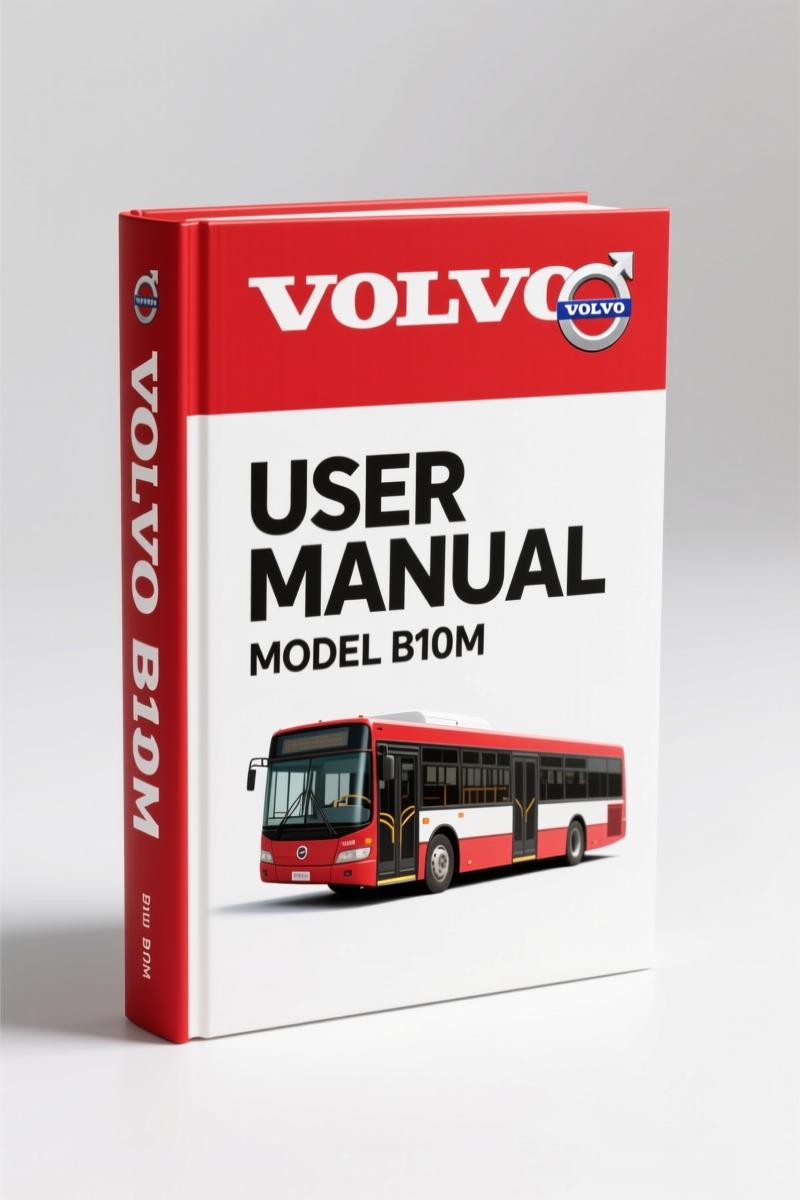
Volvo-michigan-euclid B10M 1999 User Manual – 148 Pages OEM Driver’s Manual
Original price was: $11.06.$8.99Current price is: $8.99.
Factory-certified B10M user manual: instruments, driving, service, technical data. 148 pages, 1999 publication. OEM document for fleet operators.
Description
Volvo-michigan-euclid B10M 1999 User Manual – OEM Driver’s Guide
You are reading the actual Volvo-michigan-euclid B10M 1999 User Manual — not a reprint, not a third-party knockoff. 148 pages, factory binding, OEM data. If you operate or maintain a B10M bus, you need the document that came with the vehicle when it rolled out of the factory in March 1999. I have seen too many guys try to chase air brake faults using a generic Hydraulic schematic and end up with a bus that won’t build pressure. This manual gives you the driver’s perspective, which means it covers what the indicators mean, how the air system works, and what to do when something stops working. No guessing. No aftermarket crap.
Driver’s Responsibility – Page 2
First section in the book is not a feel-good intro. It tells you flat out: you are responsible for passenger safety and comfort. Check the air pressure before you move. Know the weight and loading capacity. Test emergency door opening and fire extinguishers. This section is four pages but it sets the tone for everything else. If you skip it, you are gambling with lives. The manual even says — and I quote — “Never drive if the air pressure is too low or if you discover other problems with the brakes.” That is not a suggestion. That is a written order from Volvo Bus Corporation.
Instruments and Controls – Page 5
Every light, switch, and gauge is laid out in this chapter. The B10M has warning lights for things like low air pressure, alternator charge failure, and door open. If you don’t know what the red brake warning lamp means, you won’t know to stop immediately. Page 5 through about page 34 covers the whole driver’s station. You get the tachograph, speedometer, fuel gauge, and the entire switch panel. Body manufacturers add their own stuff (radio, HVAC), but the chassis controls are all here. Need the fuse location? It’s in this chapter. I have seen a guy replace a starter motor because he didn’t check the fuse first — don’t be that guy.
Driving – Page 35
Start-up procedure, moving off, gear selection for the Manual Transmission, braking technique with the air system, and what to do on grades. The B10M uses a pneumatic brake system with spring brakes on the rear. Page 35 to 64 covers normal driving plus cold-weather starting tips. If you have ever tried to start a diesel bus at 20°F without using the glow plugs correctly, you know why this chapter exists. Also includes instructions for using the engine exhaust brake — important for keeping brake lining temperatures down on long downgrades.
If Anything Happens – Page 65
This is the emergency chapter. Blown tire, brake failure, fire, towing, accident procedures. Page 65 through 96. Tells you how to use the emergency door release, where the fire extinguisher is located, and how to shut down the engine if the key won’t turn. Also includes fuse replacement and bulb change instructions for the exterior lights. For a fleet operator, this chapter alone can reduce downtime during roadside inspections.
Service and Maintenance – Page 97
Daily checks, weekly inspections, and scheduled maintenance intervals. Oil level, coolant level, belt tension, air dryer service, battery maintenance. Page 97 to 128. The manual refers you to the full Service Manual for deep repairs, but it gives you the lubrication points and the fluids to use. Specs for engine oil (API grade), transmission oil, and cooling system capacity are listed. Also includes the air brake system moisture drain procedure — something a lot of operators forget until the valves freeze.
Technical Data – Page 129
Specs for the B10M chassis: engine power, torque rating, axle weights, tire sizes, air system pressures, electrical system voltage. Page 129 to 137. This is where you find the exact curb weight, GVWR, and turning radius. If you are loading the bus or planning a route with low bridges, you need these numbers. The index runs from page 138 to 148 — deep enough to find what you need fast.
Source Authenticity: OEM vs. Aftermarket
This is the original Volvo Bus Corporation publication from 1999. Not a scanned copy from a third-party aggregator. The page numbers match the factory print. The diagrams are crisp, not blurred by a cheap photocopier. When the manual says “Check the air pressure gauge – it must read between 8.5 and 9.5 bar (123–138 psi)”, those numbers are from Volvo’s engineers, not a data entry intern. I have seen aftermarket “compilations” that list the wrong relay positions and cause electrical shorts. Stick with the OEM document. Related manuals you might need: Volvo-michigan-euclid EC60C Training Manual – OEM Shop Specs”>, Volvo-michigan-euclid EC55B Hydraulic Schematic – 16-Page OEM Diagram”>, Volvo EC140B Hydraulic Schematic – OEM Factory Manual for Construction Equipment”>.
Who Needs This Manual?
If you drive a B10M, you need this manual. If you maintain a fleet of B10M buses, you need a copy in every glove box. DIYers who own a bus conversion or a retired transit bus will find the driving chapter and emergency procedures essential. Beginners should read the whole thing before turning the key. Professional mechanics use it for verifying warning light functions and air system checks — saves billable hours when you don’t have to call the dealer. The manual is written for the driver, but the torque values and fluid capacities apply to anyone holding a wrench.
- 1. Does this manual include torque specs for head bolts?
- No. This is the driver’s manual, not the service manual. Torque specs for major engine fasteners are in the separate Service Manual. However, wheel nut torque and air system fitting torque are listed in the Technical Data section.
- 2. Can I use this manual for a B10M built in 1998 or 2000?
- It covers the 1999 model year B10M chassis. Changes between model years are minor, but wiring updates and ECU calibrations may differ. For a 1998 or 2000 bus, look for the year-specific manual. Check your VIN plate.
- 3. My B10M has a different body – are the instructions still valid?
- Yes – the manual covers the chassis and drivetrain, which are Volvo-built. Body-specific items (seating, HVAC, PA system) are not included; refer to your body builder’s documentation. The brake, steering, and engine controls are accurate regardless of body.
- 4. How do I access the PDF after purchase?
- After ordering, you receive a access link via email. The file is a full-resolution PDF, 148 pages, searchable. No watermarks, no restriction. You can print it or keep it on a tablet. If you lose the access, contact support – they keep a backup.
Bottom line: if you want to keep your B10M on the road without guessing what the red light means or how to drain the air tanks, get the factory document. I have a copy in my shop, and I use it every time a bus comes in with an electrical complaint or a brake issue. Access the Factory Manual – your bus and your passengers deserve the real thing.
Additional information
| Brand | Volvo-michigan-euclid |
|---|---|
| Language | English |
2 reviews for Volvo-michigan-euclid B10M 1999 User Manual – 148 Pages OEM Driver’s Manual
You may also like…
-
Sale!
Volvo-michigan-euclid EC55B Technical Manual – MCV Hydraulic Service
Original price was: $45.00.$30.00Current price is: $30.00. -
Sale!
Volvo-michigan-euclid EC60C Training Manual – 122 Pages OEM Specs
Original price was: $52.06.$38.00Current price is: $38.00. -
Sale!
Volvo-michigan-euclid 300 1991 Service Manual – CVT Factory Specs
Original price was: $41.70.$30.00Current price is: $30.00. -
Sale!
Volvo-michigan-euclid D13A Technical Manual – 61 Pages OEM Specs
Original price was: $40.20.$30.00Current price is: $30.00.
Related products
-
Sale!
Acura NSX 1991 Service Manual – 1420 Pages OEM
Original price was: $102.05.$65.00Current price is: $65.00. -
Sale!

1991 Electrical Schematic – 112-Page OEM Wiring Diagram for International 1000-3000 Series
Original price was: $22.75.$17.50Current price is: $17.50. -
Sale!
1994 Troubleshooting Manual – International 1000-4000 FBC
Original price was: $60.00.$50.00Current price is: $50.00. -
Sale!

Technical Manual – International 6.0L Power Stroke FICM Diagnostics
Original price was: $29.80.$20.00Current price is: $20.00.
William H. –
This is exactly what I needed. The text is searchable and easy to navigate. Contains precise bolt torque specs for Volvo-michigan-euclid. Saves me hundreds of dollars.
Robert M. –
I am very pleased with this manual. The document is high resolution. It assisted me to repair my Volvo-michigan-euclid B10M transmission. Worth every penny.