
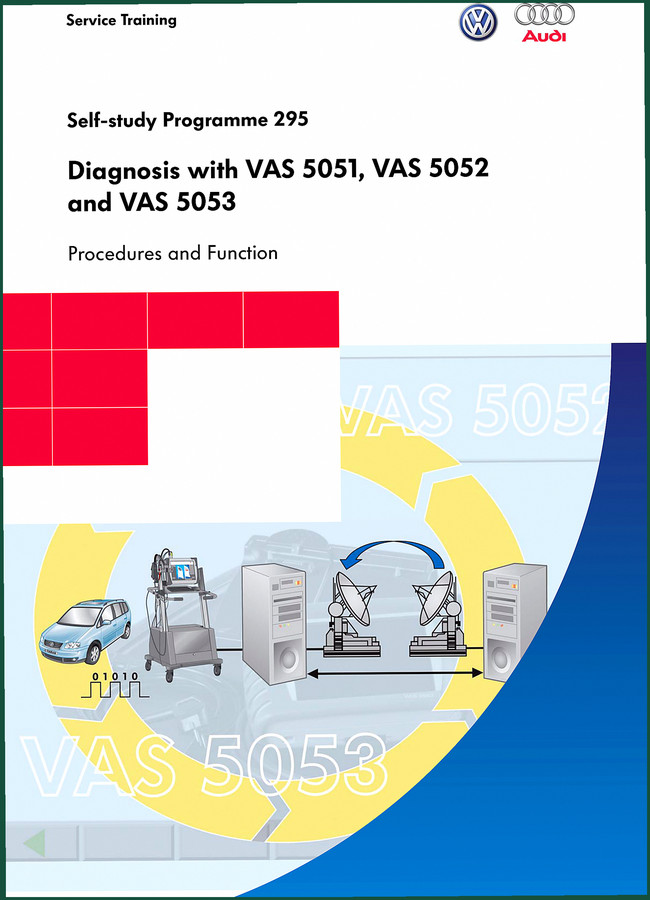
Volkswagen VAS 5051 Training Manual – OEM Diagnostic Guide
Original price was: $42.00.$30.00Current price is: $30.00.
OEM Volkswagen VAS 5051 Training Manual: 48 pages covering start screen, administration, guided fault finding, multimeter, DSO, sensor and actuator analysis.
Description
Volkswagen VAS 5051 Training Manual – Factory Diagnostic System Guide
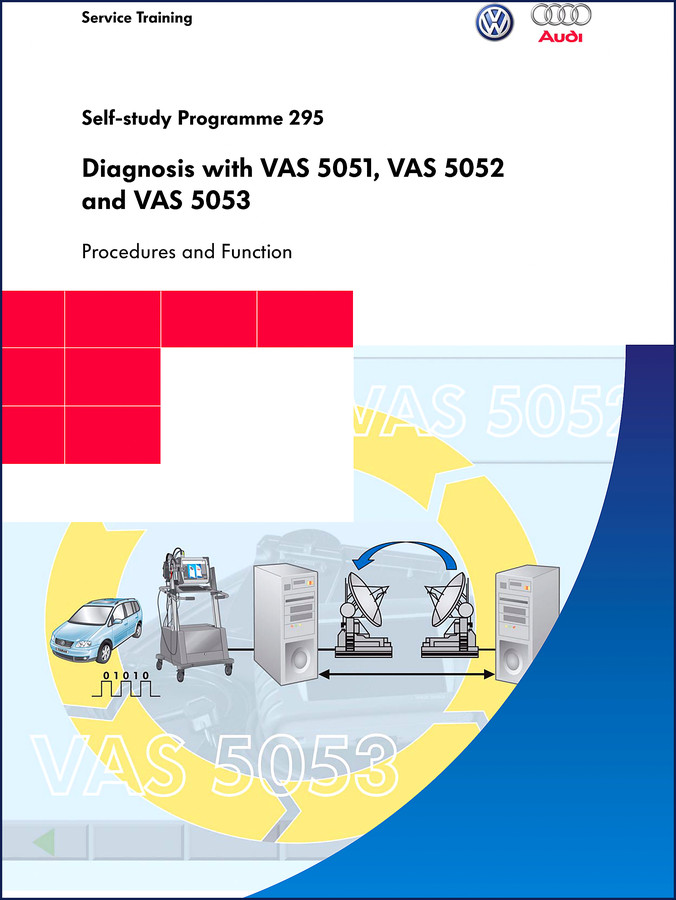
You have a Volkswagen VAS 5051 Training Manual on your screen for one reason: you’re tired of chasing electrical ghosts with a generic scan tool and a prayer. I get it. Aftermarket instructions tell you to “connect and read codes” but leave out the critical steps – like how to navigate the guided fault finding tree, or what a proper sensor waveform looks like on the DSO. This 48-page factory training document cuts the BS. It was written by the engineers who designed the system, not some third-party kid who never held a wrench.
Every page of this manual comes from the original Volkswagen self-study program No. 202. The table of contents lists Main components of the VAS 5051, Modes (Start screen, Administration, Vehicle self-diagnosis, Test instruments, Guided fault finding), and a full section on Measurements and analysis with the VAS 5051 covering the multimeter and Digital Storage Oscilloscope (DSO). You want to know why your actuator isn’t responding? Turn to the actuator analysis subsection – it walks you through waveform capture on page 40. No fluff, no generic wiring diagrams. Just the factory method.
Modes: Start Screen, Self-Diagnosis, and Guided Fault Finding
The manual breaks down each operating mode with screenshot examples and step-by-step navigation. The start screen layout is described on page 12. Administration settings – login, vehicle data entry, system configuration – start on page 13. Vehicle self-diagnosis lets you pull fault codes from every control unit, but the real meat is Guided fault finding (page 18). That mode forces you through a logical diagnostic tree based on symptom input. It keeps rookie techs from jumping to parts-swapping and saves billable hours. The training manual explains how each decision path works, so you understand the logic, not just click buttons.
Measurements and Analysis: Multimeter and Digital Storage Oscilloscope (DSO)
Pages 22 through 40 cover the built-in test instruments. The multimeter section shows you how to set up voltage, resistance, and current measurements on the VAS 5051 – including proper probe connection and range selection. Then the DSO section (page 25) gets into waveform acquisition. Sensor analysis (page 30) covers crankshaft, camshaft, knock, and oxygen sensor patterns. Actuator analysis (page 40) explains how to command injectors, ignition coils, and solenoid valves and capture their response. If you’ve ever chased a no-start and had to guess whether the crank sensor signal was good, this section alone is worth the access.
Sensor and Actuator Analysis with the DSO
The DSO chapters are dense. They give you reference waveforms for a dozen common sensors and actuators found in Volkswagen vehicles from the early 2000s. For example, the oxygen sensor voltage sweep at idle, the pattern for a failing cam sensor, and the current ramp of a diesel injector. The training manual also explains how to interpret frequency, duty cycle, and voltage spikes – stuff you won’t get from a cheap multimeter. This is the same material used in VW dealer technician certification. If you’re a home garage enthusiast working on a Passat or Golf, this turns your diagnostic box into an actual tool, not a paperweight.
Why Another Diagnostic System? The Fundamentals
The manual opens with a section titled Why another new diagnostic system? (page 4). It addresses exactly the pain point of increased networking in modern cars – more ECU intercommunication means more complex fault paths. The Fundamentals of system (page 5) and Design and features (page 6) give the architecture: PC-based unit, adapter cables, and the software interface. A Summary of tester (page 7) lists all hardware components. Knowing the system’s limits – like which protocols it supports and which vehicles – prevents you from wasting time plugging into a car that needs a different tool. This is the kind of detail aftermarket guides skip entirely.
Source Authenticity: OEM Training vs Aftermarket Knockoffs
I have thrown away more knockoff repair manuals than I care to count. Their torque specs are wrong, their wiring diagrams are reversed, and their diagnostic procedures read like someone translated them from a language the translator didn’t speak. This Volkswagen VAS 5051 Training Manual is a direct scan of the factory self-study program. The OCR excerpt on page 1 shows the official logo and part number 202. The copyright is Volkswagen AG. There is no guesswork. Compare that to some shady $9 access that claims to cover VAS 5051 but actually reprints a generic OBD2 guide. If you value your time and your vehicle’s electronics, you buy the original.
Related factory training manuals you should consider: Volkswagen VAS 5051, VAS 5052, VAS 5053 Diagnostics Manual – Factory Training”>VAS 5051, 5052, and 5053 Diagnostics Manual – Factory Training for the later systems; also the Volkswagen 2.3-ltr. V5 Training Manual – OEM Factory Specs”>Volkswagen 2.3-ltr. V5 Training Manual – OEM Factory Specs for engine-specific data; and the Volkswagen Passat 2005 Training Manual – Technical Overview”>Volkswagen Passat 2005 Training Manual – Technical Overview which covers model-specific diagnostics.
FAQ
- Is this manual a workshop repair manual?
- No. The manual itself states: “The private study program is not a workshop manual!” Use it to understand the VAS 5051 system.
- What diagnostic modes does the VAS 5051 offer?
- The training manual details five modes accessed from the start screen: Administration (vehicle data setup, login), Vehicle self-diagnosis (control unit fault codes and measuring blocks), Test instruments (multimeter and DSO), and Guided fault finding (symptom-based diagnostic trees). Each mode has its own dedicated chapter with operation steps and real-world examples. For instance, guided fault finding on page 18 shows how to select a vehicle system, enter the complaint, and let the tester guide you through component tests. The DSO mode on page 25 provides trigger settings, voltage ranges, and timebase adjustments. After reading this manual, you will understand not just which button to push, but what the machine is doing under the hood – essential for interpreting results when a waveform doesn’t match expected patterns.
For an industry perspective on how diagnostic tools evolved, check the Automotive Industry Overview”>Automotive Industry Overview. If you’re working on vehicles with manual transmissions, the DSO sensor analysis in this manual applies directly – see Manual Transmission”>Manual Transmission for background on how transmission speed sensors behave. The training manual does not cover replacement procedures, but it gives you the diagnostic foundation to avoid misdiagnosis.
Stop wrestling with vague generic instructions. Get the real factory reference that VW dealers use. Access the Factory Manual now and keep it on your bench – every time you hook up a VAS 5051, you will know exactly where to start.
Additional information
| Brand | Volkswagen |
|---|---|
| Language | English |
3 reviews for Volkswagen VAS 5051 Training Manual – OEM Diagnostic Guide
You may also like…
-
Sale!

Volkswagen Golf Jetta GTI Service Manual – 4954 Pages Official Specs
Original price was: $95.55.$65.00Current price is: $65.00. -
Sale!

Volkswagen Serie C 2003 Service Manual – OEM Factory Specs
Original price was: $53.60.$40.00Current price is: $40.00. -
Sale!

Volkswagen Phaeton Training Manual – Auxiliary Heater System (52 pages)
Original price was: $55.80.$45.00Current price is: $45.00. -
Sale!

Volkswagen Passat 1995 Repair Manual – Factory Wiring & Engine Specs
Original price was: $57.20.$40.00Current price is: $40.00.
Related products
-
Sale!

International 1000-3000 Series Operators Manual – 132 Pages of OEM Specs
Original price was: $14.40.$10.99Current price is: $10.99. -
Sale!
2004 Acura TSX Wiring Diagram – 73-Page Factory Electrical Schematics
Original price was: $15.88.$9.99Current price is: $9.99. -
Sale!
1993 Electrical Schematic – International 1000/3000/4000 Bus Chassis OEM Wiring Diagrams
Original price was: $29.26.$22.00Current price is: $22.00. -
Sale!
Acura NSX 1991 Service Manual – 1420 Pages OEM
Original price was: $102.05.$65.00Current price is: $65.00.
Robert M. –
This is just what I needed. The PDF is high resolution. A must-have for any Volkswagen VAS owner doing repairs. Saves me so much money.
diy_master –
Great workshop guide. It is easily zoomable on my iPad without blur. Contains detailed bolt torque specs for Volkswagen. Saves me hundreds of money.
William H. –
This is just what I required. The file is very clear. A must-have for any Volkswagen VAS DIYer doing repairs. I will recommend this shop to others.