
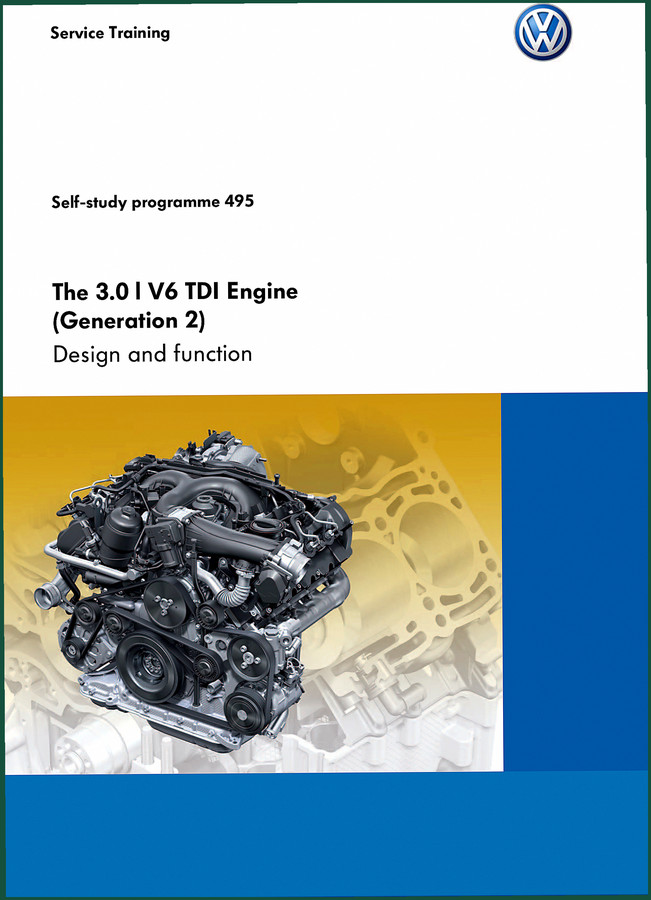
Volkswagen V6 TDI Training Manual – OEM Factory Documentation
Original price was: $45.00.$30.00Current price is: $30.00.
56-page OEM training manual for V6 TDI common rail fuel injection system. Covers design, function, and EDC 16 CP management. No repair steps.
Description
Volkswagen V6 TDI Training Manual – Common Rail Fuel Injection System Design & Function
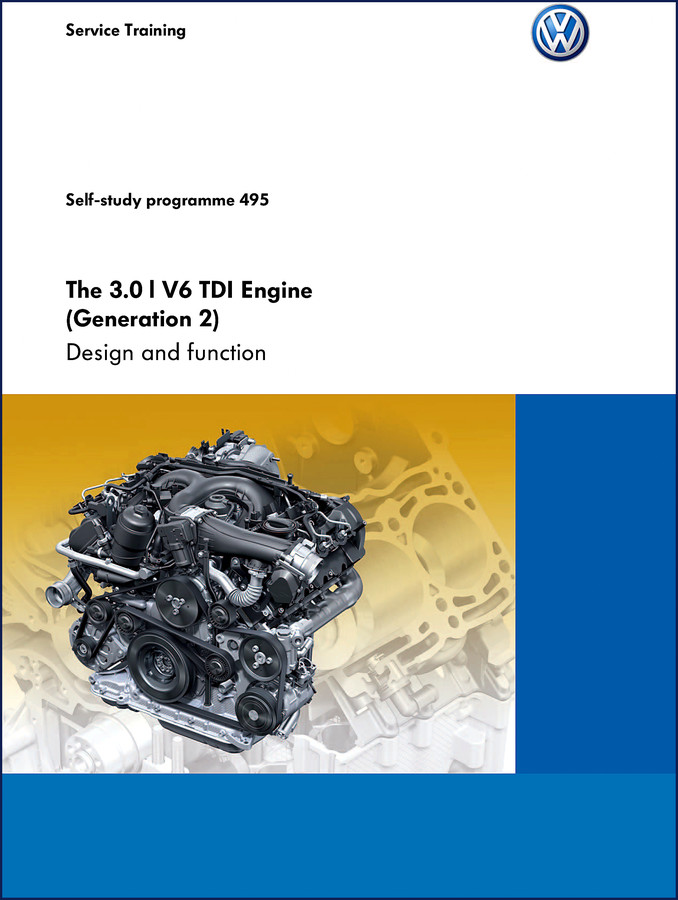
I’ve lost count of how many times a DIYer or even a shop kid has come to me with a VW TDI that won’t start or runs rough, and they’re holding a generic aftermarket PDF that tells them to “check the fuel pressure” without giving a single rail pressure spec or injector return flow limit. That’s not a manual — that’s a waste of time. This Volkswagen V6 TDI Training Manual is the real deal: OEM material written for Volkswagen techs who need to understand the piezo common rail system from the ground up. 56 pages of factory-level detail, not some third-party condensation.
Fuel System: High-Pressure Accumulator and Piezo Injectors
Turn to page 6 and you’re inside the fuel system chapter. The manual breaks down the high-pressure pump, the two rails (one per cylinder bank), and the six piezo-electric injectors. It shows how pressure generation and injection are separate — pump builds the pressure, rail stores it, injectors fire it. Bosch EDC 16 CP controls the whole show. If you’ve ever had a customer’s Phaeton or Touareg come in with a rail pressure deviation code, this chapter shows exactly where the pressure sensor sits and how the ECU calculates the demand. Don’t guess at which injector is leaking — the manual explains the return flow test procedure. Need a description of the controlling solenoids? It’s all in there.
Engine Management System: Bosch EDC 16 CP Architecture
Engine management section starts on page 30. This covers the ECU inputs, sensor outputs, and how the system adapts injection timing for pilot injection, main injection, and post-injection. The manual shows the circuit for the rail pressure regulator valve, the metering unit at the high-pressure pump, and the glow plug control module. Aftermarket wiring diagrams love to skip the CAN bus routing — this manual doesn’t. It’s the same material Volkswagen uses in their self-study programme (SSP 351). If you’re swapping an ECU or reflashing, you need these pin assignments and signal descriptions. I’ve seen guys fry a $2,000 ECU because they used a generic pinout from a forum. Don’t be that guy.
3 Reasons to Choose OEM Documentation Over Aftermarket
Aftermarket manuals copy each other’s errors. They’ll give you a torque spec that’s 10% off and expect you to “tighten until snug.” That’s not a spec — that’s a lawsuit waiting to happen. OEM training manuals like this one are written by the engineers who designed the system. The fuel injection pressures, the injector pulse widths, the rail volume — they’re all calculated, not guessed. With this Volkswagen V6 TDI Training Manual, you get the exact same information a dealer tech gets in their initial training. That means you can diagnose a high-pressure leak or a failed pressure relief valve without replacing parts until you hit the right one. If you want a deeper dive into the Gen 2 design changes, check out the Volkswagen V6 TDI Training Manual – Gen 2 Design & Function”>Volkswagen V6 TDI Training Manual – Gen 2 Design & Function. For other VW platforms, the Volkswagen 2.3-ltr. V5 Training Manual – OEM Factory Specs”>Volkswagen 2.3-ltr. V5 Training Manual – OEM Factory Specs and Volkswagen Passat 2005 Training Manual – Technical Overview”>Volkswagen Passat 2005 Training Manual – Technical Overview are also OEM originals.
Test Your Knowledge: Why That Chapter Exists
Page 54 is a “Test your knowledge” section. Most aftermarket junk doesn’t include this because they assume you already know the system. Volkswagen put it in because they want you to prove you understand before you touch a car. There are twenty-odd questions about rail pressure control, injector electrical tests, and fuel metering. Answer them wrong and you know where your knowledge gaps are. I make every new hire at my shop work through these self-study manuals before they touch a VW on my lifts. It saves me thousands in blown injectors and seized pumps.
Does This Manual Cover the 3.0L V6 TDI Only?
Yes, it’s specific to the 3.0-liter V6 TDI as fitted in the Phaeton and Touareg from around 2004–2008. It does not cover the 2.0L or 4.2L TDIs. If you’re working on the newer EA897 generation, the Volkswagen V6 TDI Training Manual – Gen 2 Design & Function”>Gen 2 version is what you need. For context on how common rail systems evolved across the industry, the Automotive Industry Overview”>Automotive Industry Overview gives a good timeline. If you’re also working on cars with Manual Transmission”>Manual Transmission systems, that’s a different manual — but this one sticks purely to the fuel and engine management.
Why 56 Pages Is the Right Size
Training manuals aren’t coffee-table books. They’re fat-free. 56 pages covers the entire fuel system and engine management with no padding. Each page has a diagram, a cross-section, or a functional description. The Fuel section alone takes up 24 pages — hydraulic schematics, injector cutaways, high-pressure pump internals. The Engine management section runs 24 more pages. That’s 48 pages of pure technical content, leaving 8 for the index and the test. Compare that to a 700-page aftermarket manual that buries the rail specs between chapters on brake pads and wiper blades. This is what you want on your bench when a 3.0L V6 TDI rolls in with a misfire and a P0087 code.
FAQ – Common Questions About This Manual
- What year models does this manual cover?
- The manual was written for the 3.0L V6 TDI fitted in the Phaeton and Touareg from the 2004–2008 model years. Check your engine code (e.g., BKS, BUN, BWF) to confirm compatibility.
- Is this a repair manual or a training manual?
- Training manual. It explains design and function, not step-by-step removal and installation. For repair instructions, you need the corresponding service manual from Volkswagen’s customer service literature (they mention this on page 2).
- Does it include torque specs for injectors or high-pressure lines?
- No. As a training manual, it focuses on system design. Torque values and adjustment procedures are in the factory repair manual. Do not use this PDF to torque injector clamps — get the official repair literature.
- Why should I trust a training manual over a Haynes or Chilton?
- Because Volkswagen engineers wrote this. Every pressure value, every injector resistance range, every rail volume figure is official. Aftermarket manuals reprint errors or omit critical notes like “do not reuse high-pressure lines after removal.” This manual shows you why you must replace them.
Look, I don’t sell parts. I don’t sell subscriptions. I’m telling you from 28 years of twisting wrenches that if you work on VW TDI diesels, you need this on your tablet or printed out. It’s 56 pages of exactly what the factory wants you to know before you touch the rail. Stop burning billable hours on guesswork. Access the Factory Manual and start diagnosing like a dealer tech.
Additional information
| Brand | Volkswagen |
|---|---|
| Language | English |
4 reviews for Volkswagen V6 TDI Training Manual – OEM Factory Documentation
You may also like…
-
Sale!

Volkswagen Golf Jetta GTI Service Manual – 4954 Pages Official Specs
Original price was: $95.55.$65.00Current price is: $65.00. -
Sale!

Volkswagen Phaeton Training Manual – Auxiliary Heater System (52 pages)
Original price was: $55.80.$45.00Current price is: $45.00. -
Sale!

Volkswagen Serie C 2003 Service Manual – OEM Factory Specs
Original price was: $53.60.$40.00Current price is: $40.00. -
Sale!

Volkswagen Passat 1995 Repair Manual – Factory Wiring & Engine Specs
Original price was: $57.20.$40.00Current price is: $40.00.
Related products
-
Sale!

Technical Manual – International DT 530 & HT 530 (118 Pages)
Original price was: $37.00.$25.00Current price is: $25.00. -
Sale!

2005 Parts Catalog – International NGD 3.0 L Engine (77 pages)
Original price was: $44.70.$30.00Current price is: $30.00. -
Sale!

2006 Service Manual – International DT 466E, 530E Diesel Engine
Original price was: $67.50.$50.00Current price is: $50.00. -
Sale!

Technical Manual – International 6.0L Power Stroke FICM Diagnostics
Original price was: $29.80.$20.00Current price is: $20.00.
John S. –
Great buy! Quick access after checkout process. It helped me to troubleshoot my Volkswagen V6 electrical system. Highly recommended for mechanics.
Richard G. –
I am very pleased with this manual. The document quality is excellent. It assisted me to rebuild my Volkswagen V6 electrical system. Saves me so much money.
gearhead88 –
Outstanding! The pages are clean and easy to navigate. Contains detailed wiring diagrams for Volkswagen. I will recommend this shop to others.
James L. –
Great factory service manual. The PDF is very clear. Every wiring layout is provided for Volkswagen V6. Worth every penny.