
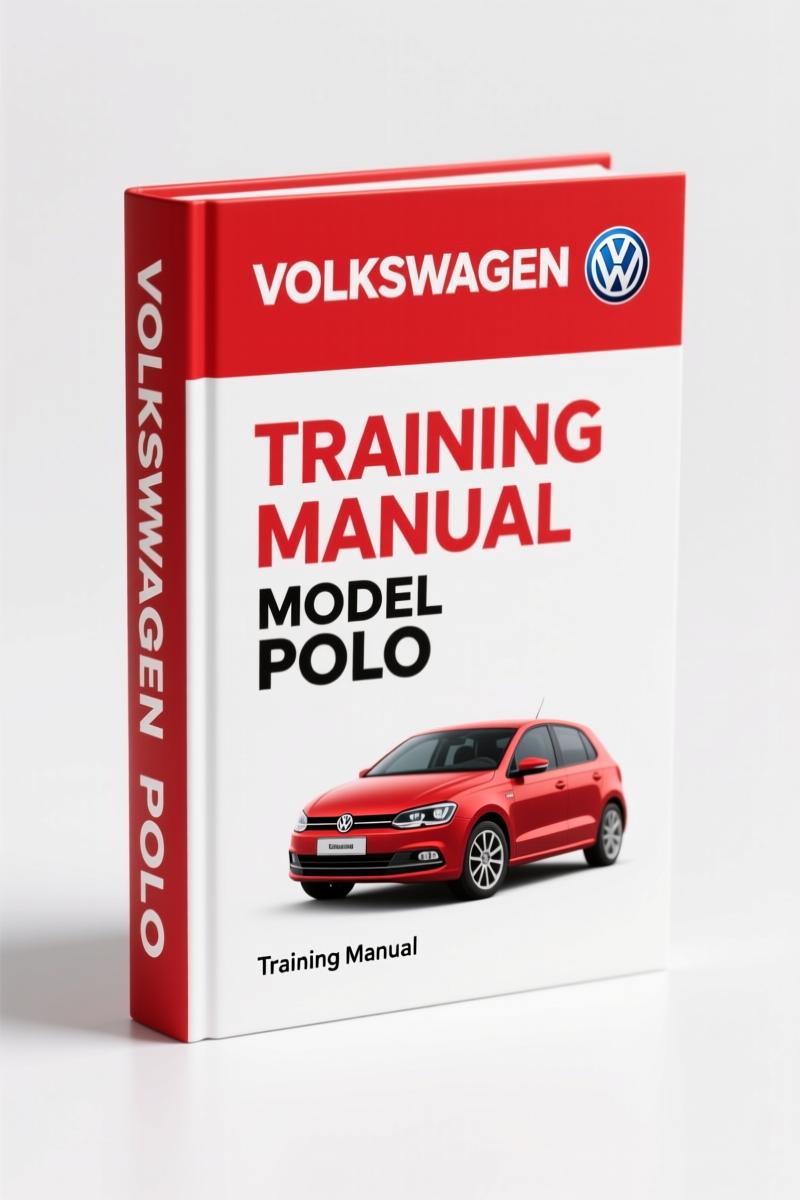
Volkswagen Polo 2002 Training Manual – 36-Page Factory OEM Guide
Original price was: $21.00.$15.00Current price is: $15.00.
Factory training manual for 2002 VW Polo 1.2L petrol engines. 36 pages of design, function, and service data.
Description
Volkswagen Polo 2002 Training Manual – Design & Function of the 1.2L 3-Cylinder Engine
If you’re working on a 2002 Volkswagen Polo 2002 Training Manual and you think you can eyeball the camshaft timing on that 3-cylinder without the factory diagrams, you’re going to be ordering a cylinder head. I’ve been turning wrenches for 28 years, and I’ve watched guys blow up engines because they didn’t have the right documentation. This is a Training Manual – not a service manual. It’s the Self-Study Programme 260 from Volkswagen, 36 pages, published 2002. It won’t give you torque specs for head bolts – those come from the workshop manual – but it will show you exactly how the balancer shaft and camshaft drive interact. That’s the difference between a running engine and a scrap pile.
Aftermarket manuals for the 1.2L 3-cylinder often get the cylinder numbering wrong or skip details on the crank assembly with balancer shaft. This genuine Volkswagen training manual walks you through the entire Engine mechanics section starting on page 6: drive of camshafts and of oil pump, cylinder head and camshaft housing, valve gear, cylinder block, and crank assembly. You need to understand why that third cylinder has a different firing order before you touch the timing chain. I’ve seen guys skip the balancer shaft alignment and wonder why the engine vibrates like a paint shaker. Page 11 covers the balancer shaft – read it.
Engine Mechanics: Camshaft Drive and Cylinder Head (Pages 6-11)
Section starts with the drive of camshafts and oil pump. Two versions of the engine exist – a 40 kW 2-valve per cylinder and a 47 kW 4-valve per cylinder. Both share the same base engine except for the cylinder head. The training manual breaks down the camshaft housing, valve gear, cylinder block, and crank assembly with that critical balancer shaft. The oil filter and oil pump are covered on page 12, cooling system page 13, fuel system without return flow page 14, fuel filter with pressure regulator page 15, engine cover with air filter page 16, and crankcase ventilation page 17. If you’re doing anything inside that block, you need to know the routing of the oil pump drive chain. This manual shows it in exploded views, not some generic sketch.
Engine Management System: Control Unit and Self-Diagnosis (Pages 20-30)
System overview on page 20, engine control unit page 22, single-spark ignition coils page 23, fuel pump feed control page 24, exhaust post-treatment page 26, function diagram page 28, and self-diagnosis page 30. The self-diagnosis section explains how the ECU monitors the three cylinders individually. If you’re chasing a misfire, this will tell you what signals the ECU expects from each cylinder’s knock sensor. Aftermarket manuals lump all three cylinders together and leave you guessing. Page 30 has the diagnostic flow – use it before you throw parts at it.
I’ve had a junior tech replace three ignition coils on a 2002 Polo because he didn’t understand the single-spark system. Each coil fires independently, and the control unit checks secondary current. The training manual shows the wiring logic. That’s the kind of detail that saves billable hours.
Why a Training Manual Belongs on Your Bench
This isn’t a step-by-step repair guide. It’s a design and function document that answers the “why” behind every component. When you understand why Volkswagen used a balancer shaft on a 3-cylinder, you’ll know why timing chain stretch kills the engine differently than on a 4-cylinder. It’s the same reason I keep this manual next to the workshop manual on my personal bench. You can’t fix what you don’t understand.
Source Authenticity: OEM vs Aftermarket Documentation
This is a genuine Volkswagen Training Manual – SSP 260. Not a scanned photocopy, not a third-party rewrite. The diagrams are factory original. Aftermarket manuals for the 1.2L 3-cylinder often get the cylinder head torque sequence wrong because they copy from a 4-cylinder template. Trust me, I’ve seen the results. This manual is the real deal, and it comes from AutoRepairManuals, the largest collection of OEM shop manuals in North America. For an overview of how OEM documentation differs from generic repair guides, see this Automotive Industry Overview.
Service Information and Special Tools (Pages 31-32)
Extended service interval details and a list of special tools. The 2002 Polo uses a long-life service regime – this manual explains the oil quality and change intervals. The special tools section shows you which factory tools you need for timing chain tensioning and balancer shaft alignment. Don’t go buying generic tools; know what OEM part numbers to search for. I recommend checking the Automotive Industry Overview for standards on service documentation.
Related manuals you might need alongside this training manual: Volkswagen Polo Golf Passat Bora Touareg 2010 Workshop Manual for actual repair steps, Volkswagen Polo Training Manual – 1.2L 3-Cylinder Design & Function (the same volume), and VW Bora, CC, Eos, Golf 2009 Service Manual – OEM Trailer Guide if you’re working on electrical systems.
FAQ – 4 Questions About the Volkswagen Polo 2002 Training Manual
- Does this manual include torque specifications?
- No. This is a design and function training manual. Use the workshop manual for fastening torques.
- What engines are covered?
- The 1.2L 3-cylinder petrol engines – both the 40 kW 2-valve and 47 kW 4-valve versions. The base engine is identical except for the cylinder head.
- How many pages and what year?
- 36 pages, published 2002. It’s the Self-Study Programme 260.
- Can I use this to diagnose a no-start condition?
- Yes, especially the self-diagnosis section (page 30) and function diagram. It explains the engine control unit and sensor inputs. However, for fault code interpretation and wiring diagrams, you’ll need the factory wiring manual. This training manual gives you the theory behind the system – why the ECU does what it does. I’ve seen techs waste hours chasing ghosts because they didn’t understand the fuel pump feed control logic. This manual clears that up. So yes, it’s useful for diagnostics if you pair it with the proper service literature.
Don’t guess on a 3-cylinder engine that’s different from anything you’ve worked on. Get the factory documentation and do the job right. Access the Factory Manual now from AutoRepairManuals.
Additional information
| Brand | Volkswagen |
|---|---|
| Language | English |
2 reviews for Volkswagen Polo 2002 Training Manual – 36-Page Factory OEM Guide
You may also like…
-
Sale!

Volkswagen Serie C 2003 Service Manual – OEM Factory Specs
Original price was: $53.60.$40.00Current price is: $40.00. -
Sale!

Volkswagen Phaeton Training Manual – Auxiliary Heater System (52 pages)
Original price was: $55.80.$45.00Current price is: $45.00. -
Sale!

Volkswagen Golf Jetta GTI Service Manual – 4954 Pages Official Specs
Original price was: $95.55.$65.00Current price is: $65.00. -
Sale!

Volkswagen Passat 1995 Repair Manual – Factory Wiring & Engine Specs
Original price was: $57.20.$40.00Current price is: $40.00.
Related products
-
Sale!

1989 Service Manual – International 1000-4000, 7000, 8000 Instruments
Original price was: $58.80.$40.00Current price is: $40.00. -
Sale!
1991 Electrical Schematic – 112-Page OEM Wiring Diagram for International 1000-3000 Series
Original price was: $22.75.$17.50Current price is: $17.50. -
Sale!
1993 Operators Manual – International Bus 1000-3000 OEM Specs
Original price was: $12.30.$7.99Current price is: $7.99. -
Sale!
1993 Electrical Schematic – International 1000/3000/4000 Bus Chassis OEM Wiring Diagrams
Original price was: $29.26.$22.00Current price is: $22.00.
diy_master –
I am very pleased with this purchase. The scan is high-quality and well indexed. It assisted me to fix my Volkswagen Polo engine. Saved my weekend project! Thanks.
workshop_guy –
This is exactly what I required. Instant access after checkout. It assisted me to rebuild my Volkswagen Polo engine. Saves me so much time.