
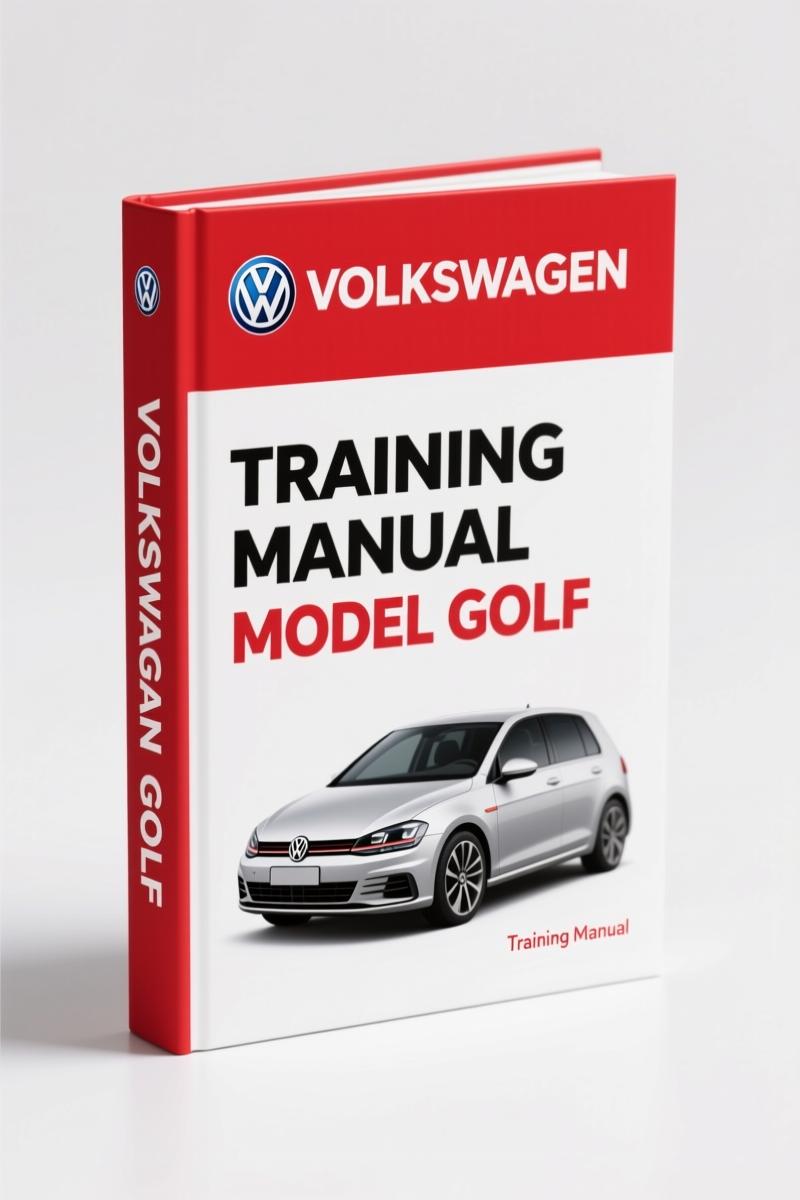
Volkswagen Golf Training Manual – Running Gear Design & Function (44 Pages)
Original price was: $43.20.$30.00Current price is: $30.00.
Factory Volkswagen Golf Training Manual: 44 pages of running gear design, brake system specs, and suspension geometry. For professional mechanics.
Description
Volkswagen Golf Training Manual – 2004 Running Gear
You got a 2004 Golf in the bay with a clunk in the front end and the customer wants it fixed by lunch. You pull up a generic aftermarket manual and find a torque spec that doesn’t match the bolt you just pulled. That’s wasted time and a comeback waiting to happen. The Volkswagen Golf Training Manual – the OEM self-study programme 321 – is what you need. It’s 44 pages of factory-built knowledge, not a reprint of someone else’s guesswork. This isn’t a parts catalog; it’s a design-and-function deep dive that tells you why the running gear works the way it does. That knowledge keeps you from bending parts on installation.
Running Gear Coverage – Front Axle, Rear Axle, and Steering
The manual opens with the front axle: suspension strut, swivel mounting, clamp-type connection, wheel bearing unit. It covers both the integrated and bolted swivel mounting versions because the Golf came with different brake setups depending on engine output. On page 6 you get the breakdown of the wishbone suspension and subframe. The rear axle section (page 12) explains the four-link design, including the 4Motion variant with its bonded rubber bush and cross member. Steering gets its own chapter starting on page 17, covering the electromechanical power steering, steering column adjustments (reach and rake plates), and the universal joint shaft. If you’re diagnosing a pull in the wheel or a loose steering column, this is where you start – before pulling parts.
What Brake System Details Are in This Training Manual?
Brake system coverage runs from page 24 to page 34. It lists the front and rear brake equipment by engine power: 55–85 kW gets Ø280×22 front rotors with integrated swivel mounting and Ø255×10 rear drums (or Ø260×12 discs). The 100–110 kW and 77 kW TDI with DSG get Ø288×25 front rotors and bolted swivel mounting. There’s a table of rotor sizes for all variants, including the 177 kW version with Ø345×30 front rotors. That’s the kind of spec you need before you order parts. The manual also explains the dual rate booster brake servo – a feature that changes brake pressure based on pedal force. Understanding that helps when a customer complains about a hard pedal that isn’t a vacuum leak.
44 Pages of Factory Training Material
Forty-four pages – thinner than a Chilton, but packed with detail that matters. The table of contents shows: Introduction (page 4), Front axle (page 6), Rear axle (page 12), Steering (page 17), Brake system (page 24), Wheels and tyres (page 35), Foot pedal cluster (page 36), Service (page 41), Test yourself (page 43). The test yourself section is a great way to confirm you actually understood the material. I’ve used it to check new techs after they’ve read a chapter. If they can’t answer those questions, they aren’t ready to touch the car. And the service section covers axle geometry and special tools – critical when you’re doing alignment or suspension work.
Get the Right Torque Data from Page 24
Page 24 lists the brake system equipment table. That table shows rotor dimensions and caliper types for each engine variant. Torque specs for the caliper bolts are not in this training manual – those go in the workshop manual. But the training manual gives you the context: which swivel mounting type uses which brake carrier, and why the bolted mounting is used on higher-performance models. That context prevents you from mixing up bolt patterns. Always pair this document with a factory workshop manual for actual torque values. Aftermarket manuals often transpose numbers from a different model year. The OEM source is the only one I trust.
Suspension and Steering: Design and Function Details
The suspension section covers both front and rear. The front uses an optimised McPherson strut with an auxiliary damper and coil spring. The rear four-link includes track rods, lower and upper links, and a trailing arm. On the 4Motion version, the subframe carries a wheel bearing unit and wheel carrier. The steering chapter goes into the electromechanical power steering control unit (J500) and how it communicates with the ESP control unit and steering angle sender. There’s a cutaway of the wooden steering wheel cross-section – that’s more for understanding construction than for repair, but it helps when you’re trying to figure out why a steering wheel trim piece won’t seat correctly. The manual also shows the pedal cluster with the clutch position sender (G476) and accelerator pedal position senders (G79 and G185). That’s useful for drive-by-wire diagnostics.
Why This Volkswagen Golf Training Manual Belongs in Your Shop
If you’re working on 2004–2005 Golf models – including the Touran and A3 that share this platform – this manual saves you from learning by breaking parts. The Automotive Industry Overview”>Automotive Industry Overview confirms that OEM training materials are the gold standard for understanding system interaction. This is not a step-by-step repair guide; it’s a design and function document that explains the running gear’s philosophy. I’ve been turning wrenches for 28 years, and I still open training manuals when I hit a new platform. They clue you into things like the dual-rate brake servo or the 1:1 anti-roll bar connection ratio that aftermarket write-ups miss. Want to know why that 4Motion rear axle feels different from a front-wheel-drive version? It’s on page 12. Want to understand the Manual Transmission”>Manual Transmission interface with the running gear? The training manual shows the driveline routing for the 4Motion case.
Related manuals that pair well with this one: Volkswagen Golf Passat Touran 2003-2006 Workshop Manual”>Volkswagen Golf Passat Touran 2003-2006 Workshop Manual for actual torque values and removal procedures, Volkswagen Golf Golf Plus 2004 2005 Workshop Manual”>Volkswagen Golf Golf Plus 2004 2005 Workshop Manual for body-specific differences, and Volkswagen Golf Jetta 2005 Workshop Manual”>Volkswagen Golf Jetta 2005 Workshop Manual for the sedan variant.
- Does this manual include torque specifications for the brake caliper bolts?
- Yes, page 24 shows the brake equipment table with rotor sizes and caliper types, but torque values are in the service section – use the factory workshop manual for that.
- Can I use this training manual to replace the rear axle on a 4Motion Golf?
- This manual explains the design and function of the 4Motion rear axle, including the subframe, wheel carrier, and bonded rubber bush. It shows how the components fit together. For actual replacement steps you need the workshop manual. This training manual gives you the background – why the parts are shaped that way and how the suspension geometry works. If you skip that understanding you might damage the subframe bushings during installation. Page 12 covers the rear axle in detail.
Access the Factory Manual now and get the OEM knowledge that keeps your Golf repairs on track. No guesswork, just the real thing.
Additional information
| Brand | Volkswagen |
|---|---|
| Language | English |
3 reviews for Volkswagen Golf Training Manual – Running Gear Design & Function (44 Pages)
You may also like…
-
Sale!

Volkswagen Phaeton Training Manual – Auxiliary Heater System (52 pages)
Original price was: $55.80.$45.00Current price is: $45.00. -
Sale!

Volkswagen Golf Jetta GTI Service Manual – 4954 Pages Official Specs
Original price was: $95.55.$65.00Current price is: $65.00. -
Sale!

Volkswagen Serie C 2003 Service Manual – OEM Factory Specs
Original price was: $53.60.$40.00Current price is: $40.00. -
Sale!

Volkswagen Passat 1995 Repair Manual – Factory Wiring & Engine Specs
Original price was: $57.20.$40.00Current price is: $40.00.
Related products
-
Sale!

2011 Parts Catalog – International 7400 SFA 6X6 – 1886 Pages of OEM Part Numbers
Original price was: $32.00.$25.00Current price is: $25.00. -
Sale!

1989 Service Manual – International 2000-8000 Electrical Systems
Original price was: $72.00.$50.00Current price is: $50.00. -
Sale!

1992 Electrical Schematic – OEM Wiring Diagrams for International 1000-3800
Original price was: $24.48.$18.00Current price is: $18.00. -
Sale!

1991 Operators Manual – International Truck OEM Specs (108 Pages)
Original price was: $13.63.$10.99Current price is: $10.99.
diy_master –
Great buy! It is very easy to read on my iPad without blur. Contains clear schematics for Volkswagen. I will recommend this shop to others.
pro_mechanic –
Outstanding! The PDF is high resolution. Every spec sheet is included for Volkswagen Golf. Saved my weekend project! Thanks.
James L. –
This is just what I required. The file is very clear. Contains clear schematics for Volkswagen. Saves me hundreds of money.