
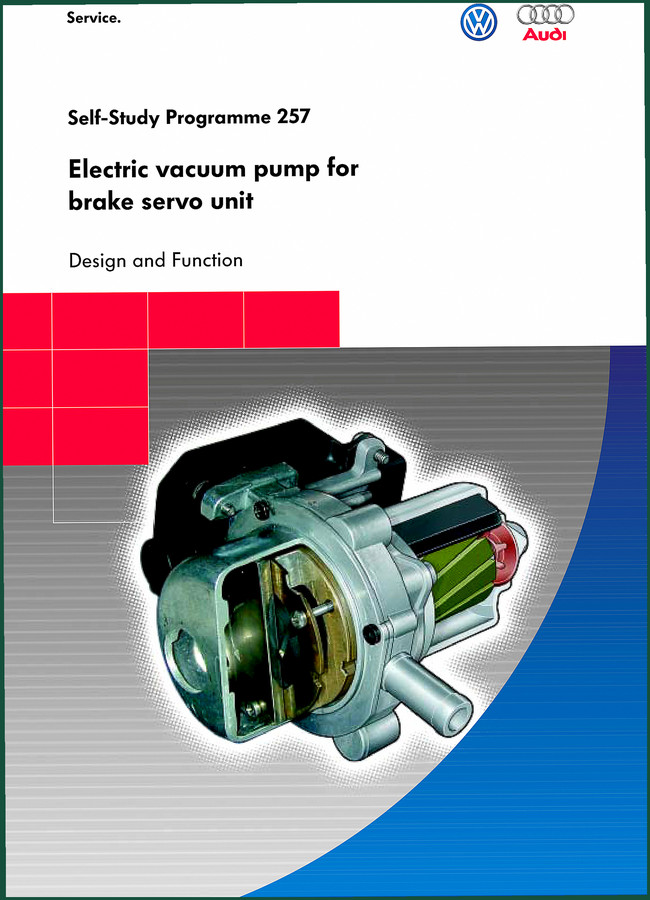
Volkswagen Audi VW Technical Manual – Electric Vacuum Pump | AutoFix Global
Original price was: $29.03.$22.50Current price is: $22.50.
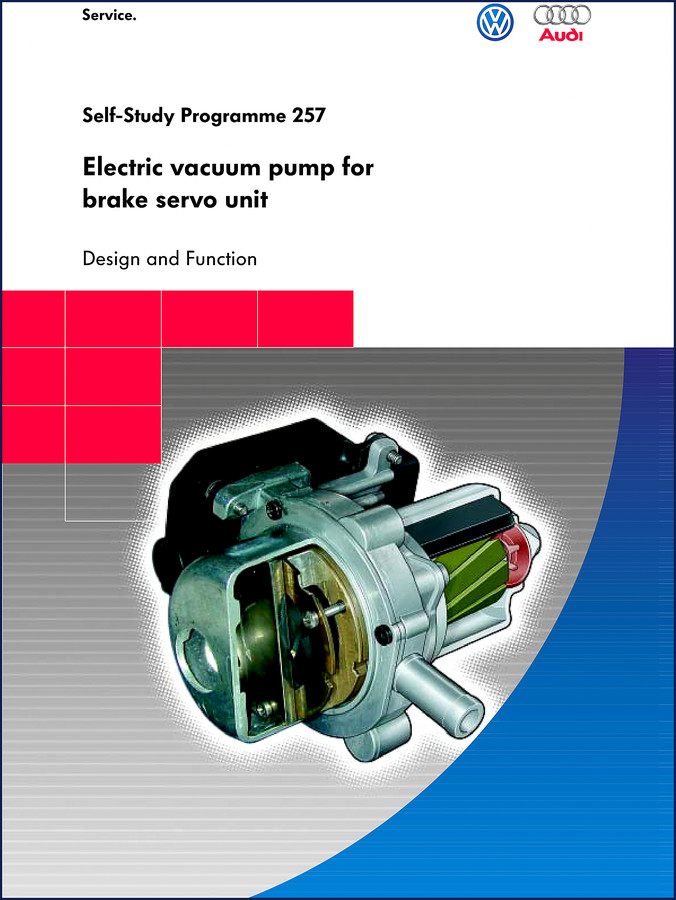
Self-Study Programme 257: electric vacuum pump for brake servo unit – design, function, diagnostics. 20 pages.
Description
Volkswagen Audi, VW Technical Manual – Self-Study Programme 257 Brake Vacuum Pump
I’ve lost count of the cars towed into my shop because someone chased a brake pedal complaint without understanding the vacuum pump. You replace the booster, bleed the system, and the pedal still goes hard after one pump. Then you find the electric vacuum pump is dead or the control module is confused. That’s when you need the factory documentation – not a Chilton summary written by someone who never held a wrench. This Volkswagen Audi, VW Technical Manual (Self-Study Programme 257) is a 20-page deep dive into the electric vacuum pump for the brake servo unit. It is not a repair manual, but it explains the design, function, and self-diagnosis so you actually understand what the system is supposed to do before you start swapping parts.
What This Manual Covers
The table of contents reads like a troubleshooting roadmap: Introduction, Function of the brake servo unit, Design and function of the electric vacuum pump, Design and function of the vane pump, Open-loop controlled vacuum pump, Open-loop control version, Installation position, Operating conditions, Function diagram, Closed-loop controlled vacuum pump, Closed-loop control version, Function of pressure sensor, Hysteresis, Self-diagnosis, and a Test your knowledge section. Every one of those sections matters when you are trying to figure out why the vacuum drops during a cold start on an EU4-compliant VW with an automatic transmission. The manual explains that the throttle valve opens further to heat the catalytic converter, reducing manifold vacuum, and that’s when the electric pump has to pick up the slack. If you don’t know that, you condemn a good pump.
Is This a Repair Manual?
Notice the important note on page 2: “The Self-Study Programme describes the design and function of new developments! The contents are not updated. Please always refer to the relevant service literature for up-to-date inspection, adjustment and repair instructions.” That’s honest. You don’t get torque specs or removal procedures here. You get the engineering logic behind the system. Once you understand that, the service manual makes sense. I’ve seen guys replace a closed-loop pump because they didn’t know it had a pressure sensor with hysteresis – they thought the pump was running constantly. That’s a $400 mistake. This manual would have saved them.
20 Pages of Factory Documentation
Twenty pages sounds thin, but these are dense, illustration-heavy pages straight from Volkswagen’s training department. Each page has cross-section diagrams, flow charts, and function diagrams. For example, the open-loop control version uses a relay and a timer; the closed-loop version uses a pressure sensor and the engine control module. The manual walks through the operating conditions: when the pump runs, when it stops, and what triggers it. There is no filler. Every sentence carries technical weight. If you are working on a 2005-2010 Audi A4 or VW Passat with the 2.0T and automatic gearbox, you need this background. The self-diagnosis section on page 16 tells you how the system checks itself – that’s the difference between reading a code and actually understanding why the code set.
Brake System Safety: Why You Need the OEM Spec
Brake failure is not a learning experience; it’s a lawsuit. The electric vacuum pump supports the brake servo unit when engine vacuum is low. If you misdiagnose the pump or the control circuit, you risk a hard pedal at a bad moment. The OEM document gives you the exact logic: open-loop pump runs for a fixed time after start; closed-loop pump modulates based on pressure. There is no guesswork. Aftermarket manuals often skip the nuance of the EU4 emission strategy because they copy the same paragraphs for every model. This factory manual explains the specific interaction between the throttle valve, the cat converter warm-up, and the pump – and that is the root cause of many intermittent brake booster complaints on these cars.
Who Should Buy This Manual
If you own a VW or Audi from the mid-2000s with a petrol engine and automatic transmission, and you do your own brakes, buy this manual. If you are a shop tech who sees three of these a month with a P code for vacuum pump plausibility, buy it. The 20 pages will save you hours of head-scratching. I keep a binder of these Self-Study Programmes on my shelf – they are the missing link between the wiring diagram and the actual physics. For related training materials, check out the Volkswagen Audi CANbus Training Manual Introduction and Volkswagen Audi Self-Study Programme 224 Service Interval for more system-level knowledge. If you need to understand the data bus that the pressure sensor talks on, grab SSP 269 CAN Bus II Data Transfer. For broader automotive context, the Automotive Industry Overview explains why emissions standards drove this design, and the Manual Transmission page is unrelated but worth a bookmark if you work on manuals too.
Frequently Asked Questions
- Does this manual include wiring diagrams for the vacuum pump?
- No. It has function diagrams that show the electrical flow, but not full pin-out wiring. Use the factory service manual for that.
- Will this work for a 2012 Audi Q5?
- It covers the general design of the electric vacuum pump used on EU4-compliant models. The basic principles apply, but specific control logic may differ – always cross-reference with your vehicle’s SSP.
- Can I use this to replace the pump myself?
- Yes, but only as background. You still need the repair manual for removal and reinstallation steps, plus torque specs for the brake lines. This tells you why the pump runs; that tells you how to swap it safely.
- How does this help with diagnostics?
- The self-diagnosis section explains the monitoring strategy – the ECU checks if the pressure sensor sees vacuum within a certain time after start. If not, it sets a code. Understanding hysteresis (page 15) prevents you from thinking a pump with normal operation is faulty. That alone is worth the price.
You don’t need to reinvent brake system diagnosis. Volkswagen already printed the answers. Access the Factory Manual and put the engineering knowledge to work on your next repair.
Additional information
| Brand | Volkswagen |
|---|---|
| Language | English |
2 reviews for Volkswagen Audi VW Technical Manual – Electric Vacuum Pump | AutoFix Global
You may also like…
-
Sale!

Volkswagen Golf Jetta GTI Service Manual – 4954 Pages Official Specs
Original price was: $95.55.$65.00Current price is: $65.00. -
Sale!

Volkswagen Serie C 2003 Service Manual – OEM Factory Specs
Original price was: $53.60.$40.00Current price is: $40.00. -
Sale!

Volkswagen Passat 1995 Repair Manual – Factory Wiring & Engine Specs
Original price was: $57.20.$40.00Current price is: $40.00. -
Sale!

Volkswagen Phaeton Training Manual – Auxiliary Heater System (52 pages)
Original price was: $55.80.$45.00Current price is: $45.00.
Related products
-
Sale!
Acura NSX 1991 Service Manual – 1420 Pages OEM
Original price was: $102.05.$65.00Current price is: $65.00. -
Sale!

2006 Service Manual – International DT 466E, 530E Diesel Engine
Original price was: $67.50.$50.00Current price is: $50.00. -
Sale!

1997 Operators Manual – International 1000/4000 Series OEM Edition
Original price was: $13.49.$9.99Current price is: $9.99. -
Sale!
1989 Service Manual – International 1000-4000, 7000, 8000 Instruments
Original price was: $58.80.$40.00Current price is: $40.00.
Michael T. –
This is exactly what I needed. It is very easy to read on my iPad without losing quality. Contains clear bolt torque specs for Volkswagen. I will recommend this shop to others.
Charles W. –
Great OEM spec sheet. The scan is high-quality and well indexed. A must-have for any Volkswagen Audi mechanic doing repairs. I will recommend this shop to others.