
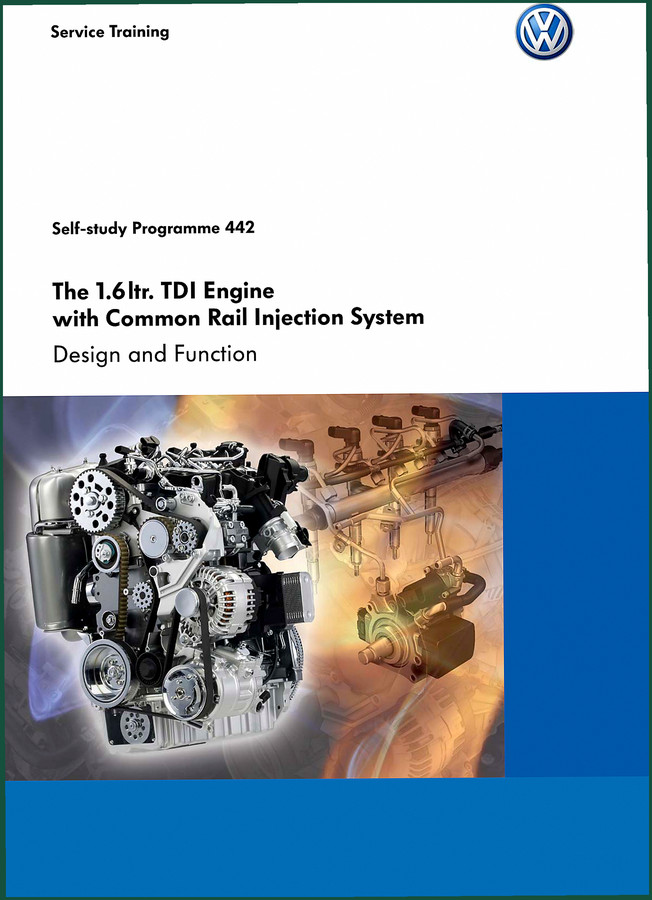
Volkswagen 1.6L TDI & 2.0l 103kW TDI – OEM Service Manual 48 Pages
Original price was: $36.49.$26.25Current price is: $26.25.
OEM Volkswagen self-study programme for 1.6L TDI and 2.0l 103kW TDI – 48 pages of engine design, functional diagrams, and service overview.
Description
Volkswagen 1.6L TDI, 2.0l 103kW TDI Service Manual – OEM Factory Specs
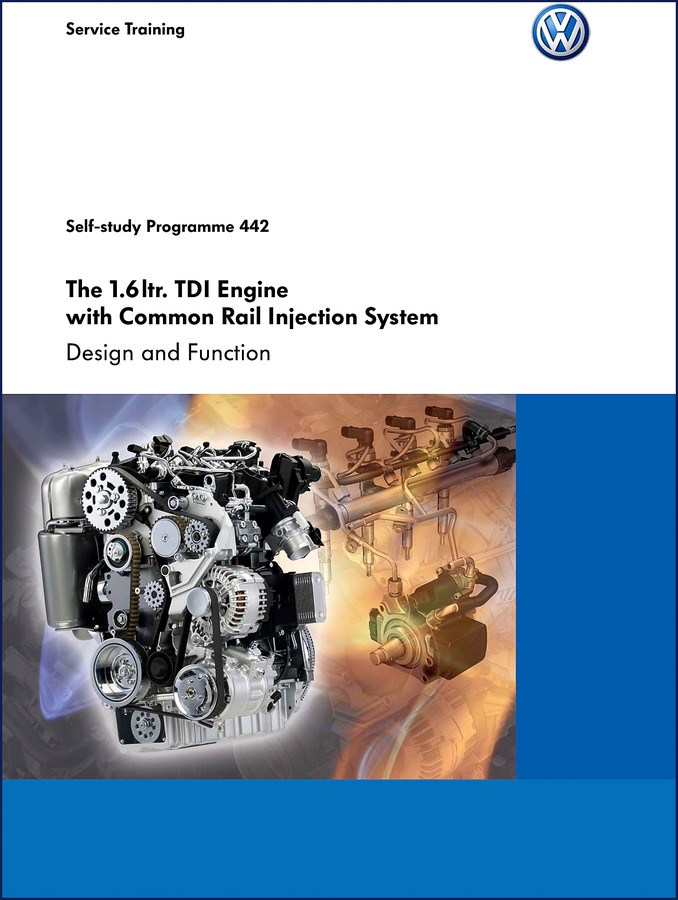
I’ve torqued more head bolts than you’ve had hot meals. When I see a DIY guy trying to figure out a common rail injection system with a Haynes manual, I cringe. This 48-page Volkswagen 1.6L TDI, 2.0l 103kW TDI Service Manual from Volkswagen’s self-study programme isn’t a step-by-step repair guide – it’s the engineering brief behind the engine. You need this before you touch a wrench on a 1.6L TDI or the 2.0l 103kW TDI. Without it, you’re guessing at why the system works the way it does, and that leads to snapped bolts and misdiagnosed faults. Used on the workbench alongside the factory service literature, this manual saves you from costly mistakes.
Self-Study Programme 442: What You Get
Volkswagen’s self-study programmes are not updated after release – they are design-and-function documents. This one covers the 1.6L TDI with common rail injection system, which forms the basis for all future four-cylinder diesel engines. The engine comes in three power versions: 55kW, 66kW, and 77kW. It also compares new features against the 2.0l 103kW TDI engine. The PDF is scanned from the original SSP 442, complete with colour cross-sections and cutaways. Six chapters: Introduction (page 4), Engine Components (page 8), System Overview (page 38), Functional Diagram (page 40), Service (page 43), and a Test Yourself section (page 44). That’s 48 pages of concentrated factory knowledge.
Volkswagen 1.6L TDI, 2.0l 103kW TDI Service Manual – Engine Components Section
Engine Components starts on page 8. It covers the cylinder head, common rail fuel injection system, drive for ancillary units, exhaust gas recirculation module, toothed belt drive, engine mounting, oil filter module, oil pump, and crankcase. Each component is described with its function and interaction. For example, the common rail injection system from Continental (PCR 2) is explained in detail. If you’re rebuilding a 1.6L TDI, you need to understand the piezo injector location and the rail pressure dynamics. This manual gives you that background. It also shows the differences from the 2.0l 103kW TDI – critical when swapping parts between engines.
Is This a Repair Manual or a Training Guide?
Straight answer: it’s a training guide. But that doesn’t make it useless for repair work. The Service section on page 43 gives you the factory testing points and adjustment procedures for the common rail system. However, for current testing, adjustment, and repair instructions, you must refer to the relevant service literature – this manual tells you that on page 2. So use it as the roadmap. When the official repair manual says “set the charge pressure”, you come here to see the functional diagram and understand why that valve opens. Pair this with the proper workshop manual, and you’ve got the complete picture.
3 Key Areas Covered in the Functional Diagram
The Functional Diagram on page 40 shows the electrical and fluid circuits for the 1.6L TDI. Three major loops: the fuel system from tank to rail, the exhaust gas recirculation with cooler, and the engine management inputs/outputs. The diagram uses Volkswagen’s standard symbols. If you’re diagnosing a no-start on a 2011 Golf with the 1.6L TDI, trace the rail pressure sensor signal on this diagram. Then cross-reference with the system overview (page 38) to locate the component. That’s how you avoid chasing ghosts. Factory documentation like this is light-years ahead of aftermarket wiring diagrams.
Get the Right Torque Data for the Common Rail Injection System
I’ve seen guys strip high-pressure fuel lines because they torqued them to 25 ft-lb guessing. The self-study programme doesn’t list torque values – it’s not a repair manual – but it shows you the exact sealing interface and the design of the line connections. That tells you that over-torque will deform the cone seal. For actual torque specs, you need the VW workshop manual. But this document teaches you why the spec matters. That understanding prevents you from using a cheap torque wrench on critical injector hold-down bolts. Never skip the theory.
Test Yourself: When Training Meets the Workbench
Page 44 has a “Test Yourself” section – eight questions that check your understanding of the common rail system. After you’ve studied the manual, run through these. If you can’t answer “What is the function of the exhaust gas recirculation module?” without looking, you aren’t ready to open the hood. I make my junior techs pass this before they touch a VW TDI. It separates guys who memorize steps from guys who actually know the system.
Source Authenticity: OEM vs Aftermarket
This is not a reprint of some third-party book. It’s a direct scan of the official Volkswagen self-study programme SSP 442, part number VAG-SSP442. The original German engineering team wrote it. Aftermarket manuals copy data secondhand – often with wrong torque values or missing system variants. With this PDF, you’re working from the same document that VW dealership techs studied. The only downside: it’s not updated, so always pair it with current service bulletins. But for understanding the 1.6L TDI and 2.0l 103kW TDI, nothing else comes close.
Frequently Asked Questions
- Can I use this manual alone to repair my 1.6L TDI engine?
- No. This is a self-study programme for design and function. Use it alongside the factory repair manual.
- What makes this manual better than an aftermarket online guide?
- Aftermarket guides often summarize or guess at system interactions. This is the actual Volkswagen training document – 48 pages of official cutaways, functional diagrams, and component descriptions. It explains the Continental PCR 2 injection system and the differences between the 1.6L TDI and the 2.0l 103kW TDI. No third-party interpretation. You get the exact same material that VW technicians study before they’re certified. That level of accuracy matters when you’re diagnosing rail pressure faults or timing issues.
If you work on Volkswagen diesels, this manual belongs in your digital toolbox. It’s the foundation for understanding the common rail injection system. Don’t start a TDI rebuild or diagnostic job without it. Access the Factory Manual now and get the engineering behind the technology.
Related Manuals
- Volkswagen FOX 2010 Service Manual – OEM Factory Specs | AutoRepairManuals
- Volkswagen Scirocco 2009 Service Training SSP 419
- Volkswagen Phaeton Air Suspension with Controlled Damping
For broader context on diesel engine development, see Automotive Industry Overview and Manual Transmission.
Additional information
| Brand | Volkswagen |
|---|---|
| Language | English |
3 reviews for Volkswagen 1.6L TDI & 2.0l 103kW TDI – OEM Service Manual 48 Pages
You may also like…
-
Sale!

Volkswagen Phaeton Training Manual – Auxiliary Heater System (52 pages)
Original price was: $55.80.$45.00Current price is: $45.00. -
Sale!

Volkswagen Serie C 2003 Service Manual – OEM Factory Specs
Original price was: $53.60.$40.00Current price is: $40.00. -
Sale!

Volkswagen Golf Jetta GTI Service Manual – 4954 Pages Official Specs
Original price was: $95.55.$65.00Current price is: $65.00. -
Sale!

Volkswagen Passat 1995 Repair Manual – Factory Wiring & Engine Specs
Original price was: $57.20.$40.00Current price is: $40.00.
Related products
-
Sale!

Acura Integra 1998 Service Manual – 1891 Pages Factory OEM Documentation
Original price was: $31.75.$25.00Current price is: $25.00. -
Sale!

Technical Manual – International DT 530 & HT 530 (118 Pages)
Original price was: $37.00.$25.00Current price is: $25.00. -
Sale!

2012 Service Manual – Body Builder Electrical Systems 480 Pages
Original price was: $48.28.$34.00Current price is: $34.00. -
Sale!

2011 Parts Catalog – International Truck OE Parts Documentation (1786 Pages)
Original price was: $34.50.$25.00Current price is: $25.00.
workshop_guy –
Outstanding! Quick access after checkout. A must-have for any Volkswagen 1.6L mechanic doing repairs. Saved my repair job! Thank you.
pro_mechanic –
This is just what I was looking for. It is very easy to read on my phone without blur. Contains clear bolt torque specs for Volkswagen. Saves me a lot of money.
Robert M. –
This is exactly what I needed. The file looks clean. It assisted me to fix my Volkswagen 1.6L transmission. Great value for money.