
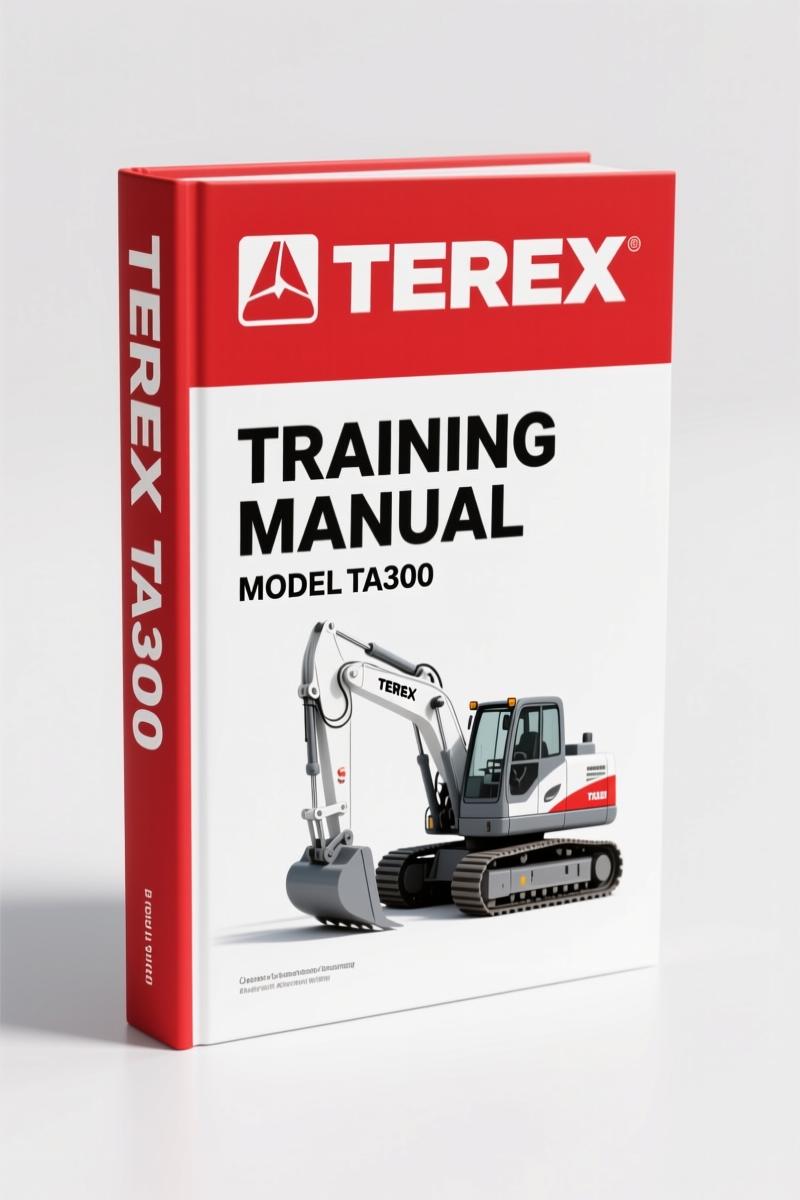
Terex TA300 2011 Service Manual – 454 Pages of Factory-Specified Repair Data
Original price was: $45.00.$30.00Current price is: $30.00.
Factory-specified repair data for Terex TA300. 454 pages of engine, transmission, and hydraulic system procedures. OEM diagrams and torque specs.
Description
Terex TA300 2011 Service Manual – Full Factory OEM Documentation
If you’re wrenching on a Terex TA300 and you don’t have the factory book, you’re gambling with your time and your wallet. I’ve seen guys guess on torque specs for articulation pivot bolts and end up with a cracked frame. That’s a week of downtime and a five-figure repair. This is the OEM manual, not some aftermarket rewrite. 454 pages of what Terex put together for their own service bays. You’re getting the same documentation that Terex dealers use — including the 2011 revisions.
What You Get from the 454-Page Factory Service Manual
The Table of Contents reads like a checklist of every system on the TA300. It starts with General Information covering technical data for the engine, transmission, axles, suspension, wheels and tyres, hydraulic system (brakes, steering, body hoist), electrical system, body, service capacities, exhaust system (including Diesel Exhaust Fluid for SCR reductant), vibration and noise emissions. Then it moves to a dedicated Welding Procedure section — because if you weld on a frame without following the factory process, you’ll introduce stress risers that crack.
Each major system gets its own chapter. For example, the ENGINE chapter includes the XPI fuel system description, removal, disassembly, inspection, assembly, installation, and a maintenance schedule broken down by hours: every 10 hours (daily), 500, 1 000, and 2 000 hours. Special tools are listed at the end of each chapter so you know exactly what you need before you start. No hunting for part numbers — they’re there.
Need to service the SCR exhaust system? The manual covers description, operation, removal, installation, and maintenance with a specific interval at every 1 000 hours. That’s the kind of specificity that keeps a mobile plant running instead of parked.
Engine Overhaul and XPI Fuel System Coverage
This manual doesn’t skip the engine. The Engine and Mounting section walks through the full teardown: description of the XPI fuel system, removal of the engine from the chassis, disassembly of components, inspection tolerances (you’ll need a micrometer and a feeler gauge — not included), then assembly and installation. It also covers the maintenance intervals I mentioned. If you’re rebuilding the engine, you need the factory clearances and torque values. Aftermarket manuals often round off torque specs to the nearest 10 ft-lb. Terex doesn’t. They give you the exact values. That matters when you’re torquing main bearing caps on a heavy-duty diesel.
Transmission – EST-37 and VTS-3 Shift Controller
The TRANSMISSION chapter dives into the EST-37 automatic shift control and VTS-3 shift controller. It lists every switch and sensor: transmission oil temperature, lockup clutch, gear selection, speedometer sensor, differential pressure switch, differential locks, and retarder control. The operation section explains how the shift controller communicates over the CAN bus. For troubleshooting, there’s a whole subsection on transmission sensor checks, solenoid coil ratings, and pressure checks. This is the kind of data you need when the machine won’t shift into third and the customer is waiting. For background on how automatic transmissions differ from Manual Transmission, this book gives you the full EST-37 breakdown. The same transmission diagnostic approach applies — learn it here.
Suspension and Axle Diagnostics – Factory Procedures
The SUSPENSION section in the General Information gives you the technical data, but the real action is in the axle groups. The Front Axle Group covers the hub operation, removal and disassembly, inspection, assembly and installation, and a 2 000-hour maintenance schedule. It includes axle diagnosis and fabricated tools you can make. The Centre Axle and Rear Axle Group both have similar coverage for the differential drive head. Each includes disassembly, inspection, assembly, and differential diagnosis tables. If you’ve ever had a rear axle hub that grinds after a bearing replacement, it’s because you didn’t follow the preload procedure. This manual has it. Bleeding the brakes on the rear axle is covered under the 2 000-hour maintenance as well.
Electrical System and Body Hoist Hydraulics
The ELECTRICAL SYSTEM section is listed in the TOC, but don’t expect generic wiring diagrams — this is the factory electrical system with all the connectors and pinouts. The Hydraulic System section covers brakes, steering, and body hoist. For the body hoist, you’ll find the same level of detail: disassembly, inspection, and assembly. If you’re troubleshooting a body that won’t raise, you’ll need the hydraulic circuit explanation and pressure specs. The manual also includes the EXHAUST SYSTEM section with DEF reductant information for the SCR system — important for emissions compliance on later-model machines.
Who Needs This Manual and Why Aftermarket Won’t Cut It
This is for the mechanic who doesn’t want to be the one who misses a step and sends a machine to the weld shop. DIY owners, fleet maintenance supervisors, and shop owners who bill by the hour. You need the torque values, the special tool numbers, and the inspection criteria. Aftermarket manuals leave out the “inspection” phases — they tell you to remove and install, but they don’t tell you what to look for when it’s apart. This manual has dedicated inspection sections for every major component. That’s where the real knowledge is. The source authenticity is solid: this is a Terex Equipment Limited Maintenance Manual, part number 15504846, revision August 2011. Original OEM print. If you want aftermarket, you’re on your own. For related documentation, check the Terex TA300 2012 After Sales Training Provision”> and the TEREX TA300 2011 Operators Manual”>. There’s also the TEREX TA250/300 Operator Handbook April 2010″> if you need the operator perspective.
If you’re still relying on guesswork for transmission diagnostics, brush up on Manual Transmission fundamentals — but for the TA300, you need the automatically shifting EST-37.
Frequently Asked Questions
- Does this manual cover the TA300 with the SCR exhaust system?
- Yes. The ENGINE section includes a dedicated SCR Exhaust System chapter covering description, operation, removal, installation, and maintenance at 1 000-hour intervals. It also includes the Diesel Exhaust Fluid (DEF) reductant data.
- Are torque specifications given for all critical fasteners?
- The manual lists torque values throughout — for engine mounting bolts, articulation pivot pins, axle hub nuts, and transmission-to-engine fasteners. Each chapter has its own spec table in the inspection or assembly section. You won’t find a single general torque chart; specs are given where you need them.
- Can I use this manual if I have no prior experience with articulated dump trucks?
- You can, but you’ll need basic mechanical skills and a full set of hand tools. The manual assumes familiarity with heavy equipment safety procedures and proper use of lifting equipment. It gives step-by-step removal and installation sequences, but it does not teach you how to read a torque wrench.
- Is the wiring diagram included for the electrical system?
- The ELECTRICAL SYSTEM section is listed in the Table of Contents, but the exact content of wiring diagrams is not detailed in the excerpt. The manual covers the electrical system, switches, sensors, and body hoist controls. For full wiring schematics, you may need the separate electrical troubleshooting supplement.
If you’re serious about keeping a TA300 in the field instead of on the lift, get the factory data. Access the Factory Manual and put it on your shop tablet. The 454 pages will earn their keep the first time you need to torque an articulation pivot bolt to the right spec.
Additional information
| Brand | Terex |
|---|---|
| Language | English |
4 reviews for Terex TA300 2011 Service Manual – 454 Pages of Factory-Specified Repair Data
You may also like…
-
Sale!
Terex AC200-1 Training Manual – Boom Dismantling & Assembly OEM Procedures
Original price was: $93.75.$75.00Current price is: $75.00. -
Sale!
Terex AC200-1 Training Manual – Brake System Factory Specs
Original price was: $91.50.$75.00Current price is: $75.00. -
Sale!
Terex PT-70 2010 Parts Catalog – 34 Pages OEM Part Numbers
Original price was: $30,480.00.$24,000.00Current price is: $24,000.00. -
Sale!
Terex TA40 G7 2006 Parts Catalog – OEM Parts Documentation
Original price was: $32,400.00.$24,000.00Current price is: $24,000.00.
Related products
-
Sale!

1991 Operators Manual – International Truck OEM Specs (108 Pages)
Original price was: $13.63.$10.99Current price is: $10.99. -
Sale!

Acura Integra 1998 Service Manual – 1891 Pages Factory OEM Documentation
Original price was: $31.75.$25.00Current price is: $25.00. -
Sale!

1989 Service Manual – International 1000-4000, 7000, 8000 Instruments
Original price was: $58.80.$40.00Current price is: $40.00. -
Sale!
1996 Operators Manual – International 1000-4000 Series (246 pages)
Original price was: $15.28.$9.99Current price is: $9.99.
Charles W. –
Superb resource! It is easily zoomable on my phone without blur. A must-have for any Terex TA300 DIYer doing repairs. Highly recommended for mechanics.
John S. –
This is exactly what I was looking for. The file quality is excellent. It guided me to rebuild my Terex TA300 engine. I will recommend this shop to others.
Michael T. –
I am very pleased with this transaction. It is easily zoomable on my phone without losing quality. It assisted me to fix my Terex TA300 engine. I will definitely buy again.
William H. –
Five stars! It is easily zoomable on my tablet without blur. It assisted me to repair my Terex TA300 electrical system. Saves me hundreds of dollars.