
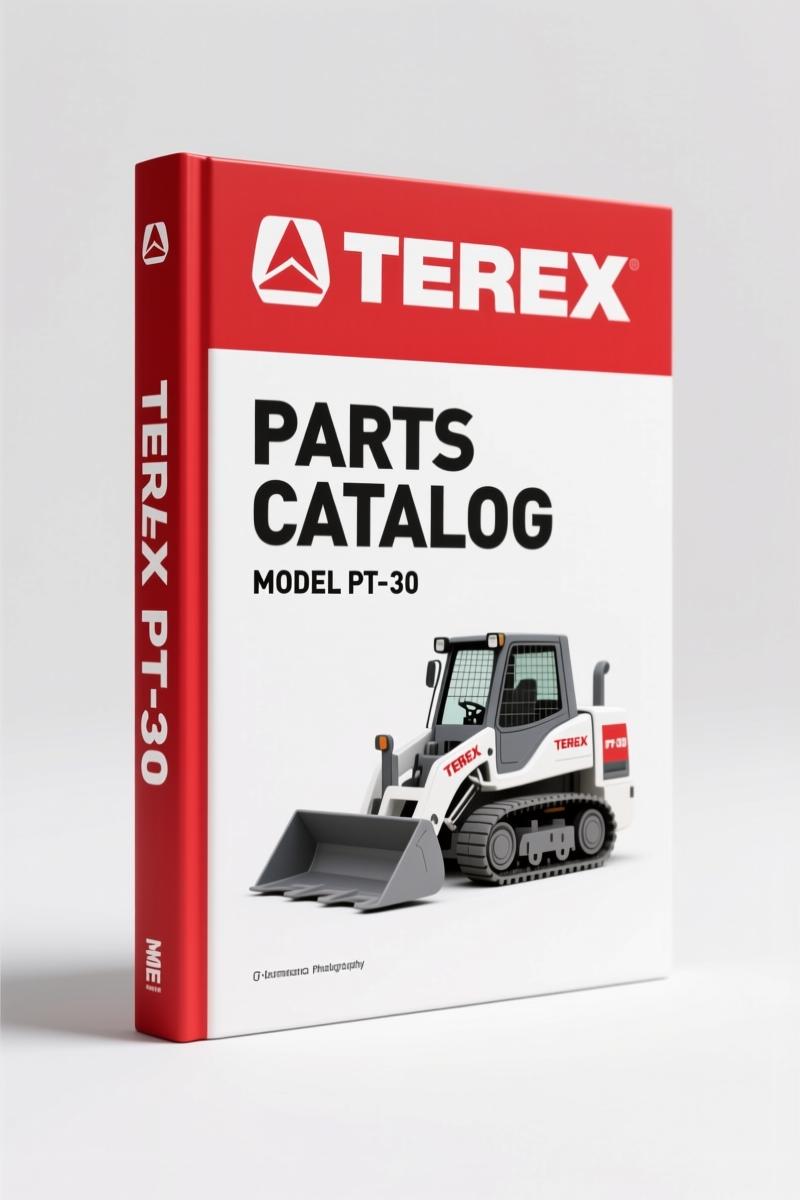
Terex PT-30 2011 Service Manual – OEM Factory Specs
Original price was: $56.25.$45.00Current price is: $45.00.
116-page OEM service manual for Terex PT-30 (2011). Covers chassis, fuel system, hydraulic reservoir, wiring diagrams, and maintenance schedules.
Description
Terex PT-30 2011 Service Manual – Factory Specs for Compact Track Loader
If you’ve ever had a fuel sending unit leak after a replacement because you guessed the torque on the retaining ring, or burned a hydraulic pump by skipping the suction screen cleaning procedure, you know the cost of missing factory specs. The Terex PT-30 2011 Service Manual eliminates that guesswork. 116 pages of OEM procedures written for the PT-30 compact track loader, not some generic aftermarket rewrite. I’ve seen techs waste a full shift chasing a faulty gauge when a quick look at the circuit diagram (chapter 3) would have pointed them to a bad ground. That’s the difference between Terex documentation and a third-party PDF.
Fuel System Repair: Fuel Sending Unit and Tank
Chapter 6 of this service manual walks through the chassis disassembly and assembly with a dedicated section on the fuel system. You get the exact steps for removing the fuel sending unit (page 6-4), including the order of disconnection and the required tool for the lock ring. The tank removal procedure lists the fuel line clamp positions and highlights the personal safety warnings about draining fuel into an approved container. No “simply pry off” nonsense—Terex tells you to use a strap wrench for the sending unit lock ring to avoid cracking the plastic tank. If you’re rebuilding a PT-30 that sat with bad fuel, the cleaning instructions for the tank are in that same section. Pair this with the Terex PT-30 2008 Parts Catalog – OEM Factory Manual to get the part numbers for the fuel tank grommets.
What Torque Values Are Listed for the Radiator and Oil Cooler?
Radiator and oil cooler work is common on these loaders—smashed cores from debris, loose fan shroud causing vibration. Chapter 7 covers disassembly and assembly procedures for the radiator/oil cooler group. It lists torque for the fan shroud bolts and the radiator mounting brackets. The adjustment procedures (fan shroud and fan guard) give you the allowable clearance between the fan tips and shroud. Running that clearance out of spec wears the belt and overheats the hydrostatic system. The manual’s torque chart isn’t buried in an appendix; it’s right in the procedure step where you need it. I’ve seen aftermarket manuals skip these values entirely, leaving you to tightie-rightie until something cracks. Not here.
16 Chapters of Factory Procedure
The table of contents runs from product safety (chapter 1) through troubleshooting (chapter 15) and maintenance (chapter 16). You get technical specifications with fluid capacities and system pressures, circuit diagrams for the hydraulic and electrical systems (chapter 3), machine controls and instrumentation (chapter 4), operator enclosure removal (chapter 5), chassis (6), radiator/oil cooler (7), hydraulic reservoir (8), loader and transmission controls (9), transmission and drive (10), engine components (11), undercarriage (12), loader (13), quick attach (14), troubleshooting (15), and maintenance (16). The hydraulic reservoir chapter (8) alone is worth the price if you’ve ever had to clean a suction screen without knowing the access cover bolt torque. It’s all sequenced: drain fluid, remove filter assembly, clean screen, reinstall. No shortcuts. For transmission-related work, refer to the TEREX PT-30 Service Manual for the drive system specs; the Manual Transmission section in chapter 10 covers gear lash adjustments if your unit has that setup.
Hydraulic Reservoir Cleaning: Suction Screen and Filter Procedure
Chapter 8 devotes three separate procedures to the hydraulic reservoir: filter element removal and installation, filter assembly removal, and suction screen removal and installation. The suction screen step tells you to inspect the screen for debris and clean with a solvent that won’t attack the seal. A clogged suction screen is the number one cause of cavitation noise in these loaders. The manual also details the hydraulic reservoir cleaning procedure with approved methods for flushing—no pressure washing the inside unless you want to force water past seals. The reservoir gauge removal procedure (page 8-5) uses a specific spanner wrench for the gauge nut. Trying to grab it with channel locks ruins the chrome bezel and causes leaks. I’ve watched a shop replace three gauges before one guy finally checked the manual.
OEM Documentation vs. Aftermarket Reprints
This is the genuine Terex Service Manual, Part Number 2010-254, printed in 2011. The PDF we sell is a direct scan of that factory document—no reprints, no OCR garbage, no third-party editing. Aftermarket manuals often omit the safety warnings (chapter 1) that cover hot fluids and pressurized items. They also mess up the wiring diagram colors. The circuit diagrams in chapter 3 use Terex’s own wire-code system; you can’t just swap in a generic color chart. If you need the Manual Transmission specifics for a different machine, look at the Terex TS14G 1994 Service Manual – Factory Specs for Overhung Scraper which is also an OEM document.
Who Needs This Manual?
Home garage enthusiasts who own a PT-30 will find the chassis procedures doable with basic hand tools plus a torque wrench. Professional mechanics working at a rental yard or construction shop need this to avoid comebacks from missing a crush washer or tightening a hydraulic fitting to the wrong spec. Workshop owners should have it on every tech’s tablet so nobody guesses the fuel tank installation torque. Beginners: don’t tackle the hydraulic reservoir cleaning without reading the personal safety section first. Hydraulic oil at 150°F will burn through a cotton glove.
- Does the manual include wiring diagrams and hydraulic schematics?
- Yes. Chapter 3 covers system diagrams: filtering and cooling, auxiliary circuit, and drive loop system. The wiring for machine controls and instrumentation is in chapter 4. You get the pin-outs and connector locations. No aftermarket redraws—these are from Terex’s original CAD files.
- How many pages?
- 116 pages.
Stop wasting hours guessing. If you’ve got a Terex PT-30 that needs a fuel tank, a radiator, or a full hydraulic system overhaul, this is the document that tells you the exact step order, the tool numbers, and the torque values—all verified by the factory. Access the Factory Manual and keep it on your workbench, not buried in a bookcase.
Additional information
| Brand | Terex |
|---|---|
| Language | English |
2 reviews for Terex PT-30 2011 Service Manual – OEM Factory Specs
You may also like…
-
Sale!
Terex PT-70 2010 Parts Catalog – 34 Pages OEM Part Numbers
Original price was: $30,480.00.$24,000.00Current price is: $24,000.00. -
Sale!
Terex TA40 G7 2006 Parts Catalog – OEM Parts Documentation
Original price was: $32,400.00.$24,000.00Current price is: $24,000.00. -
Sale!
Terex AC200-1 Training Manual – Brake System Factory Specs
Original price was: $91.50.$75.00Current price is: $75.00. -
Sale!
Terex AC200-1 Training Manual – Boom Dismantling & Assembly OEM Procedures
Original price was: $93.75.$75.00Current price is: $75.00.
Related products
-
Sale!

2012 Service Manual – Body Builder Electrical Systems 480 Pages
Original price was: $48.28.$34.00Current price is: $34.00. -
Sale!

2011 Parts Catalog – International 7400 SFA 6X6 – 1886 Pages of OEM Part Numbers
Original price was: $32.00.$25.00Current price is: $25.00. -
Sale!

Technical Manual – International 6.0L Power Stroke FICM Diagnostics
Original price was: $29.80.$20.00Current price is: $20.00. -
Sale!

1991 Electrical Schematic – 112-Page OEM Wiring Diagram for International 1000-3000 Series
Original price was: $22.75.$17.50Current price is: $17.50.
Charles W. –
Excellent OEM spec sheet. The scan is high-quality and easy to navigate. Contains clear bolt torque specs for Terex. Saved my repair job! Thanks.
workshop_guy –
Excellent quality! The scan is high-quality and easy to navigate. A must-have for any Terex PT30 owner doing maintenance. Great value for money.