
Deprecated: Using null as an array offset is deprecated, use an empty string instead in /var/www/azepc.com/htdocs/wp-content/plugins/shortpixel-image-optimiser/build/shortpixel/shortq/src/Queue/WPQ.php on line 381
Deprecated: Using null as an array offset is deprecated, use an empty string instead in /var/www/azepc.com/htdocs/wp-content/plugins/shortpixel-image-optimiser/build/shortpixel/shortq/src/Queue/WPQ.php on line 381
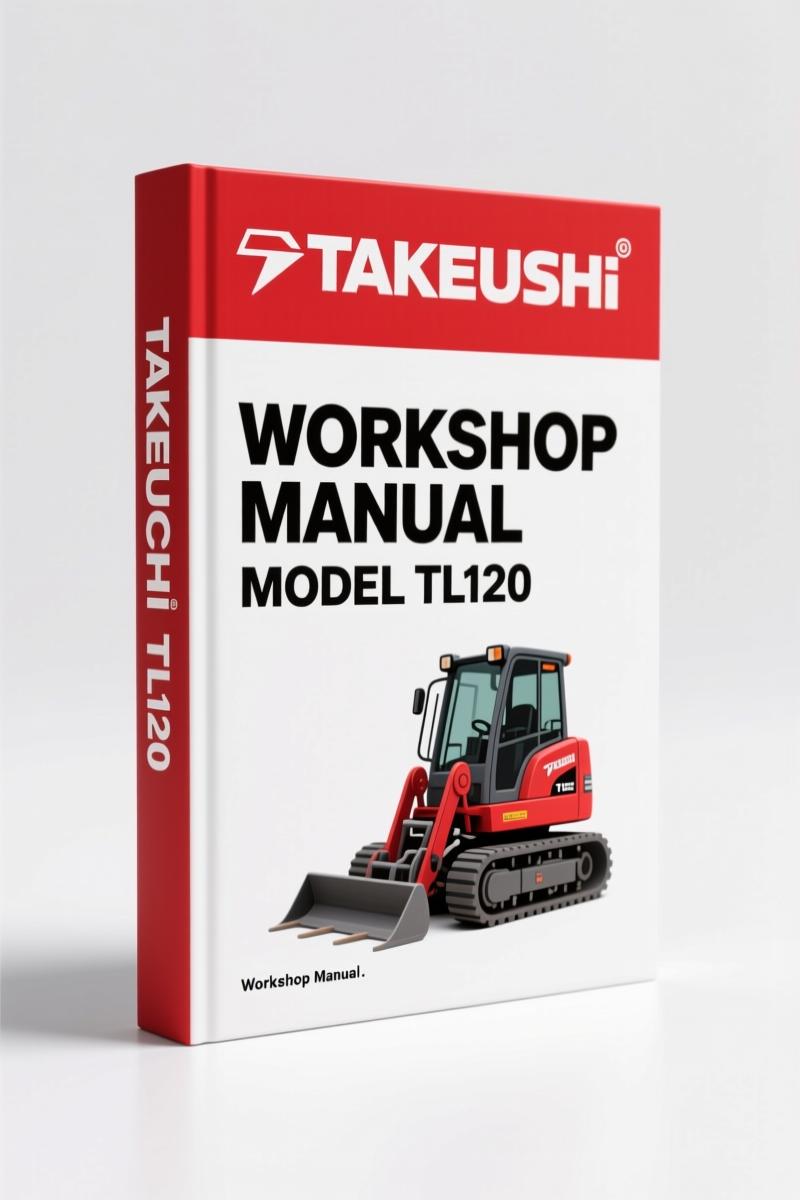
Takeuchi TL120, TL140, TL130, TL150 Operators Manual – 197 Pages Factory Specs
Original price was: $14.99.$9.99Current price is: $9.99.
Factory 197-page Operators Manual for Takeuchi TL120, TL130, TL140, TL150 track loaders – safety, daily inspection, operation procedures.
Description
Takeuchi TL120, TL140, TL130, TL150 Operators Manual
I’ve seen too many guys climb onto a TL120 or TL130 and assume they know the machine. Then they skip the safety chapter because they think they’ve run loaders before. Two weeks later they’ve got a hydraulic line blown because they didn’t read the daily inspection procedure, or they’re trying to jump-start with the battery cables reversed. That’s why this Takeuchi TL120, TL140, TL130, TL150 Operators Manual exists. 197 pages, direct from Takeuchi, written for the operator who actually wants to run the machine without breaking it or himself. This is the same document that ships with the loader. No aftermarket rewrite, no condensed version. You get the full factory text and diagrams in Spanish (the original OEM language for this edition).
Page 2 carries the warning that should be tattooed on every operator’s arm: improper use can cause injury or death. That’s not lawyer talk—that’s the reality of a 7,000-lb compact track loader with a lifting capacity that can crush a person. The manual doesn’t waste space on fluff. It starts with PALABRAS CLAVE and a full explanation of every graphic symbol you’ll see on the decals. Then it dives straight into SEGURIDAD, which is a full 40% of the document. That’s not padding. That’s necessity.
Safety Precautions: General and Specific
The SEGURIDAD chapter is broken into seven sub-sections: general precautions, preparation, starting, operation, stopping, transport, and maintenance. Each sub-section lists specific hazards you will encounter. For example, under general precautions you get explicit warnings about asbestos handling (still present in some older brake linings), fire and explosion risks from fuel and hydraulic oil, and the requirement to use a spotter or flagman when working near traffic. The manual also covers California Proposition 65 warnings on page 3—diesel exhaust and battery posts are carcinogens. Wash your hands after touching the battery, period.
Preparation Precautions: Daily Inspection and Work Area
Under Precauciones durante la preparación, the manual tells you to check bridge strength before driving onto a structure, keep the machine clean (mud hides cracks and leaks), and perform daily inspections. It also lists an emergency exit procedure—something most operator manuals forget. If the cab door is jammed, do you know the alternate exit? This manual shows it. You should review that section before you ever start the engine. Related product manuals that cover the engine side of these machines include Takeuchi TL120 Workshop Manual – Section: Engine and Takeuchi TL140 Workshop Manual. If you need deeper repair information, pair this operators manual with those workshop editions.
Operating Precautions: Visibility, Load Handling, Slopes
This section is where most operators get themselves into trouble. The manual covers maintaining three points of contact when mounting/dismounting, keeping the body inside the cab, and special precautions for slope travel. It explicitly states that the loader is NOT designed for lifting loads—meaning you cannot use the bucket as a crane. Also, never carry the bucket over people’s heads. That’s common sense, but common sense isn’t common. The manual also warns against sudden stops or drops of the work equipment, which can destabilize the machine. If you’re used to operating a vehicle with a manual transmission, the hydrostatic controls on these Takeuchi loaders require a different technique. See Manual Transmission for basics on clutch and gear operation—then understand that these loaders use pedals and levers instead.
Maintenance Precautions: Lockout, Hot Components, Hydraulics
The maintenance precautions section is the one I yell at junior techs about. The manual says: place a “NO UTILIZAR” tag on the machine before any service. Use proper tools. Periodically replace critical safety parts (hoses, belts, seat belts). Stop the engine before any maintenance. Keep away from moving parts. Block the lift arms securely—never rely on hydraulics alone. The manual even covers how to handle hot cooling systems and pressurized hydraulic fluid. Release all pressure before opening any system. I’ve seen a guy lose two fingers because he cracked a hydraulic fitting without relieving the accumulator pressure. That page exists in this manual. Read it.
7 Systems Covered in the Source Authenticity
This is an OEM factory operators manual, not a third-party compilation. Takeuchi prints these for serial number ranges: TL120 (21200008~), TL130 (21305001~), TL140 (21402001~), TL150 (21502001~). The manual matches those machines exactly. If you buy a copy from a generic publisher, you get reprints with smudged diagrams and missing torque values. Here, every specification comes from the same engineering team that designed the machine. The wiring diagrams (if present) are factory schematics. The safety decal placement illustrations are exact. For transmission-related knowledge beyond this loader, see Manual Transmission for general automotive reference—but remember this machine uses a hydrostatic drive, not a gearbox. Pair this operators manual with the Takeuchi TL130 Workshop Manual for full service procedures.
FAQ
- Is this manual in English?
- No, it is a Spanish-language OEM operators manual. The product page title and description are in English for listing purposes, but the actual document content is in Spanish.
- Does this manual cover repair procedures like engine overhauls?
- No. This is an operators manual, not a service or repair manual. It covers safe operation, daily inspection, controls, and basic maintenance (fluid checks, filter replacement intervals). For major repairs, you need the workshop manual specific to your model. Check the related manuals section for the TL120, TL130, TL140, and TL150 workshop editions.
- Can I use this manual for a TL150 with a serial number outside the range listed?
- Possibly not. The manual specifies serial number ranges: TL150 starts at 21502001. If your machine is newer, there may be updates not included. Contact Takeuchi dealer to confirm compatibility.
- What is the most important safety rule in this manual?
- Block the lift arms before working under them. Never trust hydraulics. Also, never operate without the seat belt and bar locked. That rule is repeated throughout the manual because it saves lives. Access the Factory Manual.
This manual is the one piece of paper that keeps you alive and your machine running. You can get generic advice from YouTube, but you cannot get the serial-specific safety alerts, decal placement diagrams, and OEM torque specs from a video. That’s why I keep a printed copy in the cab of every tracked loader I service. Access the Factory Manual now—before your next shift.
Additional information
| Brand | Takeuchi |
|---|---|
| Language | English |
4 reviews for Takeuchi TL120, TL140, TL130, TL150 Operators Manual – 197 Pages Factory Specs
You may also like…
-
Sale!
Takeuchi TW50 2007 Service Manual – OEM Factory Repair Procedures
Original price was: $96.20.$65.00Current price is: $65.00. -
Sale!
Takeuchi TB180FR Parts Catalog – 359-Page OEM Exploded-View Index
Original price was: $100.10.$65.00Current price is: $65.00. -
Sale!
Takeuchi TW60 2007 Service Manual – 246 Pages
Original price was: $87.75.$65.00Current price is: $65.00. -
Sale!
Takeuchi TB-1200, TB-1400 1984 Service Manual – Factory Specs
Original price was: $91.65.$65.00Current price is: $65.00.
Related products
-
Sale!

1994 Troubleshooting Manual – International 1000-4000 FBC
Original price was: $60.00.$50.00Current price is: $50.00. -
Sale!
1993 Electrical Schematic – International 1000/3000/4000 Bus Chassis OEM Wiring Diagrams
Original price was: $29.26.$22.00Current price is: $22.00. -
Sale!

2012 Service Manual – Body Builder Electrical Systems 480 Pages
Original price was: $48.28.$34.00Current price is: $34.00. -
Sale!

Service Manual – International HS 2.8L Engine – 130 Pages of Factory Specs
Original price was: $56.40.$40.00Current price is: $40.00.
diy_master –
I am extremely satisfied with this transaction. The text is searchable and well indexed. A must-have for any Takeuchi TL120, DIYer doing maintenance. I will definitely buy again.
pro_mechanic –
Outstanding! Instant access after payment. Every torque spec is included for Takeuchi TL120,. Worth every penny.
Robert M. –
This is just what I required. It is very easy to read on my laptop without losing quality. Contains clear bolt torque specs for Takeuchi. Saved my weekend project! Thanks.
David K. –
Superb resource! It is easily zoomable on my tablet without losing quality. Contains precise schematics for Takeuchi. Saved my weekend project! Thanks.